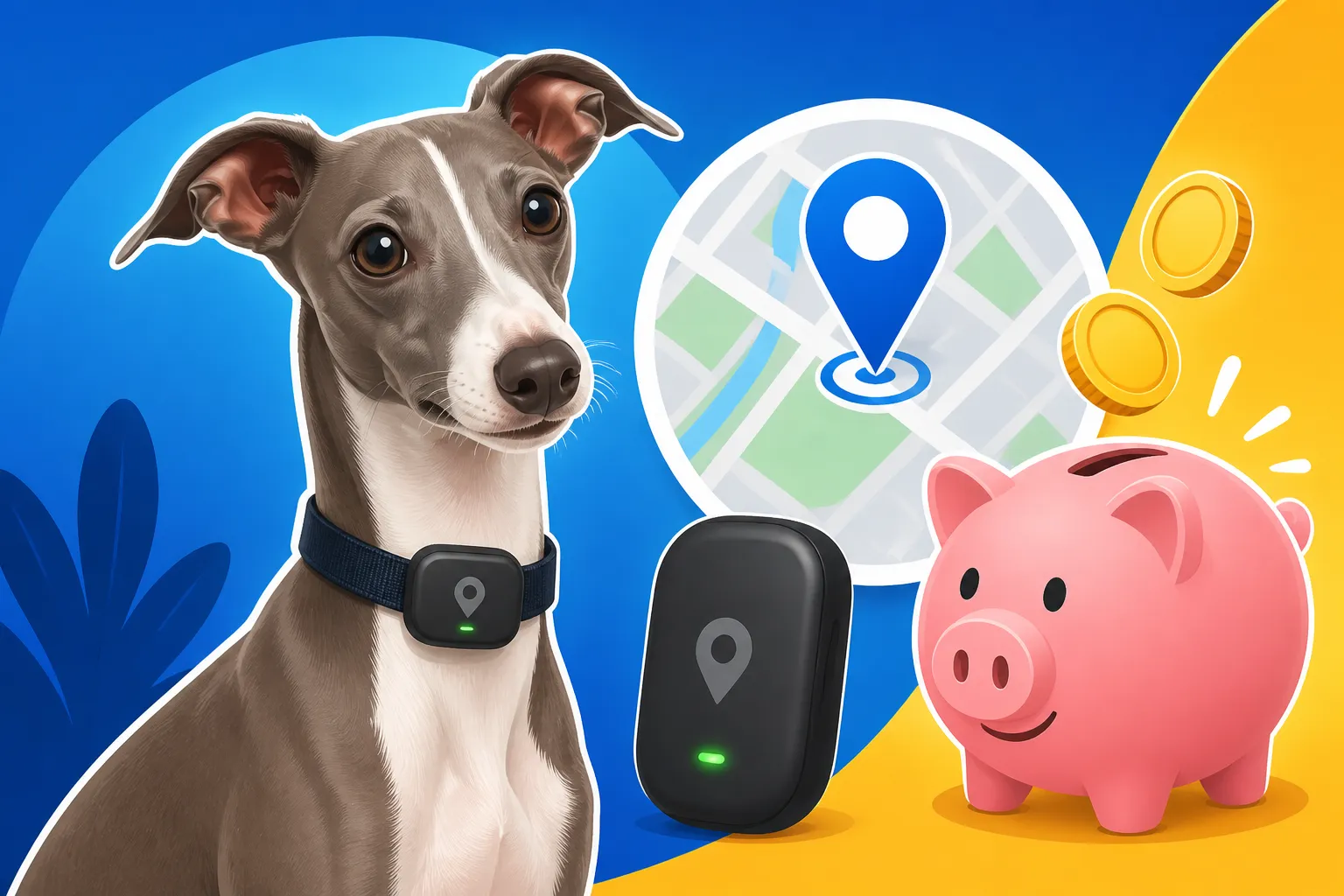
What a GPS Tracker Costs for an Italian Greyhound
The heart-stopping moment when your beloved Italian Greyhound slips out the door or through a gate is every owner's worst nightmare. These little sighthounds are built for speed and can vanish in a blink, leaving you frantic. This guide is here to walk you through understanding the real costs and considerations behind investing in a GPS tracker, helping you make an informed decision to bring a layer of peace of mind to your life with an IG.
Why an Italian Greyhound Owner Buys a Tracker
Let's be honest, owning an Italian Greyhound comes with its own unique set of anxieties, and near the top of that list is their incredible ability to go from zero to sixty in a heartbeat. The primary reason any IG owner looks into a GPS tracker isn't just convenience; it's a profound need for security against the breed's natural instincts. We've all heard the stories, or perhaps lived them, of an IG vanishing faster than a magician's trick.
The "Bolt" Instinct: Sighthound Nature in Action
Italian Greyhounds are sighthounds, plain and simple. This means they are visually driven hunters, bred for centuries to spot and chase moving objects. That little squirrel darting across the yard, a leaf blowing just so, or even a sudden movement from a passerby can trigger an instantaneous, overwhelming prey drive. When that switch flips, everything else, including your desperate calls, fades into the background. They aren't being disobedient; they are merely acting on thousands of years of genetic programming. This instinct is incredibly powerful, making them prone to bolting. It's a fundamental part of How Strong an Italian Greyhound's Prey Drive Is.
Imagine you're out for a walk, enjoying a beautiful day, and suddenly a gust of wind rattles a bush. Out pops a rabbit, and before you can tighten your grip, your IG has lunged, the leash has slipped, or the collar has given way. In that instant, they're gone, focused solely on the chase. This isn't a problem unique to "bad" owners or poorly trained dogs; it's an inherent trait of the breed. Traditional collars and leashes, even the best ones, can sometimes fail, and that's where the panic truly sets in.
Speed and Evasion: How Quickly an IG Gets Lost
If you've ever seen an Italian Greyhound really run, you know it's a breathtaking display of pure athleticism. They are incredibly fast for their size, capable of reaching impressive speeds in short bursts. This speed, combined with their slender build and agility, means they can cover a lot of ground in a very short amount of time. How Fast an Italian Greyhound Runs is genuinely astonishing.
Consider a scenario: your IG bolts out of the front door, startled by a loud noise. By the time you've registered what's happening and flung the door open, they could already be down the block, weaving through cars or disappearing around a corner. Their low profile and quick changes in direction make them difficult to spot and even harder to catch. They can easily slip under fences or through surprisingly small gaps, which is why How an Italian Greyhound Gets Under a Fence is a constant concern for owners. The sheer terror of not knowing which way they went, or if they've crossed a busy street, is what drives many of us to seek out reliable tracking solutions.
The Flawed Recall: Why Traditional Training Often Fails
While some Italian Greyhounds can be trained to have a decent recall in a controlled environment, the reality is that their prey drive often overrides even the most diligent training. When that chase instinct kicks in, it's like they have temporary selective deafness. They don't hear "come!" because their brain is singularly focused on the thrill of the pursuit. This is precisely Why an Italian Greyhound Cannot Be Trusted Off Leash, Ever in an unfenced area.
Many owners try various methods – positive reinforcement, long lines, even specialized training courses – but the sighthound nature is a formidable opponent. The frustration of seeing your dog, knowing they know the command, but watching them ignore it in favor of a fleeing critter is immense. It's not a reflection of your training ability; it's a testament to their breed-specific hardwiring. This is why a technological backup, like a GPS tracker, becomes not just a luxury, but often a perceived necessity for owners who want to offer their IGs some freedom while still having a safety net. It’s about being realistic about what these incredible, independent little hounds are capable of.
Types of GPS Trackers for Italian Greyhounds
When you start looking into GPS trackers for your Italian Greyhound, you'll quickly realize it's not a one-size-fits-all market. There are a few main categories, each with its own benefits and drawbacks, especially when considering the delicate nature and small stature of our IGs.
Dedicated Pet GPS Devices
These are the most common and robust solutions designed specifically for pets. They typically consist of a small, lightweight device that attaches to your dog's existing collar or harness. They contain a GPS chip for location tracking and usually a cellular modem to transmit that location data to your smartphone app or computer. This is why they often require a subscription plan, similar to how a phone needs a data plan to work outside of Wi-Fi.
The biggest advantage of these dedicated devices is their accuracy and range. Since they use satellite GPS and cellular networks, they can provide real-time location tracking over vast distances, essentially wherever there's cell service. Many come with features like geofencing, allowing you to set virtual boundaries and get alerts if your IG leaves a designated "safe zone" (like your yard). Some even offer activity monitoring, which can be a nice bonus for tracking your IG's zoomies or ensuring they're getting enough exercise. Brands like Fi and Tractive are well-known in this space, offering various models with different battery lives and features. However, for a tiny Italian Greyhound, size and weight are critical. You don't want a bulky device impeding their movement or causing discomfort on their slender neck. Look for the lightest, most streamlined options available.
Bluetooth Trackers and Their Limitations
You've probably seen those small, flat Bluetooth trackers that people attach to keys, wallets, or even luggage. These devices, like Apple AirTag or Tile, are very different from true GPS trackers, and it's crucial to understand their limitations for a dog, especially an Italian Greyhound.
Bluetooth trackers work by emitting a Bluetooth signal that can be detected by nearby smartphones running the corresponding app. If your item (or dog) is within Bluetooth range of your phone, you can track it. The clever part is when it's out of your direct range: it relies on a "crowdsourced" network. If another person with the app on their phone comes within Bluetooth range of your tracker, their phone can anonymously relay the location back to you. The problem for an Italian Greyhound is glaringly obvious: if your dog bolts into a rural area or a sparsely populated neighborhood, the chances of another person with the necessary app walking by within Bluetooth range are slim to none. They also don't provide real-time, continuous tracking over distance. So, while they might be useful for finding keys in your house, they are generally inadequate for a fast-moving, escape-prone Italian Greyhound that could be miles away in minutes. What a GPS Tracker Costs for an Italian Greyhound is often debated, but saving money on a Bluetooth tracker is a false economy when true peace of mind is the goal.
Smart Collar Integrations
Some companies are now integrating GPS tracking technology directly into the collar itself, rather than as a separate attachment. These "smart collars" aim for a more seamless, comfortable fit, which can be particularly appealing for breeds like the Italian Greyhound where comfort and minimal bulk are paramount. These often include the same GPS and cellular technology as dedicated attachments, meaning they also come with a subscription service.
The primary benefit here is the integrated design. There's no separate puck or box swinging from the collar; the technology is often woven into the fabric or structure of the collar itself, making it less noticeable and potentially more comfortable for your IG. They can also look sleeker and less conspicuous. When evaluating these, you'll still need to consider battery life, the robustness of the collar itself, and how easily it can be cleaned. Just like with dedicated devices, ensure the overall weight and feel are appropriate for your delicate sighthound. Companies like Whistle and Findster Duo offer integrated solutions that might appeal to IG owners looking for a more streamlined aesthetic.
Understanding the Costs Associated with a GPS Tracker
When you're looking at GPS trackers for your Italian Greyhound, it's easy to fixate on the initial purchase price, but that's rarely the full picture. The true cost of owning and operating one of these devices needs a bit more digging. It's not just about what you pay upfront; it's about the ongoing commitment.
Initial Device Purchase
This is the price tag you see on the box or on the online store. It's the cost of the physical tracker itself. For Italian Greyhounds, because they are so small and delicate, you might find that the very cheapest, bulkiest trackers aren't suitable. You'll likely be looking for something lightweight, compact, and durable. The price can vary significantly based on the brand, the features it offers, and the overall quality of construction.
Some trackers come with very basic functionality – just location. Others include activity monitoring, temperature alerts, or even health insights (though these are often more sophisticated and come with higher price tags and ongoing subscriptions). A tracker that is waterproof or highly water-resistant might cost a bit more, but for a dog that might bolt into a sudden downpour or stumble into a puddle, that extra durability is worth considering. Similarly, a device with a longer-lasting battery might have a higher upfront cost but save you the hassle of frequent recharges. Remember, an Italian Greyhound's neck is incredibly slender, so finding one that fits securely without being too heavy or cumbersome on Which Harness Suits an Italian Greyhound's Neck or a thin collar is key.
Subscription Fees: The Unavoidable Reality
Here's where many people get surprised. The vast majority of dedicated pet GPS trackers require a monthly or annual subscription fee. This isn't just a sneaky way for companies to make more money; it's how the device actually works. These trackers rely on cellular networks to transmit their GPS location data to your phone. Just like your smartphone needs a data plan to access the internet when you're not on Wi-Fi, your pet's tracker needs one too.
The subscription covers the cost of that cellular data, as well as access to the mapping services, the mobile app, and any cloud storage for your pet's activity history. Different companies offer different subscription tiers. You might find options for monthly payments, or discounts for committing to a longer plan (e.g., one year, two years, or even five years). While paying upfront for a multi-year plan might seem like a bigger bite at first, it often works out cheaper in the long run. It's vital to factor these recurring fees into your budget when considering a tracker, as they will be a continuous expense for as long as you use the device. Without an active subscription, most GPS trackers will be completely useless for tracking your IG.
Accessory Costs
Beyond the tracker and its subscription, there might be a few optional or necessary accessories that add to your overall cost. These are typically smaller expenses but can add up.
- Extra Batteries/Charging Cables: While most trackers come with one charging cable, having a spare, perhaps for travel or a different room in the house, can be convenient. Some models allow for interchangeable batteries, so purchasing an extra one can extend the device's operational time if your IG is prone to longer adventures or you simply forget to charge it frequently.
- Specialized Collars/Attachments: Some trackers are designed to integrate with specific collars, or you might need a particular attachment clip to ensure it sits snugly and comfortably on your IG's collar without dangling. Given how delicate Italian Greyhounds are, ensuring the tracker is securely and comfortably attached to avoid irritation is important.
- Protective Cases: While many trackers are built to be reasonably durable, a small protective case can add an extra layer of defense against bumps, scrapes, or chewing, prolonging the life of your device.
These aren't always mandatory purchases, but they're worth thinking about as you budget for your tracking solution.
Hidden Costs to Consider
Sometimes, there are costs that aren't immediately obvious but can crop up.
- Replacement Fees: If your tracker is lost or damaged beyond repair, you'll have to purchase a new device. Some companies might offer a discounted replacement program, especially if you have an active subscription, but it's not guaranteed.
- Warranty Exclusions: Understand what the warranty covers. Does it cover accidental damage, or just manufacturing defects? For an active dog, this can make a difference.
- Roaming Charges: If you travel internationally with your Italian Greyhound, check if your tracker's subscription plan covers international roaming for data, or if you'll incur additional charges. Most pet trackers are designed for domestic use within a specific country or region.
By looking at all these potential costs, you can get a much clearer picture of what you're truly signing up for when you decide to invest in a GPS tracker for your adventurous Italian Greyhound. It’s an investment in peace of mind, but like any investment, it comes with its own budget considerations.
Choosing the Right GPS Tracker for Your Italian Greyhound
Selecting a GPS tracker for an Italian Greyhound isn't as simple as picking the cheapest or most feature-rich option. You need to consider their unique physical characteristics and behavioral quirks to find a device that’s both effective and safe.
Size and Weight Considerations for a Delicate Breed
This is perhaps the most critical factor for an Italian Greyhound. IGs are notoriously delicate, with slender necks and fine bone structure. A tracker that might feel lightweight on a Labrador will be a heavy, cumbersome burden on an 8-pound Italian Greyhound. A heavy or poorly designed tracker can cause discomfort, rub against their skin, or even interfere with their natural gait. We want to protect our IGs, not inadvertently harm them.
When you're shopping, pay very close attention to the device's stated weight. Look for trackers specifically advertised as ultra-lightweight or designed for small breeds. Ideally, the tracker should weigh no more than a small fraction of your dog's body weight. Many owners find that even slightly bulky trackers cause their IGs to scratch at their collars or seem generally annoyed. You want something so minimal they barely notice it's there. Additionally, consider the profile of the device – a slim, flat design is often preferable to a chunky, protruding one, especially if your IG likes to burrow under blankets or squeeze into tight spaces, which is often related to The Velcro Dog: What Constant Company Means With an Italian Greyhound.
Battery Life and Durability for Escape Artists
An Italian Greyhound, when they bolt, can keep going for quite a while. That means the tracker you choose needs a battery life that can keep up with their potential adventures. A tracker that dies after a few hours is almost useless if your dog manages to get genuinely lost and is on the move.
Look for devices that offer multiple days of battery life on a single charge. Some even have power-saving modes that can extend the battery further when your dog isn't actively moving. Real-time tracking, while invaluable, can drain batteries faster, so understanding the balance between constant updates and battery longevity is key.
Durability is also paramount. IGs are not known for being gentle with their belongings, and a tracker needs to withstand the elements, accidental bumps, and perhaps even a curious chew. Look for devices that are waterproof or highly water-resistant. This means it can survive a sudden rain shower, a roll in a damp patch of grass, or even a quick dip in a shallow puddle. While no device is truly indestructible, choosing one that's designed to be robust will save you headaches and potential replacement costs down the line.
Coverage Area and Accuracy for Reliable Tracking
What good is a tracker if it can't tell you where your IG is? The coverage area and accuracy are vital. Most dedicated pet GPS trackers rely on cellular networks (like 4G or 5G) to transmit their location. This means they will only work effectively where there is reliable cell service.
If you live in a very rural area with spotty cell coverage, you might find that even the best GPS tracker struggles to provide consistent updates. Always check the carrier compatibility and coverage maps for your specific region before committing to a device and its subscription. Some trackers, like those from Healthy Paws, leverage robust networks, but it's always good to check.
Accuracy refers to how precisely the tracker can pinpoint your dog's location. Is it within a few feet, or does it give you a general block radius? For a small dog that could hide under a bush or slip into a backyard shed, pinpoint accuracy is far more valuable. Look for trackers that boast high precision, often within a few meters. Features like "live tracking" or "real-time updates" are also crucial, allowing you to see your IG's movements continuously on a map, guiding you directly to them rather than just their last known spot.
App Features and Ease of Use
Finally, the accompanying smartphone app is your window into your Italian Greyhound's whereabouts and activity. A clunky, difficult-to-use app will add stress to an already stressful situation.
Look for an app that is intuitive and easy to navigate. Key features to consider include:
- Real-time Mapping: A clear, responsive map that shows your dog's current location and historical paths.
- Geofencing: The ability to set virtual safe zones (like your yard or a dog park) and receive instant alerts if your IG crosses these boundaries. This is especially useful for preventing Why an Italian Greyhound Bolts Through a Door.
- Activity Monitoring: While not essential for tracking, some apps offer insights into your dog's activity levels, sleep patterns, and calories burned. This data can be interesting for understanding your IG's daily routine and overall health.
- Battery Life Indicator: A clear display of the tracker's current battery level, so you know when it's time for a recharge.
- Multiple User Access: The ability for multiple family members or trusted friends to access the tracker's data, which can be invaluable in a search effort.
- Notification Customization: Control over what alerts you receive (e.g., leaving a safe zone, low battery).
Some apps, especially those from popular pet platforms, might integrate with other services, like ordering food from Chewy or managing health records. Brands like Ollie also focus on integrated pet care solutions, so their companion apps might offer a wider ecosystem of services. A user-friendly interface can make all the difference in a high-stress situation, allowing you to quickly find and retrieve your adventurous Italian Greyhound.
Comparing GPS Tracker Options for Italian Greyhounds
Navigating the world of GPS trackers can feel overwhelming, especially with so many options promising the world. For our delicate Italian Greyhounds, the balance of features, comfort, and cost is key. Let's break down some general types and what to look for, keeping in mind that specific brands will have their own pricing structures.
The most important takeaway for Italian Greyhounds is that the smallest, lightest, and most reliable option is generally the best, even if it comes with a higher price tag. The peace of mind, and the prevention of a potentially catastrophic loss, is truly priceless.
| Feature Category | Basic Dedicated GPS Tracker | Advanced Dedicated GPS Tracker | Bluetooth-Only Tracker (e.g., AirTag, Tile) |
|---|---|---|---|
| Initial Cost | Moderate (Device only) | Higher (Device often includes more robust hardware) | Low (Device only) |
| Ongoing Cost | Required monthly/annual subscription for cellular service | Required monthly/annual subscription for cellular service | None (relies on existing smartphone network and app) |
| IG Suitability | Look for ultra-lightweight and compact models | Choose carefully; can be larger/heavier, potentially uncomfortable | Generally NOT suitable for IGs due to range limitations |
| Range/Coverage | Nationwide (where cellular service is available) | Nationwide/Global (depending on subscription, cellular service) | Limited (Bluetooth range of owner's phone or other app users) |
| Accuracy | Good (within meters) | Excellent (often within a few feet, faster updates) | Varies (can be precise if very close, otherwise approximate) |
| Key Features | Real-time tracking, Geofencing, Basic activity monitor | Live tracking, Advanced activity/health monitoring, Temperature alerts, Virtual fence history | Proximity finding, Crowdsourced network for general location |
| Battery Life | Typically 2-5 days | Varies (some offer extended battery, others are more power-hungry for features) | Often months (due to low power Bluetooth) |
| Durability | Often splash-proof, reasonably durable | Typically water-resistant/waterproof, rugged design | Varies, generally not built for pet ruggedness |
| Peace of Mind | High (reliable tracking over distance) | Very High (more features, better accuracy, robust design) | Low (unreliable for a bolting Italian Greyhound) |
The Investment in Peace of Mind
At the end of the day, a GPS tracker for your Italian Greyhound is more than just a gadget; it's an investment in your peace of mind. The sheer terror of What to Do When an Italian Greyhound Gets Loose is something no pet parent ever wants to experience. While the costs, both upfront and ongoing, might seem significant, they pale in comparison to the emotional distress and potential financial burden of a truly lost dog.
Many owners consider a GPS tracker an essential part of their Italian Greyhound's safety equipment, right up there with a secure harness and a sturdy leash. It's a proactive measure against the breed's inherent instincts to chase and run, giving you a powerful tool to bring them home safely should the unthinkable happen. It allows you to offer your IG a bit more freedom in secure areas, knowing you have a backup plan.
Ultimately, whether a GPS tracker is "worth it" is a personal decision, but for an Italian Greyhound owner, the answer is almost universally yes. The ability to quickly locate your beloved companion and bring them back into your arms is truly invaluable.
Disclaimer
This article is for general informational purposes only and does not constitute professional advice. Laws, prices and regulations vary by location and change over time. Consult a qualified professional for guidance on your specific situation.