Why an Italian Greyhound Bolts Through a Door
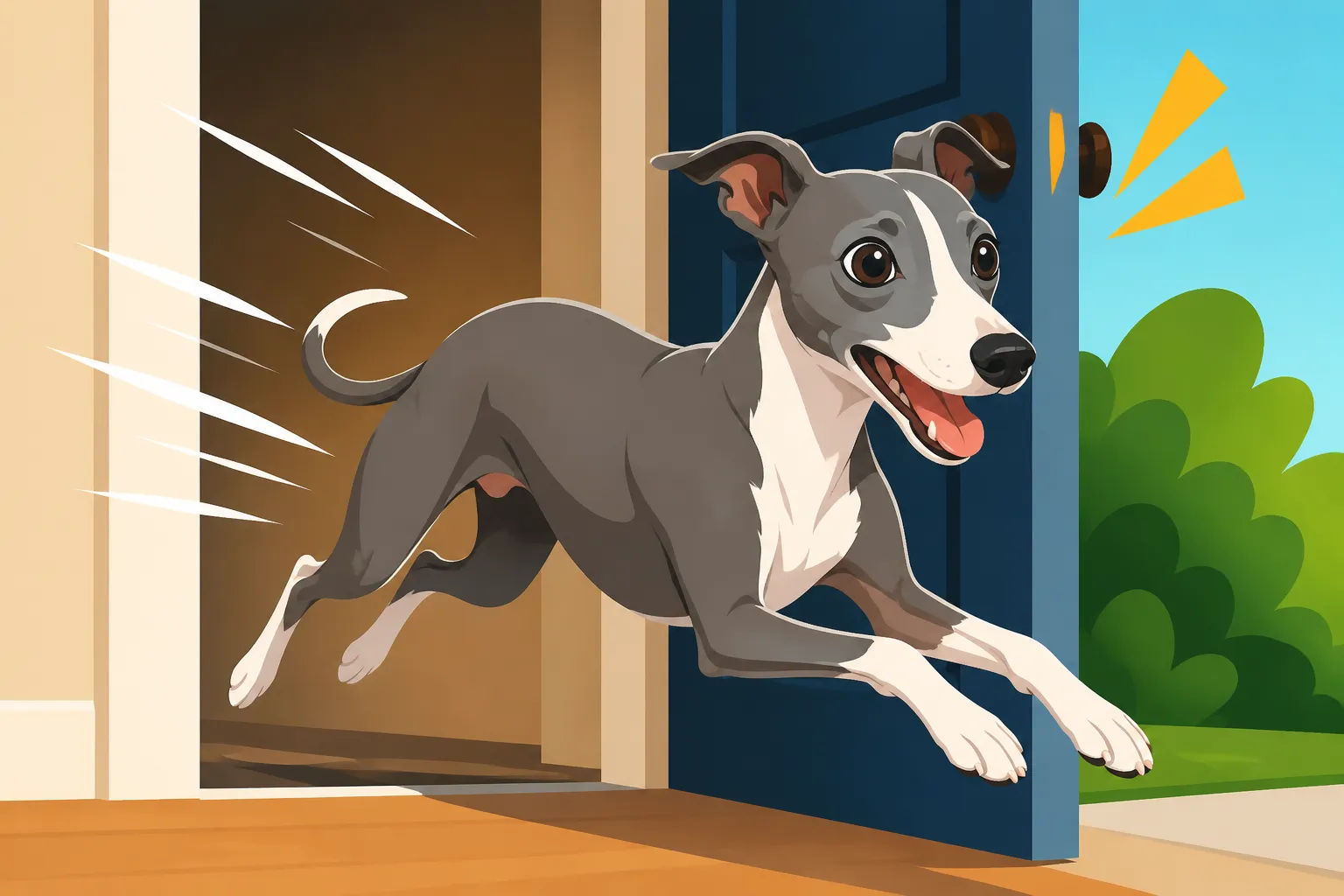
There’s a specific kind of heart-stopping terror that only an Italian Greyhound owner knows: that split second when the front door cracks open just a hair too wide, or the gate to the yard is left unlatched, and your tiny, lightning-fast companion is suddenly a blur disappearing into the distance. It’s a common, incredibly frustrating, and potentially dangerous behavior that many of us face. This guide is here to help you understand why your Italian Greyhound bolts through a door and, more importantly, how to prevent these terrifying escapes.
Understanding the Italian Greyhound's Instinct to Bolt
It's easy to feel like your Italian Greyhound is doing this just to spite you, or that they simply don't care about your frantic calls. But the truth is, this behavior is deeply rooted in their ancient sighthound instincts and their unique physical makeup. It's not about being naughty; it's about being an Italian Greyhound.
The Sighthound Prey Drive
Italian Greyhounds, despite their delicate appearance, are sighthounds through and through. This means they were selectively bred for centuries to hunt by sight, not scent. When that door opens, even a tiny crack, their world expands, and suddenly, every leaf blowing across the street, every squirrel scampering up a tree, every distant bird or even a stray piece of litter becomes a potential "prey" item. It's an almost irresistible urge for them to chase. They don't rationalize the dangers of traffic or getting lost; they simply see, react, and pursue. This innate drive is incredibly powerful, often overriding any training they've received in a calm, controlled environment. If you've ever wondered How Strong an Italian Greyhound's Prey Drive Is, you'll quickly learn it's a force to be reckoned with.
The Thrill of the Chase and Freedom
Beyond just prey drive, there's a profound exhilaration that comes with the unexpected dash for freedom. Imagine being cooped up, even in a lovely, spacious home, and suddenly a portal to an entirely new world opens up. For an Italian Greyhound, that's exactly what an open door represents. It's a chance to sprint, to explore, to feel the wind against their delicate fur, and to engage in the pure, unadulterated joy of running. The sheer thrill of the chase, combined with the feeling of unbounded freedom, is a potent cocktail that can make them forget all their manners and training. It’s a self-rewarding behavior; the act of running itself is often enough of a reward to make them want to do it again.
Their Incredible Speed and Agility
Let's be honest, Italian Greyhounds are built for speed. They might look fragile, but they are incredibly athletic, with long, powerful legs and a deep chest designed for bursts of incredible acceleration. When that door opens, they can go from zero to sixty (or at least, from standing still to full sprint) in the blink of an eye. Their small size and agility also mean they can slip through surprisingly small openings or dart around obstacles with ease. How Fast an Italian Greyhound Runs is truly astounding for their size, which is why a simple door-bolt can turn into a desperate chase so quickly. This combination of natural speed and agility makes them formidable escape artists, capable of disappearing before you even register what's happened.
Common Scenarios Where Iggies Bolt
Understanding the instinct is one thing, but recognizing the specific situations where your Italian Greyhound is most likely to make a break for it can help you put preventative measures in place. They are creatures of habit, but also opportunists!
The Front Door Dash
This is probably the most common and terrifying scenario. You're greeting a visitor, bringing in groceries, or simply stepping out to grab the mail. The front door opens, and before you can even say "stay," your Italian Greyhound has zipped between your legs and is halfway down the driveway. The sensory overload from outside – the sounds, the smells, the movement – acts like a siren call. They're often so quick that they're out before you can physically block them, and once they're out, their prey drive can kick in, making recall incredibly difficult, if not impossible. Many Italian Greyhound owners find that the moment the doorknob turns, their Iggy is already poised, muscles tensed, ready to make their move.
The Back Yard Escape
You might think a fenced yard is a safe haven, but don't underestimate your Italian Greyhound's ingenuity and desire for adventure. A gate left ajar, a small gap under the fence, or even a sudden distraction that sends them over (yes, they can jump surprisingly high!) can lead to a backyard escape. While a yard might seem less risky than a busy street, a bolting Iggy can still get lost, injure themselves, or encounter dangers like other animals or even pools. They often look for the path of least resistance, and if that means slipping through a loose gate hinge or tunneling under a shrub, they'll seize the opportunity. For this reason, many Italian Greyhound owners use Whether an Invisible Fence Holds an Italian Greyhound to contain them, only to discover that these systems are often ineffective against their determined escape attempts.
Car Door Leaps
Another high-stress situation involves car doors. Whether you're opening the door to let them in, or they're eager to get out at the dog park or vet, an Italian Greyhound can launch themselves out of an open car door with shocking speed. This is especially dangerous in parking lots or on busy streets. Their excitement can completely override their sense of caution. Many Iggies associate the car door opening with an exciting destination, and they simply can't wait. This is why it's absolutely crucial to have them securely leashed or crated before any car door is opened, and never to assume they'll patiently wait. Even a quick stop at a drive-thru can turn into a frantic situation if you're not careful.
Why Traditional Training Methods Often Fail
If you've tried all the usual "sit" and "stay" commands and still find your Iggy making a break for it, you're not alone. What works for some breeds often falls flat with the unique temperament and drives of an Italian Greyhound.
Italian Greyhounds and Punishment
Many traditional training methods rely on some form of correction or punishment to deter undesirable behavior. However, Italian Greyhounds are incredibly sensitive souls. They thrive on positive reinforcement and can shut down completely if subjected to harsh words or physical correction. A raised voice or a sharp tug on the leash when they've bolted might teach them to be fearful of you, rather than to stop bolting. They might simply learn to hide their "misbehavior" or become more sneaky in their escape attempts. Why Raising Your Voice Sets an Italian Greyhound Back a Month is not an exaggeration for this breed; their trust is hard-won and easily shattered. Instead of learning not to bolt, they might learn to associate the door opening with fear, complicating future training even further.
The "Come" Command vs. Instinct
The "come" or "recall" command is arguably the most important one for any dog, but with an Italian Greyhound, it faces a significant challenge: instinct. When your Iggy sees that squirrel or feels the rush of freedom, the primal urge to chase is often far more powerful than their desire to please you or remember their training. In that moment, your voice can become just background noise. They aren't being disobedient out of malice; they're simply responding to thousands of years of selective breeding telling them to run. This is why How Reliably an Italian Greyhound Comes When Called is often a source of frustration for owners. While it's vital to teach recall, it's equally important to acknowledge that in a high-distraction, high-drive situation, it may not be enough to override their powerful instincts.
Distractions Over Discipline
Italian Greyhounds are highly intelligent, but they are also easily distracted, especially by movement and novel stimuli. A door opening isn't just an exit; it's a sensory explosion. The sudden change in temperature, the new smells carried on the breeze, the visual stimulation of a dynamic outdoor environment – all of these can overwhelm any attempts at discipline in that crucial moment. Their attention span, particularly when something exciting is happening, can be incredibly short. Trying to enforce a "stay" while a leaf blows past or a neighbor walks by with their dog is often a losing battle. They prioritize the external stimulus over your command, not because they don't understand, but because their natural inclination is to investigate and chase.
Implementing Effective Containment Strategies
Given their strong instincts and delicate nature, the most reliable way to prevent bolting is often through robust containment strategies. Think of it as creating a multi-layered defense system around your home.
Creating Physical Barriers
Physical barriers are your first and best line of defense. This means more than just a closed door. Consider baby gates or exercise pens strategically placed inside your home, especially near entryways. When the front door is opened, there should always be a secondary barrier that your Italian Greyhound cannot easily bypass. This might mean a gate across a hallway that leads to the front door, or a small pen in the entryway itself. This two-barrier system gives you a crucial buffer zone and extra seconds to react if your Iggy tries to make a break for it. For example, if you're bringing in groceries, you can place your Iggy behind a sturdy gate while the front door is open, ensuring they can't slip out unseen. Look for gates that are tall enough and have vertical bars that are too narrow for them to squeeze through. You can find a wide variety of these on platforms like Amazon.
Leash and Harness Protocol
A secure leash and harness should be a non-negotiable part of your routine whenever you're opening an exterior door, even if it's just for a moment. Flat collars are notoriously easy for Italian Greyhounds to slip out of, especially when they pull back in a sudden surge of excitement or fear. Their slim necks and head shape mean they can often back right out of a standard collar. Instead, invest in a properly fitting sighthound-specific harness or a martingale collar. A sighthound harness typically has a broader chest plate and straps that wrap securely around the rib cage, making it much harder to escape. Which Harness Suits an Italian Greyhound's Neck is a critical question, and the answer is usually not a flat collar. Get into the habit of always clipping the leash on before the door is even approached, let alone opened. If you have guests, train them to wait until your dog is secured before entering or exiting.
Secure Outdoor Spaces
Even if you have a fenced yard, it’s essential to regularly inspect it for potential escape routes. Italian Greyhounds can squeeze through small gaps, dig under fences surprisingly quickly, or even scale certain types of fencing if motivated enough. Check for loose boards, gaps under gates, and any areas where the ground has eroded, creating a space for them to wriggle under. For some Iggies, a truly secure yard might require higher fencing, or even a "coyote roller" on top to prevent jumping. If you have a patio, ensure any railings are secure and that there are no openings large enough for your slender Iggy to slip through. When they are outside, always supervise them. Never assume a fence alone is enough to keep an Italian Greyhound contained, especially if they catch sight of something tantalizing on the other side.
Training for Door Safety and Impulse Control
While containment is key, training also plays a vital role in building better habits and impulse control around doors. These aren't quick fixes, but consistent effort can make a big difference.
The "Wait" Command at the Door
Teaching a strong "wait" command at the door can be a game-changer. This means your Italian Greyhound learns to pause, even with an open door, until you give them a release cue. Start in a low-distraction environment. With your Iggy on a leash, approach the door. Before you even touch the doorknob, ask them to "wait." If they stay, even for a second, reward them heavily with a high-value treat and praise. Gradually work up to touching the doorknob, then opening the door a crack, then fully opening it, always reinforcing the "wait." If they move, immediately close the door (without saying anything or making it a punishment) and try again. The goal is for them to associate waiting calmly with getting what they want (the treat, or eventually, going outside). This requires immense patience and consistency, but it's a skill that can literally save their life. This is a primary focus for many Teaching an Italian Greyhound to Wait at a Door training regimens.
Desensitization to Door Activity
Part of the problem is the sudden excitement associated with door activity. You can help desensitize your Italian Greyhound to the door by making it a less thrilling event. Practice opening and closing the door repeatedly throughout the day, without actually going anywhere or letting your dog out. Walk past the door, touch the doorknob, jingle your keys – do all the things that normally trigger their excitement, but without the release of actually leaving. When they remain calm, reward them. The idea is to break the association that "door movement = immediate escape opportunity." You can also have a designated "spot" for them to go to when the door is being used, like a comfy bed or a mat a few feet away, rewarding them for staying there.
Positive Reinforcement and High-Value Rewards
Italian Greyhounds respond best to positive reinforcement. This means rewarding desired behaviors rather than punishing unwanted ones. When training around doors, use treats that your Iggy absolutely adores – small pieces of cooked chicken, cheese, or specialized training treats. These high-value rewards make waiting and staying far more appealing than bolting. How Much an Italian Greyhound Cares About Food can be a real asset here; they are often very food motivated. Make training sessions short, fun, and frequent. If your Iggy successfully waits at the door, even for a second, shower them with praise and treats. A well-timed, delicious reward is far more effective than any scolding in shaping their behavior. Consider exploring online training resources, like those offered by BAXTER & Bella, which often emphasize positive reinforcement techniques that work well with sensitive breeds.
Essential Gear and Tools for Bolters
Beyond training and barriers, having the right equipment can provide crucial layers of safety and peace of mind when managing an Italian Greyhound prone to bolting.
Secure Harnesses and Leashes
As mentioned before, a regular flat collar is simply not enough for an Italian Greyhound. They are masters of slipping out of them. A properly fitted martingale collar, which tightens slightly when pulled but doesn't choke, can be effective, but many owners prefer a sighthound-specific harness. These harnesses are designed with their deep chests and slender necks in mind, often featuring a wider chest strap and multiple points of adjustment to prevent escape. They distribute pressure more evenly across the chest, making them more comfortable and secure. Always double-check that the harness fits snugly without being restrictive. You can find a range of reliable harnesses and leashes specifically designed for sighthounds on major retail sites like Amazon, ensuring you get a product that truly offers security for their unique physique.
GPS Trackers for Peace of Mind
Even with the best training and precautions, accidents can happen. A gate might be left open by a delivery person, or your Iggy might slip their leash in a moment of extreme excitement. For these worst-case scenarios, a GPS tracker can be an absolute lifesaver. These small devices attach to your dog's collar or harness and allow you to track their location in real-time via a smartphone app. While they do have a recurring service fee, the peace of mind they offer is immeasurable. What a GPS Tracker Costs for an Italian Greyhound is a worthwhile investment when you consider the alternative. They don't prevent bolting, but they drastically improve your chances of a quick and safe recovery if an escape occurs. Many Italian Greyhound owners consider them an essential piece of equipment due to the breed's speed and tendency to bolt. It’s comforting to know Why an Italian Greyhound Owner Buys a Tracker usually boils down to wanting to prevent a terrible loss.
Gate and Pen Solutions
For those moments when you can't actively supervise your Italian Greyhound, or when you need to manage door traffic, well-placed gates and pens are invaluable. Beyond the internal baby gates for entryways, consider a portable exercise pen or a sturdy indoor gate system to create a safe zone in your home. This could be a "decompression zone" near the front door where guests enter, or a secure area in the kitchen when you're busy cooking. These tools act as a physical barrier, removing the opportunity for a dash. They also provide a consistent expectation for your Iggy – when the gate is up, door access is restricted. Look for gates that are tall enough to prevent jumping and stable enough not to be pushed over by a determined Iggy. Some owners even use What a Crate for an Italian Greyhound Costs to safely contain their dog during high-traffic door times, offering a secure, den-like space.
| Strategy | Primary Benefit | Key Equipment/Method | Best Use Case |
|---|---|---|---|
| Physical Barriers | Prevents escapes entirely | Baby gates, secure fencing, closed doors | Entryways, yard access, unsupervised periods |
| Leash & Harness | Direct control during door transitions | Sighthound harness, martingale collar, sturdy leash | Greeting guests, taking trash out, car transfers |
| "Wait" Command | Builds impulse control & obedience | High-value treats, consistent training | Anytime a door opens or is approached |
| Desensitization | Reduces excitement around door activity | Repetitive door actions, no actual exit | General door manners, reducing anxiety |
| GPS Tracker | Aids in recovery if escape occurs | GPS device attached to collar/harness | Ultimate backup for accidental escapes |
| Secure Outdoor Space | Safe outdoor exercise | Fully inspected fence, secured gates, supervision | Playtime in the yard, potty breaks |
Disclaimer
This article is for general informational purposes only and does not constitute professional advice. Laws, prices and regulations vary by location and change over time. Consult a qualified professional for guidance on your specific situation.