How Tall an Italian Greyhound Stands
One of the first things people notice about an Italian Greyhound is their delicate, elegant appearance. They look like tiny, refined sculptures, and it's natural to wonder just how tall these slender beauties are supposed to be. Many prospective owners and even those who've loved the breed for years sometimes find themselves scratching their heads over what constitutes an "ideal" height. This guide will meticulously break down the typical height ranges for Italian Greyhounds, explore why these measurements matter, and help you understand all the factors that contribute to your Italian Greyhound's unique stature.
Understanding the Breed Standard for Height
When you're looking at a purebred dog, the "breed standard" is essentially the blueprint of what the ideal dog of that breed should look like. It covers everything from ear set and tail carriage to, yes, height and weight. For Italian Greyhounds, these standards are incredibly important, not just for show dogs but also for understanding the breed's fundamental characteristics. It helps maintain the integrity of the breed and ensures that Italian Greyhounds continue to embody the qualities they're known for.
The American Kennel Club AKC Standard
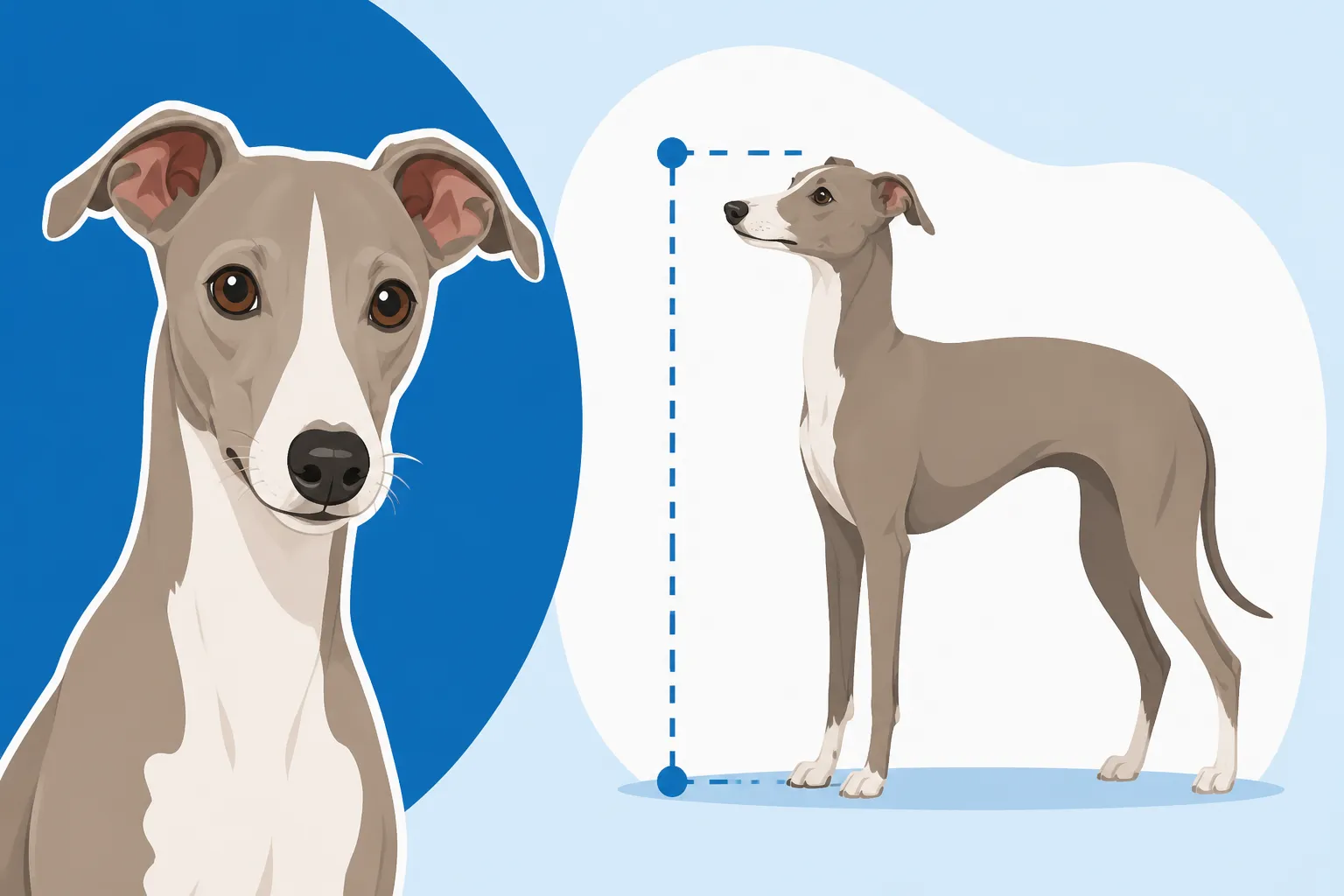
In the United States, the most widely recognized standard for Italian Greyhounds comes from the American Kennel Club (AKC). Their standard is quite specific when it comes to height. For an Italian Greyhound, the AKC states that the ideal height at the withers (the highest point of the shoulder blades) should be between 13 and 15 inches. This isn't a suggestion; it's a firmly set guideline that breeders strive for and judges adhere to in the show ring. Anything outside this range is considered a deviation from the ideal.
This precise height range speaks to the breed's history and function – they were bred as companion dogs, delicate enough to be held in laps but athletic enough for a quick chase around the Renaissance gardens. When a dog falls slightly outside this range, say 12.5 inches or 15.5 inches, it's not necessarily a problem for a pet owner, but it might mean they wouldn't place well in a conformation show. It highlights that the standard is a target, and variations, while sometimes unavoidable, do have implications in competitive settings. The emphasis is on elegance and proportion within that specific size.
International Breed Standards FCI, KC
While the AKC standard is prominent in North America, other kennel clubs around the world also have their own specific guidelines for Italian Greyhound height. The Fédération Cynologique Internationale (FCI), which represents many European countries, sets a similar standard, typically defining the height at the withers between 32 to 38 cm (approximately 12.5 to 15 inches). The Kennel Club (KC) in the United Kingdom also aligns closely, often specifying a height range within these similar parameters. These slight differences can sometimes lead to minor variations in type seen across different continents.
It's interesting to note these subtle nuances. An Italian Greyhound that might be considered perfectly within standard in one country could be at the very edge, or just slightly out, in another. This doesn't mean the dog is "wrong," but rather reflects the ongoing discussions and historical interpretations within different breed clubs. For pet owners, it simply underscores that while there's an ideal, there's also a natural range of sizes within the breed, and your Italian Greyhound is a beloved family member regardless of which specific height measurement they hit.
What "Ideal" Height Truly Means for an IG
When we talk about "ideal" height for an Italian Greyhound, it's not just about hitting a specific number; it's about the overall balance and proportion of the dog. An Italian Greyhound should look graceful and refined, with long, slender legs and a body that fits harmoniously together. A dog that is too short might look stocky, losing that signature elegance, while one that is excessively tall could appear gangly or unwieldy, lacking the breed's characteristic compact athleticism.
This ideal contributes significantly to the Italian Greyhound's unique aesthetic and movement. They are known for their high-stepping, springy gait, which is enhanced by their elegant proportions. An ideal height, combined with correct bone structure, allows for this distinctive movement and maintains the visual appeal that has captivated dog lovers for centuries. It's truly a blend of form and function, ensuring the Italian Greyhound remains both beautiful to behold and capable of moving with effortless grace, whether on a lead or during a spirited indoor zoomie session.
Why Height Matters in an Italian Greyhound
The height of an Italian Greyhound isn't just a detail for show judges; it has practical implications for their health, how they fit into your home, and even how you manage their care. While a few inches here or there might seem negligible, for a breed as finely built as the Italian Greyhound, it can make a real difference in their day-to-day life and overall well-being.
Health Implications of Being Too Small or Too Large
Italian Greyhounds, particularly puppies, are renowned for their delicate bone structure. Being at either extreme of the height spectrum can sometimes carry health implications. For instance, an Italian Greyhound that is significantly undersized might be prone to even more fragile bones, increasing the risk of fractures, especially during their rambunctious puppy and adolescent phases. Many owners understand that A Broken Leg Is the Emergency Every Italian Greyhound Owner Fears, and smaller size can exacerbate this concern. Conversely, an unusually large Italian Greyhound, while seemingly sturdier, might still possess the fine bone structure typical of the breed, which could put undue stress on joints if they carry more weight than their delicate frame is truly designed for.
Consider the potential for orthopedic issues. While not as common as in larger breeds, an Italian Greyhound that is either too small or too large relative to the breed standard could theoretically face challenges. For instance, a very small dog might have disproportionately thin bones, making them more susceptible to breaks from even minor falls. Owners often worry about The Age an Italian Greyhound Is Most Likely to Break a Leg, and a dog at the extreme ends of the size spectrum might fall outside the typical risk assessment. It's a fine balance, where the "ideal" height range generally correlates with the most structurally sound and resilient individuals within the breed.
Impact on Daily Life and Home Setup
The height of your Italian Greyhound significantly influences how you need to set up your home to keep them safe and comfortable. A dog on the smaller end of the spectrum, say 13 inches, might struggle to get onto higher furniture like sofas and beds without assistance, or without the risk of a fall. This often means investing in ramps or steps. These aren't just for senior dogs; they're essential for preventing leg injuries in younger, agile Italian Greyhounds too. On the other hand, a dog closer to 15 inches might be able to jump onto certain pieces of furniture more easily, but the height of the jump down still poses a risk for their slender limbs.
Think about the everyday environment. A higher dog might be able to reach items on coffee tables or low counters that a shorter one cannot, which changes how you need to dog-proof your home. Furthermore, interactions with other pets or children can be influenced by size. A very petite Italian Greyhound might feel more vulnerable around larger, boisterous dogs, even if those dogs are gentle. These are practical considerations that Italian Greyhound owners constantly navigate, from choosing appropriate pet furniture to ensuring safe play. Finding the right gear, like steps or a cozy bed, is easy at retailers like Chewy, which offers a wide range of products designed for smaller, delicate breeds.
Show Ring and Breeding Considerations
For those involved in the world of dog shows, height is a non-negotiable aspect of the breed standard. An Italian Greyhound competing in conformation must fall squarely within the specified 13 to 15-inch range to have a chance at winning. A dog even slightly outside this, whether too tall or too short, will be penalized, as it indicates a deviation from the ideal type the standard aims to preserve. This makes careful measurement and adherence to the standard crucial for breeders and exhibitors.
In breeding programs, height is a genetic trait that breeders carefully consider. They aim to produce puppies that not only have excellent temperaments and good health but also conform closely to the breed standard in terms of size and structure. Breeding two dogs that are both at the extreme ends of the height range, for example, might produce offspring that are consistently outside the ideal. Responsible breeders use these standards as a guide to make informed decisions that promote the health and integrity of the Italian Greyhound breed for future generations.
Factors Influencing an Italian Greyhound's Height
While the breed standard sets an ideal, several factors contribute to the actual height your Italian Greyhound will reach. It's not always as simple as looking at the parents, as genetics can be complex, and environmental influences during growth also play a significant role. Understanding these elements can help you anticipate your puppy's potential size and ensure they grow up healthy.
Genetics and Parental Influence
Unsurprisingly, genetics are the primary driver of your Italian Greyhound's adult height. The size of both parents provides a strong indicator of how tall their offspring might become. If both parents are on the taller end of the 13-15 inch standard, their puppies are more likely to inherit those genes and mature into taller Iggies. Conversely, if the parents are smaller, their puppies will likely follow suit. It's not an exact science, as there can be variations within a litter, but the genetic predisposition is powerful.
Beyond the immediate parents, the genetics of previous generations also contribute. A good breeder will be familiar with the lineage of their dogs and can often give you an educated guess about a puppy's likely adult height based on the sizes of grandparents and even great-grandparents. This is why choosing a reputable breeder is so important; they understand the genetic history and are working to produce healthy, conformationally sound dogs. Don't be afraid to ask about the size of a puppy's ancestors when you're looking for a new family member.
Nutrition and Growth During Puppyhood
Proper nutrition during puppyhood is absolutely crucial for healthy growth and reaching an Italian Greyhound's full genetic potential for height. Puppies need a balanced diet formulated specifically for their rapid growth, providing the right levels of protein, fats, vitamins, and minerals. Overfeeding, especially with diets too high in calcium, can sometimes lead to issues with bone development, while underfeeding can stunt growth. It's about finding that sweet spot to support steady, healthy development.
Consulting with your veterinarian to establish the appropriate feeding regimen and portion sizes is always a good idea. They can help you select a high-quality puppy food, perhaps one found easily on sites like Chewy, that supports optimal bone and muscle growth without overtaxing their delicate developing joints. Rapid growth isn't always healthy growth, especially for a breed known for its fragile bones. Aim for consistent, moderate growth to allow bones and growth plates to mature properly, reducing the risk of injuries later on. You want strong bones, not just fast growth. The Age an Italian Greyhound's Bones Finish Hardening is an important consideration during this developmental stage.
Sex Differences in Italian Greyhound Height
Like many dog breeds, there can be subtle differences in height between male and female Italian Greyhounds. Generally, male Italian Greyhounds tend to be slightly taller and often have a more robust build than females. While both sexes should fall within the 13-15 inch breed standard, you might find that the males more frequently hit the 14-15 inch mark, while females might often be in the 13-14 inch range. These are generalizations, of course, and there's plenty of overlap.
However, these differences are usually not dramatic enough to cause one sex to fall outside the standard if bred responsibly. It's more about a slight tendency. For a pet owner, this might mean that a male Italian Greyhound puppy you bring home is likely to grow a little bit taller than a female from the same litter, but it's not a guarantee. These natural variations contribute to the diversity within the breed while still maintaining the overall elegance and refinement Italian Greyhounds are known for.
Comparing Italian Greyhound Height to Other Breeds
When you look at an Italian Greyhound, their unique stature often prompts comparisons to other sighthound breeds or even other small dogs. Understanding how their height stacks up against others helps to highlight their distinct characteristics and reinforces why they are classified as a toy breed, despite their sighthound lineage.
Italian Greyhound vs. Whippet vs. Greyhound
It's very common for people to confuse an Italian Greyhound with a miniature Whippet or even a tiny Greyhound. While they share a similar elegant, aerodynamic build, their heights place them in entirely different categories. A standard Greyhound is a large dog, typically standing 27-30 inches tall at the withers. A Whippet is a medium-sized sighthound, usually measuring between 18.5 and 22.5 inches. Then, you have the Italian Greyhound, a true toy breed, at a mere 13-15 inches. This clear distinction in size is fundamental to their identity.
The size difference isn't just a number; it impacts everything from their energy levels to their suitability for different living environments. A Greyhound needs a lot of space to stretch out and run, while a Whippet is a fantastic apartment dog that still loves a good sprint in a securely fenced yard. The Italian Greyhound, being the smallest, is perfectly suited for even the most compact living spaces, as long as they get regular, short bursts of exercise indoors or in a very safe, contained area. When considering How an Italian Greyhound Differs From a Whippet, their size is the most immediate and obvious contrast.
Here's a quick comparison of average heights for these elegant sighthound relatives:
| Breed | Typical Height (at withers) | Size Category |
|---|---|---|
| Italian Greyhound | 13 – 15 inches | Toy |
| Whippet | 18.5 – 22.5 inches | Medium |
| Greyhound | 27 – 30 inches | Large |
Italian Greyhound vs. Other Toy Breeds Chihuahua, Miniature Pinscher
When thinking about toy breeds, people often group Italian Greyhounds with dogs like Chihuahuas or Miniature Pinschers due to their small stature. However, even within the toy group, the Italian Greyhound's height and build set them apart. Chihuahuas are considerably smaller, often standing only 6-9 inches tall. Miniature Pinschers are generally a bit stockier than Iggies, with a height range typically between 10-12.5 inches. The Italian Greyhound, while still small, has a much more elongated and delicate frame than most other toy breeds.
This comparison highlights the Italian Greyhound's unique position. They are small enough to be toy dogs, fitting easily on a lap or nestled in a soft bed from Chewy, but their sighthound heritage gives them a distinct athletic build and a leggy elegance that is rare among other tiny companions. They don't have the compact, square build of many other toy breeds; instead, they possess the fine bone and arched back reminiscent of their much larger sighthound cousins, just in a more diminutive package.
The Myth of the "Teacup" Italian Greyhound
In some circles, you might hear the term "teacup Italian Greyhound." It's important to understand that there is no recognized "teacup" variety or standard for the Italian Greyhound breed. This term is often used by unscrupulous breeders to market unusually small Italian Greyhounds at a premium price. These extremely tiny dogs, often bred down to be significantly under the 13-inch minimum, can come with a host of health problems. Their bones can be even more brittle, making them incredibly fragile and prone to frequent, severe fractures.
Responsible Italian Greyhound breeders adhere strictly to the established breed standard, which defines the healthy and appropriate size for the breed. If an Italian Greyhound falls far below the 13-inch mark, it's typically an indication of poor breeding practices or a health issue, rather than a desirable trait. True Italian Greyhounds are delicate enough as they are; deliberately breeding for an even smaller size compromises their health and well-being. Always prioritize health and ethical breeding over trends or marketing terms like "teacup."
Measuring Your Italian Greyhound Accurately
Knowing the breed standard is one thing, but actually measuring your own Italian Greyhound can sometimes feel a bit like trying to measure a wiggle worm! However, with the right tools and a little patience, you can get a reasonably accurate idea of your dog's height. This is particularly useful if you're tracking a puppy's growth or simply curious where your adult dog falls within the standard.
Tools and Techniques for Measuring
To measure your Italian Greyhound's height, you'll need a flat, level surface and a measuring tool. A carpenter's square or a yardstick and a level are ideal. The goal is to measure from the ground to the highest point of their shoulder blades, known as the withers. Have your dog stand squarely, with all four paws on the ground, not slouching or stretching. It helps if they are standing next to a wall.
Place the end of your yardstick or tape measure on the floor directly beneath their front leg. Then, use the carpenter's square or level to create a horizontal line from the top of their withers to the vertical measuring tool. Mark or read the measurement where the horizontal line intersects the vertical one. It's often a two-person job – one to hold the dog steady and another to take the measurement. Patience is key, as your Italian Greyhound might not be thrilled about standing perfectly still for this procedure!
When to Measure Your Growing Italian Greyhound
Italian Greyhounds grow relatively quickly during their first year. Most Iggies will reach their full adult height by about 8-12 months of age, though their bone structure might continue to fill out slightly until they are around 18 months old. If you're keen to track their growth, you can take measurements every few weeks during their peak growth period (roughly 3-6 months). This can be a fun way to see how they're developing, and it also helps to ensure they are growing at a healthy rate. Weighing an Italian Greyhound Puppy Every Week can also complement these height measurements.
However, once your Italian Greyhound is past their first birthday, their height measurements are unlikely to change significantly. At this point, any further changes will mostly be in muscle development and slight filling out. If you have concerns about your puppy's growth being unusually slow or fast, or if they seem disproportionate, it's always best to consult your veterinarian. They can assess your dog's overall health and development.
Interpreting Your Dog's Measurements
So, you've measured your Italian Greyhound, and you have a number. Now what? Compare it to the breed standard of 13-15 inches. If your dog falls within this range, fantastic! They are well within the recognized parameters for the breed. If they are slightly outside, say 12.5 inches or 15.5 inches, don't panic. For a beloved pet, this minor deviation is generally not a cause for concern regarding their health or happiness.
It's important to remember that the breed standard is an ideal, and natural variation exists. A dog might be slightly smaller or larger than the specified range and still be a perfectly healthy, happy, and well-adjusted companion. What truly matters is their overall health, temperament, and your bond with them. Unless you're planning to show your Italian Greyhound in conformation, a precise measurement is more for curiosity than anything else. Focus on providing them with excellent care, proper nutrition, and a safe environment, and they'll thrive regardless of a fractional difference in height.
Disclaimer
This article is for general informational purposes only and does not constitute professional advice. Laws, prices and regulations vary by location and change over time. Consult a qualified professional for guidance on your specific situation.