Which Renaissance Painters Included Italian Greyhounds
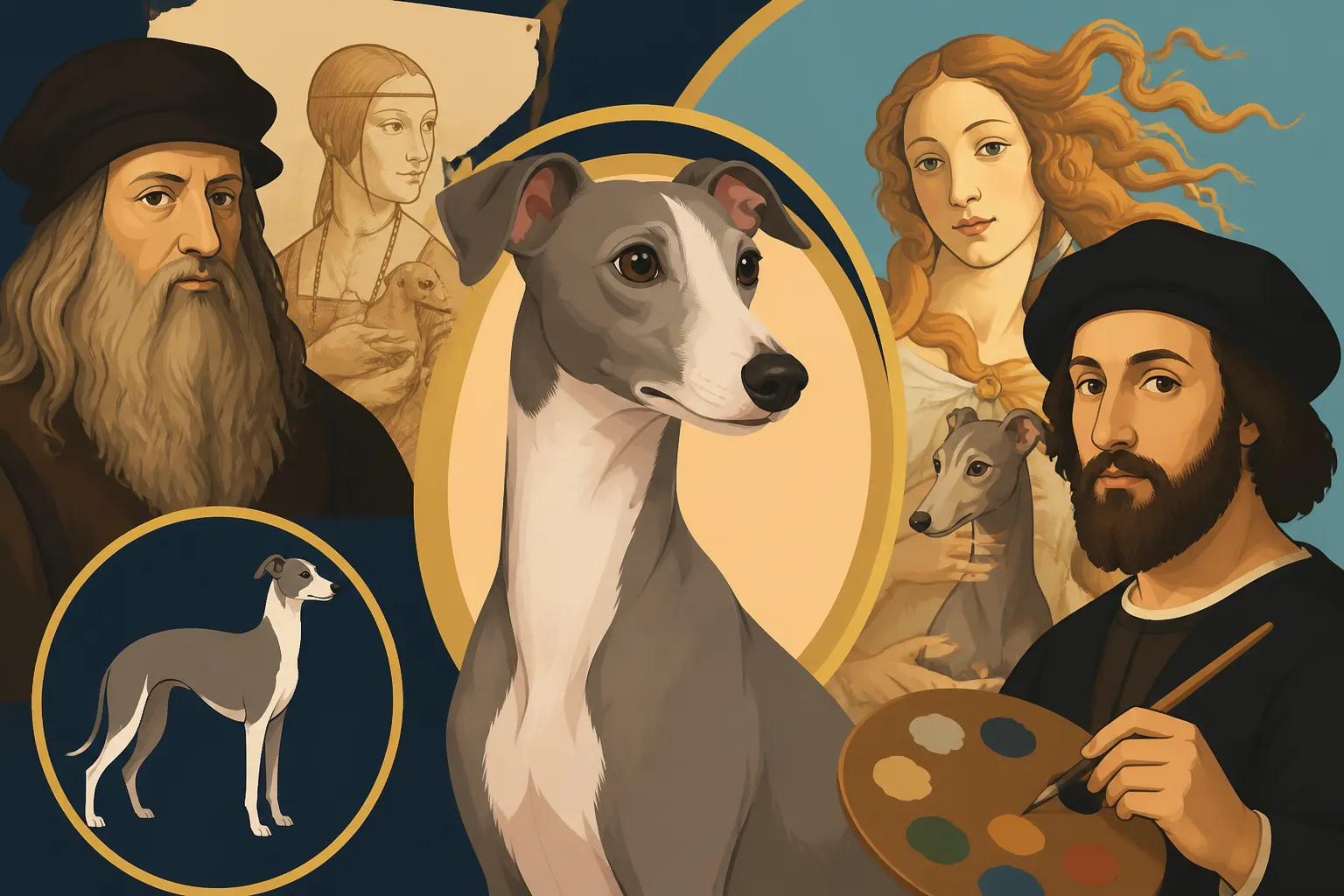
A slender dog in a Renaissance painting can look unmistakably like an Italian Greyhound: fine-boned, deep-chested, and folded into the lap of a noble owner. But old paintings rarely label breeds, and artists often stylized their subjects. This guide explores which painters are associated with Italian Greyhound-like dogs, how to read those images, and why confident identification can be difficult.
Why Renaissance paintings are hard to read as breed records
Artists painted recognizable types, not modern pedigrees
Renaissance painters could show a dog with a long muzzle, narrow waist, and delicate legs without intending to document a formally defined breed. Dogs were often recognizable by their function or social role: a hunting hound, a household companion, or a symbol of loyalty. Their appearance might be adjusted to suit the composition, the patron’s preferences, or the visual language of the period.
That distinction matters when looking for Italian Greyhounds in art. A small sighthound in a portrait may resemble the breed we know today, but resemblance alone does not establish that it was an Italian Greyhound in the modern sense. The breed’s history stretches back many centuries, while today’s standards and pedigrees belong to a much later system of breed classification. For a broader look at those questions, see The Italian Greyhound Is Two Thousand Years Old and What DNA Studies Say About the Italian Greyhound.
Paintings also compress real life. An artist might lengthen a dog’s legs or narrow its body to make it appear elegant beside a richly dressed person. A dog that looks more like a miniature Greyhound to a modern viewer may reflect an artistic choice rather than a precise record of a particular breed.
What details can suggest a sighthound
When comparing a painted dog with an Italian Greyhound, look at the whole body rather than one feature. Sighthounds tend to have a long, narrow head, a deep chest, a tucked-up abdomen, and long limbs. A slim tail and folded ears may add to the impression, though neither feature proves breed identity on its own.
Scale and setting can be clues, too. A little dog nestled beside its owner or shown inside a domestic setting may have been a companion animal rather than a working hunting dog. Still, size can be hard to judge in a painting: perspective, placement, and the relative proportions of people and animals are not always naturalistic.
| Visual clue | What it may suggest | Why it is not proof |
|---|---|---|
| Long muzzle and narrow head | A sighthound-like profile | Other breeds and mixed types can share the shape |
| Deep chest and tucked waist | A lean, athletic build | Artists may exaggerate these proportions |
| Small scale beside a person | A household companion | Perspective can distort size |
| Presence in a noble portrait | Status, affection, or loyalty | The dog may be symbolic rather than documentary |
| Fine legs and delicate feet | A resemblance to an Italian Greyhound | A painted outline cannot confirm ancestry |
Renaissance painters associated with Italian Greyhound-like dogs
Giotto and the early visual tradition
Giotto is often included in discussions of early Italian art depicting dogs that resemble Italian Greyhounds. His frescoes belong to a period before the height of the Renaissance, and they are important partly because they show how artists began to give figures and animals more physical presence. Dogs in religious and narrative art can be easy to overlook among the people and architecture, but they offer a glimpse of the animals familiar to viewers at the time.
Identifying a particular painted dog as an Italian Greyhound remains a matter of interpretation. A narrow-bodied animal in a fresco may look sighthound-like, but the image does not provide the kind of detail that would settle a modern breed identification. The most responsible description is often “a small hound” or “a dog resembling an Italian Greyhound,” rather than a definitive label. The topic is explored further in The Italian Greyhounds in Giotto's Frescoes.
This caution does not make the paintings less valuable. They show that lean, elegant dogs were part of the visual world of medieval and early Renaissance Italy. That is meaningful context, even when the exact identity of an individual dog cannot be known.
Vittore Carpaccio and dogs in Venetian scenes
Vittore Carpaccio’s paintings are another frequent point of interest for people looking for Italian Greyhounds in Renaissance art. His detailed scenes of Venetian life and religious stories include animals among the human figures, clothing, buildings, and carefully observed objects. These dogs can draw attention because their elegant shapes seem to fit the image many people have of an Italian Greyhound.
The challenge is that a dog’s role in a complex painting may be more important than its breed. It could help establish a domestic setting, add movement, suggest companionship, or contribute to a story’s symbolic meaning. A dog that appears beside an aristocratic figure may invite an association with status and affection, but that does not mean the painting functions as a portrait of a named breed.
Carpaccio’s work is a useful example of how to look closely without overclaiming. Notice the animal’s body proportions, then ask what it is doing in the scene and how confidently its features are painted. For more on this artist and the Venetian setting, see The Italian Greyhound in Carpaccio's Venice.
Pisanello and the appeal of the elegant hound
Pisanello is particularly relevant to this subject because he was celebrated for close observation of animals, including horses and dogs. His drawings and painted works are often discussed in connection with the refined animal forms that became popular in courtly settings. In hunting imagery, the dog’s shape and movement can be central to the scene, making the resemblance to a sighthound more apparent than it might be in a crowded narrative painting.
Even here, it is safer to distinguish “greyhound-like” from “Italian Greyhound.” Hunting scenes may show larger working hounds, while a modern viewer may focus on the long legs and lean outline that resemble the smaller companion breed. The two types share visual features, but their size, purpose, and historical context are not interchangeable.
Pisanello’s animal studies are still valuable to anyone interested in the breed’s visual history. They show how artists could record a dog’s posture and anatomy with care, while reminding us that a sketch or painting is not a pedigree document. The wider artistic tradition is discussed in The Renaissance Painters Who Put Italian Greyhounds in the Frame.
Other artists and the limits of identification
Hieronymus Bosch and the difficulty of reading symbolic animals
Hieronymus Bosch is sometimes mentioned in discussions of dogs that look like Italian Greyhounds. His crowded, imaginative scenes are filled with animals, and their forms can be strikingly memorable. But Bosch’s images often invite symbolic readings, and an animal may serve a visual or moral purpose rather than represent a specific pet or breed.
That makes breed identification especially uncertain. A slender dog-like figure may seem familiar to a modern viewer, yet its shape could be exaggerated, fantastical, or assembled from visual conventions rather than observed from a particular animal. A careful reading starts with the painting’s overall subject and composition, not just the resemblance of one creature to a modern breed.
Bosch is a reminder that “looks like” and “is” are different claims. If a source describes a dog in his work as an Italian Greyhound, it is worth asking whether that is a confirmed identification, a traditional interpretation, or simply a modern comparison. For one focused discussion, see Where Bosch Put an Italian Greyhound.
Why Titian and other portrait painters are often brought into the conversation
Titian and other celebrated portrait painters are often discussed when people search for Italian Greyhounds in Renaissance art, because dogs appear in portraits and domestic scenes from the period. A dog at the feet of a sitter can communicate affection, fidelity, wealth, or household life. Its presence may help make a portrait feel intimate, rather than purely ceremonial.
But a small dog in a portrait should not automatically be called an Italian Greyhound. Some animals have compact bodies or coats that point to other types, while the painting’s pose and scale can make the silhouette misleading. Even when a dog has a long, delicate outline, the artist may have simplified its features.
The strongest approach is to describe what is visible and separate that observation from interpretation. “A small, slender dog with a sighthound-like profile” is more precise than confidently assigning a breed when the evidence is inconclusive. For further context on why artists included dogs in portraits, read Why Painters Used the Italian Greyhound as a Symbol and What an Italian Greyhound Signaled in a Portrait.
How to assess a claimed Italian Greyhound in a painting
Check the artwork, date, and description
Start with the painting’s title, artist, and approximate date. Then look for a museum or collection description, exhibition note, or art-history discussion that identifies the animal. If the wording says “greyhound,” that may refer to a broader type of dog rather than the modern Italian Greyhound. If it says “Italian Greyhound-like,” treat that as a visual comparison rather than a settled breed identification.
It helps to compare several images from the same period. If an artist repeatedly paints dogs with similar bodies, that may tell you about the artist’s style or the animal types familiar to their patrons. It still cannot prove that every dog shown is the same breed.
Also pay attention to how certain the description sounds. “A dog, possibly a small sighthound” signals uncertainty; “an Italian Greyhound” sounds more definitive. When that confidence is not backed by a clear explanation, it is reasonable to keep the distinction in mind rather than repeat the stronger claim as fact.
Read the dog in its social and artistic setting
Ask what the dog is doing. Is it curled beside a person, accompanying a hunter, or placed as part of a symbolic scene? A companion dog in a private or courtly setting may fit the history of the Italian Greyhound as a cherished household animal. A dog in a hunting scene may instead be a larger hound, even if its body looks similarly lean.
The person who commissioned the work can also matter. Portraits often reflect ideals of status and refinement, and an elegant dog could contribute to that image. The animal’s placement may express closeness or loyalty without telling us exactly what breed it was. For more on the breed’s historic role as a companion, see Why the Italian Greyhound Was Bred Purely for Company and Which Royals Kept Italian Greyhounds.
A careful answer, then, is not a simple list of painters whose dogs can be identified with certainty. Giotto, Carpaccio, and Pisanello are among the artists discussed in connection with Italian Greyhound-like dogs, while Bosch and other painters may appear in broader conversations about the breed’s artistic image. Their works help show that elegant, fine-boned dogs had a place in European visual culture; the precise breed of any individual painted dog often remains uncertain.
Disclaimer
This article is for general informational purposes only and does not constitute professional advice. Laws, prices and regulations vary by location and change over time. Consult a qualified professional for guidance on your specific situation.