Whether a Teacup Italian Greyhound Exists
A “teacup Italian Greyhound” can sound like a special, extra-small version of an already delicate breed. In reality, “teacup” is not a recognized Italian Greyhound variety or official size category. This guide explains what the label usually means, how to assess a very small puppy, and what to ask before bringing one home.
Does a teacup Italian Greyhound officially exist
“Teacup” is a marketing term, not a breed variety
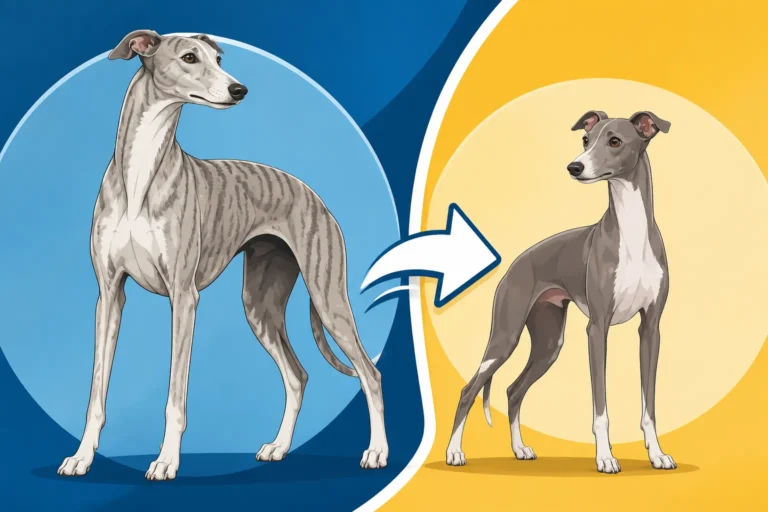
Italian Greyhounds are a single recognized breed, not a collection of official sizes such as standard, miniature, and teacup. Breed standards describe the expected type and proportions; they do not establish a separate teacup variety. A breeder or seller may use “teacup” to describe a particularly small puppy, but the word itself does not confirm that the puppy is purebred, healthy, or likely to stay a certain size.
That distinction matters when you are trying to compare puppies. Two sellers might use “teacup” for dogs of very different sizes, and neither is bound by a consistent definition. One may mean the smallest puppy in a litter; another may be using the word simply because shoppers search for extra-small dogs. The label alone tells you very little about the adult dog you will actually have.
For a clearer picture of the breed’s expected proportions, read What an Italian Greyhound Weighs and How Tall It Stands. It can help you distinguish normal variation within the breed from a seller’s made-up size category.
A small Italian Greyhound is not automatically a teacup
Italian Greyhounds are naturally fine-boned, narrow-bodied dogs. A healthy individual may be smaller than another healthy individual, just as dogs of any breed can vary. A small adult dog is not necessarily unhealthy, and a light puppy is not automatically a problem. The important questions are how the dog is growing, whether it is well cared for, and whether its overall structure and health are being assessed honestly.
There is also a difference between a naturally petite dog and one deliberately bred to be unusually tiny. A puppy’s size can be affected by many things, including its parents, litter size, health, and nutrition. A breeder cannot reliably promise a puppy will stay at a particular weight simply by calling it teacup. Growth is not a product feature that can be guaranteed from a nickname.
If a seller presents “teacup” as a separate, predictable type, ask what that claim is based on. Request the puppy’s veterinary records, information about its parents, and a chance to discuss adult size without pressure. A responsible breeder should be comfortable explaining uncertainty rather than promising a tiny adult dog.
What the teacup label can mean for a puppy
Ask whether the puppy is simply the smallest in the litter
Sometimes a seller uses “teacup” for the smallest puppy in a litter. Being the smallest does not, by itself, tell you why the puppy is small or what its future health will be. It could be a healthy puppy with a naturally small build, or its size could reflect a medical or developmental issue that needs careful assessment. Only a veterinarian who examines the puppy can evaluate its individual condition.
Ask whether the puppy is gaining weight and growing steadily, what veterinary care it has received, and whether it has been examined for concerns the seller has noticed. Ask to see records rather than relying on a verbal assurance that the puppy is “perfect.” You can also ask whether the puppy has had any difficulty eating, staying warm, or keeping up with its littermates. The answers should be specific and open, not evasive.
A responsible breeder may not be able to tell you an exact adult weight, but should be willing to discuss the puppy’s growth and family history. You can use Which Questions to Ask an Italian Greyhound Breeder as a starting point for a more complete conversation. If the seller insists on a guaranteed tiny adult size but cannot explain the basis for that promise, treat that as a reason to slow down.
Take extra care with puppies advertised as exceptionally tiny
A very small puppy may need more careful observation during ordinary routines, especially if it is struggling to eat, seems weak, or is not keeping up with its littermates. Avoid trying to diagnose the cause from appearance alone. Ask a veterinarian to review the puppy’s health and growth rather than assuming it is merely a petite version of the breed.
It is also reasonable to ask the breeder what happens if a veterinary examination finds a significant concern. Make sure you understand any health agreement or return policy before you pay a deposit. A seller who discourages an independent veterinary check or rushes you into a decision is not giving you the time and transparency a careful purchase deserves.
The basic questions to ask include:
- How old is the puppy, and what veterinary care has it received?
- Can I review the puppy’s health and vaccination records?
- What are the sizes and health histories of both parents?
- Has a veterinarian discussed the puppy’s growth or any concerns?
- What is the written health agreement, and what does it cover?
- Can I meet the puppy and see where it has been raised?
A breeder’s answers matter more than the “teacup” label. For more on evaluating a breeder’s preparation, see What an Italian Greyhound Breeder Should Have Tested.
Health and everyday care for a very small Italian Greyhound
Choose care for the individual dog, not the sales label
A tiny dog may need extra attention around handling, play, and household hazards, but there is no single care plan that applies to every dog described as teacup. Ask your veterinarian what is appropriate for your puppy’s age, health, and body condition. Keep routine checkups, feeding, and activity suited to the individual dog rather than trying to make it smaller or larger to fit an advertised category.
Italian Greyhounds are delicate-looking and fine-boned even at typical breed size. Safe handling is sensible for any puppy: support the chest and hindquarters when lifting, keep the puppy close to your body, and teach children to sit on the floor rather than carry the dog around. Avoid rough play with much larger dogs, and supervise interactions so that an excited bump or leap does not become an accident. For more on one particular concern, read Why an Italian Greyhound's Leg Bones Break So Easily.
Do not add calcium, supplements, or extra food to change a puppy’s size without veterinary guidance. Feeding more will not make a dog develop a sturdier frame in a controlled way, and supplements can be inappropriate for a growing puppy. If you are unsure whether a puppy is growing well, bring its records and feeding details to a veterinarian.
Keep clothing and equipment comfortable and properly fitted
Small dogs can be difficult to fit in equipment made for other breeds. A harness that is too loose may shift or allow an escape, while one that is too tight can rub or restrict movement. Measure the puppy according to the product’s sizing instructions, check the fit regularly as it grows, and make sure you can slip the recommended amount of space between the straps and the dog’s body.
This is a practical place to shop by measurements rather than by a “teacup” label. If you are comparing small harnesses, coats, or bedding, retailers such as Chewy may offer a range of sizes, but check each item’s measurement chart and return terms before choosing. A product marketed for tiny dogs is not automatically the right fit for an Italian Greyhound’s narrow shape.
For cold-weather comfort, choose clothing that fits without restricting the shoulders or legs, and watch your dog’s behavior outdoors. Some dogs need a coat in chilly weather; others may be comfortable for a brief outing without one. Chewy can also be one place to compare coat sizes, but the fit and the conditions matter more than the product description. The guide Keeping an Italian Greyhound Warm Is Daily Work, Not a Winter Job covers the breed’s temperature needs in more detail.
| What you are assessing | Useful question | Why it matters |
|---|---|---|
| The word “teacup” | Is the seller using it as an informal description? | It is not an official size variety or a guarantee of adult size. |
| Puppy’s growth | Has a veterinarian reviewed the puppy’s health and growth? | Small size alone does not explain whether a puppy is developing well. |
| Parent dogs | Can you learn about both parents and see their records? | Family information helps provide context, though it cannot promise an exact adult size. |
| Handling and play | Can the puppy be lifted and supervised safely? | Careful handling helps reduce avoidable accidents. |
| Equipment fit | Have you checked measurements and fit on the dog? | Size labels vary, and poor fit can cause rubbing or escape risks. |
How to decide whether a “teacup” listing is trustworthy
Look for openness rather than promises
A trustworthy breeder or rescue should be prepared to talk about the dog’s real needs, health, and background. They should not rely on an impressive label to substitute for records or a conversation. Ask to meet the puppy, understand how it has been raised, and review relevant documents before making a commitment. If you are buying from a breeder, ask whether you can meet the mother and learn about the father, too.
Pay attention to how the seller describes uncertainty. A careful person may explain that adult size varies and that no one can promise an exact weight. That is more credible than a claim that a puppy will remain exceptionally tiny because of a special “teacup” line. You should also be able to take your time, ask follow-up questions, and consult your veterinarian before deciding.
If a listing uses “teacup” alongside claims of guaranteed size, unusually low pricing, or pressure to send money immediately, pause and verify the puppy’s background. Read What a Cheap Italian Greyhound Puppy Signals for more warning signs to consider. Do not let the fear of missing out rush you into a decision that affects the dog’s whole life.
Consider the dog you want to live with, not the label
If your main goal is a smaller companion, focus on temperament, health, adult size information, and the practical realities of care. An individual Italian Greyhound may be smaller than another, but the breed’s needs do not disappear because a seller uses a smaller-sounding name. You will still need to prepare for routine veterinary care, safe handling, appropriate exercise, and a secure home environment.
It may help to write down what “small” means to you before contacting sellers. Are you concerned about apartment space, travel, handling, or the cost of supplies? Those needs can often be addressed directly. For instance, a dog’s comfort in an apartment depends on more than its weight, and a well-fitted harness or carrier matters more than a teacup label. A retailer such as Chewy may be useful for comparing products by measurements, but it cannot verify a puppy’s breed, health, or future adult size.
Ultimately, there is no officially recognized teacup Italian Greyhound variety. There are individual dogs that differ in size, and there are sellers who use “teacup” as a marketing term. Judge the puppy by its health, care, background, and the honesty of the person placing it—not by a label promising that it will stay tiny. For a broader view of what makes the breed a good fit, explore Who the Italian Greyhound Actually Suits and Whether an Italian Greyhound Suits a First Time Owner.
Disclaimer
This article is for general informational purposes only and does not constitute professional advice. Laws, prices and regulations vary by location and change over time. Consult a qualified professional for guidance on your specific situation.