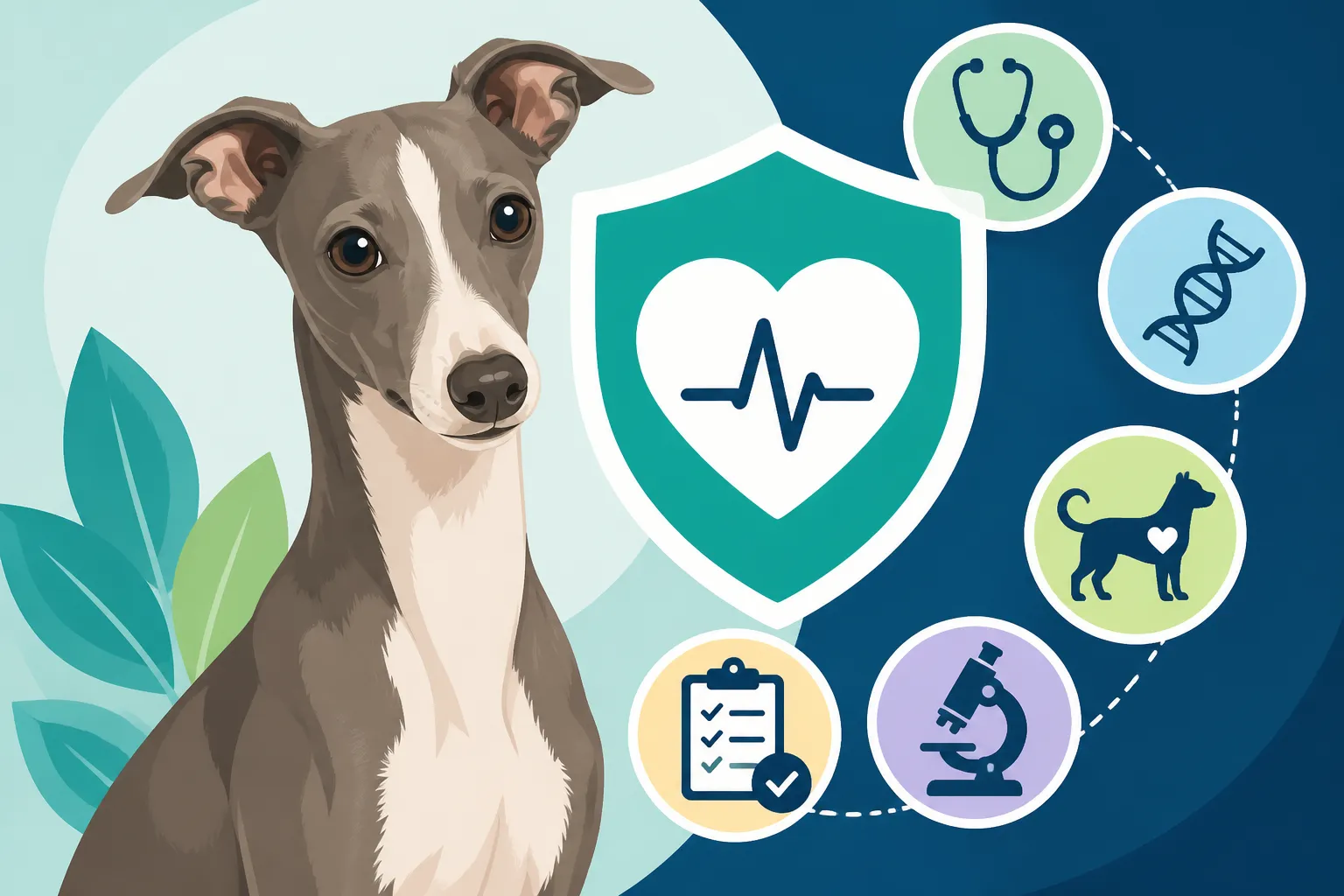
What the Italian Greyhound Club’s Health Program Covers
An Italian Greyhound health program can sound like a single checklist, but it usually combines breed-club education, recommended health screening, and guidance for breeders and owners. That distinction matters: a screening result is useful information, not a guarantee that a dog will never become ill. This guide explains what these programs commonly cover and how to use their recommendations in real life.
What a breed-club health program is designed to do
Health education and breed-specific priorities
A breed club’s health program helps people understand the conditions that deserve attention in Italian Greyhounds. It may share information about inherited or commonly discussed concerns, explain what screening can and cannot detect, and encourage breeders to make informed decisions. That is different from a veterinary clinic, which assesses an individual dog and recommends care based on that dog’s history and examination.
For Italian Greyhounds, discussions often include patellar luxation, eye conditions, thyroid disease, and other health issues that may affect the breed. The goal is not to suggest that every dog will develop these problems. Rather, breed-specific information helps owners ask useful questions and helps breeders consider health alongside temperament, structure, and overall quality of life.
A program may also direct people to health resources, screening recommendations, or research initiatives. The exact resources can change, so check the relevant club’s current materials and clarify whether a recommendation is a formal requirement, a screening suggestion, or general educational advice. The difference can be important when you are comparing breeder claims or trying to understand a test result.
Breeder guidance and health transparency
Health programs can help breeders identify which checks are worth discussing before breeding a dog. They also give puppy buyers a clearer starting point for asking about the parents’ health history, relevant examinations, and how results are documented. For a deeper checklist of questions, see What an Italian Greyhound Breeder Should Have Tested and Which Health Tests an Italian Greyhound Breeder Should Run.
A responsible breeder should be able to explain what was tested, when it was done, who performed the evaluation, and what the result means. A casual statement such as “the parents are healthy” is not as useful as documentation tied to the individual dogs. At the same time, a stack of test results is not proof that a puppy is guaranteed to remain healthy: screening reduces uncertainty but cannot eliminate it.
Buyers sometimes feel awkward asking for records, especially when they have waited a long time for a puppy or are worried about appearing distrustful. It is reasonable to ask calmly and specifically. You are not demanding a perfect dog; you are trying to understand the health decisions behind the litter. The questions in Which Questions to Ask an Italian Greyhound Breeder can help make that conversation more practical.
The screenings owners are likely to hear about
Patellar evaluation
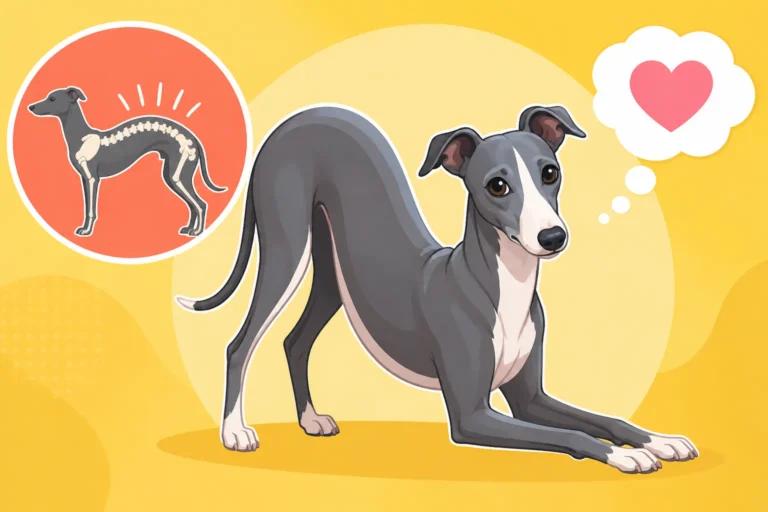
Patellar luxation occurs when the kneecap moves out of its normal position. A veterinary evaluation can assess the kneecaps and identify signs of luxation, but the meaning of a finding depends on the dog’s examination and clinical context. A screening result should be interpreted by a qualified veterinary professional rather than treated as a simple pass-or-fail label.
For a breeder, a patellar evaluation is one part of understanding a dog’s health before making breeding decisions. For a pet owner, it can provide useful background if the dog skips a step, intermittently holds up a hind leg, or seems uncomfortable after exercise. Those signs can have other causes too, so they are reasons to arrange a veterinary assessment rather than diagnose the problem at home. Learn more in Patellar Luxation in an Italian Greyhound.
Eye examinations
Eye screening is another area commonly associated with breed health guidance. A specialist examination can look for eye abnormalities that may not be obvious during everyday handling. The type and timing of an examination depend on the dog, the purpose of screening, and the recommendations in place for the breed and individual animal.
An eye result is a snapshot, not a lifetime promise. Some conditions develop later, and not every eye problem is inherited. If a puppy’s parents had normal examinations, that is helpful information, but it does not mean the puppy will never need eye care. Owners should arrange veterinary attention for new squinting, cloudiness, redness, unusual discharge, or a sudden change in vision. For more detail, see The Eye Diseases an Italian Greyhound Breeder Screens For and Whether an Italian Greyhound Needs a Yearly Eye Exam.
Thyroid testing and other health checks
Thyroid screening may be included in breed-health discussions or recommended as part of a breeder’s health plan. Test interpretation can be complicated: an abnormal result does not automatically mean a dog has hypothyroidism, and a single laboratory value may need to be considered alongside symptoms, medications, and other findings. A veterinarian can explain whether further testing is appropriate.
Owners may also hear about cardiac examinations, DNA tests, or other checks. These should not automatically be treated as universal requirements for every Italian Greyhound. A useful question is, “What condition is this test intended to assess, and why is it recommended for this dog or breeding?” That keeps the conversation focused on evidence and purpose rather than on the number of tests listed.
| Health-program area | What it may involve | What it does not guarantee |
|---|---|---|
| Patellar screening | Veterinary assessment of kneecap position and function | That a dog will never develop mobility problems |
| Eye screening | Examination for visible or detectable eye conditions | That no eye disease can appear later |
| Thyroid testing | Blood testing interpreted with the dog’s clinical picture | That one result alone provides a complete diagnosis |
| Health education | Guidance about breed concerns and preventive care | That every condition can be prevented |
| Breeder records | Documentation of examinations and results | That a puppy is guaranteed to be free of inherited disease |
How to use health-program information as an owner
Ask what a test actually tells you
When you receive a health record, identify the test, the date, the examiner or laboratory, and the result. If the record uses unfamiliar terms, ask the breeder or your veterinarian to explain them in plain language. You should be able to tell whether the result describes a normal screening, a finding that needs follow-up, or a diagnosis that has already been made.
This is particularly useful when a dog changes homes. A rescue or breeder may provide incomplete records, and owners can understandably feel unsure about what needs to happen next. Bring any available paperwork to your veterinary appointment and ask which items are still relevant. A clinician can help build a plan around the dog’s age, symptoms, family history, and previous results rather than repeating tests without a clear reason.
Keep copies in one place, whether that is a paper folder or a secure digital record. Write down the date of each exam and any follow-up recommendation. If a medication or home-care product is recommended, confirm the exact product and directions with the veterinary team. Some owners compare their clinic’s pharmacy with services such as Chewy when arranging prescription fulfillment, but the prescription and product should match the veterinarian’s instructions.
Turn recommendations into routine care
Health screening works best as part of a broader care routine. Regular wellness visits give you a chance to discuss changes in movement, appetite, skin, eyes, behavior, or energy. A dog may seem perfectly fine at home while still benefiting from a professional examination, and a normal screening does not replace routine veterinary care.
It also helps to notice patterns without trying to interpret every small change as a serious disease. For example, a brief skip during a run is worth mentioning if it repeats, but it is not enough on its own to establish a diagnosis. Keep a short note of when it happens, what the dog was doing, and whether the behavior continues afterward. That kind of detail can make a veterinary appointment more productive.
If your veterinarian recommends a treatment or preventive item, ask about safe use, possible side effects, and what signs should prompt a call. Chewy may be one option owners consider for routine supplies or eligible prescriptions, but availability and fulfillment rules can vary. For dental-care questions, including practical home routines, see Brushing an Italian Greyhound's Teeth Every Day. For broader breed-health context, Whether the Italian Greyhound Is a Healthy Breed is also relevant.
Know when the situation is urgent
A club health program is not an emergency service. Sudden severe pain, difficulty breathing, collapse, repeated vomiting, inability to urinate, a major injury, or abrupt loss of vision calls for prompt veterinary advice rather than waiting for a scheduled screening. When you are uncertain, contact a veterinary clinic and describe the signs and when they began.
Italian Greyhounds can be quick and athletic, and an injury may not always look dramatic at first. If your dog is suddenly limping or refusing to bear weight, limit movement and contact a veterinarian for guidance. Do not assume that a dog is uninjured simply because it is still alert or trying to move around. Signs an Italian Greyhound Has Broken a Leg explains why close observation and timely assessment matter.
For less urgent concerns, keep a written list and raise it at the next appointment—or call sooner if the signs are worsening. That approach helps avoid both extremes: ignoring a persistent change because the dog seems cheerful, or panicking over a single mild symptom without checking the context.
Questions to ask the club, breeder, or veterinarian
Clarify which recommendations are current
Ask the club which screenings it currently recommends and whether they are intended for breeding dogs, all adult dogs, or dogs with particular symptoms or family histories. A recommendation may be designed to guide breeding decisions rather than prescribe the same testing schedule for every pet. Confirm the purpose before treating it as a universal rule.
If you are speaking with a breeder, ask to see results and request an explanation of any terms you do not recognize. Ask whether either parent has a known diagnosis and whether relatives have had relevant health concerns. A thoughtful answer should include context, not just reassurance. If a breeder cannot explain the records, your veterinarian may help you understand what the information means before you make a decision.
For a veterinarian, useful questions include: “Does this result need follow-up?”, “How often should this dog be rechecked?”, and “Would this test change the care plan?” The answers may differ between a healthy adult pet, a young dog being considered for breeding, and an animal showing symptoms.
Understand the limits of screening
No screening program can promise a disease-free dog. Tests have limits, conditions may appear later, and some health problems are influenced by factors beyond inheritance. This is not a reason to dismiss screening. It is a reason to treat results as one part of a larger picture that includes veterinary care, family history, responsible breeding, and attentive daily observation.
A useful health program makes that picture easier to understand. It gives breeders and owners shared language, points people toward relevant examinations, and encourages transparent record-keeping. Its strongest value is not a perfect guarantee; it is helping people make more informed choices for the dog in front of them.
When you use the program this way, it becomes a practical resource rather than a pass-or-fail scorecard. Keep the records, ask what each result means, and work with your veterinarian to decide what is appropriate for your Italian Greyhound’s age and circumstances.
Disclaimer
This article is for general informational purposes only and does not constitute professional advice. Laws, prices and regulations vary by location and change over time. Consult a qualified professional for guidance on your specific situation.