Why an Italian Greyhound’s Ears Fold Back
Italian Greyhound ears often fold backward along the head, and that can look worrying if you expect them to sit upright. In most cases, it is simply normal ear carriage or a response to what the dog is feeling. This guide explains what is typical, how to read the rest of your dog’s body language, and when a change in ear position deserves a veterinary check.
What folded-back ears mean in an Italian Greyhound
The breed’s ears are not meant to stand straight up
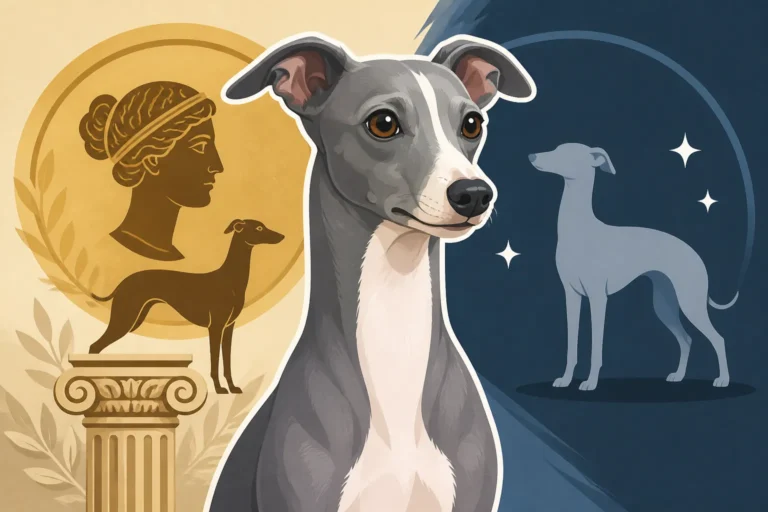
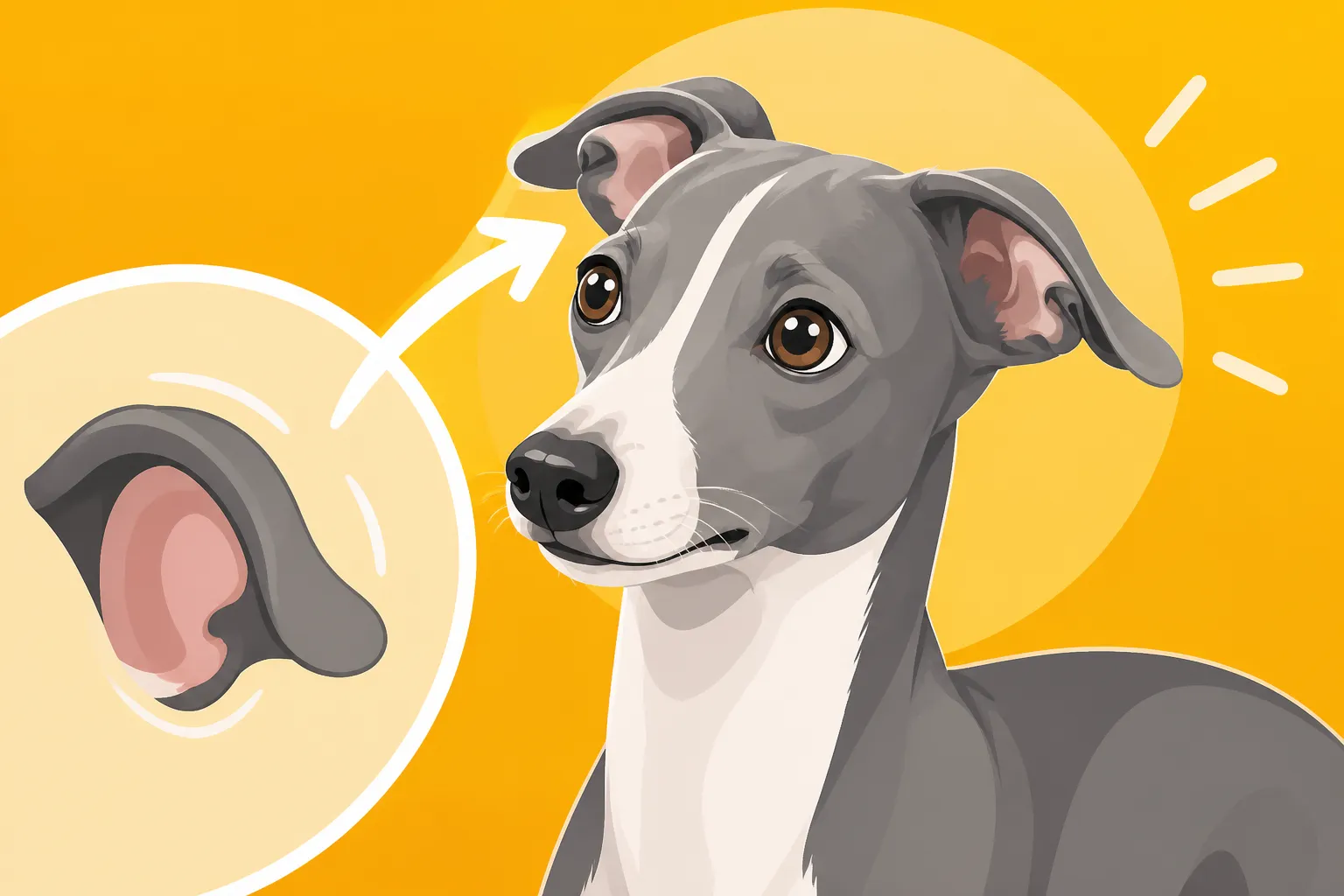
Italian Greyhounds have fine, delicate ears that naturally fold rather than stand erect like a German Shepherd’s. When your dog is relaxed, the ears may rest back against the head or neck. When something catches their attention, they may lift or rotate, then fold again as the dog settles.
That change in position can happen quickly. Your dog might turn an ear toward a sound in the hallway, perk up when you open a treat cupboard, then let the ear fall back as soon as the moment passes. This is ordinary movement, not necessarily a sign of discomfort.
Ear carriage is one part of the breed’s appearance, but there is some individual variation. Age, excitement, concentration, and the shape and flexibility of the ear can all affect how it looks in a particular moment. If you are learning the breed’s outline, How an Italian Greyhound's Ears Should Be Carried offers a useful companion topic.
Relaxed ears can look different from worried ears
A dog holding its ears back is not automatically frightened. Some Italian Greyhounds simply rest that way, especially when they are tucked into a blanket, lying beside you, or preparing to nap. Look at the whole dog before deciding what the ears mean.
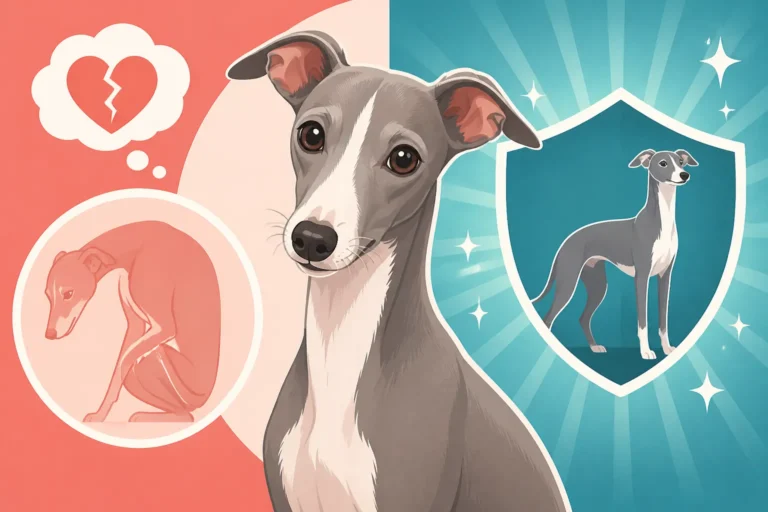
A loose body, soft eyes, and a relaxed mouth usually point toward a comfortable dog. By contrast, ears pinned tightly back alongside a lowered body, tucked tail, wide eyes, or repeated lip-licking may indicate unease. The same ear position can have different meanings depending on what is happening around the dog.
For example, an Italian Greyhound may fold its ears back while leaning into your hand for a favorite scratch. That is different from a dog backing away, crouching, or trying to hide while its ears are held tightly against the head. Context matters more than one feature on its own.
Why your dog may hold its ears back in specific situations
Some dogs draw their ears back when greeting a person, being approached by a larger dog, or hearing an unfamiliar noise. This can be a cautious or appeasing response. Others do it when they are excited, running, or focused on something moving. A quick glance at the dog’s posture and behavior can help you tell these situations apart.
If your Italian Greyhound is new to your home, their ear position may also reflect uncertainty as they adjust. A dog might keep its ears back while exploring a new room, then carry them more loosely once the space feels familiar. Give them room to approach at their own pace rather than leaning over them or insisting on contact.
For dogs that seem uneasy often, notice the pattern instead of correcting the ear position. Write down what happened just before it: a visitor arrived, a noise startled them, or another dog came close. Learning to spot those triggers can help you make greetings and everyday routines gentler.
How to read ear position alongside body language
Look for a whole-body pattern
Ears are only one signal. An Italian Greyhound’s tail, posture, facial expression, and movement can provide important clues about whether they are comfortable. A loose, curved posture and willingness to stay nearby may suggest ease. A rigid body, retreating steps, or repeated attempts to get away suggest the dog may need more space.
Try to notice what your dog does next. Do they approach you, sniff around, or settle down? Or do they freeze, turn away, hide, or keep watching the person or object that worries them? A single ear movement is brief; a repeated cluster of signals is more informative.
It can help to compare your dog’s behavior in familiar situations. Watch them at home when relaxed, during a walk, and when greeting someone they know. That gives you a personal baseline. If their ears look different but their overall behavior remains loose and ordinary, the position may simply be part of their usual expression.
Distinguish a brief response from persistent distress
A momentary ear movement after a bang or sudden approach is common. If your dog quickly returns to normal—sniffing, playing, or resting—the brief reaction may not be a concern. If they remain tense, keep trying to leave, or repeatedly show signs of fear, take the situation seriously and make it easier for them to feel safe.
For instance, if a visitor arrives and your dog pins their ears back while retreating behind the sofa, do not pull them out to say hello. Let them stay at a comfortable distance, and ask the visitor to avoid reaching over them. That is more useful than trying to change the ear position itself.
If fear is frequent or interfering with daily life, talk with your veterinarian. They can help assess whether pain or another health issue may be contributing and, if appropriate, discuss behavior support. For more on how this sensitive breed responds to pressure, see How an Italian Greyhound Responds to Correction.
Notice what is normal for your individual dog
Some owners become concerned because their dog’s ears look different in photos, at the park, or beside another Italian Greyhound. Comparing dogs can be misleading: ear shape and carriage vary, and a photograph captures only one instant. A dog looking alert in a picture may have lifted its ears just as the camera clicked.
Pay attention instead to changes from your dog’s own usual pattern. If one ear suddenly droops, your dog starts shaking their head, or they react as if the ear is tender, those changes deserve attention even if the other ear looks normal. A new change is more useful information than a comparison with a different dog.
For a broader look at breed structure and expression, you may also enjoy What Judges Look For First in an Italian Greyhound. That perspective can help separate normal variation in appearance from a sudden change in your pet’s comfort or movement.
Ear health and when to call the vet
Folded ears still need occasional checking
Folded ears are not automatically unhealthy, and you do not need to clean them simply because they fold back. Routine observation is usually more helpful than frequent cleaning. Look at the outer ear for redness, swelling, unusual debris, or an unpleasant smell, and note whether your dog seems bothered when you touch near it.
Make checks calm and brief. Choose a moment when your dog is relaxed, gently lift or move the ear only as much as needed to see the outer area, and reward them afterward. If your dog pulls away, yelps, or becomes distressed, stop rather than forcing the examination.
A simple check can be part of a broader grooming routine. How Often an Italian Greyhound's Ears Need Checking and Cleaning an Italian Greyhound's Folded Ears cover related care questions. For general supplies, a vet can recommend an appropriate cleaner if one is needed. If you use a retailer such as Chewy to locate a veterinarian-recommended product, check that the product matches the clinic’s instructions rather than choosing one just because it is labeled for dogs.
Watch for symptoms, not just ear position
Contact your veterinarian if your dog has persistent head shaking, repeated scratching at an ear, redness, swelling, discharge, a strong odor, or signs of pain. A sudden change in how one or both ears are carried can also matter when it appears alongside these symptoms. Ear problems can have different causes, so guessing at home or using leftover medication may delay the right care.
A dog that tilts their head, seems unsteady, or appears unusually uncomfortable should be assessed promptly. Those signs are not simply an ear-style variation. Your vet can examine the ear and decide whether treatment or further testing is appropriate.
If you are buying cotton pads or other cleaning supplies through Chewy, use them only as directed by your vet. Avoid pushing cotton swabs or other objects into the ear canal; they can cause injury or push debris deeper. A product meant for routine cleaning is not a substitute for an examination when the ear looks inflamed or painful.
Avoid trying to reshape the ears
Do not tape, glue, or repeatedly hold an Italian Greyhound’s ears in a preferred position. A natural fold is not a problem that needs fixing, and attempts to alter it may irritate the skin or cause discomfort. The same applies to repeatedly handling the ears to make them sit differently for photographs or appearance.
If you are unsure whether your dog’s ears are typical, take a clear photo and ask your veterinarian during a routine appointment. You can also ask whether the ear canal looks healthy and whether cleaning is needed. Chewy and other retailers may carry a variety of ear-care products, but the best choice depends on your dog’s actual needs, not on the fact that the ears fold back.
| What you notice | What it may mean | What to do |
|---|---|---|
| Ears rest back while your dog is relaxed | Normal resting carriage | Observe your dog’s overall behavior |
| Ears move briefly after a sound | Attention or a startle response | Give your dog a moment to settle |
| Ears are tightly back with a tense body or retreating behavior | Possible fear or discomfort | Reduce pressure and offer space |
| Head shaking, scratching, odor, redness, or discharge | Possible ear irritation or infection | Contact your veterinarian |
| A sudden change in ear position with pain or head tilt | A change that needs assessment | Arrange veterinary advice promptly |
Helping your Italian Greyhound feel comfortable
Make handling predictable and gentle
Because Italian Greyhounds are fine-boned and often sensitive to sudden handling, a calm approach can make routine care easier. Let your dog see your hand before you touch near the head. Use a quiet voice, keep the check short, and pause if they seem uncomfortable. Small, positive experiences are more useful than holding them still through a long inspection.
You can build comfort gradually. Start by rewarding your dog for staying relaxed while you touch their cheek or the outside of an ear. Later, if they remain comfortable, briefly lift the ear to look at the outer area. If they turn away or pull back, make the next attempt easier rather than insisting.
This approach is useful beyond ear checks. A dog who learns that gentle handling is predictable may be more comfortable during grooming and veterinary visits. If your dog’s response is intense or worsening, ask your veterinarian for guidance rather than continuing to practice in a way that scares them.
Keep a simple record if the position changes
If you notice a new ear position, take note of when it happens and whether it affects one ear or both. Record any other changes, such as head shaking, scratching, appetite changes, or reluctance to be touched. A short note or photo can help you describe the pattern clearly at an appointment.
For example, “left ear held lower after our walk, with head shaking” is more useful than “the ears looked strange.” You do not need to monitor every movement; just keep track if a change persists, recurs, or appears with other symptoms.
Most of all, remember that folded-back ears are part of the Italian Greyhound’s normal range of expression. When your dog is comfortable and behaving normally, there is usually no need to intervene. When the position changes suddenly or comes with signs of pain, irritation, or distress, let a veterinarian assess what is going on. For further reading about ear problems, see How Often an Italian Greyhound Gets Ear Infections.
Disclaimer
This article is for general informational purposes only and does not constitute professional advice. Laws, prices and regulations vary by location and change over time. Consult a qualified professional for guidance on your specific situation.