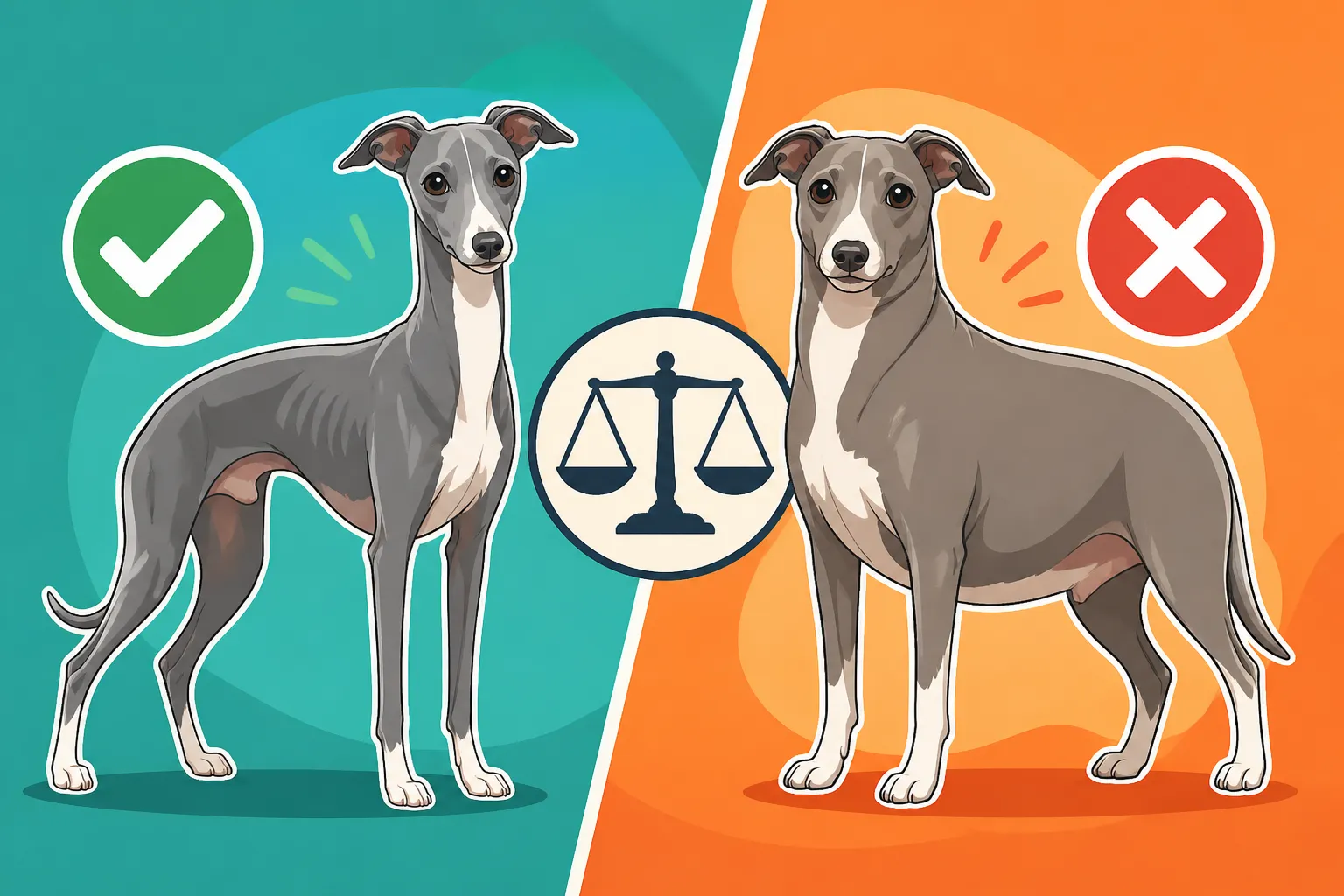
Whether a Heavier Boned Italian Greyhound Is Correct
A sturdier-looking Italian Greyhound can be perfectly healthy and still fit the breed, but “heavier boned” can mean several different things: genuinely broader bone, a larger frame, more muscle, extra body fat, or simply a dog with less delicate proportions. This guide explains how to tell those apart, what breed standards emphasize, and when a change in build deserves a closer look.
What “heavier boned” means in an Italian Greyhound
People often use “heavy boned” as a quick description for an Italian Greyhound who looks less fine-boned than the dogs they have seen in photos or at shows. But it is not a precise measurement. A dog can look substantial because of its leg structure, chest, muscle, height, coat, posture, or body condition. Those clues do not all mean the same thing.
The breed is meant to look elegant and athletic, not frail. A strong-looking dog is not automatically overweight, poorly bred, or outside the breed type. The useful question is whether the dog’s overall proportions still look like an Italian Greyhound and whether its body condition is healthy.
Bone, size, muscle, and weight are different things
Bone refers to the underlying structure, especially the thickness and apparent sturdiness of the legs. Size refers more broadly to the dog’s height and overall frame. Muscle can make the shoulders, thighs, and hindquarters look more defined, while body fat can soften the outline and add weight without making the skeleton itself heavier.
These differences can be confusing when you see one dog beside another. Imagine two adult Italian Greyhounds of similar height. One has slim legs and a narrow-looking chest; the other has more substantial limbs and a broader outline. The second may be heavier boned, but it could also be more muscular or simply built at the sturdier end of the breed’s range. A bathroom scale alone cannot tell you which.
Weight is especially easy to misread in a small dog. A few ounces can change a percentage of body weight more noticeably than they would in a large breed, but the number still needs context. Height, frame, age, muscle, and body condition all matter. For a broader look at measurements, see What an Italian Greyhound Weighs and How Tall It Stands and What Weight Range an Italian Greyhound Should Fall In.
A sturdier build does not automatically mean poor quality
It is tempting to assume that the most delicate-looking Italian Greyhound is the most correct one. That is not a reliable shortcut. The breed should be fine and graceful, but an individual dog should also be functional, balanced, and able to move comfortably. A dog that looks excessively fragile is not necessarily closer to an ideal simply because its limbs appear thinner.
Likewise, sturdier does not mean better in every case. If the frame looks coarse, the body is out of proportion, or the dog carries excess weight, those are separate concerns. The goal is not to choose the thinnest-looking dog or the heaviest-looking dog; it is to assess the complete picture.
This is why the phrase “heavier boned” needs a follow-up question: heavier compared with what? A person used to very fine-boned show dogs may describe an ordinary, healthy companion as substantial. Someone used to larger sighthounds may see that same dog as quite delicate. Perspective can distort the comparison.
What the breed standard says about build
Breed standards describe the desired overall type rather than giving owners a simple test for whether an individual dog is “correct.” In the United States, the AKC Italian Greyhound standard describes a small, fine-boned, elegant dog and gives a height range of 13 to 15 inches at the withers. Other registries may word their standards differently, so the applicable standard depends on where the dog is being evaluated.
A standard is a guide to breed type, not a veterinary health assessment. A dog can be a wonderful companion without matching every show-ring ideal, and a show-quality appearance does not guarantee that an individual dog is healthy. For the height details, see What Height the Italian Greyhound Standard Asks For.
Judges assess the whole dog, not a single feature
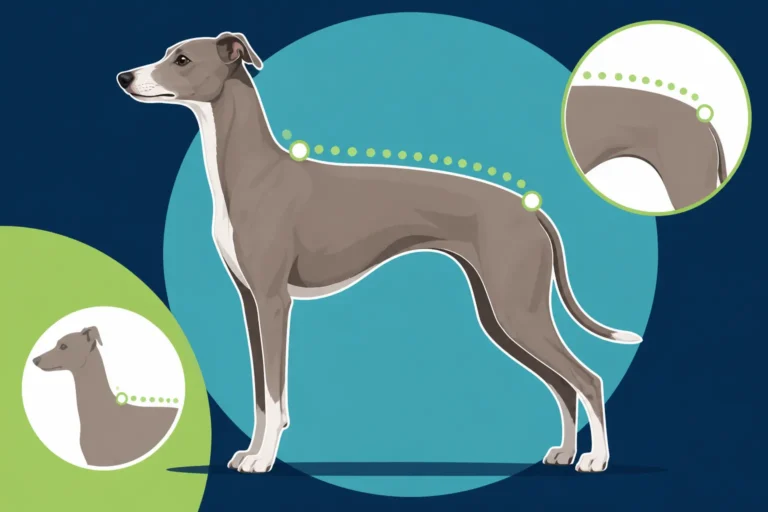
In conformation, the question is not simply whether the legs look fine or thick. Judges consider how the dog’s structure fits together: its outline, proportions, topline, chest, tuck-up, head, gait, and overall balance. A feature that seems more noticeable when viewed alone may look entirely appropriate when the dog is standing and moving.
For example, a dog may have sturdy-looking forelegs but still have a refined outline, a deep chest, a tucked abdomen, and an effortless, balanced gait. Another dog may have finer legs but appear coarse elsewhere or move poorly. Looking at only one trait can lead to a misleading verdict.
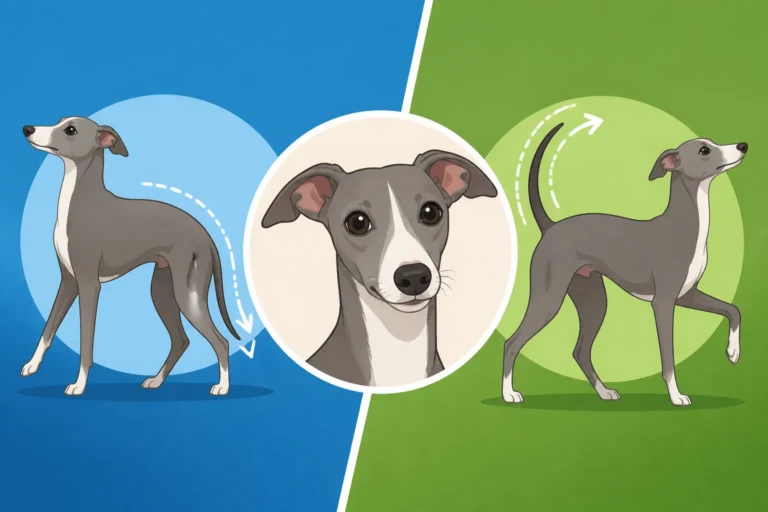
Movement is particularly useful because it shows how the dog uses its body. A well-proportioned Italian Greyhound should move freely and smoothly, without obvious discomfort or an awkward, overloaded appearance. If you are comparing dogs, watch them walk and trot on a safe, level surface rather than judging from a single posed photograph.
Standards describe an ideal, not a pass-or-fail label for pets
A show standard helps breeders and judges maintain a consistent picture of the breed. It does not mean that every pet Italian Greyhound must look identical. Some variation in frame and bone is normal, and the dog’s age, sex, condition, and family lines can all influence appearance.
If you are choosing a puppy, be cautious about sellers who promise a “perfect” miniature or unusually tiny dog as though smaller automatically means more desirable. Very small size is not the same as correct structure, and breeding toward extreme delicacy can create welfare concerns. Why Very Small Italian Greyhounds Are Unsound explains why “smaller” should not be treated as a quality claim.
If your goal is showing, ask a reputable breeder or experienced breed mentor to assess the dog against the standard used in your country. If your goal is simply to understand whether your companion is healthy, a veterinarian can assess body condition, growth, and movement. Those are related questions, but they are not interchangeable.
| What you notice | What it may indicate | What to check next |
|---|---|---|
| Thick-looking legs with a lean waist and defined muscles | Sturdier bone or athletic muscle | Compare the whole outline and observe movement |
| A broad, softened body with less visible waist definition | Possible excess body fat | Ask a veterinarian to assess body condition |
| A taller or longer-looking dog with otherwise balanced proportions | Larger frame or individual variation | Measure height and consider the relevant breed standard |
| A sudden increase in weight or a newly rounded outline | Weight change, growth, or a health issue | Track the change and arrange veterinary advice if unexplained |
| Limping, stiffness, or reluctance to move | Possible pain or injury, not merely “heavy bone” | Contact a veterinarian |
How to tell whether your Italian Greyhound is sturdy, overweight, or simply larger
It is hard to judge your own dog objectively, especially when you see them every day. One week the dog looks too thin; the next, a photograph from above makes the waist seem to have vanished. Italian Greyhounds are naturally lean, so people may worry about visible ribs even when the dog is at a healthy weight. On the other hand, a slim breed can gain weight in ways that are easy to overlook beneath a blanket or sweater.
Use body condition rather than appearance alone
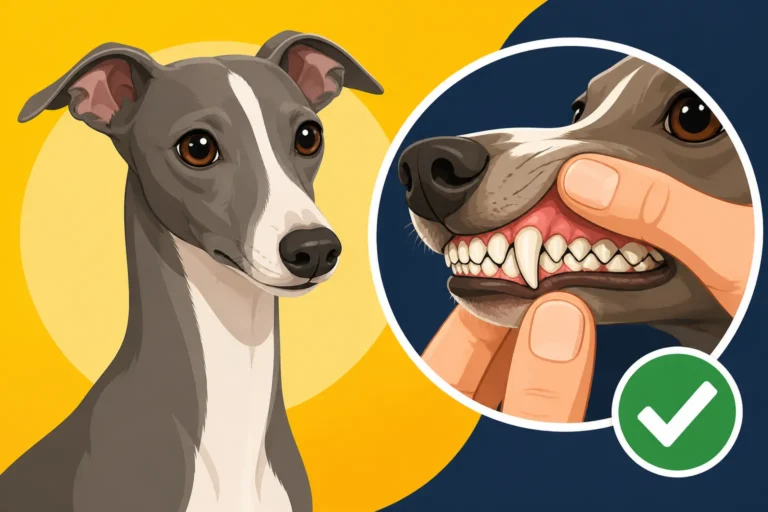
A veterinarian can assess body condition by feeling the dog’s ribs and looking at the waist and abdominal tuck. The important point is not whether every rib is visible in every pose. It is whether the dog has an appropriate amount of covering over the ribs, a discernible waist when viewed from above, and a tummy that rises behind the rib cage rather than continuing in a rounded line.
Do not press hard or compare your dog’s body to a social-media photograph. Lighting, posture, camera angle, and whether the dog has just eaten can change the apparent shape. A dog standing naturally on a level floor is easier to assess than one curled up, stretched out, or wearing bulky clothing.
If you are uncertain, ask your veterinarian to show you what a healthy body condition feels like on your own dog. That turns a vague instruction such as “keep him lean” into something practical. You can also record weight at routine visits and note the trend rather than reacting to one number.
Consider age, fitness, and recent changes
Puppies change shape as they grow, and adolescents can look temporarily lanky, leggy, or uneven in proportion. Adults may become more muscular with regular, appropriate exercise. Older dogs can lose muscle while gaining fat, so a stable number on the scale does not always mean their body composition has stayed the same.
Look for changes from your dog’s normal baseline. If an adult Italian Greyhound suddenly appears heavier, check whether the feeding routine, treats, exercise, or access to other pets’ food has changed. If the build changes without an obvious explanation—or if the dog’s appetite, energy, or movement changes too—bring that information to your veterinarian rather than assuming it is simply bone structure.
There can also be practical reasons a dog appears bulkier. A winter coat can hide the waist, and a well-padded bed or curled posture can make the body look rounder. Take a clear standing photo from the side and above every so often. Those photos are not a diagnosis, but they can help you notice gradual changes that are easy to miss day to day.
Do not try to “correct” a naturally sturdy dog with dieting
A dog who is heavier boned may weigh more than a finer-framed dog of the same height without being overweight. Reducing food simply because the dog looks substantial can leave an otherwise healthy dog underfed. Conversely, assuming every extra pound is “just bone” can make it harder to spot gradual weight gain.
If a veterinarian recommends weight loss, ask for a specific feeding and activity plan suited to your dog’s age and health. Avoid adding supplements or changing food based on appearance alone. Extra calcium is not a way to make a dog’s bones stronger or more correct; Whether Calcium Strengthens an Italian Greyhound's Bones covers why nutritional changes should be discussed with a professional.
If you buy food or measuring tools through a retailer such as Chewy, use the product label and your veterinarian’s guidance rather than a generic feeding estimate as the final word. Feeding guides are starting points; the right amount depends on the individual dog and should be adjusted based on body condition and weight trends.
Practical questions about a heavier-boned Italian Greyhound
Is a heavier-boned Italian Greyhound still purebred?
Yes. A dog’s bone thickness by itself does not establish whether it is purebred. Pedigree records and responsible breeding practices are more relevant to ancestry than a visual judgment based on one trait. Mixed-breed dogs can resemble Italian Greyhounds, and purebred dogs can vary in appearance.
If you are considering a puppy, ask the breeder about the parents, health screening, temperament, and how they raise their dogs. Be wary of claims that rely on labels such as “extra tiny,” “rare,” or “perfectly built” without clear information about the dogs and their care. Appearance alone cannot confirm lineage or soundness.
Does heavier bone mean fewer injuries?
Not necessarily. A sturdier appearance is not a guarantee against injury, and a fine-boned appearance does not mean an individual dog will inevitably be hurt. Injury risk depends on many factors, including age, activity, the environment, body condition, and how a dog lands or collides while moving.
Focus on safe habits rather than trying to judge risk from leg thickness alone. Supervise play with much larger dogs, reduce slippery surfaces where practical, and teach your dog to use a ramp or wait to be lifted down from furniture. For context on the breed’s delicate structure and common concerns, read Whether a Correct Italian Greyhound Looks Fragile and Why an Italian Greyhound's Leg Bones Break So Easily.
If your Italian Greyhound is limping, holding up a limb, or suddenly unwilling to jump or walk, do not dismiss it as a consequence of being “built awkwardly.” Contact a veterinarian for advice. A change in movement is more important than whether the dog looks heavier or lighter than another Italian Greyhound.
Could a thicker build mean the dog is not a typical Italian Greyhound?
It might mean the dog is less close to a particular show ideal, but that is not something to decide from one photograph or one word. Height, proportions, gait, head, chest, topline, and overall presentation all matter. Different families may also have somewhat different appearances while remaining recognizably within the breed.
When comparing breeds, remember that an Italian Greyhound is not simply a tiny version of a Whippet. Their standards and proportions differ, and a dog that looks relatively substantial beside a particularly fine Italian Greyhound may still look small and refined next to a Whippet. How an Italian Greyhound Differs From a Whippet offers a useful comparison.
For a pet owner, the more relevant question is usually whether the dog is comfortable, active, and at a healthy body condition. If you are evaluating show prospects, seek an experienced assessment against the appropriate breed standard. If you are concerned about weight, growth, or movement, make the veterinarian’s examination the priority. A sturdier outline can be normal variation; sudden change or discomfort deserves attention.
Disclaimer
This article is for general informational purposes only and does not constitute professional advice. Laws, prices and regulations vary by location and change over time. Consult a qualified professional for guidance on your specific situation.