Whether an Italian Greyhound Is the Right Dog for a City
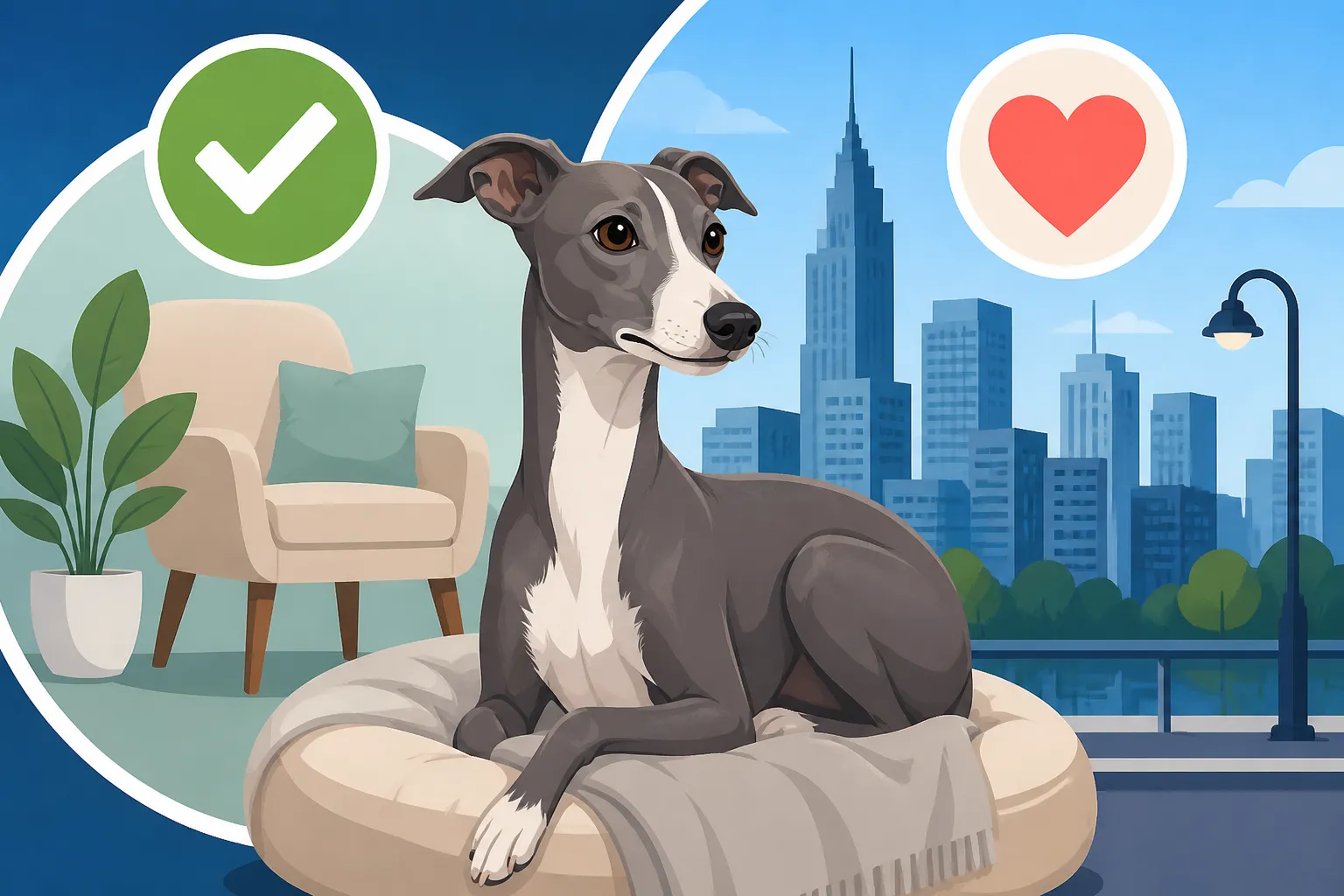
An Italian Greyhound can fit beautifully into city life, but a small body and a quiet indoor manner do not automatically make city ownership easy. Cold pavement, busy streets, long workdays, slippery floors, and tricky housetraining can catch people off guard. This guide helps you weigh the breed’s apartment-friendly qualities against the daily routines and safety needs urban life requires.
Why an Italian Greyhound can suit city living
A compact dog with a big need for closeness
Italian Greyhounds are small enough to share limited living space comfortably, and many are content to curl up beside their person for long stretches. They usually do not need a yard to relax at home. In a city apartment, a soft bed near the sofa and a calm spot away from the front door may matter more than a large floor plan.
That closeness has a flip side. These dogs often want company and warmth, and some find long, regular periods alone difficult. A dog that seems perfectly settled while you work at home may have a much harder time when left alone in a studio for an entire workday. Practice short departures gradually, and arrange a midday visit or a trusted sitter if your schedule keeps you away for long periods. A second dog is not a guaranteed fix for separation distress.
Noise and activity vary from one dog to another. A busy hallway, delivery buzzer, elevator, or street-facing window may be more stressful than the square footage of your apartment. Give your dog a sheltered resting place and reward quiet settling rather than expecting them to simply get used to every sound. For a closer look at the breed’s attachment style, read The Velcro Dog: What Constant Company Means With an Italian Greyhound.
A walk-and-play routine can work without a yard
An Italian Greyhound needs regular opportunities to walk, sniff, and move, but most owners do not need to provide endless strenuous exercise. A few thoughtfully timed outings, with room for relaxed sniffing, may work better than one exhausting march through crowded streets. Many also enjoy brief bursts of running in a safely enclosed space, followed by a long nap at home.
City blocks can make even a short potty trip feel like a production. There may be traffic, bicycles, construction, other dogs, or a sudden downpour between your door and the nearest patch of grass. Plan a practical route and a backup option before bringing a puppy home. If you are considering an indoor potty area, decide where it can stay consistently and how you will keep it clean. Indoor pads can help in some households, but they do not make outdoor training automatic. See Whether Indoor Pads Work for an Italian Greyhound and How a Covered Potty Area Helps an Italian Greyhound.
A small apartment can also be a good place for indoor enrichment. Scatter a few pieces of kibble for your dog to sniff out, offer a safe food puzzle, or practice a short training session in a quiet room. These activities are useful on days when weather or a crowded sidewalk makes a longer outing unpleasant. Keep sessions brief and positive; a sensitive dog may shut down if every new sound or behavior is met with pressure.
Quiet indoors does not mean no barking or alerting
Some Italian Greyhounds are quiet at home, while others announce hallway sounds, visitors, or movement outside a window. In an apartment building, repeated barking can become a neighbor problem quickly, especially when a dog is unsettled by being alone. Listen for patterns: barking only after you leave suggests a different problem from barking at every delivery cart.
A predictable routine can make apartment life easier. Give your dog a chance to toilet and move before a long stretch of rest, then provide a familiar bed and a safe activity when you leave. Close curtains if street movement triggers alerting. If the dog seems distressed, is damaging the door, or cannot settle, do not assume that more toys alone will resolve it. Separation-related behavior may call for help from a veterinarian or a qualified behavior professional.
The city challenges that deserve careful planning
Housetraining can be harder without a private yard
Many prospective owners imagine that a small dog will be easy to toilet in a city because it is easy to carry outside. In practice, the timing can be demanding. A puppy may need frequent chances to go, and by the time you find your keys, reach the elevator, walk past the lobby, and get to an appropriate spot, the opportunity may have passed.
A consistent schedule helps. Take a young dog out after waking, eating, playing, and naps, and use the same safe toilet area when possible. Praise promptly when the dog goes in the right place. If you live several floors up, consider how you will respond during overnight trips and bad weather, not just during an ordinary sunny walk. Owners who work long shifts may need a reliable midday arrangement while training is underway. Housetraining an Italian Greyhound Is the Hardest Part of Owning One explains why patience and consistency matter with this breed.
An indoor toilet can be useful for some dogs, particularly during severe weather or when access outside is unusually difficult. It should be treated as a deliberate part of the plan rather than an emergency patch introduced after repeated accidents. Some dogs learn to use both indoor and outdoor options; others become less clear about where toileting is expected. If you use pads or a grass tray, keep the setup in one predictable place and clean accidents thoroughly so lingering odor does not invite repeat visits.
Cold, rain, and heat change the everyday walk
Italian Greyhounds have short coats and little body fat, so cold and wind can make ordinary city outings uncomfortable. A dog may hesitate at the lobby door, shiver on a short walk, or hurry home rather than toilet. A well-fitting coat and a quick, practical route can help, but clothing does not mean a dog should remain outside when visibly uncomfortable. Learn the difference between a brief shiver from excitement or nerves and signs that your dog is cold, and respond to the whole situation rather than relying on clothing alone.
Rain can be its own obstacle. A covered building entrance, sheltered courtyard, or nearby awning may help you get through a quick toilet break, but some dogs still refuse to go when the ground is wet. Keep a towel by the door and avoid turning the outing into a battle. In winter cities such as Chicago or Boston, sidewalks may be windy, icy, or treated with salt. Check your dog’s paws after walks and rinse them if they have contacted irritating de-icing material.
Summer city surfaces need attention too. Pavement can become uncomfortably hot, and streets often offer less shade than a park path. Choose cooler parts of the day, seek shaded routes, and check the ground before a walk. A dog that is overheating or reluctant to continue should be brought somewhere cool. The practical clothing and bedding needs are covered in Keeping an Italian Greyhound Warm Is Daily Work, Not a Winter Job.
Stairs, elevators, and furniture need a safety plan
An apartment may have stairs inside the unit, a high bed, or a sofa the dog is expected to jump onto and off. Those everyday leaps are easy to overlook because the dog may appear athletic and eager. Yet repeated jumping from furniture, slipping on hard flooring, or tumbling on stairs can create injury risks for a fine-boned dog. Use a ramp or steps where appropriate, and teach your dog to wait to be lifted rather than launching down without warning. Teaching an Italian Greyhound Not to Jump Down offers more detail on building that habit.
Elevators are often easier than stairs, but they bring their own small hazards: doors closing, crowded rides, and unfamiliar dogs entering at close range. Keep your dog securely harnessed and close to you while waiting. In a narrow lobby, a short leash and a calm pause can prevent a startled dash toward an open street door. Do not rely on a collar alone if your dog can back out of it; learn more in Which Harness Suits an Italian Greyhound's Neck.
Before moving in, look at the floors. Smooth hardwood, polished tile, and steep stairs can be difficult for a small dog to navigate confidently. Non-slip runners can create safer paths from the bed to the door, while a baby gate can block access to a dangerous staircase when you cannot supervise. A few targeted changes are often more useful than trying to redesign the whole apartment.
City routines and environments compared
Match the neighborhood to the dog, not just the apartment size
A city home can be calm or overwhelming depending on what is just outside the door. A quiet street near a park may offer easy, lower-stress walks. A unit above a busy avenue may mean more sirens, motorcycles, and visual triggers at the window. Consider the actual route your dog would take for a morning toilet break, not only whether a listing allows pets.
| City living setup | Potential advantage | Main challenge to plan for |
|---|---|---|
| Apartment near a quiet park | Easier access to sniffing walks and green space | Crowds and off-leash dogs may still be present |
| High-rise with an elevator | Avoids frequent stair use | Potty trips take longer and elevator rides can be busy |
| Walk-up apartment | May have a quieter entrance | Repeated stairs can be difficult, especially for a puppy or injured dog |
| Ground-floor unit with a small patio | Quick access for supervised breaks | Fencing, escape gaps, and cold or wet weather still matter |
| Apartment near a busy road | Convenient access to city services | Traffic noise and sudden movement can be stressful |
A dog’s age and experience also matter. A confident adult that has lived in a city may settle into elevator rides and street noise more quickly than a young puppy encountering everything for the first time. A rescue dog may need a slower introduction to the neighborhood, with quiet walks at less busy times before you add crowded routes.
Check the building’s pet rules and your lease before committing. Think beyond the basic permission to keep a dog: consider elevator access, nearby green space, noise expectations, safe places for toilet breaks, and whether a sitter or dog walker can enter when needed. Those details can make the difference between a workable routine and a daily scramble.
Not every city dog park is a safe place to run
Italian Greyhounds can have a strong instinct to chase moving animals. A rabbit, squirrel, pigeon, or small dog bolting across a park may be more compelling than a familiar recall cue. In an open urban space, that can put a dog near traffic in seconds. Use a leash in unfenced areas, and do not assume that a calm walk through the neighborhood means the dog is safe off leash.
A crowded dog park can also be physically risky. A larger, playful dog may collide with a small Italian Greyhound without meaning harm. Choose enclosed spaces carefully, watch the play rather than chatting across the park, and leave if the group becomes too rough or chaotic. For many owners, a secure private yard or a well-managed small-dog play area is a better place for free running than a busy public dog park. Read Why a Dog Park Is Dangerous for an Italian Greyhound before deciding whether one suits your dog.
City sidewalks require close attention even when your dog is normally well behaved. Keep the leash short enough to prevent sudden lunges into a bike lane, but loose enough that your dog is not constantly pulled. At intersections, pause and reward waiting. Practice door manners at home too, since an open lobby or apartment door can lead directly to a busy shared space. The breed’s off-leash limitations are explored in Why an Italian Greyhound Cannot Be Trusted Off Leash, Ever.
How to decide whether the breed fits your city life
Use the daily schedule as your reality check
Before choosing an Italian Greyhound, sketch an ordinary weekday from the dog’s point of view. When will the first toilet trip happen? How long is the dog alone? Who handles a midday break? Where can the dog walk when it is cold or raining? What happens when you are sick, delayed at work, or away for a weekend?
If you live in a studio and work long hours away from home, the biggest question may not be whether the dog fits in the apartment. It may be whether you can provide enough companionship and consistent toilet breaks. If you work from home but live on a busy street, the challenge may be managing door sounds and frequent exposure to traffic. An honest schedule is more useful than assuming a small dog will adapt to any routine.
Budget time for coat care, safe bedding, training, and preventive veterinary care as well as walks. City ownership may also mean arranging a sitter rather than relying on a boarding kennel, particularly if your dog is anxious in unfamiliar places or struggles with cold conditions. Having backup care identified before you need it can make emergencies and travel much less stressful.
Prepare the apartment before bringing a dog home
A few simple adjustments make city life safer and more predictable:
- Set up a comfortable resting place away from the noisiest window or hallway.
- Add non-slip rugs along common paths and block unsafe stair access.
- Decide on a consistent outdoor toilet route and, if useful, an indoor backup.
- Choose a secure, well-fitted harness and practice wearing it indoors.
- Keep a coat and towel near the exit for cold or wet weather.
- Arrange a plan for midday breaks and days when you cannot manage the usual walk.
- Teach waiting at doors and elevators before relying on those skills in a crowded lobby.
When gathering supplies, focus on fit and function rather than buying a large collection of gear. Chewy is one place owners may look for basics such as washable potty pads, beds, or walking supplies; check sizing carefully, since standard small-dog products do not always fit an Italian Greyhound’s narrow shape. A local pet shop can also be useful when you want to try on a coat or harness before taking it home.
If you are deciding between a puppy and an adult, consider the training support each will need. Puppies require frequent outings and close supervision, while an adult dog may already have established habits that need time and patience to understand. For either, set aside room for a crate or other safe resting area, and introduce it gradually rather than using it as punishment. Chewy may offer a convenient way to compare basic home supplies, but a well-fitted harness, a safe route, and a reliable daily schedule matter more than a long shopping list.
An Italian Greyhound can thrive in a city when the owner can provide companionship, patient housetraining, weather-appropriate outings, and thoughtful protection from traffic and rough play. The breed’s small size is a practical advantage, but it does not erase the need for daily care. If your routine leaves room for those needs, an apartment can be a comfortable home rather than a compromise.
Disclaimer
This article is for general informational purposes only and does not constitute professional advice. Laws, prices and regulations vary by location and change over time. Consult a qualified professional for guidance on your specific situation.