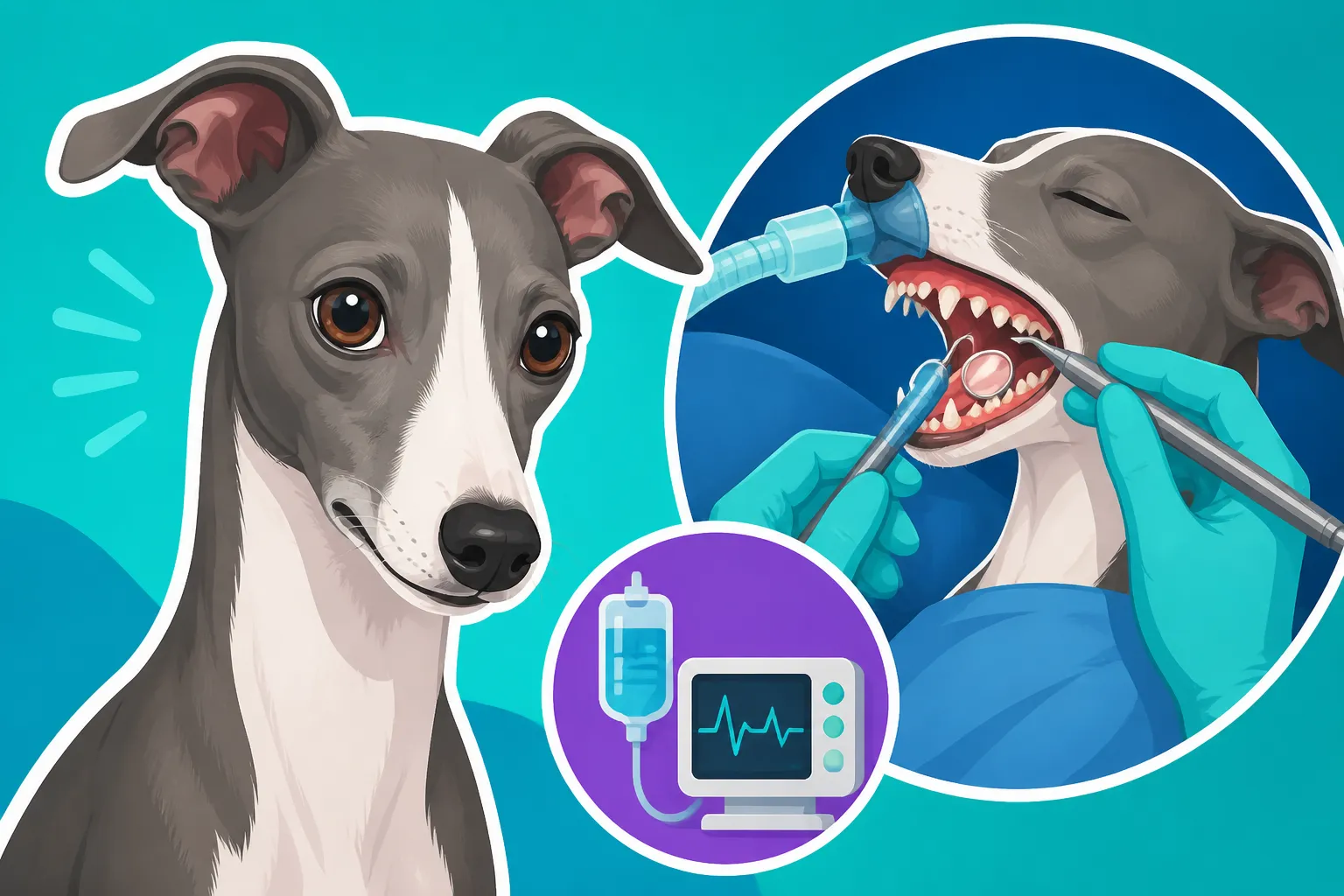
Why an Italian Greyhound’s Dental Requires Anesthesia
It's incredibly common for Italian Greyhound owners to feel a knot in their stomach when their vet recommends an anesthetic dental cleaning. You worry about the risks, the cost, and whether it's truly necessary when your little companion seems perfectly fine. The truth is, due to their unique physiology and the nature of canine dental disease, an Italian Greyhound's dental procedure absolutely requires general anesthesia for both their safety and the efficacy of the treatment. This guide will walk you through the crucial reasons why your vet insists on it, and what makes these little sighthounds so different.
The Unique Physiology of Italian Greyhounds and Anesthesia Risks
Italian Greyhounds are delicate, fine-boned creatures with a metabolism and body composition that sets them apart from many other breeds. These physiological differences mean that anesthesia, while generally safe, must be approached with extra caution and specific protocols to ensure their well-being.
Their Lean Body Mass and Temperature Regulation
One of the most striking characteristics of an Italian Greyhound is their incredibly lean body mass. Unlike many breeds that carry a decent layer of insulating fat, IGs have very little subcutaneous fat. This isn't just about aesthetics; it has significant implications for anesthesia. When under general anesthesia, a dog's body temperature naturally drops. For an Italian Greyhound, this drop can be precipitous and dangerous due to their lack of natural insulation. They simply don't have the fat reserves to keep warm.
This phenomenon, known as hypothermia, can lead to a host of complications, including delayed recovery from anesthesia, increased risk of heart rhythm disturbances, impaired blood clotting, and a slower metabolism of anesthetic drugs, which means they stay "under" longer. Imagine being unable to shiver or move to warm yourself; that's essentially what happens under anesthesia. Because of this, veterinary teams go to great lengths to maintain an Italian Greyhound's body temperature during a dental procedure. They use specialized warming blankets, circulating warm water pads, forced-air warming systems (like a Bair Hugger), and warm intravenous fluids. The goal is to keep their core temperature stable, mimicking their normal body heat as closely as possible. It's a meticulous process, but vital for these sensitive dogs. This careful attention to temperature is a key reason why your Italian Greyhound needs to be so closely monitored while under sedation.
Sensitivity to Certain Anesthetic Agents
Sighthounds, including Italian Greyhounds, are known to have sensitivities to certain anesthetic drugs. This isn't an urban legend; it's a well-documented physiological reality. Historically, drugs like thiobarbiturates (e.g., thiopental) were commonly used for inducing anesthesia. However, these drugs are metabolized and excreted primarily by the liver and kidneys, and also by redistribution into fat stores. Since Italian Greyhounds have very little body fat, these drugs stay in their bloodstream longer, leading to prolonged and difficult recoveries. What might be a standard dose for a Golden Retriever could be dangerously high for an Italian Greyhound.
Modern veterinary medicine has evolved significantly, and most experienced vets are well aware of these sighthound sensitivities. They opt for newer, safer anesthetic protocols that utilize different combinations of drugs, often including propofol for induction, and maintaining anesthesia with inhaled gases like isoflurane or sevoflurane. These agents are quickly metabolized and expelled by the respiratory system, allowing for a much smoother and faster recovery, even in lean breeds. This careful selection of drugs, along with appropriate dosages tailored to your individual Italian Greyhound's weight and health status, is a testament to the advancements in veterinary anesthesia, but it still necessitates a skilled hand and constant vigilance. If you're wondering, "Why Anesthesia Is Handled Differently in an Italian Greyhound," this sensitivity to specific agents is a major factor.
Respiratory System Considerations
While not as pronounced as their lean body mass or drug sensitivities, Italian Greyhounds can have subtle respiratory considerations that impact anesthesia. Their long, narrow snouts are generally good for breathing, but their relatively small lung capacity in proportion to their body length can sometimes mean less respiratory reserve. During anesthesia, it's crucial to ensure adequate oxygenation and ventilation.
Veterinarians typically intubate Italian Greyhounds, meaning a tube is placed down their windpipe to deliver anesthetic gas and oxygen directly to their lungs. This also protects their airway from aspiration of water or debris during the dental cleaning. This intubation allows for precise control over breathing and immediate intervention if there are any respiratory issues. Monitoring devices, such as pulse oximeters and capnographs, are continuously used to measure oxygen saturation and carbon dioxide levels, ensuring their respiratory system is functioning optimally throughout the procedure. This level of meticulous respiratory management can only be achieved with a patient completely still and unconscious.
The Unavoidable Need for Thorough Dental Procedures
Now that we understand the physiological reasons why anesthesia is necessary from an Italian Greyhound's body perspective, let's look at why the dental work itself simply cannot be done effectively or safely without it. The issues often lie out of sight, beneath the gumline, and require precision and immobility.
Beneath the Gumline: The Invisible Problem
Many pet owners assume a dental cleaning is primarily about scraping off the visible tartar from the tooth surface. While that's part of it, the most critical — and often most damaging — dental disease occurs below the gumline. This is where bacteria accumulate, forming plaque and tartar that lead to gingivitis and, eventually, periodontal disease. Periodontal disease is a silent, painful destroyer of tooth-supporting structures. You can't see it, and your Italian Greyhound often won't show obvious signs of pain until the disease is very advanced. You might notice your dog has bad breath, which can be a telltale sign of problems beneath the surface.
To properly assess and treat this invisible problem, veterinarians must perform a thorough oral examination, which includes probing the gumline around each tooth and taking full-mouth dental X-rays. Imagine trying to do this on a conscious dog! Even the most well-behaved Italian Greyhound would not tolerate a sharp probe being inserted into their gum pockets or X-ray sensors being placed in their mouth for dozens of images. Anesthesia allows the vet to meticulously inspect every tooth surface, every gum pocket, and to get a complete radiographic picture of the roots and jawbone, revealing abscesses, bone loss, and other painful issues that are otherwise hidden. Without anesthesia, you're only getting a cosmetic cleaning, not a health-saving procedure.
The Importance of Scaling and Polishing
Once the underlying issues are identified through examination and X-rays, the actual cleaning process begins. This involves two main steps: scaling and polishing. Scaling uses specialized ultrasonic and hand instruments to remove plaque and tartar from both above and below the gumline. These instruments, while effective, are sharp and vibrate at high frequencies. Using them on a conscious, struggling dog would not only be ineffective (as it's impossible to reach all surfaces safely and thoroughly) but also incredibly dangerous. A sudden movement could lead to lacerations of the gums, tongue, or cheeks, or even damage to the teeth themselves.
After scaling, each tooth is polished. This step is crucial because scaling, even with the finest instruments, creates microscopic scratches on the tooth enamel. These tiny scratches become perfect new surfaces for bacteria and plaque to adhere to, accelerating future tartar buildup. Polishing smooths out these microscopic imperfections, creating a slick surface that helps repel plaque for longer. This process also requires a high-speed rotating tool with a specialized paste, another procedure that simply cannot be performed on a conscious animal. It's an essential part of ensuring the cleaning lasts and genuinely contributes to your Italian Greyhound's oral health. Thinking about "How Often an Italian Greyhound Needs a Dental Cleaning" often comes down to how well these critical steps are performed.
Extractions and Oral Surgery
Unfortunately, for many Italian Greyhounds, dental disease progresses to a point where simple cleaning isn't enough. Due to factors like their small mouth structure and propensity for overcrowding—a common issue addressed in articles like "Why an Italian Greyhound's Teeth Crowd"—extractions become necessary. This is especially true as they age, and their teeth become more susceptible. As a dog ages, the likelihood of needing extractions increases, and this becomes a core aspect of Caring for an Italian Greyhound Past Eleven.
Extracting a tooth is a surgical procedure. It involves carefully dissecting the gum around the tooth, removing bone if necessary, and then extracting the tooth in pieces if it's multi-rooted or fractured. The socket often needs to be cleaned, and the gum flap sutured closed. This is delicate, painful work that absolutely requires a patient to be completely unconscious and pain-free. Local anesthetic blocks are often used in conjunction with general anesthesia to provide additional pain relief during and after the procedure, but the primary anesthesia ensures the dog remains still and unaware. Trying to perform an extraction on a conscious dog would be inhumane, extremely painful, and impossible to do effectively or safely. It's often the case that What an Italian Greyhound's Lifetime Dental Costs includes these more intensive procedures, highlighting the financial aspect that pet insurance like Healthy Paws can help with.
Prioritizing Safety Through Anesthesia Protocols
Given the unique considerations for Italian Greyhounds and the invasive nature of dental procedures, modern veterinary practices employ stringent safety protocols to minimize risks and ensure a smooth experience for your beloved pet.
Pre-Anesthetic Screening and Personalized Plans
Before any Italian Greyhound goes under anesthesia, a comprehensive pre-anesthetic screening is paramount. This isn't just a formality; it's a critical step to identify any underlying health issues that could increase anesthetic risk. This screening typically includes a thorough physical examination by the veterinarian, where they listen to the heart and lungs, check for any abnormalities, and assess overall health.
Beyond the physical exam, blood work is almost always recommended. This blood panel assesses organ function (kidneys and liver, which metabolize anesthetic drugs), red and white blood cell counts (to check for anemia or infection), and electrolyte balance. For older Italian Greyhounds or those with suspected heart issues, additional diagnostics like an EKG or chest X-rays might be recommended to evaluate cardiac and respiratory health further. The results of these tests, combined with your Italian Greyhound's age, weight, and medical history, allow the veterinary team to create a personalized anesthetic protocol. This means selecting the safest combination of drugs and dosages specifically for your dog, minimizing risks as much as possible. This proactive approach helps to catch potential issues, which is critical for ensuring a long and healthy life, as discussed in Why an Italian Greyhound Lives Fourteen to Fifteen Years. It also helps manage the costs, as proactive care can prevent more expensive emergencies, something companies like Healthy Paws advocate for.
Monitoring During the Procedure
Once your Italian Greyhound is under anesthesia, the vigilance doesn't stop. In fact, this is where constant, intensive monitoring truly shines. A dedicated veterinary technician is typically assigned solely to monitor the patient throughout the entire procedure. They continuously track several vital signs, often with sophisticated electronic equipment:
- Heart Rate and Rhythm (ECG): An electrocardiogram monitors the electrical activity of the heart, detecting any irregularities or changes in rhythm.
- Respiratory Rate and Depth: The technician observes breathing and often uses a capnograph to measure the carbon dioxide levels in exhaled breath, indicating how effectively the lungs are working.
- Blood Pressure: Blood pressure monitoring is crucial for ensuring adequate blood flow to vital organs. Too low or too high can indicate problems.
- Oxygen Saturation (Pulse Oximetry): A pulse oximeter measures the percentage of oxygen carried in the blood, ensuring proper oxygenation.
- Body Temperature: As previously discussed, maintaining an Italian Greyhound's body temperature is vital. Rectal thermometers provide continuous readings, allowing the team to adjust warming measures as needed.
This continuous stream of data allows the veterinary team to make immediate adjustments to anesthetic depth, fluid rates, and warming efforts, ensuring your Italian Greyhound remains as stable and safe as possible throughout the entire dental cleaning or extraction procedure. This meticulous monitoring is what differentiates a safe anesthetic experience from a risky one.
Post-Anesthetic Care and Recovery
The care doesn't end when the dental work is finished. The recovery period is just as crucial, especially for Italian Greyhounds. The goal is a smooth, quiet, and warm wake-up. Your dog will be moved to a warm, quiet recovery area, often with continued use of warming blankets or incubators to combat hypothermia.
The veterinary team will continue to monitor their vital signs closely as they regain consciousness. They'll watch for signs of pain, disorientation, or any unusual reactions as the anesthetic drugs wear off. Pain medication is usually administered before they even wake up, and sometimes for several days post-procedure, especially if extractions were performed. The technician will ensure the intubation tube is removed at the appropriate time (when they can swallow on their own) and will often hold the dog to comfort them as they slowly come around. A good recovery ensures that the benefits of the dental procedure aren't overshadowed by a difficult or prolonged wake-up. This comprehensive approach from start to finish is why a dental procedure under anesthesia, while daunting, is truly the safest and most effective option for your Italian Greyhound's long-term health.
| Reason for Anesthesia | Explanation for Italian Greyhounds | Safety Measures Taken |
|---|---|---|
| Physiological Risks | Lean body mass, poor temperature regulation, drug sensitivities, small lung capacity. | Tailored drug protocols, active warming (blankets, IV fluids), constant vital sign monitoring. |
| Thorough Exam | Cannot probe gumlines, take X-rays, or fully inspect mouth on a conscious dog. | Full mouth X-rays, careful probing, detailed oral charting. |
| Effective Cleaning | Sharp instruments for scaling, high-speed polisher for smoothing enamel. Cannot be done on moving patient. | Ultrasonic scalers, hand scalers, specialized polishing tools. |
| Pain Management | Extractions and surgical procedures are painful. | General anesthesia, local nerve blocks, post-operative pain medication. |
| Airway Protection | Prevents aspiration of water, debris, or blood into lungs. | Endotracheal intubation. |
Disclaimer
The information provided in this article is for educational and informational purposes only, and does not constitute veterinary medical advice. Always consult with a qualified veterinarian for any health concerns or before making any decisions about your pet's health or treatment.