How Much an Italian Greyhound Barks
Prospective owners often fall in love with the sleek, quiet grace of the Italian Greyhound, assuming this delicate sighthound will glide silently through life without uttering a peep. The reality, however, often surprises new handlers when their dainty companion unleashes a surprisingly sharp alarm bark at the mail carrier or picks up a persistent habit of demand yipping. Understanding how much an Italian Greyhound barks, what triggers their vocalizations, and how to gently manage their noise level is essential for keeping the peace in your home.
Understanding Italian Greyhound Vocal Tendencies
The Sighthound Reputation versus Reality
Many people drawn to the Italian Greyhound assume that because full-sized Greyhounds and Whippets are famously quiet indoor companions, the miniature version will share the exact same muted demeanor. While it is true that sighthounds as a family do not generally bark for the sheer joy of hearing their own voices like some working or herding breeds, the Italian Greyhound sits at a unique intersection of sighthound heritage and toy group character. They are observant, sensitive, and deeply attached to their human companions, which creates a very different vocal profile than a standard Greyhound resting silently on a duvet.
In an urban setting, evaluating How Quiet an Italian Greyhound Is for Neighbors becomes a top priority before bringing a puppy home. While they are far less yappy than many other toy breeds, they are certainly not silent ghosts. Their heightened awareness of their environment means they notice subtle sounds outside your door—footsteps in the hallway, a car door slamming, or a distant dog barking—and feel compelled to announce it. If you are exploring How an Italian Greyhound Lives in an Apartment, you can generally expect a moderate noise level, provided their daily physical, mental, and emotional needs are fully met.
The difference between expectation and reality usually comes down to environment and handling. An Italian Greyhound that feels secure, well-exercised, and properly socialized will spend the vast majority of its day snoozing under a heap of fleece blankets. However, an under-stimulated or anxious Italian Greyhound can quickly develop repetitive barking habits that shock owners who expected total sighthound quietude.
Sound Profile: Yips, Chuffs, Screams, and Barks
The vocal repertoire of an Italian Greyhound is surprisingly varied, ranging from soft, comical throat noises to ear-splitting high-pitched alarms. Understanding these distinct sounds helps owners read their dog’s emotional state and address the underlying cause of the noise rather than simply trying to suppress it.
- The Chuff or Huff: This is a low, breathy “boof” or huffing sound made through closed lips. It is often the initial warning sign that your dog has noticed something unusual outside. It serves as an internal filter before escalating into a full bark.
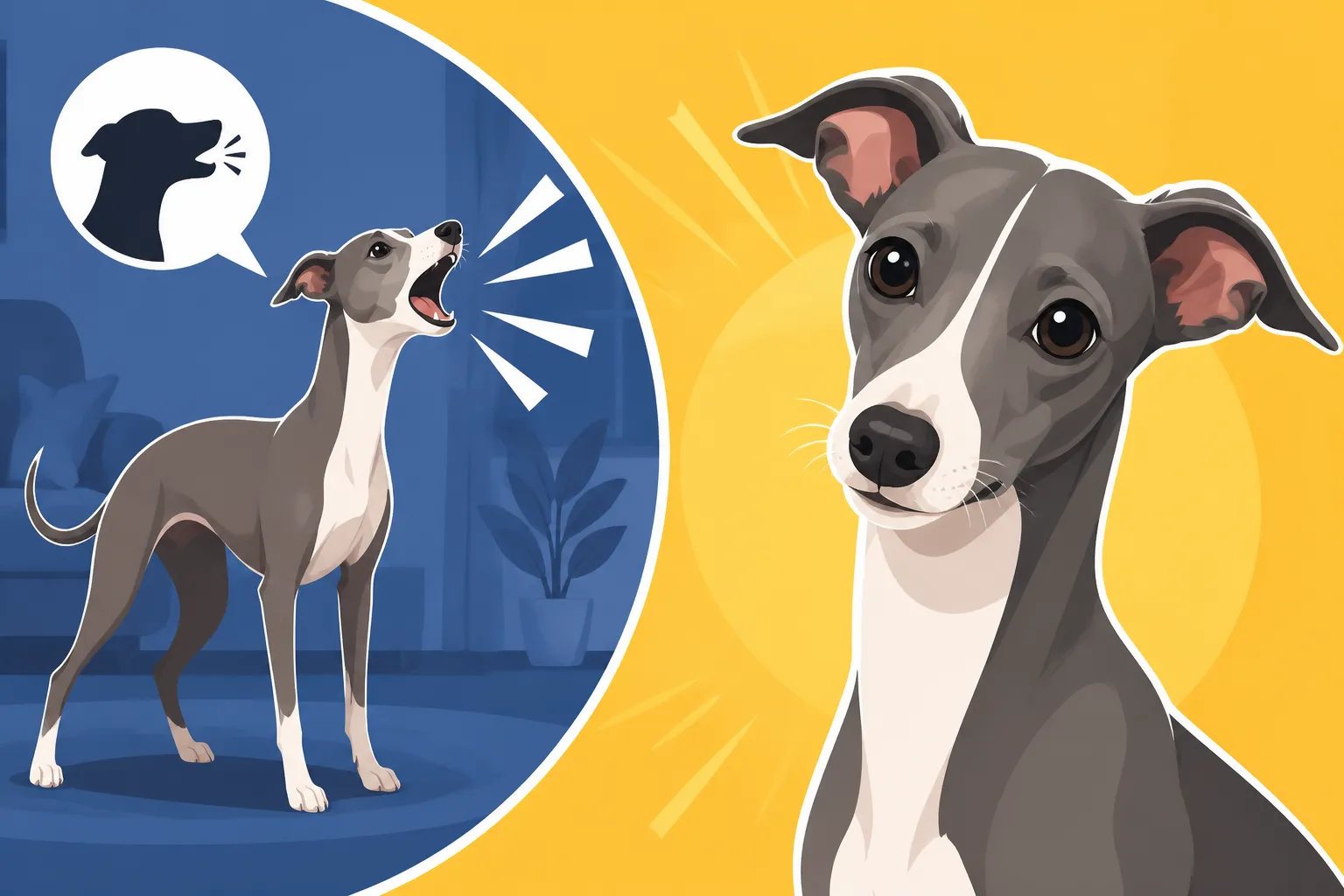
- The Sharp Alarm Bark: High-pitched, piercing, and sudden, this bark is designed to alert the entire household to potential danger. Because Italian Greyhounds have fine-tuned hearing, this bark often seems to happen out of nowhere from an owner’s perspective.
- The Demand Yip: Short, repetitive, and persistent, this high-pitched yip is utilized when an Italian Greyhound wants something immediately—whether that is a piece of food from your plate, access to the furniture, or an immediate tuck-in under a blanket.
- The Separation Cry or Howl: A mournful, continuous whining that can escalate into a high-pitched baying or howling sound when the dog feels isolated or distressed by being separated from its favored human.
- The Sighthound Scream: Famous across all sighthound breeds, this sudden, blood-curdling vocalization occurs when an Italian Greyhound is startled, pinched, minorly injured, or overwhelmed by sudden fear. It sounds alarming, but often indicates drama rather than serious physical injury.
Recognizing the shift between a mild huff of curiosity and a sharp demand yip gives you the window of opportunity needed to step in with positive training interventions before the behavior becomes a ingrained habit.
Individual Temperament and Genetic Factors
Not all Italian Greyhounds vocalize at the same volume or frequency. Genetics, line breeding, and early puppyhood experiences play a massive role in shaping how vocal an individual dog will turn out to be. Breeders who select for confident, stable temperaments tend to produce puppies that take environmental noises in stride, whereas lines prone to nervous energy or high reactivity may yield dogs that bark at the slightest change in their surroundings.
A puppy raised in a busy household with early exposure to household sounds, visitors, and varied environments develops a higher threshold for alarm barking. Conversely, a puppy raised in isolation may view every unfamiliar sight or sound as a potential threat requiring a vocal response. Early environmental enrichment equips the dog with the confidence needed to observe without reacting.
Additionally, gender and age influence noise levels. Young puppies tend to test boundaries with demand barking during their first year as they learn how to navigate human rules. Senior dogs, on the other hand, may develop increased vocalization due to sensory decline, such as failing eyesight or hearing loss, which makes unfamiliar environmental changes more startling to them.
Common Triggers for Italian Greyhound Barking
Alert and Alarm Barking at the Door or Window
One of the primary reasons an Italian Greyhound vocalizes is to protect what it considers its home perimeter. Their keen eyesight and sharp hearing make them exceptional watchdogs, even if their physical size means they pose zero actual threat to an intruder. Studying How an Italian Greyhound Announces the Door reveals that most alert barking is driven by a mix of territorial instincts and environmental curiosity.
When a delivery driver approaches or a neighbor walks past a ground-floor window, the Italian Greyhound’s natural reaction is to sound the alarm. Identifying What an Italian Greyhound Barks At often reveals a pattern: visual triggers like dogs passing the yard, auditory triggers like doorbell chimes or knocking, and even subtle environmental shifts like the rumble of a trash truck down the block.
To manage alert barking, handlers must realize that shouting over the dog only confirms their suspicion that something exciting or alarming is happening. Instead, acknowledging the alert calmly and directing the dog to an alternative behavior, such as retreating to a designated bed or mat, helps de-escalate their state of arousal.
Demand Barking for Attention, Food, and Blankets
Italian Greyhounds are masters of human management. Because of their delicate appearance and expressive eyes, owners frequently give in to their small requests without realizing they are reinforcing demanding behavior. Demand barking usually starts subtly—a small whine or a soft yip when they want to be lifted onto the sofa or covered with a blanket.
If the owner immediately responds by covering the dog or picking them up, the dog quickly learns that vocalizing produces immediate results. Understanding What Motivates an Italian Greyhound is crucial here; these dogs value physical comfort and proximity to their owners above almost everything else. If barking earns them warm blankets or direct eye contact, they will repeat the noise with increasing frequency and volume.
To break the cycle of demand barking:
1. Identify the reward: Recognize what the dog is asking for in that moment (e.g., blanket adjustment, lap access, treats).
2. Withhold reinforcement: Turn your back, avoid eye contact, and remain completely silent while the vocalization is happening.
3. Reward quiet behavior: Wait for at least three to five seconds of total silence, then ask for a calm sit before granting access to the blanket or furniture.
4. Provide proactive comfort: Ensure their favorite resting spots are already set up with soft, warm bedding so they do not feel the need to ask for adjustments continuously.
Keeping mental engagement high through interactive puzzle feeders or snuffle mats—easily sourced through online retailers like Amazon—can direct that persistent focus away from demanding human attention and toward constructive, calming mental work.
Separation Anxiety and Distress Vocalization
Perhaps the most challenging form of barking in Italian Greyhounds is distress vocalization caused by separation anxiety. As classic “velcro” companion dogs, they thrive on human presence and can struggle significantly when left entirely alone without prior conditioning. When an Italian Greyhound feels panicked by isolation, its barking is not driven by stubbornness or bad behavior; it is a genuine manifestation of panic.
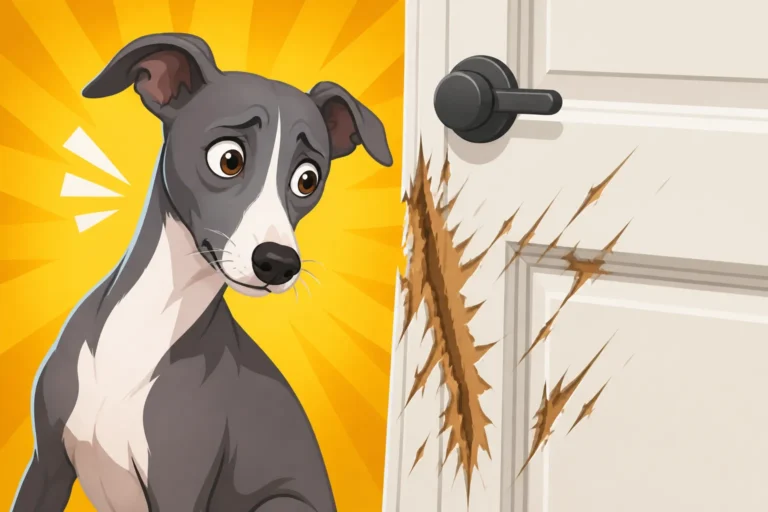
Recognizing the early Signs an Italian Greyhound Has Separation Anxiety is critical for intervening before distress becomes severe. Distress barking typically starts within minutes of the owner’s departure and is accompanied by pacing, whining, panting, or destructive clawing at exit doors. Unlike brief alert barking, separation-related noise can continue for hours if the dog remains in a state of high distress.
Addressing separation vocalization requires a gradual, systematic desensitization process. Leaving the dog with long-lasting chew items, establishing positive association with crate or pen spaces, and practicing micro-absences (starting with just a few seconds) help build the dog’s confidence in being alone without resorting to panic vocalizations.
Environmental Factors and Behavioral Conditioning
Cold Weather, Frustration, and Indoor Boredom
Italian Greyhounds have extremely low body fat and thin coats, making them notoriously sensitive to cold temperatures and wet weather. When cold snaps hit, these dogs often refuse to step foot outside, leading to built-up energy, indoor frustration, and increased vocalization. A dog that is cold and under-exercised is far more likely to bark at minor household triggers than one that is warm and physically satisfied.
During winter months, indoor boredom becomes a major contributor to nuisance barking. When outdoor walks are cut short due to freezing rain or snow, the Italian Greyhound’s pent-up sprint energy must find an outlet. Without constructive outlets, that energy often translates into pacing, indoor zoomies, and reactive barking at the window.
Creating indoor activity circuits, teaching new trick behaviors, and using hide-and-seek games with treats can burn off excess nervous energy when outdoor exercise is not feasible, keeping noise levels under control even during inclement weather.
Social Facilitation and Learning From Other Dogs
Dogs are social learners, and Italian Greyhounds are particularly observant of their canine housemates. Observing Whether an Italian Greyhound Learns From Another Dog demonstrates how quickly vocal habits spread in a multi-dog household. If an Italian Greyhound lives with a vocal terrier or a reactive watchdog, they will rapidly adopt those same vocal responses to everyday events.
This phenomenon, known as social facilitation, means that an otherwise quiet Italian Greyhound will join in on a barking session simply because another dog in the home raised the alarm. The excitement of the first dog validates the Italian Greyhound’s instinct to vocalize, creating a feedback loop that increases overall household noise.
Managing multi-dog dynamics requires training the dogs individually as well as together. If one dog triggers the other, separating them during high-risk times—such as when the mail arrives—prevents the Italian Greyhound from continuously practicing social vocalization.
The Role of Early Socialization and Structured Training
The foundation for a quiet, confident Italian Greyhound is laid during early puppyhood. Exposing a puppy to a wide variety of sights, sounds, surfaces, and people in a positive, non-threatening manner prevents the fear-based reactivity that leads to adult alarm barking.
When training an Italian Greyhound, handler demeanor is everything. Understanding Why Raising Your Voice Sets an Italian Greyhound Back a Month is essential for anyone raising this sensitive breed. Harsh verbal corrections or loud scolding startle Italian Greyhounds, creating anxiety and mistrust that often increases vocalization rather than stopping it. They respond best to soft-spoken, clear, positive-reinforcement methods.
Structured online training programs, such as those offered by BAXTER & Bella, provide step-by-step guidance on implementing force-free communication methods at home. Their digital resources help owners establish positive routines, correct demand behaviors, and build quiet confidence in sensitive toy breeds without resorting to intimidation or punitive measures.
Comparing Italian Greyhound Noise Levels to Other Breeds
Italian Greyhounds versus Larger Sighthounds
When placed alongside their larger sighthound relatives, the Italian Greyhound occupies a middle ground in terms of noise. Examining How an Italian Greyhound Differs From a Whippet highlights key behavioral distinctions that affect vocal tendencies. While full-sized Greyhounds and Whippets are famously passive indoors and rarely bark unless engaged in high-arousal play or lure coursing, the Italian Greyhound’s toy lineage makes it slightly more vocal and attentive to household activity.
Larger sighthounds possess a higher threshold for environmental stimuli; a passing pedestrian or doorbell knock rarely rouses a retired racing Greyhound from its slumber. Italian Greyhounds, by contrast, maintain a higher state of environmental vigilance, making them more likely to sound a quick alarm bark before settling back down.
Italian Greyhounds versus Other Toy Breeds
Comparing the Italian Greyhound to other members of the AKC Toy Group reveals just how relatively quiet they are overall. When evaluating an Italian Greyhound or Chihuahua for a First Dog, potential owners quickly notice a substantial difference in vocal intensity and trigger frequency.
While many toy breeds—such as Chihuahuas, Pomeranians, or Miniature Pinschers—were historically selected to act as vocal watchdogs, the Italian Greyhound was bred primarily as a refined lap companion and noble status symbol. Consequently, they lack the persistent, sharp yappiness often associated with smaller breeds, making them much easier to manage in quiet living environments when properly trained.
Noise Level Comparison Table
To better understand where the Italian Greyhound sits on the vocal spectrum, the table below compares its vocal traits with other popular breeds commonly considered by urban and suburban dog owners:
| Dog Breed | Average Bark Frequency | Primary Vocal Triggers | Sound Pitch / Tone | Ease of Noise Management |
|---|---|---|---|---|
| Italian Greyhound | Low to Moderate | Doorbell, sudden sounds, separation distress, comfort requests | High, sharp alarm bark; low chuff; soft demand yip | Moderate (responds well to gentle, consistent positive training) |
| Whippet | Very Low | High play arousal, prey sight, extreme isolation | Medium-high, rare single bark | High (naturally quiet indoor demeanor) |
| Chihuahua | High | Strangers, doorsteps, movement outside, attention seeking | High-pitched, rapid, persistent yip | Moderate to Challenging (strong watchdog instincts) |
| French Bulldog | Low to Moderate | Excitement, play, demand for attention | Low-pitched grunt, bark, or dramatic whine | High (generally easygoing indoor noise profile) |
| Miniature Pinscher | High | Territory defense, movement, noise in hallway | Piercing, sharp, repetitive alarm | Challenging (high vigilance and bold temperament) |
| Cavalier King Charles | Low to Moderate | Excitement upon greeting, doorbell, attention seeking | Medium pitch, soft alert bark | High (eager to please, low territorial drive) |
Actionable Strategies to Prevent and Manage Excessive Barking
Desensitization and Counter Conditioning Techniques
If your Italian Greyhound has developed a habit of barking at specific environmental triggers, systematic desensitization and counter-conditioning are the most effective ways to change their emotional response and quiet their behavior.
Follow these practical steps to address doorbell or hallway noise barking:
- Record the trigger sound: Record the sound of your doorbell or hallway footsteps on your phone.
- Play at ultra-low volume: Play the sound at a volume so low that your dog notices it but does not bark or tense up.
- Pair with high-value rewards: The moment the faint sound plays, feed your Italian Greyhound a high-value treat (such as small pieces of boiled chicken or freeze-dried liver).
- Gradually increase volume: Over multiple short sessions across several days, slowly increase the volume, continuing to feed treats whenever the sound occurs.
- Build positive associations: Eventually, your dog will associate the sound of the doorbell with delicious rewards delivered calmly to their bed rather than an event requiring a vocal alarm.
For dogs that bark at visual triggers outside windows, using decorative window film or privacy blinds temporarily removes the visual stimulus while you work on building a solid “leave it” or “place” command. Supplying comfortable calming beds or crate covers—available in various sizes on Amazon—helps create a safe, den-like atmosphere free from alarming external visuals.
Meeting Physical and Mental Enrichment Needs
A tired Italian Greyhound is a quiet Italian Greyhound. Ensuring your dog receives an adequate balance of physical exercise, sensory exploration, and mental challenge dramatically reduces nuisance vocalization caused by frustration or pent-up energy.
- Daily Physical Outlets: Two 20-to-30-minute walks per day, supplemented by controlled sprinting sessions in a securely fenced area, help drain physical energy safely.
- Olfactory Enrichment: Sniffing burns tremendous mental energy. Allow your dog to lead “sniffari” walks where they explore scents at their own pace, or scatter kibble in a snuffle mat indoors.
- Interactive Problem-Solving: Use puzzle toys, frozen lick mats, or stuffed rubber chews during times when your dog is most prone to demand barking (such as during family dinnertime).
- Structured Quiet Routines: Establish predictable daily patterns for resting, eating, and playing so your dog does not feel anxious about when their next interaction will occur.
Integrating guided online home-training systems like BAXTER & Bella into your weekly routine provides structured mental workouts that strengthen your bond, build impulse control, and keep your dog focused on cooperative learning rather than vocal demanding.
When and How to Seek Professional Behavioral Guidance
While mild alert barking and occasional demand yips are easily managed at home with consistency and patience, severe vocalization driven by panic, deep-seated reactivity, or extreme separation distress requires professional evaluation.
When seeking professional help:
* Choose force-free professionals: Ensure any trainer or behaviorist you hire uses strictly positive reinforcement and force-free methods. Avoid trainers who advocate for shock collars, citronella spray collars, or physical corrections, as these devices cause extreme psychological harm to sensitive sighthounds.
* Consult your veterinarian: If sudden vocalization changes occur in an older dog, rule out underlying medical issues, pain, or cognitive decline with a thorough veterinary exam.
* Work with a certified specialist: For severe separation anxiety, consult a Certified Separation Anxiety Trainer (CSAT) who can design a tailored, step-by-step desensitization protocol for your home setup.
With gentle guidance, consistent routines, and an understanding of their unique sighthound-toy heritage, you can easily maintain a peaceful home where your Italian Greyhound feels safe, warm, and quiet.
Disclaimer
This article is for general informational purposes only and does not constitute professional advice. Laws, prices and regulations vary by location and change over time. Consult a qualified professional for guidance on your specific situation.