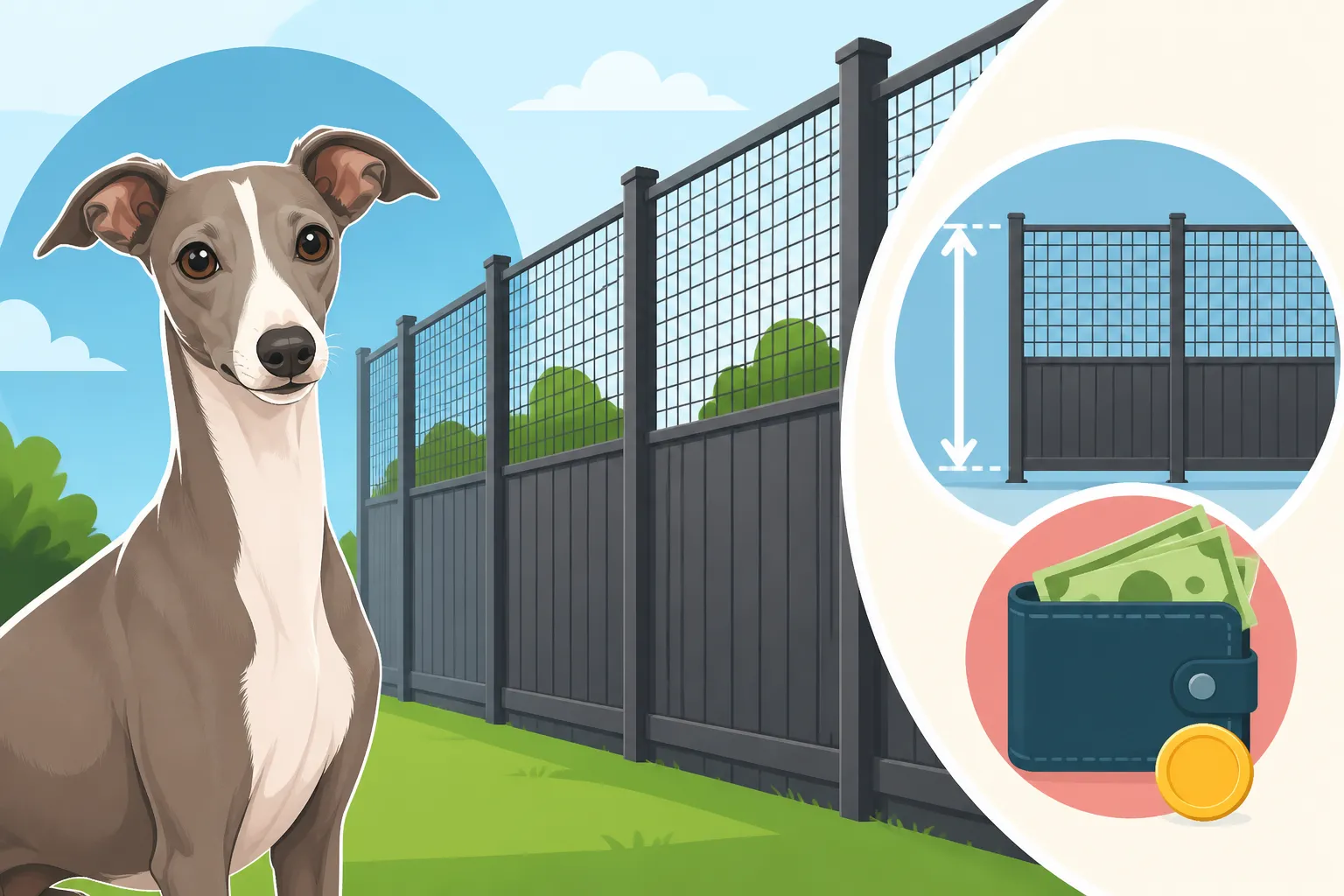
What Fencing High Enough for an Italian Greyhound Costs
There's nothing quite like watching your Italian Greyhound zoom around the yard, ears flying, tail tucked, truly reveling in the joy of being a dog. It’s a beautiful sight, and it’s why so many of us dream of giving them a safe, secure outdoor space. But then the reality hits: Italian Greyhounds are escape artists, built for speed and possessing an impressive vertical leap. Figuring out what "high enough" truly means for a fence, and then what that fence will actually cost, can feel like navigating a maze blindfolded. This guide is here to shine a light on the real expenses and considerations involved in creating a truly Iggy-proof outdoor haven.
Why Your Italian Greyhound Needs a Seriously Secure Fence
Let's be honest, Italian Greyhounds are not your average backyard dog. Their delicate build, incredible speed, and surprisingly high prey drive mean that a standard fence often isn't enough to keep them safe. Many owners have faced the heart-stopping panic of watching their little rocket dog spot a squirrel and disappear over a fence or through a gap they didn't even know existed. This isn't just about keeping them in; it's about protecting them from a world they're not always equipped to handle on their own.
The Iggy's Instinct to Bolt
It's in their sighthound DNA. These dogs were bred to spot small, fast-moving objects and chase them down. While our modern Iggies are primarily beloved companions, that ancient instinct is still very much alive. A squirrel, a rabbit, a blowing leaf, or even just another dog across the street can trigger an immediate, all-consuming chase response. When that happens, your Iggy isn't thinking about property lines or your frantic calls; they're operating on pure instinct. This is why a fence isn't just a convenience; it's a critical safety barrier. Why an Italian Greyhound Cannot Be Trusted Off Leash, Ever is a crucial read for any Iggy owner considering outdoor time. Without a robust physical barrier, the risks of them getting lost, hit by a car, or injured are astronomically high.
Imagine you're enjoying a beautiful afternoon in your yard, and suddenly a neighborhood cat saunters by on the other side of your standard 4-foot fence. Your Iggy, who moments ago was sunbathing peacefully, transforms into a blur. Before you can even shout their name, they've launched themselves upwards, paws scrabbling, and in a terrifying instant, they're over. This scenario isn't a rare exception; it's a very real possibility for Italian Greyhound owners. Their athleticism is truly remarkable, and it demands a higher standard of security than many other breeds.
Understanding Their Jumping and Climbing Abilities
While they might look delicate, Italian Greyhounds are surprisingly agile. They can spring from a standstill, and if they have something to push off of – even a slight unevenness in the ground, a decorative rock, or a sturdy shrub near the fence line – they can clear impressive heights. It's not always a graceful Olympic leap; sometimes it's a scramble, a parkour-like ascent that catches you completely off guard. Many owners have been stunned to find their Italian Greyhound has scaled what looked like an insurmountable barrier.
Even if they can't clear the top, some Iggies are clever climbers. Chain-link fences, for example, can act like a ladder for their nimble paws. They might not jump over it, but they might climb up it. Smooth fences like vinyl or solid wood are generally harder to scale, but even then, a determined Iggy can find a way if the fence isn't high enough or if there are footholds near the top. This adaptability means that "high enough" isn't just about the peak height, but also about the surface material and what's around the fence.
Deciphering Fencing Costs: Materials and Types
When you're trying to figure out what fencing high enough for an Italian Greyhound costs, you quickly realize it's not a simple per-foot price. The material you choose plays an enormous role, not just in the aesthetic of your yard, but also in the security it offers and its long-term durability. Each type has its own set of advantages, disadvantages, and, of course, price tags.
Wood Fencing: Classic Appeal with Iggy Considerations
Wood fences offer that classic, natural look that many homeowners adore. They come in various styles, from solid privacy fences to more open picket designs, and can be stained or painted to match your home's exterior. For an Italian Greyhound, a solid privacy fence is usually the best option as it prevents them from seeing triggers (like that squirrel) and potentially climbing. The lack of footholds makes it harder to scale.
- Cost Shape: Generally, wood fencing falls into the mid-range price bracket. The cost per linear foot can vary significantly based on the type of wood (pine, cedar, redwood), the height, and the complexity of the design. A standard 6-foot cedar privacy fence will cost more than a 4-foot pine picket fence, for instance. You're looking at material costs that can range from moderate to high, plus labor.
- Pros for Iggies: Good visual barrier, harder to climb if solid, can be built to significant height.
- Cons for Iggies: Can rot or warp over time if not maintained, requiring repairs that could create weak spots. Also, some Iggies are chewers, and an unsealed wood fence might prove tempting. Small gaps can develop at the bottom over time, providing an escape route.
- Cost Factors: The height is a major factor for Iggies. While a 5-foot fence might seem sufficient, many Iggy owners opt for 6 feet or even higher if their dog is a particularly skilled jumper or if there are objects near the fence line. The type of wood, post spacing, and gate quality will also influence the total.
Vinyl Fencing: Low Maintenance, High Security
Vinyl fencing has become incredibly popular for its durability and low maintenance. It resists rot, pests, and doesn't require painting or staining. Like wood, it comes in privacy styles that are excellent for Italian Greyhounds because of their smooth, unclimbable surface.
- Cost Shape: Vinyl is typically more expensive upfront than wood fencing. However, its longevity and minimal maintenance requirements often make it a cost-effective choice over the long term. Expect material costs to be on the higher side.
- Pros for Iggies: Very secure with solid panels, smooth surface is nearly impossible to climb, weather-resistant, and won't develop gaps from warping like wood can.
- Cons for Iggies: Higher initial investment. While durable, extreme impact can damage panels, which might be costly to replace.
- Cost Factors: Again, height is key. For an Iggy, a 6-foot solid vinyl fence is often recommended. Color and style variations can also affect the price, but the primary drivers will be the linear footage and height.
Chain-Link Fencing: Affordable, But Risky for Iggies
Chain-link is often the most budget-friendly option, making it attractive for large areas. However, it presents significant challenges for Italian Greyhounds.
- Cost Shape: Generally the lowest cost material per linear foot, both for materials and installation.
- Pros for Iggies: Affordable, quick to install.
- Cons for Iggies: This is where chain-link really falls short. The mesh acts like a ladder for agile Italian Greyhounds, making it very easy for them to climb. It's also transparent, allowing them to see squirrels, rabbits, or other dogs, which triggers their prey drive and encourages attempts to escape. Even a 6-foot chain link fence might not be enough if your Iggy is determined. How an Italian Greyhound Gets Under a Fence is also a concern with chain-link as it can be easier to push up at the bottom.
- Cost Factors: While cheaper, you might end up needing a taller fence (7-8 feet) or additional measures (like coyote rollers at the top, or a solid panel attachment) to make it Iggy-proof, negating some of the initial savings. For the safety of your Iggy, many owners find chain-link simply isn't worth the inherent risks.
Wrought Iron or Aluminum Fencing: Elegant, But Needs Modifications
These types of fences offer a sophisticated, open aesthetic and are incredibly durable. They're often used for decorative purposes or to define property lines.
- Cost Shape: Wrought iron is typically one of the most expensive options due to the material and specialized installation. Aluminum offers a similar look at a slightly lower (though still premium) price point.
- Pros for Iggies: Very durable, long-lasting, attractive.
- Cons for Iggies: The open pickets mean your Iggy can see everything, triggering their chase instinct. More critically, the gaps between pickets (or under the fence) can be large enough for a small Italian Greyhound to squeeze through. While it might look tall, the open design fundamentally compromises its security for an Iggy.
- Cost Factors: The height for these fences would need to be considerable (6+ feet), and you would likely need to add mesh or solid panels to the lower sections to prevent escapes, significantly increasing the cost and altering the aesthetic.
Other Fencing Options & Iggy Suitability
| Fencing Type | Typical Cost (Material) | Iggy Suitability (Height & Security) |
|---|---|---|
| Wood Privacy | Mid-range | Good: 6ft+ recommended. Solid panels prevent viewing triggers. Smooth surface deters climbing. Check for gaps at bottom. |
| Vinyl Privacy | High-range | Excellent: 6ft+ highly recommended. Smooth, solid, unclimbable. Resists weather damage that could create gaps. High upfront cost, low long-term maintenance. |
| Chain-Link | Low-range | Poor: Not recommended. Acts as a ladder for climbing. See-through nature triggers prey drive. Requires extreme height (7-8ft) or additional measures (coyote rollers, solid panels) to be minimally secure, often negating cost savings. |
| Wrought Iron | Very High-range | Poor: Not recommended as-is. Open design allows viewing and squeezing through gaps. Requires extensive modification (adding mesh/panels) to be secure for an Iggy, which significantly increases cost and changes appearance. |
| Aluminum | High-range | Poor: Similar to wrought iron. Requires significant modification to prevent viewing triggers and escapes through gaps. |
| Invisible Fence | Low-range | Extremely Poor: Absolutely not suitable for Italian Greyhounds. These dogs are highly sensitive and driven by prey instinct. They will run through the shock if sufficiently motivated, and once outside, there's no barrier to bring them back. This poses a severe danger to their safety and mental well-being. |
For an Italian Greyhound, the goal isn't just to deter them, but to contain them reliably. This often means choosing a fence that is at least 6 feet tall and has a solid, unclimbable surface. If you're on a tight budget, it might be tempting to opt for a cheaper material, but for an Italian Greyhound, that could mean repeated escapes and potential vet bills from injuries or accidents. Healthy Paws, or any pet insurance, won't cover the stress of a lost dog or the heartbreak of an accident that could have been prevented by a more secure enclosure.
The True Price of Installation: DIY vs. Professional Services
Once you've settled on the type of fence, the next big chunk of the cost is installation. This is where many people try to save money, but it's important to understand the complexities involved, especially when dealing with a high-stakes fence for an Italian Greyhound.
Professional Installation: Expertise and Peace of Mind
Hiring a professional fencing company offers several advantages. They have the right tools, experience, and knowledge of local building codes and property lines. For an Iggy-proof fence, their expertise can be invaluable in ensuring the fence is truly secure, with no weak points or potential escape routes.
- Cost Shape: Professional installation typically adds a significant percentage to the total cost, often as much as the materials themselves, sometimes more. This includes labor, equipment rental, and the company's overhead.
- What's Included: A reputable company will usually handle everything: site preparation (clearing brush, leveling ground), digging post holes, setting posts in concrete, installing panels or pickets, and building gates. They should also be familiar with local permit requirements and ensure the fence meets all regulations.
- Why It's Worth It for an Iggy Owner: The peace of mind that comes from knowing your fence is installed correctly and securely is priceless when you have an Italian Greyhound. They can spot a weakness in a fence like a hawk spots prey. A professional installer will ensure proper gate latching mechanisms, address uneven terrain that could create escape gaps, and ensure the fence posts are sturdy enough to withstand attempts at pushing or digging. This level of meticulousness is crucial for keeping a determined Iggy safe.
DIY Installation: Potential Savings, Significant Work
For those with a strong DIY spirit, installing a fence yourself can certainly save on labor costs. However, it's a labor-intensive project that requires careful planning, the right tools, and a good understanding of construction techniques.
- Cost Shape: You'll only pay for materials, tool rentals (if needed), and any necessary permits. This can significantly reduce the overall cost.
- What's Involved: You'll be responsible for everything: measuring, marking property lines, calling utility companies (to mark underground lines before digging!), clearing the area, digging post holes (which is hard work), mixing concrete, setting posts, installing fence sections, and building gates. It's a huge undertaking.
- Challenges for the Iggy-Proof Fence: Ensuring the fence is perfectly plumb, level, and gap-free is critical for an Iggy. Even a small error can create an escape route. Getting gates perfectly aligned and securely latched, and ensuring the bottom of the fence is flush with the ground (or buried) to prevent digging, requires precision. If you're not experienced, you might inadvertently create vulnerabilities. Remember, an Iggy's safety is on the line.
- Tools and Equipment: You'll need post-hole diggers, a level, string lines, a saw, a drill, concrete mixer (or wheelbarrow for hand mixing), and safety gear. Some tools, like a power auger for post holes, might be worth renting to save your back. You can find many of these tools and supplies at local hardware stores or even through online retailers like Chewy if they offer home improvement supplies for pet-friendly projects.
Beyond Height: Other Critical Considerations for Italian Greyhound Fencing
While the height of your fence is paramount, a truly Iggy-proof enclosure involves more than just how tall it stands. There are several other critical factors that, if overlooked, can turn your expensive new fence into an expensive escape route.
Addressing the Diggers and the Squeezers
Many Italian Greyhounds are not known for being prolific diggers, but a determined Iggy, especially one fixated on a scent or a critter, can surprise you. If they can't go over, they'll try to go under. To prevent this, you need to think about the ground level.
- Burying the Fence Line: For maximum security, the bottom of your fence can be buried a few inches into the ground. This makes it much harder for an Iggy to dig under.
- L-Footer: Another effective method is installing an "L-footer" or "dig guard." This involves burying a section of wire mesh (like hardware cloth) horizontally along the inside base of the fence, extending inward by about 1-2 feet. When your Iggy tries to dig, they hit the buried mesh and are deterred. This is particularly useful for preventing escapes and discouraging unwelcome wildlife from digging into your yard.
- Concrete Trench: For ultimate security, some owners even pour a shallow concrete trench along the fence line, burying the bottom of the fence posts and panels directly into it. This is a significant undertaking but effectively creates an impenetrable barrier at ground level. This level of protection can be especially important if you live near woods or areas with lots of wildlife that might tempt your Iggy.
Gate Security and Latches
Your fence is only as strong as its weakest point, and for many fences, that's the gate. Italian Greyhounds are intelligent and curious. A flimsy latch or a gate that doesn't close flush can be an open invitation for an escape.
- Double Latching Mechanisms: Always opt for at least two latches on any gate. A spring-loaded latch that automatically closes is a good start, but add a secondary, manual latch (like a barrel bolt or a lockable mechanism) higher up that your Iggy cannot reach or manipulate.
- Self-Closing Hinges: These ensure the gate swings shut behind you, even if you forget to manually close it. This can be a lifesaver in a moment of distraction.
- Gap Prevention: Ensure the gate fits snugly within its frame when closed, with no gaps at the bottom or sides that your Iggy could squeeze through. Over time, gates can sag; regular maintenance is essential to keep them perfectly aligned. Remember, your Iggy is often quite flexible and can fit through surprisingly small openings.
Landscaping and Obstacle Removal
An Italian Greyhound's ability to jump is amplified if there's anything near the fence line that they can use as a launchpad. This includes:
- Shrubs and Bushes: Any planting close to the fence needs to be trimmed back or removed. A dense bush might seem like a barrier, but it could actually provide a hidden step.
- Retaining Walls or Large Rocks: If you have landscaping features that elevate the ground near the fence, those effectively reduce the fence's height. Consider these as part of the "jump zone" and adjust your fence height or placement accordingly.
- Outdoor Furniture or Equipment: Don't leave things like garden chairs, stacked firewood, or tools near the fence. An enterprising Iggy might just use them to get a boost.
Maintenance and Long-Term Value
A fence isn't a "set it and forget it" solution, especially one designed to contain such a specialized breed. Regular inspection and maintenance are vital to ensure its long-term security.
- Check for Gaps: Over time, wood can warp, posts can shift, or hardware can loosen. Periodically walk your fence line, checking for any new gaps, loose panels, or compromised sections. Pay particular attention after heavy storms.
- Gate Adjustments: Gates may sag or stick, creating gaps. Adjust hinges and latches as needed to ensure they remain secure.
- Repairs: Address any damage promptly. A small crack in a vinyl panel or a loose board in a wood fence can quickly become an escape route for a determined Iggy. Delaying repairs could mean a lost dog or an emergency vet visit, which can be incredibly costly. What an Italian Greyhound's Emergency Vet Visit Costs is something no one wants to face.
While the initial cost of installing an Italian Greyhound-proof fence might seem daunting, it's an investment in your dog's safety, your peace of mind, and ultimately, a more relaxed life together. The freedom to safely enjoy your yard without constant vigilance is truly priceless. Whether an Italian Greyhound Is Worth the Vet Bills is a question that often comes up when discussing large expenses, but proactive measures like a secure fence often prevent those very bills.
Disclaimer
This article is for general informational purposes only and does not constitute professional advice. Laws, prices and regulations vary by location and change over time. Consult a qualified professional for guidance on your specific situation.