What High Stepping Action Means in an Italian Greyhound
An Italian Greyhound can look as if it is prancing when it trots, and that distinctive lift often leaves owners wondering whether the movement is normal or a sign of discomfort. High-stepping action is a breed-related description of the dog’s movement, not a diagnosis. This guide explains what it looks like, how to tell it from an abnormal gait, and when to ask a veterinarian for help.
What high-stepping action means
The shape of the movement
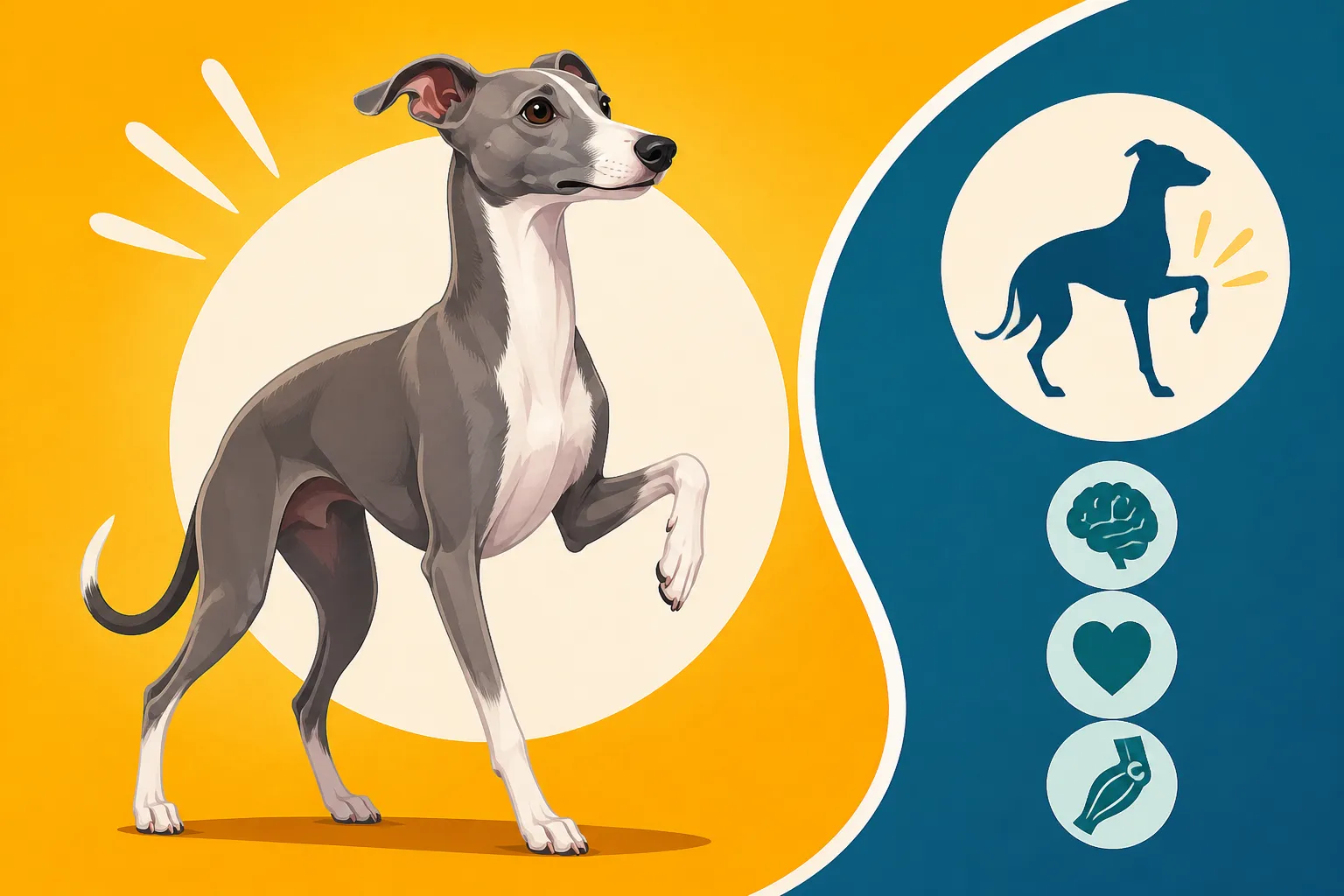
High-stepping action describes a noticeable lift of the front feet as an Italian Greyhound moves at a trot. Instead of skimming close to the ground, the feet rise and come forward in a light, deliberate-looking motion. The result can appear elegant or almost dance-like, especially when the dog is trotting across a smooth, open surface.
The phrase is used in descriptions of the breed’s characteristic movement. It does not mean that every Italian Greyhound should lift its feet to the same height, or that the dog should exaggerate the motion. A balanced gait should still look comfortable, coordinated, and purposeful. The dog should be able to move forward without appearing stiff, strained, or unsteady.
For a broader description of the breed’s movement, see What the Italian Greyhound's Gait Should Look Like. High-stepping action is one part of the overall picture; it is not a feature to assess in isolation from the dog’s rhythm, balance, and comfort.
Why it is associated with the breed
Italian Greyhounds are fine-boned, athletic sighthounds with a light, springy way of moving. A well-proportioned dog can look especially graceful at a trot, and the lift in the forelegs contributes to that impression. Breed descriptions distinguish this movement from a heavy, pounding stride or a short, shuffling walk.
The dog’s outline and body structure also affect what you see. A flexible topline, well-shaped legs, and feet that track in a coordinated way all contribute to the overall impression of movement. That does not mean a single feature, such as a high front-foot lift, proves that a dog has correct structure. The whole body needs to be considered.
It can help to compare movement at different speeds. At a relaxed walk, the feet may lift less. At a trot, the action becomes easier to see. If the dog is excited, trying to keep up, or moving over uneven ground, its stride may change for practical reasons. A moment of extra prancing is not enough to judge whether the movement is typical.
High stepping is not the same as hackneying
A high-stepping trot can be confused with hackneying, a more exaggerated action in which the front legs lift unusually high and may bend sharply at the wrist. The terms can sound similar in casual conversation, but the movements are not necessarily the same. A natural, light lift is different from a pronounced, repeated upward flick that makes the dog’s gait look forced.
The dog should not need to throw its front legs upward to make progress. Watch whether the movement remains smooth and whether the feet land securely beneath the body. If the dog seems to be paddling, swinging the legs outward, stumbling, or struggling to maintain a regular rhythm, do not assume that the motion is simply a breed trait. You can read more in Whether an Italian Greyhound Should Hackney.
How to observe an Italian Greyhound’s gait
Watch the dog at a comfortable trot
A useful first look is often from the side, with the dog moving at a steady, natural trot on a level, non-slippery surface. Avoid asking the dog to sprint or pulling it into a pace that feels unnatural. A short, calm observation is more useful than trying to make the dog perform.
Look for an even rhythm. The steps should repeat in a coordinated pattern, and the dog should appear willing to move. Notice whether the front feet lift in a light, consistent way and whether the rear legs appear to contribute to forward movement. You do not need to measure foot height or count every step; you are looking for a comfortable, balanced impression.
If you want to compare what you see, take a brief video from the side and, if it is safe and practical, another from the front or behind. Keep the dog on a short lead and do not force a pose. A video can help you notice changes over time, but it cannot diagnose a problem. If the movement appears painful or suddenly different, contact a veterinarian rather than repeatedly filming or testing it.
Check the surface and the dog’s pace
A dog’s gait can change dramatically with the ground beneath its feet. Hardwood, polished tile, wet pavement, loose gravel, or a slick clinic floor may make an Italian Greyhound shorten its steps or lift its paws cautiously. That response may be an attempt to stay balanced rather than a sign that the dog is showing its usual trot.
Choose a surface with good traction when observing movement. A quiet stretch of level pavement or a non-slip indoor floor is generally easier to assess than a staircase, soft sand, or a busy dog park. If the dog walks normally outside but looks hesitant on slick flooring, consider the footing before interpreting the movement. Why an Italian Greyhound Slips on Hardwood offers more context about traction and safe footing.
Pace matters too. A dog walking slowly may not show the same action as it does at a trot. A dog rushing to greet someone may exaggerate its steps, while a nervous dog may move with a tense, shortened stride. Try to observe when the dog is calm and moving at its own comfortable pace.
Consider body shape without judging by one feature
The feet are part of the movement pattern, but they are not the entire explanation. Italian Greyhounds have distinctive, compact feet; their shape and placement can affect how the legs appear to travel. For more on this feature, see What Shape an Italian Greyhound's Feet Are.
A dog’s back and body carriage also influence the way its movement looks. The breed is known for a graceful outline, but that does not mean every curve or posture should be interpreted as evidence of quality or health. If you are assessing a puppy or considering a dog for showing or breeding, ask a knowledgeable breeder, breed specialist, or qualified judge to explain the whole picture. Why an Italian Greyhound's Back Arches discusses the topline separately.
For everyday owners, the most practical question is not whether the dog’s trot looks perfect. It is whether the dog moves willingly and comfortably in daily life. A slightly different-looking action may simply be an individual variation. A new limp, reluctance to walk, or sudden change deserves more attention than a naturally distinctive but stable trot.
Normal variation and signs of a problem
What can change from dog to dog
Not every Italian Greyhound displays high-stepping action with the same intensity. Age, confidence, excitement, speed, surface, and individual body structure all affect how a dog moves. Puppies may have less polished coordination as they grow, and a young dog rushing around the living room is not a reliable example of its controlled trot.
Even adult dogs may look different from one day to another. A dog that has just woken up may stretch and take a few uneven steps before settling into a normal rhythm. One that is cold, anxious, tired, or distracted may move more cautiously. Consider the wider context rather than deciding that a single unusual step defines the dog’s gait.
High stepping also should not be used as a reason to encourage bigger jumps, harder exercise, or repeated running on slippery surfaces. Italian Greyhounds are athletic, but they are delicate dogs, and safe movement depends on sensible footing and supervision. For a comparison with related sighthounds, see How an Italian Greyhound Differs From a Whippet.
Warning signs that merit a veterinary call
A high-stepping appearance is not automatically a medical concern. The pattern becomes more worrying when it is new, inconsistent, or accompanied by signs that the dog is uncomfortable. Watch for limping, repeatedly holding up one foot, stumbling, dragging a paw, sudden reluctance to climb or walk, or a visible difference between the right and left sides.
Also pay attention to behavior. A dog may move less, hesitate before jumping, resist being handled, or become unusually quiet when something hurts. Italian Greyhounds can be quick and energetic even when a problem is developing, so a brief burst of play does not necessarily rule out discomfort. If you notice a persistent change, make a note of when it began and what activities seem to bring it on.
Seek prompt veterinary advice if the dog cannot bear weight, appears to be in significant pain, has an obvious injury, or develops a sudden severe change in movement. Do not try to straighten a limb or force the dog to walk for evaluation. Keep the dog calm and limit unnecessary movement while arranging care. For background on one concern Italian Greyhound owners often worry about, see Signs an Italian Greyhound Has Broken a Leg.
A practical comparison
| What you notice | Possible explanation | What to do |
|---|---|---|
| Light, regular lift at a comfortable trot | Breed-related movement or individual variation | Observe the dog in ordinary activity |
| More cautious steps on slick flooring | Reduced traction or uncertainty | Offer a non-slip route and watch for normal movement elsewhere |
| A few uneven steps after resting that quickly resolve | Temporary stiffness or readjustment | Monitor; contact a veterinarian if it persists or worsens |
| New, repeated limping or one-sided movement | Pain or injury may be involved | Arrange veterinary advice |
| Dragging a paw, stumbling, or inability to bear weight | A potentially urgent movement problem | Seek prompt veterinary care |
This table is a guide to observation, not a way to diagnose the cause. The same visible change can have different explanations, and a veterinary examination is the right next step when the movement is persistently abnormal.
Supporting comfortable movement at home
Make everyday routes easier to navigate
A dog’s gait can look less confident when the floor is slippery or the route includes an awkward leap. Add rugs or runners where the dog regularly turns, accelerates, or lands. Keep paths to food, water, and resting places clear, and use a ramp or steps where furniture access encourages risky jumping.
These changes are useful even when your dog’s movement is normal. They provide more secure footing and make it easier to notice whether a gait change occurs everywhere or only on a particular surface. If the dog hesitates at one spot, check for a slick patch, a loose rug, or a change in flooring before assuming the dog has developed a movement issue.
For outside walks, use a secure lead and choose a route that suits the dog’s pace. A well-fitted harness can be more comfortable for some dogs than pressure concentrated at the neck, but fit matters. If you are browsing harnesses or traction-related supplies through Chewy, compare the product’s measurements and adjustability with your dog’s actual body measurements rather than choosing by breed label alone.
Keep observation low-pressure
It is tempting to ask a dog to trot back and forth repeatedly so you can inspect its feet. That can tire or frustrate the dog, and it may make the movement look less natural. Instead, notice how your dog walks during ordinary outings and play. A short video during a normal walk may be useful if you later need to show a veterinarian what you observed.
Keep a simple record if you are monitoring a change: when it started, which leg or side seems affected, whether it occurs on every surface, and whether the dog is still eating, playing, and settling as usual. Include any recent falls, rough play, or increase in activity. These details can make a veterinary conversation more focused.
A gait clip is most informative when it shows the dog moving naturally, not being coaxed into a fast run. Chewy carries everyday walking and handling supplies, but no harness, boot, or supplement can explain a new limp. If the dog is uncomfortable, prioritize an examination over trying new equipment.
Ask for help when the picture is unclear
If you are choosing a puppy, evaluating a show prospect, or simply uncertain whether the gait is normal, ask someone experienced with Italian Greyhounds to watch the dog move. A responsible breeder can explain how the breed’s movement is described and how it differs from a more exaggerated action. A veterinarian can assess pain, injury, or other health concerns.
It is also reasonable to ask your regular clinic to watch the dog walk in the exam room. If the floor is slippery or the dog is nervous there, mention that its movement looks different at home. Bringing a brief video of the dog walking on a safe, familiar surface may help provide context. For movement and body type comparisons, Whether a Correct Italian Greyhound Looks Fragile can help separate the breed’s fine appearance from the question of whether a dog is comfortable.
The central distinction is simple: high-stepping action describes a light, noticeable lift in an Italian Greyhound’s trot. It should not be used to dismiss pain, limping, or a sudden change. Observe the whole dog, account for the surface and pace, and get veterinary guidance when movement seems uncomfortable or abnormal.
Disclaimer
This article is for general informational purposes only and does not constitute professional advice. Laws, prices and regulations vary by location and change over time. Consult a qualified professional for guidance on your specific situation.