Which Grade of Patellar Luxation Needs Fixing in an Italian Greyhound
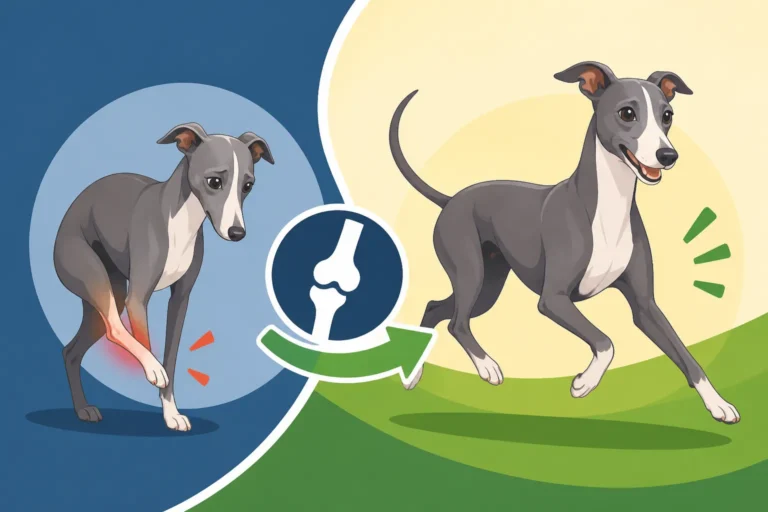
It's incredibly distressing to watch your beloved Italian Greyhound suddenly skip a step, hold up a back leg for a moment, or limp after a burst of zoomies. You immediately think the worst – a broken leg – because we all know how fragile our Iggies can be. But sometimes, that tell-tale skip or bunny hop points to another common orthopedic issue for our delicate sighthounds: patellar luxation, or a slipping kneecap. This guide will walk you through what patellar luxation is, how it's graded, and crucially, which grades typically require surgical intervention to get your Italian Greyhound back to their happy, active selves.
Understanding Patellar Luxation in Italian Greyhounds
Patellar luxation is a fancy way of saying your dog's kneecap (patella) dislocates or slips out of its normal groove on the thigh bone (femur). For Italian Greyhounds, this is a particularly prevalent concern, often due to their unique delicate bone structure and sometimes a genetic predisposition for shallow patellar grooves or misaligned leg bones. It's not usually a sudden traumatic injury like a fracture; instead, it's often a developmental issue that worsens over time or due to repetitive stress. Imagine your kneecap as a train on a track – with patellar luxation, the train keeps jumping off the rails.
Most often, in Italian Greyhounds and other small breeds, the kneecap slips towards the inside of the leg (medial luxation), but it can also slip to the outside (lateral luxation), though this is less common. The instability this causes can range from a minor annoyance to severe lameness and chronic pain. As an Italian Greyhound owner, you're constantly on alert for any sign of discomfort or lameness, especially given their propensity for A Broken Leg Is the Emergency Every Italian Greyhound Owner Fears. Patellar luxation, while not as immediately devastating as a fracture, can still lead to significant issues if not addressed, including the development of arthritis and further orthopedic problems down the line. It's a condition that demands careful observation and a clear understanding of its progression.
Why Italian Greyhounds Are Prone to Patellar Luxation
Our graceful Iggies are unfortunately prone to several orthopedic challenges, and patellar luxation is high on that list. Their finely boned legs and often exaggerated angulation can contribute to the problem. Many veterinarians experienced with sighthounds understand that the breed's conformation can make them more susceptible. It's often an inherited condition, meaning if your Italian Greyhound's parents had it, your pup has a higher chance of developing it too. This highlights the importance of choosing a reputable breeder who screens their breeding stock for such genetic issues.
Beyond genetics, the specific anatomy of an Italian Greyhound can predispose them. The groove in the femur, where the patella normally glides, might be too shallow. Or, the alignment of the thigh bone, shin bone, and kneecap ligament might be off-kilter, causing the kneecap to pull to one side. Over time, with repeated luxations, the groove can become even shallower, and the ligaments supporting the kneecap can stretch, making it easier for the patella to slip out again. This repeated "jumping off the track" can also cause wear and tear on the cartilage and bone, setting the stage for painful arthritis as your Italian Greyhound ages. Owners need to be vigilant for Signs an Italian Greyhound's Kneecap Slips, even if they seem minor at first.
Recognizing the Signs and Symptoms
The signs of patellar luxation in an Italian Greyhound can be subtle or quite obvious, depending on the severity and how often the kneecap slips. You might notice your dog suddenly yelping, picking up a hind leg for a few steps, and then putting it back down as if nothing happened. This is often described as a "skip" or a "bunny hop" gait, where they might run on three legs for a moment until the kneecap pops back into place. This particular symptom can be a strong indicator, as detailed in our article on Why an Italian Greyhound Skips a Step When Running.
Other indicators include:
- Intermittent lameness: Your Ig might limp only occasionally, especially after exercise or a sudden movement.
- Reluctance to jump or use stairs: They might hesitate before getting on the sofa or trying to navigate steps, even if they used to do so with ease.
- Pain: While Italian Greyhounds are incredibly stoic and often try to hide their pain, a yelp or flinching when you touch their knee could be a sign. Learn more about How an Italian Greyhound Hides Pain to help you spot subtle cues.
- Abnormal leg carriage: In more severe cases, the leg might appear bowed or the dog might carry the affected leg stiffly.
- Reduced activity: They might seem less enthusiastic about walks or playtime.
It’s easy to dismiss these early signs, especially in an otherwise energetic Italian Greyhound. However, ignoring them can lead to further joint damage and increased discomfort for your dog in the long run. If you observe any of these symptoms, it’s crucial to consult with your veterinarian.
Deciphering the Grades of Patellar Luxation
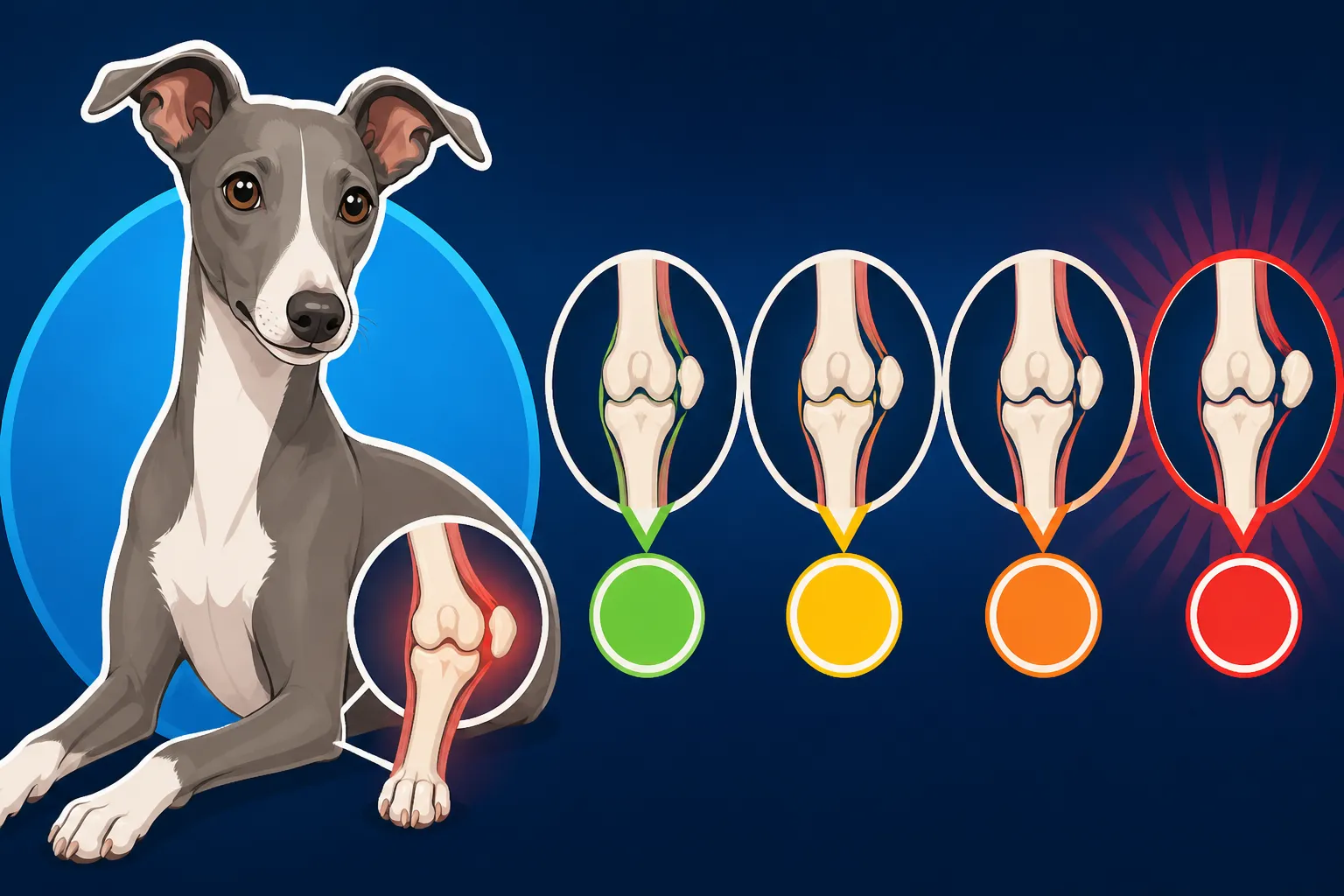
Veterinarians classify patellar luxation into four grades, from I to IV, to describe the severity of the condition. This grading system helps them determine the best course of action, whether it's conservative management or surgical repair. It’s important to understand that these grades aren’t necessarily static; a Grade I luxation could, over time, progress to a Grade II or even higher, especially with continued activity or if the underlying anatomical issues aren't addressed.
Grade I (Mild Luxation):
This is the mildest form. The kneecap can be manually luxated (pushed out of its groove by a vet) but immediately returns to its normal position once released. Clinically, your Italian Greyhound might show very few symptoms, if any. You might occasionally notice a skip in their gait, but it's usually brief and doesn't cause significant pain or lameness. Many Italian Greyhounds with Grade I patellar luxation live full, happy lives without needing surgery, provided they are managed carefully. For example, a young Ig puppy might have a Grade I, and with restricted jumping and consistent monitoring, it might never progress.
Grade II (Moderate Luxation):
Here, the kneecap spontaneously luxates (slips out on its own) and remains luxated for a short period before returning to its normal position. The kneecap might slip out when your Italian Greyhound twists their leg, jumps, or even just changes direction. You'll definitely notice the characteristic "skip" or "hop" more frequently with a Grade II. Your dog might hold the affected leg up for several steps or even minutes before it pops back in. They might show mild discomfort or hesitation during certain movements. This is often the point where owners really start to notice an issue and seek veterinary advice. While some Grade II cases can be managed non-surgically, many veterinarians will begin discussing potential surgical options, especially if the luxation is frequent or causing noticeable pain.
Grade III (Severe Luxation, Mostly Luxated):
In Grade III, the kneecap is luxated most of the time. It can be manually repositioned into the groove, but it will immediately slip out again once the pressure is released. This means your Italian Greyhound's leg is almost constantly experiencing the kneecap out of place. The affected leg will often appear bowed, and your dog will likely experience persistent lameness and discomfort. They might be reluctant to put weight on the leg or may walk with a noticeable limp. This level of luxation can significantly impact their quality of life, making normal activities difficult and painful. At this stage, surgical intervention is almost always recommended to correct the anatomical defects and prevent further damage and chronic pain. The risk of developing severe arthritis early on is very high with Grade III luxation.
Grade IV (Permanent Luxation):
This is the most severe grade. The kneecap is permanently luxated and cannot be manually repositioned into the groove. The entire limb structure is often significantly deformed, with the leg severely bowed or twisted. Your Italian Greyhound will likely experience severe, constant lameness and pain. They might have extreme difficulty walking or even bear weight on the affected leg. The muscles in the leg may atrophy due to disuse. Dogs with Grade IV patellar luxation usually require complex surgical procedures to reconstruct the joint and limb alignment. Without surgery, their quality of life is extremely poor.
Here's a quick overview of the grades:
| Grade | Description | Clinical Signs (Italian Greyhound) | Manual Reduction? | Surgical Recommendation |
|---|---|---|---|---|
| Grade I | Patella can be manually luxated, but immediately returns to normal. | Occasional skip/hop, generally no pain. | Yes | Usually not |
| Grade II | Patella spontaneously luxates, remains out briefly, then returns. | More frequent skips, mild lameness, intermittent pain. | Yes | Often considered |
| Grade III | Patella is mostly luxated, can be manually reduced but reluxates immediately. | Persistent lameness, bowed leg, clear discomfort. | Yes (briefly) | Strongly recommended |
| Grade IV | Patella is permanently luxated, cannot be manually reduced. | Severe, constant lameness, significant limb deformity, severe pain. | No | Almost always required |
When Surgical Intervention Becomes Necessary
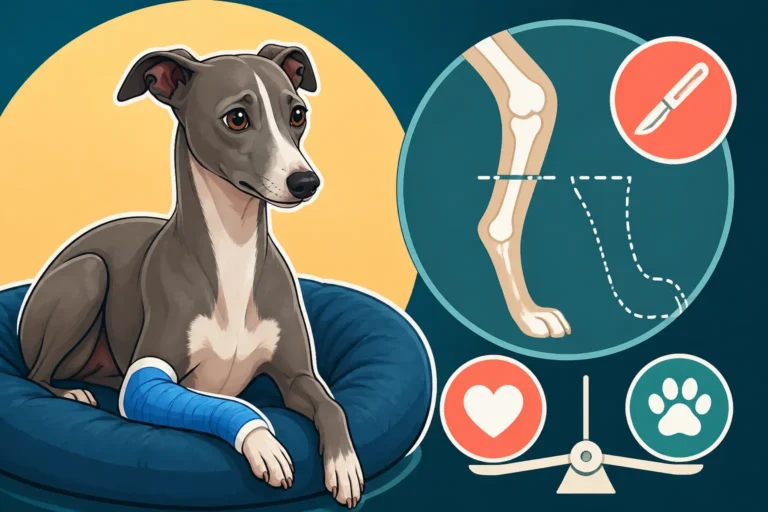
The decision of whether or not to pursue surgery for patellar luxation in your Italian Greyhound is a significant one, and it depends on a multitude of factors beyond just the numerical grade. While Grade I luxations are typically managed conservatively, Grade II, III, and IV cases often warrant surgical consideration. However, it's not a black-and-white decision; your vet, potentially a veterinary orthopedic specialist, will take into account your Italian Greyhound's age, overall health, activity level, and most importantly, their quality of life and level of pain.
Factors Influencing the Surgical Decision
Even for a Grade II luxation, which sits on the fence, several factors can tip the scales towards surgery:
- Frequency and Duration of Luxation: How often does the kneecap slip out? Does it stay out for long periods? An Ig whose kneecap luxates multiple times a day, even if it eventually returns, will experience more cumulative trauma and pain than one whose kneecap rarely slips.
- Degree of Pain and Lameness: Is your Italian Greyhound visibly uncomfortable? Are they consistently limping, refusing to jump, or yelping when the kneecap slips? If the condition is causing significant pain that can't be managed with medication, surgery becomes a more appealing option. Remember, our Iggies are masters at hiding pain, so even subtle signs of discomfort should be taken seriously.
- Progression of the Condition: Has the luxation worsened over time? If your vet has been monitoring a Grade I and it progresses to a Grade II despite conservative management, surgery might be recommended to prevent further deterioration.
- Presence of Other Orthopedic Issues: Sometimes, patellar luxation can coincide with other problems, such as hip dysplasia or Legg Calve Perthes Turns Up in an Italian Greyhound at Six Months. Addressing the patellar luxation might be part of a broader treatment plan.
- Owner's Lifestyle and Dog's Activity Level: An Italian Greyhound who is very active and constantly running and jumping might exacerbate a luxation, whereas a more sedate dog might cope better with conservative management for a longer period. However, we want our Iggies to be able to enjoy their lives to the fullest, so if their activity is severely restricted by pain, surgery is worth considering.
- Potential for Arthritis: Repeated luxation inevitably leads to abnormal wear and tear on the joint cartilage, leading to degenerative joint disease (arthritis). Surgery can help stabilize the joint and slow down the progression of arthritis, offering a better long-term prognosis.
When discussing the costs involved, it's worth noting that orthopedic surgeries can be expensive. Many owners find relief in pet insurance plans like those offered by Healthy Paws, which can significantly offset the financial burden of such unexpected medical needs.
What Surgical Correction Entails
If surgery is recommended for your Italian Greyhound, there are several techniques a veterinary orthopedic surgeon might employ, often in combination, to correct the problem:
- Trochlear Sulcoplasty: This involves deepening the femoral groove (the track where the kneecap sits). If the groove is too shallow, the kneecap has nowhere to sit securely. The surgeon might remove a wedge of bone or use a rasping technique to create a deeper, more defined groove.
- Tibial Tuberosity Transposition: This procedure corrects the alignment of the kneecap ligament. The tibial tuberosity, which is the bony bump on the shin bone (tibia) where the patellar ligament attaches, is cut and then reattached in a new position that keeps the kneecap centered in the groove. This is typically secured with pins or screws.
- Lateral Imbrication: This technique tightens the joint capsule on the side opposite the luxation (often the lateral side for medial luxations) to help hold the kneecap in place.
- Medial Release: If the tissues on the side of the luxation (often the medial side) are too tight and pulling the kneecap out of alignment, the surgeon might release or cut these tissues to reduce tension.
The specific combination of procedures will depend entirely on your Italian Greyhound's unique anatomy and the severity of their luxation. It's a precise surgery, and finding a board-certified veterinary orthopedic surgeon experienced with toy breeds and sighthounds is paramount. They understand the nuances of Why Anesthesia Is Handled Differently in an Italian Greyhound and the delicate nature of their bone structure. Surgery can be a daunting prospect, but for Grades II, III, and especially IV, it often provides the best chance for a pain-free, active life.
Life Beyond Surgery: Management and Prevention
Undergoing surgery for patellar luxation is a big step, but it's often just the beginning of the recovery journey. Post-operative care is crucial for successful healing and long-term stability of the joint. Furthermore, even with surgery, continued management and preventive measures are important to ensure your Italian Greyhound maintains good joint health throughout their life.
Post-Operative Care and Rehabilitation
After surgery, your Italian Greyhound will need strict rest and activity restriction for several weeks, sometimes months. This is critical to allow the bones and soft tissues to heal properly. Your vet will provide detailed instructions, which typically include:
- Crate Rest: Limiting movement to a crate or a small, confined space is usually necessary. This can be challenging for active Iggies, but it's non-negotiable for proper healing.
- Pain Management: Your Ig will be prescribed pain medication and anti-inflammatory drugs to keep them comfortable during recovery. Adhering to the medication schedule is vital.
- Physical Therapy: Controlled physical therapy exercises will likely be recommended, starting gently and gradually increasing in intensity. This might include passive range of motion exercises, gentle massage, and eventually short, controlled walks. A rehabilitation specialist can be invaluable here.
- Monitoring Incision Site: You'll need to keep a close eye on the surgical incision for any signs of infection or complications. An Elizabethan collar (cone) might be necessary to prevent licking.
- Follow-up Vet Visits: Regular check-ups and X-rays will be scheduled to monitor healing progress and ensure the kneecap remains stable.
The recovery period can feel long, especially when your Italian Greyhound is eager to run and play. However, rushing the process can lead to re-injury or poor healing. Patience and strict adherence to your vet's recommendations are key. The cost of rehabilitation can add up, but many pet insurance plans, like Healthy Paws, often cover post-surgical physical therapy, which is a huge relief for owners.
Long-Term Management and Lifestyle Adjustments
Even after full recovery from surgery, a proactive approach to your Italian Greyhound's joint health is essential. The goal is to minimize stress on the joint and support its long-term function.
- Weight Management: Keeping your Italian Greyhound at a healthy weight is paramount. Extra pounds put unnecessary strain on all joints, including the knees. Regularly assess if What an Italian Greyhound Weighs and How to Tell If It Is Right for their frame.
- Controlled Exercise: While adequate exercise is good, high-impact activities like jumping off furniture, aggressive wrestling with larger dogs (Why an Italian Greyhound Puppy Should Not Wrestle Big Dogs), or sudden starts and stops should be minimized. Low-impact activities like leash walks and swimming are excellent alternatives.
- Joint Supplements: Your vet might recommend joint supplements containing glucosamine, chondroitin, and MSM, which can help support cartilage health and reduce inflammation.
- Supportive Environment: Provide ramps or steps for furniture to prevent jumping, which is a major stressor on the knees. Consider non-slip rugs on hardwood floors to provide better traction. Our guide on Ramps and Steps for an Italian Greyhound's Furniture offers practical advice.
- Regular Veterinary Check-ups: Continued monitoring of your Ig's joint health, especially as they age, is important. Early detection of any new issues or signs of arthritis can lead to more effective management. This includes understanding Caring for an Italian Greyhound Past Eleven, as joint issues can become more prominent in their senior years.
While surgery offers a significant solution for patellar luxation, lifelong commitment to good care, informed by your vet's advice and potentially covered by a comprehensive pet insurance plan like Healthy Paws, will give your Italian Greyhound the best chance at a comfortable and joyful life.
Disclaimer
This guide is intended for informational purposes only and does not constitute veterinary advice. Always consult with a qualified veterinarian for any health concerns or before making any decisions about your Italian Greyhound's medical care.