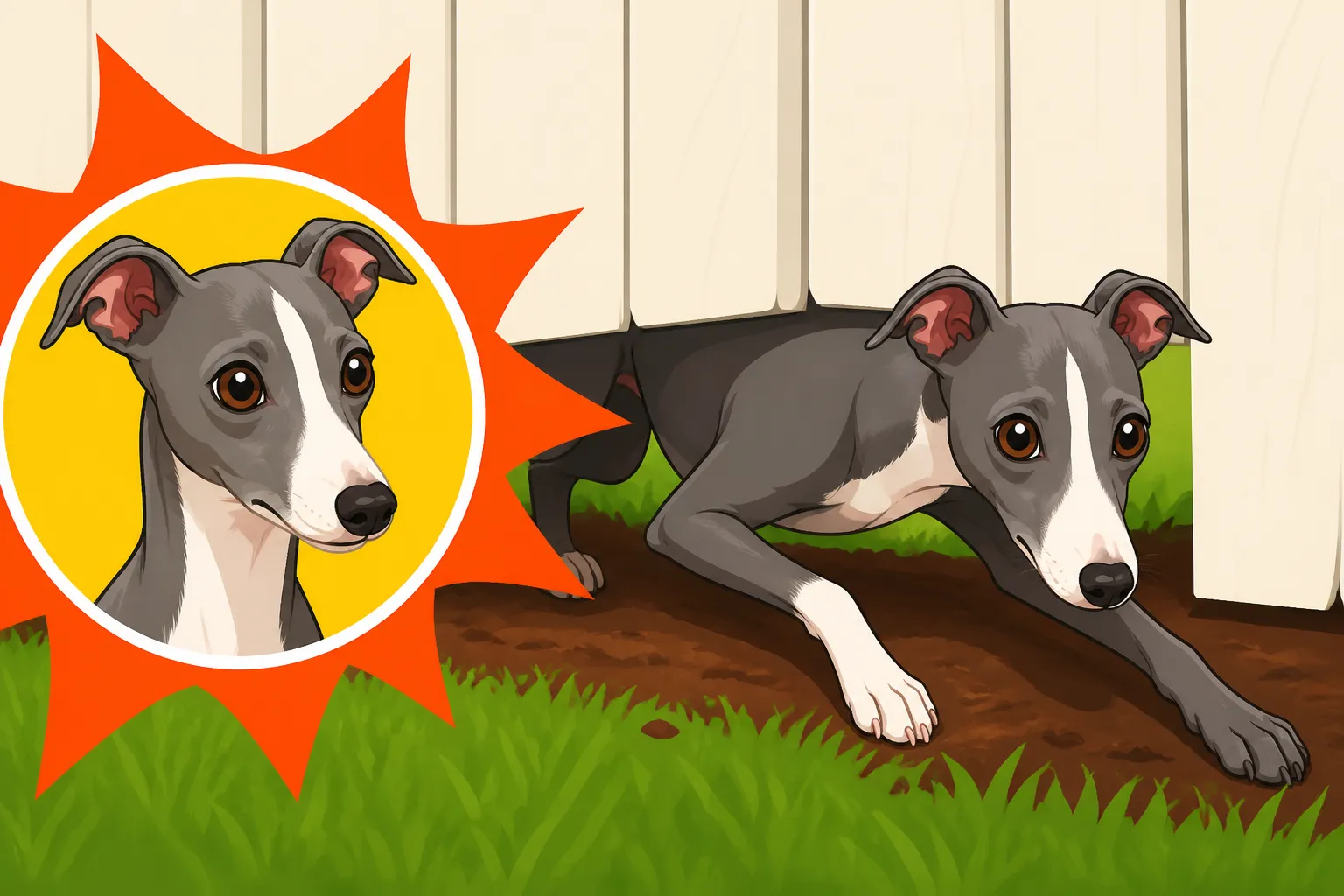
How an Italian Greyhound Gets Under a Fence
It’s a heart-stopping moment for any Italian Greyhound owner: you let your little shadow out into the yard, turn your back for a second, and when you look again, they’re simply… gone. These elegant, delicate dogs are masters of escape, and one of their most frustrating talents is finding a way right under what you thought was a perfectly secure fence. This guide is here to walk you through why your Italian Greyhound might be eyeing the ground beneath your fence and, more importantly, how to prevent them from slipping away to explore the great unknown.
The Italian Greyhound's Unique "Under-the-Fence" Superpowers
Italians Greyhounds are built like tiny, sleek athletes, and while their apparent fragility often makes us worry about them breaking a leg, their physical attributes also make them surprisingly adept at Houdini-like escapes. Understanding their unique physical makeup and natural instincts is the first step to truly securing your perimeter.
Their Lithe, Flexible Build
Unlike many breeds with more robust, stocky bodies, Italian Greyhounds possess an incredibly lithe and flexible frame. Their slender bones, narrow chests, and deep tuck-up mean they can contort their bodies into shapes you wouldn't believe. What looks like a tiny gap in your fence to you, or even just a few inches of clearance at the bottom, can be a wide-open invitation for an IG. They can often flatten themselves against the ground, using their long, agile legs to push and wiggle their way through openings that seem impossibly small. It’s like watching a liquid dog flow through a crack in a wall; it’s both astonishing and terrifying for an owner. This flexibility, coupled with their relatively small size, means they don't need much space to squeeze out. Even a well-maintained fence can have minor imperfections, slopes in the yard, or uneven ground that creates just enough space for an enterprising Italian Greyhound to make their move.
Their Instinct to Chase and Explore
Beyond their physical capabilities, Italian Greyhounds possess a strong prey drive, a remnant of their sighthound heritage. If they catch sight of a squirrel, a rabbit, or even a blowing leaf on the other side of the fence, that instinct can kick in, overriding any training or hesitation they might have. For a breed that can reach surprising speeds, a chase is an exhilarating, all-consuming urge. You might be wondering How Strong an Italian Greyhound's Prey Drive Is, and trust me, it’s formidable. Once that chase instinct is activated, they will exploit any weakness in your fence with laser-like focus. They aren't trying to be naughty; they're simply following their deeply ingrained nature. This powerful drive to pursue can make them exceptionally persistent in their escape attempts, tirelessly testing the boundaries until they find a weak spot. It’s not about being disobedient; it’s about being a sighthound, plain and simple.
The Role of Boredom and Anxiety
An Italian Greyhound that is bored or suffering from separation anxiety can also become a persistent escape artist. These dogs thrive on companionship and mental stimulation. If left alone for long periods in a yard without toys, shade, or interaction, they can become restless. A bored IG will often turn to exploring their environment, and that includes looking for ways out. For some, the anxiety of being alone might lead them to desperate attempts to rejoin their human family. They might not be trying to escape for freedom, but rather to alleviate their distress. This can manifest as relentless digging, pushing, or pacing along the fence line, systematically searching for a weak point. If you notice your IG exhibiting signs of stress or boredom, like excessive barking or destructive chewing, while unsupervised, it might be a clue that they’re also looking for an exit strategy. This isn't just a concern for fences; a stressed Italian Greyhound might also Why an Italian Greyhound Bolts Through a Door if given the chance.
Common Methods Italian Greyhounds Use to Get Under Fences
Italians Greyhounds are surprisingly resourceful when it comes to breaching a perimeter. They don't always use brute force; often, it's a combination of clever observation, agility, and pure persistence. Knowing how they typically get out helps you secure your yard effectively.
Digging Under the Fence Line
This is perhaps the most obvious, but often underestimated, method. While Italian Greyhounds aren't known as avid diggers like terriers, they absolutely will dig if motivated. A slight gap, a soft spot in the soil, or a tempting scent from the other side can be all it takes. They'll use their slender paws and sharp nails to scratch away at the earth, creating a small trench that, when combined with their flexible bodies, allows them to wriggle through. This is particularly common if the fence sits on uneven ground, allowing small gaps between the bottom rail and the soil. You might walk the fence line regularly and not even notice a small divot forming until it's too late. It doesn't take much, especially if they dig a little, then push with their whole body, using their narrow frame to their advantage. They learn quickly which spots offer the least resistance.
Squeezing Through Small Gaps
This goes back to their incredibly flexible physique. An Italian Greyhound can squeeze through incredibly tight spaces. Think about the gaps between fence pickets, where two panels meet, or even where a gate doesn't quite seal perfectly. If there's a space that's barely wider than their head, they can often manipulate the rest of their body through it. Their narrow skull and almost conical shape allow them to test the waters with their nose and head first. If that goes through, the rest of their sleek body is often not far behind. This is especially true for puppies or younger Italian Greyhounds who are still learning their limits and are driven by curiosity. These are often the gaps that human eyes overlook, dismissing them as "too small" for a dog. For an Italian Greyhound, "too small" is merely a suggestion.
Exploiting Uneven Terrain or Landscaping
Your yard might seem perfectly secure, but slight changes in elevation can create massive vulnerabilities for an Italian Greyhound. A small dip in the lawn, a raised garden bed that makes the fence seem shorter, or even roots from a nearby tree pushing up the soil can give them the leverage or space they need. Imagine a slight depression where your fence meets the ground – that's a perfect tunnel waiting to happen. Likewise, if you have landscaping rocks or bricks near the fence line, these can provide a step-up, giving them just enough height to reach an upper gap or a better angle to push under. They're smart little opportunists, and they'll quickly identify and exploit any area where the ground slopes away from the fence, effectively creating a larger opening underneath. These are the subtle weak points that require a careful, ground-level inspection of your entire fence line.
Securing Your Fence Against the Agile Italian Greyhound
Preventing escapes requires a proactive and thorough approach, addressing both the physical vulnerabilities of your fence and your Italian Greyhound's natural inclinations. It’s not just about building higher; it’s about securing the perimeter from the ground up.
Fortifying the Bottom of the Fence
The most critical area to address is the very bottom of your fence. Since Italian Greyhounds excel at getting under, you need to eliminate any gaps.
- Bury Wire Mesh or Chicken Wire: A highly effective strategy is to bury a section of sturdy wire mesh or chicken wire along the bottom of your existing fence. Extend it about 12-18 inches deep and then bend it outwards into your yard by another 12-18 inches. This creates an "L-shaped" barrier underground. If your Italian Greyhound tries to dig near the fence, they'll hit the wire mesh, and if they try to dig further out, the bent-out section will discourage them, as they’ll be digging away from the fence rather than directly under it. This effectively creates an anti-digging apron. You can find rolls of this type of wire at local hardware stores or readily available on Amazon.
- Install a "Kickboard": If your fence has a gap at the bottom, consider adding a kickboard. This is a solid piece of lumber or durable plastic attached to the bottom of the fence, extending slightly into or flush with the ground. This physically blocks any attempts to squeeze under. Ensure it's firmly secured and that there are no gaps where the board meets the ground, even on uneven surfaces. You might need to trench it in slightly or backfill with dirt to create a truly seamless barrier.
- Pour a Concrete Trench: For the most determined escape artists, or if you're building a new fence, pouring a concrete footer or trench along the entire fence line is the ultimate deterrent. This creates an impassable barrier that an Italian Greyhound cannot dig under or squeeze through. While more labor-intensive and costly, it offers permanent peace of mind.
Eliminating Gaps and Weak Points
Beyond the bottom of the fence, you need to be a detective, meticulously inspecting every inch of your perimeter for potential weaknesses.
- Regular Fence Inspections: Make it a routine to walk your fence line regularly, looking for any loose boards, holes, or shifting panels. Pay close attention after heavy rain or storms, which can erode soil or shift fence posts, creating new gaps. Look at it from an Italian Greyhound's perspective – where would they try to get out? Get down on your hands and knees if you have to, especially in areas with dense vegetation.
- Secure Gates: Gates are often the weakest link. Ensure your gate latches securely and doesn't have a large gap at the bottom or sides. Consider adding a secondary latch or a bottom sweep to eliminate any clearance. A simple L-bolt latch at the bottom of the gate can prevent it from being pushed outwards, even if the primary latch fails.
- Reinforce Areas with Uneven Terrain: If your yard has slopes or uneven ground, these areas need extra attention. You might need to add additional fencing material, landscape timbers, or fill with soil to ensure the fence maintains consistent contact with the ground. For instance, if a section of the fence is higher off the ground due to a dip, you could add a short section of solid paneling or mesh directly underneath, anchored firmly into the ground.
Training and Supervision Strategies
While physical barriers are paramount, training and supervision play a crucial role in preventing escapes and ensuring your Italian Greyhound's safety.
- Supervised Yard Time: Never leave your Italian Greyhound unsupervised in the yard, especially if they have a history of escape attempts or if your fence isn't fully fortified. Even a "secure" yard can have a hidden weakness they've been patiently observing. When you are outside with them, actively engage with them. Play fetch, practice some basic obedience commands, or simply enjoy their company. This reduces boredom and strengthens your bond. It also gives you an immediate opportunity to redirect them if you see them sniffing suspiciously along the fence line.
- Recall Training: Should the unthinkable happen and your Italian Greyhound does get out, a reliable recall can be a lifesaver. This is incredibly challenging with a sighthound's prey drive, but consistent, positive reinforcement training can make a difference. Work on recall in a secure, enclosed area first, gradually introducing more distractions. Tools like long lines can help you practice safely. Companies like BAXTER & Bella offer online puppy training programs that cover crucial recall skills, even if they're not specifically geared towards fence-breaking prevention. However, remember that Why an Italian Greyhound Cannot Be Trusted Off Leash, Ever is a truth universally acknowledged by IG owners, even with the best recall.
- Provide Enrichment: A well-exercised and mentally stimulated Italian Greyhound is less likely to become bored and destructive, which can include escape attempts. Ensure they get regular walks, playtime, and puzzle toys. Indoor zoomies are great, but dedicated outdoor time, even on a long lead or in a carefully secured space, is important. A bored dog is an inventive dog when it comes to finding ways out. Consider rotating toys, offering chew items, and spending quality time together to fulfill their needs. For ideas on keeping them engaged, check out What an Italian Greyhound Does When Bored.
- Using a Long Line for Added Security: Even in a fenced yard, if you have doubts, use a lightweight long line attached to a well-fitting harness (not a collar, to avoid neck injury). This gives you an extra layer of control and allows you to quickly intervene if they start investigating a suspicious spot along the fence. Just be sure to supervise closely so the line doesn't get tangled or snagged. You can find various lengths and materials on Amazon.
Fence Modification Comparison
Here's a quick look at different fence modification strategies to help secure your yard:
| Method | Description | Pros | Cons | Best For |
|---|---|---|---|---|
| Bury Wire Mesh | Install L-shaped wire apron (12-18" deep, 12-18" out) underground. | Highly effective dig deterrent; relatively affordable. | Requires digging a trench; can be labor-intensive. | Preventing digging under wooden/chain-link fences. |
| Install Kickboard | Attach solid board to fence bottom, flush with or trenched in ground. | Blocks squeezing through bottom gaps; aesthetically pleasing. | May require cutting to fit uneven ground; less effective against digging. | Fences with consistent bottom gaps. |
| Concrete Trench | Pour a concrete footer along the entire fence line. | Permanent, impassable barrier; no digging or squeezing possible. | Most expensive; very labor-intensive; difficult to remove. | New fence installations or maximum security. |
| Fill Gaps with Rocks/Dirt | Use large rocks, gravel, or packed dirt to fill small gaps. | Low cost, easy to implement for minor issues. | Less permanent; requires regular maintenance; not dig-proof. | Temporary fixes or very small, isolated gaps. |
| Gate Bottom Sweep | Attach a brush or rubber sweep to the bottom of the gate. | Prevents squeezing under the gate; inexpensive. | May wear out over time; only for gate bottoms. | Securing gate bottoms with small clearances. |
What to Do If Your Italian Greyhound Escapes
Despite all your best efforts, an Italian Greyhound escape can still happen. Knowing what to do in those panic-inducing moments can significantly increase the chances of a safe return.
The Immediate Aftermath: Don't Chase!
Your first instinct might be to sprint after them, yelling their name. Resist this urge! For an Italian Greyhound, especially one caught up in the thrill of the chase (whether it's a squirrel or just the excitement of being "free"), being pursued by a frantic human often makes them run faster and further. They interpret your chase as part of the game or, worse, as a threat. Instead of chasing, immediately turn and run in the opposite direction, calling their name in an excited, happy voice. Many sighthounds, intrigued by this unexpected behavior, will often turn and follow. You can also drop to the ground and pretend to be injured or offer high-value treats. The goal is to make yourself the most interesting thing in the environment, not the scariest. For more on this, check out What to Do When an Italian Greyhound Gets Loose.
Search Strategies and Local Resources
Once the immediate panic subsides, if your Italian Greyhound hasn't returned, it's time to activate a focused search.
- Alert Neighbors Immediately: Italian Greyhounds are distinctive and often easily recognized. Let your immediate neighbors know, provide a clear photo, and tell them not to chase if they see your dog, but to call you.
- Canvas the Area: Walk or drive your immediate neighborhood, calling their name. Bring their favorite squeaky toy or a bag of their most enticing treats. Think about what What an Italian Greyhound Chases – local wildlife, other dogs – and look in those directions.
- Contact Local Shelters and Rescues: File a lost pet report with every animal shelter, animal control facility, and Italian Greyhound rescue group within a reasonable radius. Provide a detailed description and photo. Many Italian Greyhound specific rescues, like IGCA Rescue, have networks that can help spread the word quickly.
- Utilize Social Media: Post on local lost and found pet groups on social media platforms. Include multiple clear photos, your dog's name, their last known location, and your contact information. Emphasize their timid nature and advise people not to chase.
- Prepare "Lost Dog" Posters: Create simple, clear posters with a large photo, "LOST DOG" in bold letters, and your contact information. Place these at major intersections, local vet clinics, pet supply stores (like those that might sell products also found on Amazon), and community boards.
Preventing Future Escapes
The experience of a lost Italian Greyhound is traumatic, and it reinforces the need for ongoing vigilance.
- Double-Check All Repairs: After an escape, painstakingly re-evaluate your entire fence line. Whatever method they used, it needs to be permanently secured. This might mean investing in more robust solutions like a concrete trench or reinforcing with heavy-gauge wire.
- Consider a Double-Gated System: For extremely agile or determined escape artists, or if you have children or guests who frequently use the gate, a double-gated system can add an extra layer of security. This involves creating a small enclosure right at the gate entrance, so even if the first gate is accidentally left open, there's another barrier.
- Continuous Training and Positive Reinforcement: While physical barriers are key, continuing positive reinforcement training for recall and boundary awareness, even if it's just for peace of mind, is beneficial. A well-adjusted, confident Italian Greyhound is generally less likely to be looking for an escape route born of boredom or anxiety. Consider professional trainers or online resources if you struggle with these behaviors.
An Italian Greyhound's ability to get under a fence is a testament to their unique athleticism and drive. By understanding these traits and taking diligent steps to secure your perimeter, you can ensure your beloved companion stays safe and sound in their own yard.
Disclaimer
This article is for general informational purposes only and does not constitute professional advice. Laws, prices and regulations vary by location and change over time. Consult a qualified professional for guidance on your specific situation.