Whether a Second Italian Greyhound Fixes the Anxiety
Dealing with an Italian Greyhound who struggles with separation anxiety can be absolutely heart-wrenching. You walk out the door, and the frantic barking starts, or you come home to chewed baseboards and accidents, and it just rips at your heart. It's a common, incredibly frustrating challenge many of us Italian Greyhound owners face, and it often leaves us wondering if there's any way to truly ease their distress. This guide is here to explore a popular, yet often misunderstood, solution: getting a second Italian Greyhound, and whether it truly helps calm an anxious pup.
Understanding Italian Greyhound Separation Anxiety
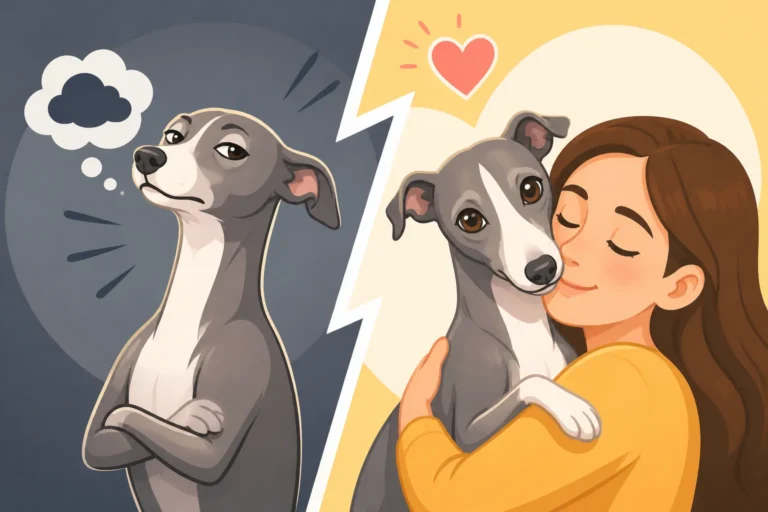
Before we dive into whether another furry friend can be the answer, it's crucial to understand what separation anxiety truly is for an Italian Greyhound. It's not just a little bit of loneliness; it's a genuine panic response, a fear of being left alone, often rooted in their incredibly deep bond with their human companions.
The Root Causes of Italian Greyhound Anxiety
Italian Greyhounds are often referred to as "Velcro dogs" for a reason. They were bred for centuries to be companions, to be literally attached to their people, warming laps and following every move. This intense desire for constant companionship means that being left alone can trigger profound distress. It's in their DNA. Think about it: a breed developed to be a royal confidant, tucked into sleeves and accompanying nobles everywhere, is suddenly expected to be okay on its own for hours. That's a huge ask. The Velcro Dog: What Constant Company Means With an Italian Greyhound highlights just how deeply ingrained this need for closeness is.
Beyond their breed tendencies, individual Italian Greyhounds can develop separation anxiety due to various factors. Perhaps they had a traumatic experience in a previous home, were rehomed multiple times, or spent their critical socialization period with limited exposure to being alone. A sudden change in routine, like a human suddenly working longer hours, or even a move to a new house, can also trigger this anxiety. Their delicate nature means they are often highly sensitive to changes in their environment and your emotional state, making them more prone to stress and insecurity when left without their primary attachment figure.
Common Signs Your Italian Greyhound is Struggling Alone
It's important to differentiate between mild boredom or a bit of whining when you leave and true separation anxiety. A dog with mild boredom might chew a toy for a bit then settle down. An Italian Greyhound with separation anxiety, however, displays a more intense and often destructive range of behaviors. You might hear frantic, incessant barking or howling as soon as you close the door, or find that they've soiled the house despite being perfectly housetrained when you're home. Many owners discover the extent of the problem by setting up a camera.
Destructive chewing is another hallmark, but it's not just any chewing. Anxious IGs often target exit points like doors, doorframes, windowsills, or even their crates in desperate attempts to escape and reunite with you. What an Anxious Italian Greyhound Does to a Door can be truly shocking, revealing scratched wood and chewed drywall. Other signs include pacing, panting excessively, drooling, or even self-mutilation, like licking or chewing at their paws. These aren't acts of defiance; they are clear indicators of intense panic and fear. Observing these behaviors, often captured through a pet camera, is how most owners truly realize the depth of their Italian Greyhound's distress. If you're seeing these kinds of behaviors, it's time to seriously consider intervention. Signs an Italian Greyhound Has Separation Anxiety delves deeper into these tell-tale signs.
The "Second Dog" Theory: A Hopeful, But Often Misguided, Approach
When faced with an Italian Greyhound suffering from separation anxiety, it's natural to grasp at any potential solution. For many, the idea of getting a second dog seems like a logical, even comforting, answer. After all, if your dog is lonely, wouldn't a companion be the perfect fix?
The Appeal of a Companion
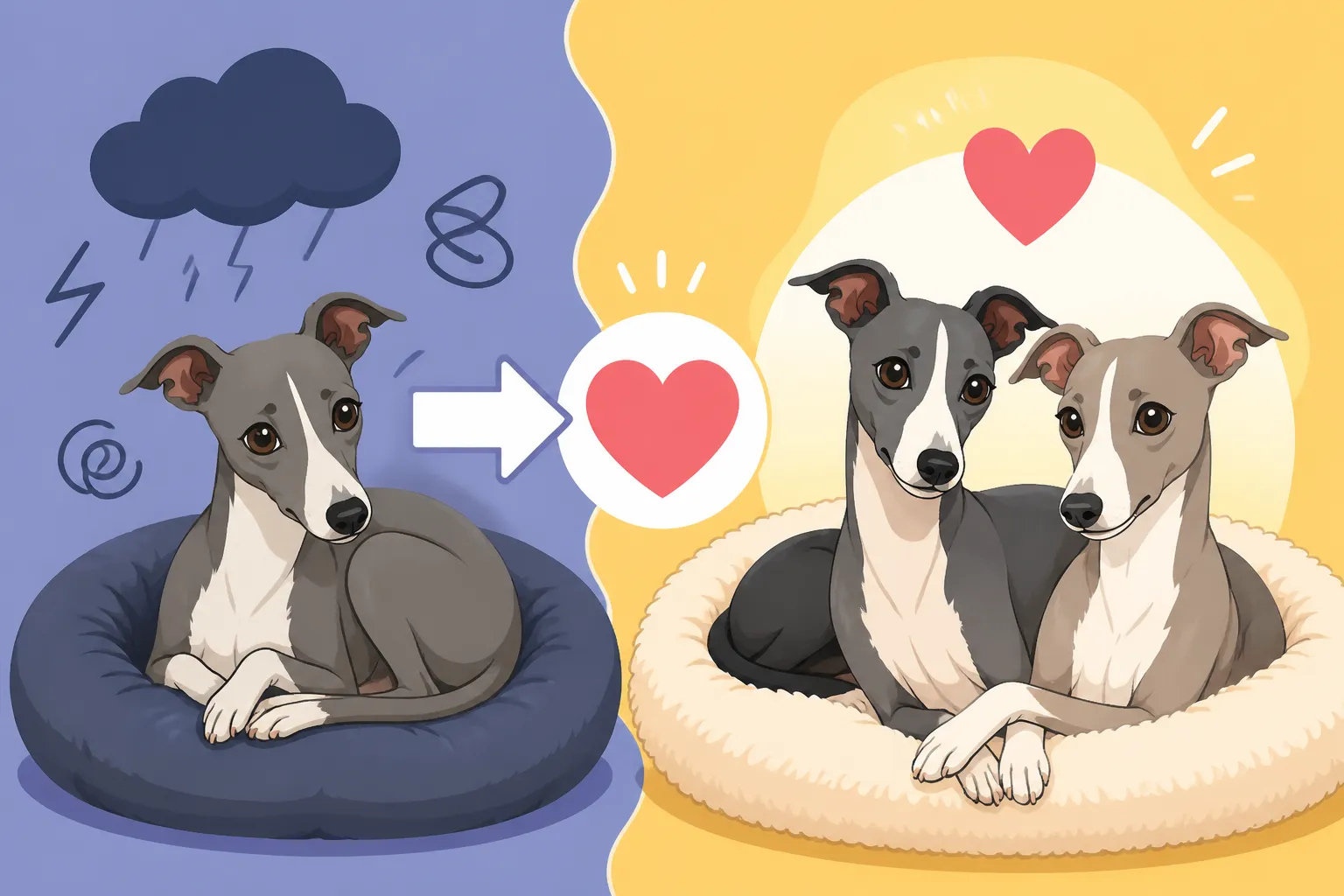
The thought process is simple and, on the surface, entirely rational: if your Italian Greyhound is distraught when you leave, perhaps they just need another friend to keep them company. This often stems from a place of deep love and guilt. We, as owners, feel terrible leaving our beloved pets, especially when we know they're struggling. Imagining two little Iggies curled up together, playfully chasing each other, or simply resting side-by-side instead of pining for us, offers immense comfort. It feels like a humane and loving solution, a way to ensure our first dog is never truly "alone" even when we're gone.
Many anecdotal stories circulate of dogs who seemed to improve with a companion, fueling this hope. Owners might see their dog perk up when another dog is around, or notice less immediate distress upon departure when a canine friend is present. It’s easy to project our human understanding of companionship onto our pets, assuming that what brings us comfort in solitude will do the same for them. This desire for a quick, elegant solution to a complex behavioral problem makes the "second dog" theory incredibly appealing, promising a way to alleviate both our dog's suffering and our own guilt.
The Pack Mentality Myth vs. Reality
While dogs are undoubtedly social animals and often thrive in groups, the concept of a "pack mentality" immediately solving separation anxiety is largely a myth. Separation anxiety is not typically about a dog feeling lonely for any companion; it's often a deep-seated fear or panic specifically tied to the absence of their primary human caregiver. Your Italian Greyhound isn't just missing a dog; they're missing you. A second dog, no matter how lovely or playful, cannot replicate that specific bond or address the root cause of the anxiety that your presence usually alleviates.
In reality, a new dog might not soothe the anxious Italian Greyhound at all. If the first dog's anxiety is severe and focused on the human, the second dog might simply be an ignored presence, or worse, become a new source of stress or competition. Furthermore, instead of alleviating the problem, the new dog might actually learn anxious behaviors from the first dog, leading to two dogs with separation anxiety. Imagine coming home to double the destruction or double the barking chorus – that's a real possibility. While some dogs certainly benefit from canine companionship, true separation anxiety often requires more targeted, behavioral intervention that a new playmate simply can't provide.
When a Second Italian Greyhound Might (and Might Not) Help
Deciding whether to add another Italian Greyhound to your family is a big decision, and it's even more complex when you're hoping it will solve an existing behavioral issue. There are specific circumstances where a companion could be beneficial, but just as many, if not more, where it could worsen the situation.
Scenarios Where a Companion Can Be Beneficial
If your Italian Greyhound's "anxiety" is more akin to mild loneliness, boredom, or a touch of puppy energy that needs an outlet, then a second dog might provide a wonderful solution. This often manifests as quiet whining, some restless pacing, or perhaps a bit of inappropriate chewing on non-exit-related items. In these cases, the first dog isn't in a full-blown panic; they're just looking for something to do or someone to interact with. A second Italian Greyhound could provide that much-needed company, engaging them in play, offering a snuggle buddy, and generally making solo time less dull. Whether Two Italian Greyhounds Are Easier Than One explores how having a pair can sometimes create a more self-sufficient, happier dynamic.
For some Italian Greyhounds, the presence of any other dog is comforting, even if they're still missing their human. If your dog is generally outgoing, enjoys other dogs, and has shown signs of being less stressed when another dog (even a visitor) is around, a permanent canine companion could make a positive difference. This works best when the anxiety is not severe, and the original dog is well-adjusted in most other areas, simply needing a distraction or a sense of "pack" security when you're not there. They might be perfectly content just sharing a bed or playing a quick game of chase, making the hours you're away feel shorter and less stressful. However, this is a nuanced situation, and it's essential to honestly assess if your dog's issues truly fall into this "mild loneliness" category rather than true separation panic.
When a Second Dog Can Make Things Worse
Unfortunately, for many Italian Greyhounds suffering from true, intense separation anxiety, introducing a second dog can not only fail to resolve the problem but can actively make it worse. If your IG's anxiety is profoundly tied to your absence, another dog cannot fill that void. The anxious dog's distress will likely continue, and the new dog will simply be an unhelpful witness. We've seen scenarios where the new, initially calm Italian Greyhound starts to pick up on the first dog's anxiety cues – the frantic pacing, the whining, the desperate attempts to escape. Now, instead of one anxious dog, you have two, often amplifying the chaos when you're gone.
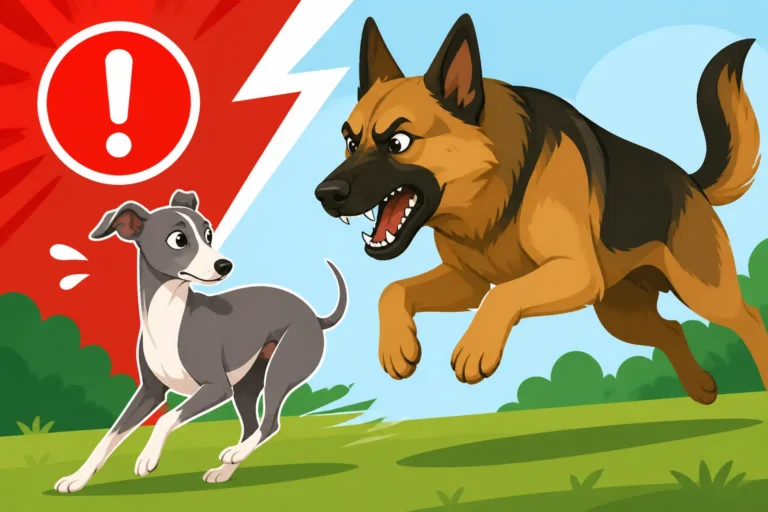
Furthermore, introducing a new dog can create entirely new behavioral issues. Resource guarding (over toys, food, or even your attention) can develop, leading to tension and stress between the dogs. If the new dog is too boisterous or plays too roughly, it could even lead to injuries for your delicate Italian Greyhound, whose bones are notoriously fragile. Why an Italian Greyhound Should Not Play With Large Dogs is a constant reminder of their vulnerability. An already anxious dog doesn't need additional stress from a new housemate, especially if that housemate isn't a perfect fit. It's crucial to understand that simply adding another dog is often a gamble, and the stakes are high, potentially compounding the very problem you're trying to solve.
| Factor | Potential Outcome with Second IG (Mild Loneliness) | Potential Outcome with Second IG (Severe Separation Anxiety) |
|---|---|---|
| Distress Level | Reduced | Unchanged or Worsened |
| Destructive Behavior | May decrease due to distraction | Continues, or may become double the destruction |
| Vocalizations | May decrease | Continues, or both dogs may bark |
| Bonding | Likely to form a positive companionship | May not bond, or new dog may become anxious |
| New Issues | Low risk | High risk of resource guarding, amplified anxiety |
| Owner Stress | Potentially reduced | Significantly increased |
| Financial Cost | Double for food, vet, etc. | Double for everything, plus potential behaviorist fees |
Comprehensive Strategies Beyond Just Another Dog
While the idea of a second Italian Greyhound offering a quick fix for separation anxiety is appealing, it's rarely the complete answer. True resolution often requires a multifaceted approach that addresses the core issues, not just the symptoms.
Training and Behavioral Modification
The cornerstone of managing separation anxiety in an Italian Greyhound is a consistent, patient, and positive training program. This isn't about punishment; it's about helping your dog feel safe and secure when you're not there. One of the most effective techniques is desensitization and counter-conditioning. This involves gradually accustoming your IG to your absence, starting with incredibly short periods – literally seconds – and slowly increasing the duration. You might practice putting on your shoes, grabbing your keys, and then sitting back down, never actually leaving, to desensitize them to your "departure cues."
Pair these exercises with high-value treats or toys that are only given when you leave and taken away when you return. This helps your dog associate your departure with something positive. Crate training, when introduced correctly and positively, can also be a valuable tool, offering a safe, den-like space where your dog can feel secure rather than exposed. Leaving an Italian Greyhound Crated requires careful introduction and ensuring the crate is a comfort, not a punishment. Online platforms, like those offered by BAXTER & Bella, often provide structured programs and support for tackling separation anxiety, guiding you step-by-step through these complex training protocols. The goal is to teach your Italian Greyhound that your departures are temporary and not something to fear, and that they can Teaching an Italian Greyhound to Settle Alone in your absence.
Environmental Enrichment and Management
Beyond direct training, creating an environment that supports your Italian Greyhound's emotional well-being while you're away is paramount. This means providing plenty of mental and physical stimulation before you leave, so they are tired and content. A brisk walk or a good play session can work wonders. Once you leave, engage their minds with puzzle toys stuffed with their favorite treats, or long-lasting chews that will occupy them for a significant period. You might consider leaving calming music specifically designed for dogs, or even a talk radio station, as background noise to mask outdoor sounds and provide a sense of presence.
A comfortable, secure resting spot, perhaps a plush bed with a blanket they can burrow into, is also important. For some owners, installing a pet camera (easily found on Amazon) offers not just peace of mind but crucial insights into their dog's behavior when alone, helping to tailor interventions more effectively. These cameras often have two-way audio, allowing you to speak to your dog, though some experts caution against this as it can confuse an anxious dog. Ultimately, the goal is to manage their environment to minimize triggers and maximize their sense of security and engagement while you're gone.
Professional Help and Support
It's absolutely vital to recognize that you don't have to tackle severe separation anxiety alone. In many cases, professional help is not just beneficial but necessary. A certified professional dog trainer (CPDT) specializing in separation anxiety can provide tailored strategies and hands-on guidance, helping you implement desensitization and counter-conditioning protocols effectively. They can assess your specific situation, identify triggers, and develop a personalized plan that addresses your Italian Greyhound's unique needs.
For very severe cases, or when behavioral modification alone isn't enough, consulting a veterinary behaviorist might be the next step. These are veterinarians with advanced training in animal behavior, who can prescribe medication to help manage your dog's anxiety in conjunction with behavioral therapy. Medication is never a standalone solution, but it can significantly lower your dog's anxiety levels enough for the training to be more effective. Don't view seeking professional help as a failure; it's a sign of a responsible and loving owner committed to their Italian Greyhound's welfare.
The Realities of Life with Two Italian Greyhounds
Even if you hope a second Italian Greyhound might help with anxiety, it's essential to approach the decision with open eyes, understanding the significant practical implications that come with doubling your dog family.
Increased Costs and Time Commitments
Adding a second Italian Greyhound means doubling almost every single expense. From the obvious like food and treats, to the less apparent, like annual vet check-ups, vaccinations, and parasite prevention. Given the breed's delicate nature, the potential for unexpected What an Italian Greyhound's Emergency Vet Visit Costs also doubles. What the First Year With an Italian Greyhound Costs is already substantial for one, and it scales up dramatically with two. You're looking at increased costs for beds, toys, crates, and even professional grooming if your dogs need it (though Iggies are low maintenance in that regard). Even routine dental cleanings, a common necessity for Italian Greyhounds, will become a recurring double expense. What an Italian Greyhound Costs Per Month can quickly become a significant portion of your budget.
Beyond the financial outlay, the time commitment expands exponentially. Training two dogs, especially if one or both have behavioral quirks, requires immense patience and consistency. Walks, playtime, individual cuddles, and even just managing their daily routines take more time. If you're hoping two dogs will keep each other company, remember they still need individual attention, training, and enrichment from you. What might seem like a simple solution can quickly become a significant drain on both your wallet and your free time, requiring a dedication that not every household can realistically provide.
Potential for New Behavioral Challenges
While we dream of two Italian Greyhounds living in perfect harmony, the reality can sometimes be more complicated. Introducing a second dog, even another Italian Greyhound, can unfortunately trigger new behavioral challenges you hadn't anticipated. Sibling rivalry, for instance, is a real possibility. One dog might try to assert dominance, or competition over resources – whether it's the prime spot on the sofa, a favorite toy, or even your undivided attention – can emerge. This can create stress and tension in the household, which is the last thing an already anxious dog needs.
Moreover, if your original Italian Greyhound is prone to separation anxiety, the new dog, even if initially calm, might start to mimic or feed off the anxious behaviors. Instead of one dog barking and pacing when you leave, you might now have a chorus of two. The emotional contagion among dogs is real, and an anxious dog can inadvertently teach the new dog to feel insecure. You might also find yourself managing different personalities, energy levels, and training needs, which can be far more complex than dealing with a single dog. Instead of solving the initial problem, you could inadvertently create a whole new set of issues to navigate.
In conclusion, while the desire to alleviate your Italian Greyhound's separation anxiety with a second companion comes from a place of deep love, it's rarely the straightforward solution many hope for. For dogs experiencing mild loneliness or boredom, a second, well-matched Italian Greyhound might indeed bring comfort and companionship. However, for those suffering from true, intense separation anxiety, getting another dog often fails to address the root cause and can even complicate matters, leading to increased costs, more behavioral challenges, and potentially two anxious dogs instead of one. The most effective approach remains a dedicated program of desensitization, counter-conditioning, environmental enrichment, and, when necessary, professional guidance from a certified trainer or veterinary behaviorist. Focusing on these proven methods offers a far greater chance of helping your beloved Italian Greyhound find peace when you can't be by their side.
Disclaimer
This article is for general informational purposes only and does not constitute professional advice. Laws, prices and regulations vary by location and change over time. Consult a qualified professional for guidance on your specific situation.