What an Italian Greyhound Barks At
Ah, the Italian Greyhound bark! For such a delicate, elegant creature, their vocalizations can sometimes be surprisingly mighty, and often, utterly baffling. You might find yourself wondering what exactly has set off your little shadow this time, or why they seem to have developed a personal vendetta against the mail carrier. It's a common frustration, especially for new owners who might have expected a quiet, dainty companion. This comprehensive guide will help you decode the mysteries of your Italian Greyhound's barks, understand their common triggers, and equip you with practical strategies to manage excessive vocalization, bringing a bit more peace to your home.
Understanding the Italian Greyhound Bark: More Than Just Noise
It's easy to dismiss persistent barking as just "noise," but for your Italian Greyhound, it's a vital form of communication. They're not just trying to annoy you; they're expressing themselves, reacting to their environment, or signaling a need. Understanding this fundamental truth is the first step toward effectively managing their vocal habits.
The Sighthound Voice: A Distinctive Sound
If you've spent any time around an Italian Greyhound, you'll know their bark isn't quite like other dogs. It's often high-pitched, sharp, and can carry surprisingly far, especially when they're truly invested in their message. Unlike some larger breeds with deep, resonant barks, an IG's vocalization is more of a piercing declaration, a series of quick, urgent "yips" or a sustained, insistent "yap-yap-yap." They might even incorporate a little howl or whine, particularly if they're feeling lonely or distressed. This distinctive sound is a hallmark of the breed, a direct result of their fine bone structure and compact size, allowing that high-frequency sound to really cut through the air.
Why They Bark: Instinct vs. Environment
At its core, barking is an instinctual behavior for dogs, a way to alert the pack, defend territory, or express excitement. For Italian Greyhounds, their sighthound heritage plays a role; they have incredibly sharp vision and are quick to notice anything out of place or moving at a distance. That tiny leaf skittering across the lawn or the faint silhouette of a person two blocks away might go unnoticed by us, but to an IG, it's a potential "intruder" demanding immediate attention. Beyond instinct, their environment and learned behaviors heavily influence their barking. A dog with insufficient mental or physical stimulation might bark out of sheer boredom, while one that has learned barking gets them what they want (attention, treats, a walk) will certainly employ it as a strategy.
The "Velcro Dog" Effect on Barking
Italian Greyhounds are famously known as "Velcro dogs," rarely more than a foot or two from their beloved human. This intense attachment, while endearing, can also contribute to their vocal tendencies. When you step out, even just to another room, or leave the house entirely, their strong bond can quickly turn into anxiety or distress. A sudden separation, even a perceived one, can trigger barking as they attempt to call you back or express their unhappiness. It’s part of the profound connection that makes them such wonderful companions, but also something to be mindful of when addressing barking. Understanding The Velcro Dog: What Constant Company Means With an Italian Greyhound is crucial here, as it helps explain why their attachment can manifest in vocal displays when they feel alone or disconnected from you.
Common Triggers for Italian Greyhound Barking
Knowing why your Italian Greyhound barks is half the battle. Once you can pinpoint the triggers, you're much better equipped to address the behavior. From the expected to the surprisingly trivial, Italian Greyhounds have a wide range of things that can set off their vocal alarms.
Doorway Drama: Visitors and Deliveries
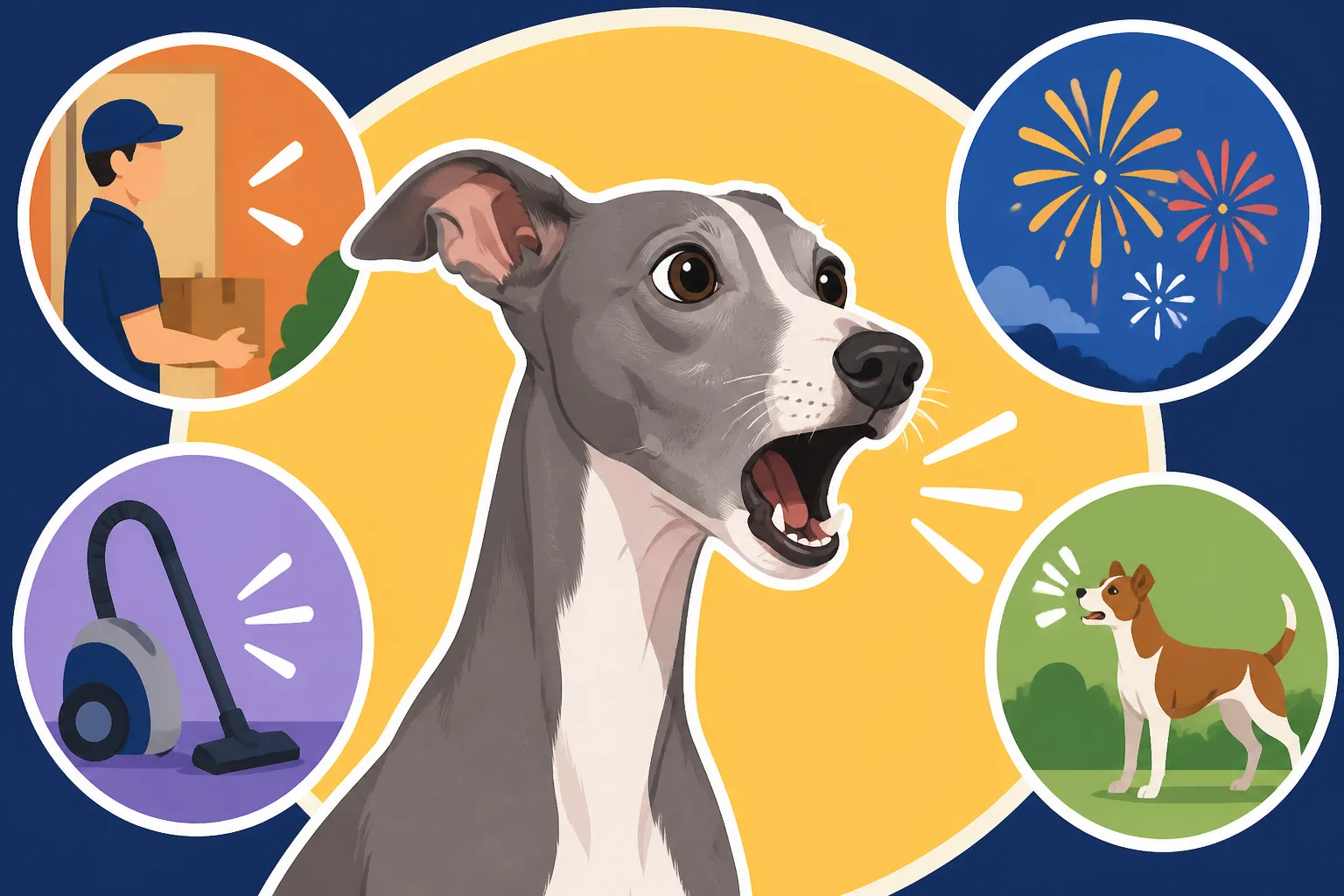
This is a classic Italian Greyhound trigger. The moment the doorbell rings, a knock echoes, or even just the subtle sound of footsteps approaching your front door, your IG can transform into a tiny, furious alarm system. Their keen hearing picks up these cues long before you do. For them, anyone approaching the "den" is a potential threat or, at the very least, an event that demands to be announced. The mail carrier, the delivery driver, a visiting friend – all are met with the same enthusiastic, and often incessant, barking. They see themselves as the first line of defense, even if their actual "defense" strategy is to make as much noise as possible from a safe distance behind your legs. This anticipatory barking can also extend to the mere sight of you reaching for the doorknob, knowing it signals an imminent arrival or departure.
Window Watching: The Neighborhood Report
With their exceptional eyesight, Italian Greyhounds are natural window watchers. For them, the window isn't just a pane of glass; it's their personal high-definition television, broadcasting the latest neighborhood drama. Every dog walker, every jogger, every car passing by, and especially every squirrel or bird in the yard, becomes a prime target for their vocal commentary. Their strong prey drive means that What an Italian Greyhound Does About Squirrels is often met with a barrage of barks, bounces, and frustrated cries. This constant visual stimulation can easily escalate into a habit, where every perceived movement outside becomes an excuse for a barking spree. They genuinely feel it's their job to report on everything that happens beyond your walls, even if you’d prefer a quieter news update.
Separation Distress: The Lonely Howl
Given their "Velcro dog" nature, it's not surprising that many Italian Greyhounds struggle with being left alone. For some, even a brief trip to the bathroom can elicit a distressed bark or whine. True separation anxiety can manifest as continuous barking, howling, whining, destructive chewing, or inappropriate urination/defecation when you're out of sight. They truly believe they need to be with you every moment of every day, and your absence can trigger genuine panic. This isn't just boredom; it's a deep-seated fear of abandonment. If you're wondering How Long an Italian Greyhound Copes Alone, the answer is often "not very long" without careful training and management. The barking in these situations is a cry for help, a desperate attempt to get you to return.
Attention-Seeking: The Demanding Yap
Sometimes, your Italian Greyhound barks because it works. If barking consistently gets them what they want – whether it's a pat, a treat, a game, or simply your focused gaze – they quickly learn to use it as a tool. You might be innocently watching TV, and your IG will let out a sharp "yap!" If you turn to look, or heaven forbid, ask "what is it, sweetie?", you've just reinforced the behavior. They are smart, and they are masters of manipulation when it comes to getting attention. This type of barking can be especially frustrating because it often seems to come out of nowhere, but it's usually a calculated move by your clever companion. They've figured out the exact frequency and intensity of bark required to peel your eyes away from your phone or book.
Environmental Stimuli: Strange Sounds and Sudden Movements
Beyond the obvious triggers, Italian Greyhounds can be sensitive to a wide array of environmental stimuli that we often tune out. A distant siren, the rumble of a truck, a sudden gust of wind rattling the windows, or even the subtle creak of the house settling can set them off. Their acute hearing and sensitive nature mean they perceive sounds we don't, or react more strongly to those we do. Similarly, quick, unexpected movements within the home can trigger a startled bark. Someone getting up quickly from the sofa, a child running past, or an object accidentally falling can all result in a sharp, startled vocalization. It's often a reflex, a way to express surprise or momentary alarm at something unfamiliar or sudden in their otherwise predictable world.
Managing Excessive Barking in Your Italian Greyhound
Now that we understand the myriad reasons why your Italian Greyhound might be barking, let's talk about what you can actually do about it. The key is never to punish the bark itself, but to address the underlying cause and redirect the behavior. Remember, yelling at your dog will likely only make things worse; Why Raising Your Voice Sets an Italian Greyhound Back a Month is not an exaggeration – these sensitive souls don't respond well to harshness.
Identify the Root Cause
Before you can tackle the barking, you need to be a detective. Spend a few days observing your Italian Greyhound closely.
- When do they bark? Is it always at the same time of day? Is it only when certain people or things are around?
- What happens right before they bark? Do they see something outside? Does the doorbell ring? Do you stand up to leave the room?
- What is their body language like when they bark? Are they excited, fearful, anxious, or demanding?
- What do you do immediately after they bark? Do you look at them, scold them, give them a treat, or let them outside?
Keeping a small journal can be incredibly helpful. Once you identify the most frequent triggers and the purpose behind the bark (alert, attention-seeking, anxiety), you can then choose the most appropriate management and training strategies. For example, a dog barking at every passerby out the window needs a different approach than one barking solely when left alone.
Environmental Management and Prevention
Sometimes, the easiest solution isn't training, but simply changing the environment to remove the trigger.
- Visual Barriers: If window-watching is a major issue, block your IG's view. You can use frosted window film on lower panes, strategically placed furniture, or simply keep curtains or blinds closed during peak "traffic" times. This removes the visual stimulus that sparks the barking.
- Sound Masking: For barking at outside noises, consider using white noise machines, a fan, or leaving a radio or TV on. This can help muffle external sounds and reduce your IG's ability to hear every distant siren or rustle.
- Safe Space: Create a quiet, cozy den for your Italian Greyhound in a less stimulating part of the house. This could be a crate with a blanket over it, or a comfortable bed in a quieter room. This gives them a retreat when things get too overwhelming.
- Indoor Potty Solutions: If your IG barks incessantly to go outside, especially in inclement weather or when they're simply being opportunistic, consider an indoor potty solution. This can be especially helpful if The Italian Greyhound That Refuses to Go Out in the Cold is a problem. Options like real grass pads or litter boxes can provide an alternative outlet and reduce the urgency of their outdoor demands. Setting Up an Indoor Bathroom for an Italian Greyhound can be a game changer for many owners.
Training and Redirection Techniques
Once environmental management is in place, consistent training and redirection are vital.
- The "Quiet" Cue: This is essential. When your IG barks at a trigger, let them bark once or twice, then gently interrupt them (a soft "shh" or a light tap on the shoulder, not a scold). The moment they stop, even for a second, say "Quiet!" and immediately reward them with a high-value treat. Practice this repeatedly. The goal is to teach them that silence, not barking, earns rewards. With consistency, you can extend the duration of silence before the reward.
- Desensitization and Counter-Conditioning: For specific triggers like the doorbell, practice simulated scenarios. Have someone ring the doorbell, but don't let your dog bark. If they remain calm or stop barking quickly, reward them. Over time, they'll associate the doorbell with positive reinforcement for quiet behavior. Similarly, if they bark at people walking by the window, give them treats for calm observation, gradually moving closer to the window as they improve.
- Enrichment and Mental Stimulation: A bored Italian Greyhound is a noisy Italian Greyhound. Ensure they get enough physical exercise (walks, safe indoor zoomies) and, crucially, mental stimulation. Puzzle toys, snuffle mats, or long-lasting chews can keep their minds engaged and their mouths busy. Many excellent options for these can be found on Amazon, offering different levels of challenge to keep your IG entertained throughout the day. This helps channel their energy into acceptable activities rather than barking. Think about What an Italian Greyhound Does All Day and how you can fill those hours constructively.
- Teach a "Place" or "Settle" Command: Having a designated spot where your dog can go and relax on command is incredibly useful, especially when the doorbell rings or guests arrive. Train them to go to their bed or mat and stay there calmly. Reward generously for compliance. Online training programs, like those offered by BAXTER & Bella, can provide structured lessons and support for teaching these foundational obedience commands, which are invaluable for redirecting barking behaviors.
- Addressing Separation Anxiety: If barking stems from separation anxiety, a more specialized approach is needed. This usually involves very gradual departures, starting with seconds and slowly building up. Crate training, if introduced positively, can provide a sense of security. Never leave an anxious dog loose to practice destructive behaviors. For some dogs, leaving an article of your worn clothing in their bed can provide comfort. If the anxiety is severe and persistent, professional help from a certified veterinary behaviorist is highly recommended. For more on this, you can look into Leaving an Italian Greyhound Crated and Teaching an Italian Greyhound to Settle Alone.
| Barking Trigger | Root Cause (Common) | Environmental Management | Training/Redirection Strategies |
|---|---|---|---|
| Doorbell/Knock | Alerting/Territorial | Muffle doorbell, put up "no soliciting" sign | "Quiet" cue, "Place" command, desensitization (practice rings) |
| Window Watching | Alerting/Prey Drive | Window film, closed curtains, furniture as barrier | "Quiet" cue, counter-conditioning with treats for calm observation |
| Left Alone | Separation Anxiety | Safe space (crate), sound masking | Gradual departures, desensitization, enrichment toys (e.g., from Amazon) |
| Attention Seeking | Learned Behavior | Ignore barking, don't reward vocalization | Reward quiet behavior, teach alternate ways to ask for attention |
| Sudden Noises/Moves | Startle/Fear | Sound masking, ensure comfortable retreat | Positive association with loud noises (treats), building confidence |
When to Seek Professional Help for Barking
While many barking issues can be managed with consistent effort at home, there are times when professional intervention is not just helpful, but necessary. Recognizing these signs can save you and your Italian Greyhound a lot of stress.
Persistent and Disruptive Barking
If your Italian Greyhound's barking is incessant, despite your best efforts at home-based management and training, and it's significantly impacting your quality of life, your relationship with your dog, or even your relationship with your neighbors, it's time to call in the experts. Persistent barking can be incredibly draining for owners and can also be a sign that your dog is experiencing significant stress or frustration that you haven't been able to alleviate on your own. A professional can offer fresh perspectives and tailored strategies that you might not have considered.
Barking with Other Behavioral Issues
A red flag often goes up when barking is accompanied by other concerning behaviors. If your Italian Greyhound is barking excessively and showing signs of aggression (snapping, growling), destructive chewing, inappropriate urination or defecation indoors, self-mutilation (licking or chewing themselves raw), or significant signs of panic, these are all indicators that the problem is more complex than simple attention-seeking. These combined behaviors often point to underlying anxiety, fear, or a deeper behavioral disorder that requires a specialized approach.
Consulting a Veterinarian and Certified Professional
Always start with a visit to your veterinarian. Explain the barking issues and any accompanying symptoms. Sometimes, excessive barking can be a symptom of an underlying medical issue, such as pain, hearing loss, cognitive dysfunction in older dogs, or even certain metabolic conditions. Ruling out physical causes is a crucial first step. Your vet can give your Italian Greyhound a thorough check-up and ensure there isn't a medical reason for their vocalizations.
Once medical causes are ruled out, seek help from a certified professional dog trainer or, for more severe cases, a veterinary behaviorist. These professionals have specialized knowledge in canine behavior and can create a personalized training plan that addresses the specific triggers and motivations behind your Italian Greyhound's barking. They can guide you through advanced desensitization protocols, help you understand canine body language, and teach you how to communicate more effectively with your sensitive companion. Organizations like the Certification Council for Professional Dog Trainers (CCPDT) or the American College of Veterinary Behaviorists (ACVB) can help you find qualified professionals in your area. They will work with you using positive reinforcement techniques, ensuring that the training is humane and effective for your beloved Italian Greyhound.
Disclaimer
This article is for general informational purposes only and does not constitute professional advice. Laws, prices and regulations vary by location and change over time. Consult a qualified professional for guidance on your specific situation.