Whether an Italian Greyhound Puppy Needs Extra Calcium
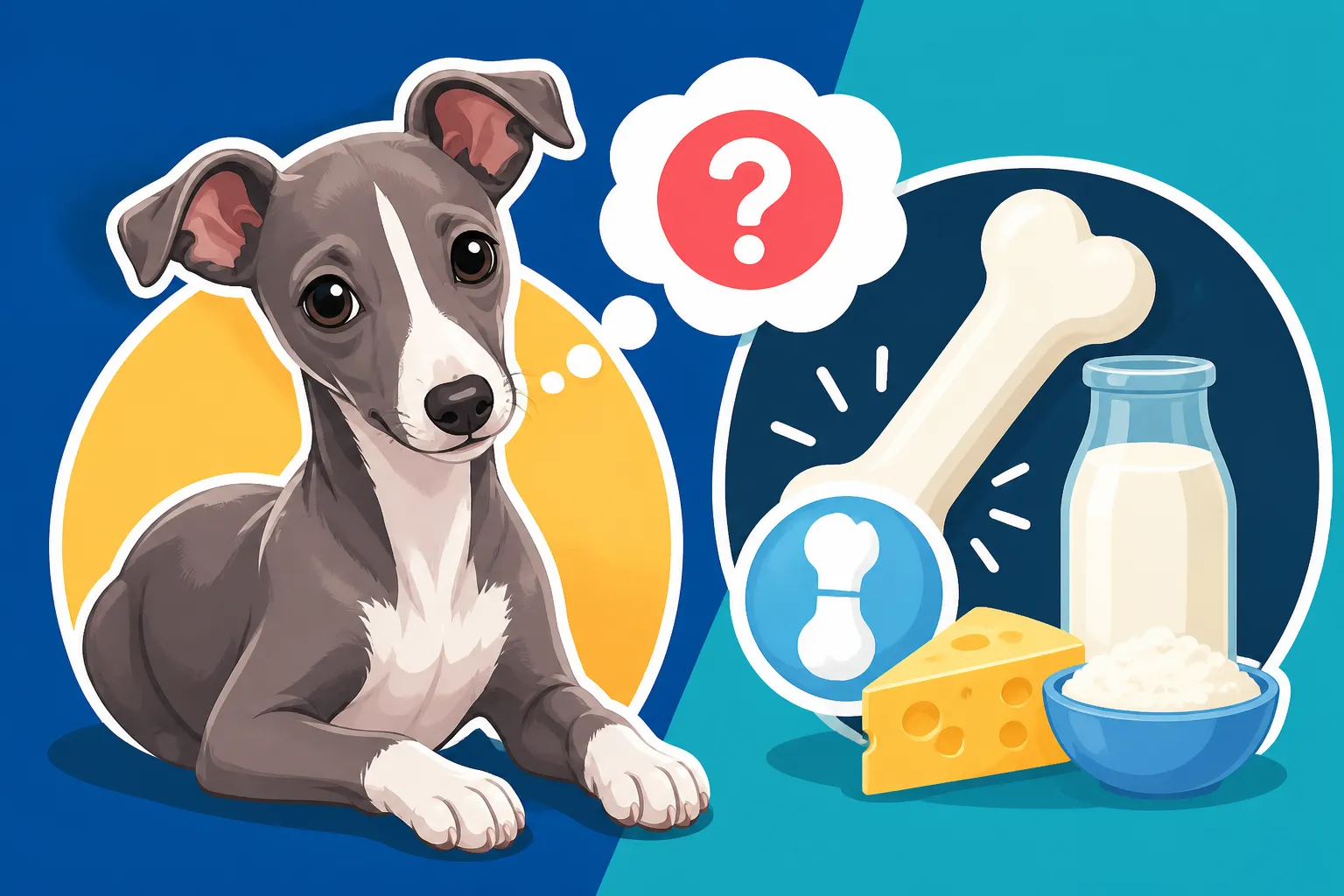
As Italian Greyhound owners, we live with a constant, nagging worry about those delicate, beautiful legs. You might find yourself staring at your tiny puppy, wondering if you're doing enough to help those fragile bones grow strong, perhaps even questioning if they need extra calcium. It's a completely natural concern, given how notoriously prone Iggies are to fractures, but the truth is, often the best intentions can actually lead to more harm than good. This guide will delve into why providing additional calcium to your Italian Greyhound puppy is usually not just unnecessary, but potentially very risky, and what truly supports healthy bone development in this unique breed.
The Delicate Balance: Why Too Much Calcium Can Be Dangerous for Italian Greyhound Puppies
It’s easy to fall into the trap of thinking "more is better," especially when we're trying to protect our beloved Italian Greyhounds from their notorious fragility. Their slender, elegant bone structure is part of their charm, but also their Achilles' heel. However, when it comes to growing bones, particularly in a fast-growing breed, pushing extra calcium can backfire dramatically. You're not strengthening them; you're setting them up for serious problems.
The Risks of Calcium Over-Supplementation
Imagine trying to build a strong house, but instead of using a balanced mix of materials, you just pour in extra cement. You might think it makes the structure sturdier, but it could actually cause it to crack and crumble in unexpected ways. That's a bit like what happens when a growing puppy, especially one of a breed like an Italian Greyhound, gets too much calcium. Their bodies are meticulously designed to regulate calcium and phosphorus levels for optimal bone growth. When you throw too much calcium into the mix, you disrupt this delicate balance.
One of the primary concerns with excess calcium in puppies is the development of various orthopedic diseases. These aren't usually what you'd typically associate with "weak bones" but rather issues caused by improper, accelerated, or distorted bone development. For example, conditions like osteochondrosis (OCD), where cartilage fails to convert to bone correctly, can be worsened or even triggered by high calcium intake. This can lead to painful joint problems, lameness, and a lifetime of discomfort, which is the exact opposite of what we want for our agile little Iggies. Moreover, a high calcium intake can interfere with the absorption of other vital nutrients like phosphorus and zinc, creating further imbalances that impact overall health, not just bone integrity.
How Excess Calcium Affects Growth Plates
Italian Greyhound puppies, like all young dogs, have what are called growth plates – areas of cartilage at the ends of their long bones that haven't yet hardened into solid bone. These are the engines of skeletal growth, allowing the bones to lengthen. They remain open and vulnerable until the puppy reaches skeletal maturity, which for an Italian Greyhound is typically around 12 to 18 months, though some sources might even suggest closer to two years for full hardening. You can learn more about The Age an Italian Greyhound's Bones Finish Hardening in our other article.
When you give a puppy too much calcium, it can cause these growth plates to close prematurely or develop abnormally. Instead of the bones lengthening and strengthening in a coordinated fashion, the growth plates might thicken irregularly, leading to deformities or even making the bone more susceptible to injury, not less. Think about a rapidly growing sapling that's forced to grow too quickly and unevenly – it might look bigger, but it's fundamentally weaker and more likely to snap in a strong wind. This is particularly concerning for a breed like the Italian Greyhound, whose long, slender limbs already carry a heightened risk for fractures. Introducing unnecessary stress on these crucial growth areas during their most vulnerable phase is a gamble no loving owner should take.
What an Italian Greyhound Puppy Actually Needs for Healthy Bone Development
So, if extra calcium isn't the answer, what does an Italian Greyhound puppy need to develop strong, healthy bones? The good news is, it's often simpler and more straightforward than you might think. The key lies in a holistic approach that focuses on proper nutrition, controlled exercise, and careful management during their critical growth period.
The Role of a Balanced Puppy Diet
The cornerstone of healthy bone development for your Italian Greyhound puppy is a high-quality, complete, and balanced puppy food. This means a diet specifically formulated for growing puppies, often labeled for "small breeds" or "all life stages," and backed by nutritional adequacy statements from a reputable organization. These foods are meticulously designed to provide the ideal ratio of calcium, phosphorus, and other essential vitamins and minerals that a puppy needs, without requiring any additional supplementation.
For an Italian Greyhound, who matures quickly in terms of size but whose bones remain fragile for a longer period, a diet that supports steady, not accelerated, growth is crucial. Over-feeding or providing a diet too rich in calories can lead to rapid weight gain, putting undue stress on developing joints and bones. Look for foods where calcium and phosphorus levels are within the recommended guidelines for puppies. Many excellent brands are available on platforms like Chewy, offering a wide range of options to discuss with your vet. Some owners also opt for fresh food diets, with companies like Ollie providing carefully balanced, vet-formulated meals that can be a great option, as long as they meet the specific needs of a growing puppy.
Here's a quick comparison of nutritional approaches:
| Nutritional Approach | Calcium & Phosphorus Ratio | Benefits | Risks (if not balanced) |
|---|---|---|---|
| Commercial Puppy Food (Balanced) | Controlled & Optimized | Supports steady growth, convenient, complete | Over-feeding leading to rapid growth |
| Raw/Homemade (Unbalanced) | Varies widely | Can be customized, fresh ingredients | Nutrient deficiencies or excesses (e.g., calcium) |
| Supplementation (Unnecessary) | Adds to diet | Perceived bone strengthening | Developmental orthopedic diseases, mineral imbalances |
The emphasis should always be on providing a consistent, high-quality base diet rather than trying to "fix" perceived deficiencies with supplements. A growing puppy's nutritional needs are complex, and commercial puppy foods from reputable manufacturers are generally formulated to meet these needs perfectly.
Controlled Exercise and Puppy Management
Beyond diet, how you manage your Italian Greyhound puppy's physical activity is paramount to bone health. These little athletes are bundles of energy, but their enthusiasm can easily outpace their skeletal maturity. Their bones, especially the long bones in their legs, are incredibly delicate during puppyhood and adolescence. This is why a simple jump off a sofa can lead to a devastating fracture. We've talked extensively about The Jump Off the Sofa That Breaks an Italian Greyhound's Leg and How an Italian Greyhound Usually Breaks Its Leg in other posts.
Controlled exercise means no forced, prolonged running, no intense agility drills, and absolutely no wrestling with larger, heavier dogs, which is a major cause of fractures in young Iggies. Think short, gentle walks on a leash, supervised play sessions on soft surfaces, and plenty of mental stimulation. Ramps and steps leading to furniture are not optional; they are essential tools for preventing fractures. These are readily available on platforms like Amazon and can be lifesavers. You might find it helpful to read Ramps and Steps for an Italian Greyhound's Furniture to understand how to best implement these in your home.
The goal isn't to restrict movement entirely but to guide it in a safe, healthy way until their growth plates have fully closed and their bones have hardened. This critical period of management significantly reduces the risk of fractures and allows their bones to develop naturally strong, without the artificial intervention of unnecessary supplements.
Spotting the Signs: When Bone Health Might Be an Issue (and it's not always calcium deficiency)
It's natural to be hyper-vigilant about your Italian Greyhound puppy's well-being, especially concerning their delicate bone structure. Sometimes, what we perceive as a potential "calcium deficiency" might actually be a symptom of an entirely different issue, or even a normal part of their unique growth pattern. Knowing what to look for, and when to truly worry, can save you a lot of anxiety and prevent unnecessary interventions.
Recognizing Normal Growth Versus Concern
Italian Greyhounds are typically slender, even as puppies. You should be able to easily feel their ribs and spine with a light touch, and they should have a clear "tuck-up" where their abdomen rises sharply towards their hindquarters. This is their natural conformation, and it doesn't mean they're underweight or lacking in nutrients. In fact, an overweight Italian Greyhound puppy is at a higher risk for fractures because the extra weight puts undue stress on their still-developing bones. You can learn more about What an Italian Greyhound Puppy Should Weigh by Month to gauge their growth appropriately.
What you're really looking for are persistent signs of pain, lameness, or visible deformities, not just general slenderness. A puppy that consistently limps, avoids putting weight on a limb, cries out when touched, or shows signs of swelling or heat in a joint warrants immediate veterinary attention. These could be indicators of a fracture, a soft tissue injury, or even a developmental orthopedic issue like Legg-Calve-Perthes disease, which specifically affects the hip joint and usually shows up between 6-12 months of age. We discuss this in more detail in What Legg Calve Perthes Does to an Italian Greyhound. These are serious concerns that require a vet's diagnosis, not a calcium supplement.
When to Consult Your Veterinarian
If you have any concerns about your Italian Greyhound puppy's bone development, growth, or general health, the first and most important step is always to consult your veterinarian. They can perform a thorough physical examination, assess your puppy's diet, and recommend appropriate diagnostics if needed. These might include X-rays to check growth plates, blood tests to evaluate calcium and phosphorus levels if a specific deficiency is suspected (which is rare with a balanced diet), or a referral to an orthopedic specialist.
Never start supplementing calcium or any other mineral without your vet's explicit instruction. Self-diagnosing or self-treating based on internet advice (even well-intentioned advice) can lead to serious health complications for your puppy. Your vet can provide guidance tailored to your individual puppy's needs, considering their age, weight, activity level, and specific breed predispositions. They understand the unique physiology of Italian Greyhounds and can differentiate between normal growth patterns and genuine problems. Remember, preventing a fracture or addressing a genuine orthopedic issue requires professional medical care, not simply adding more minerals to their bowl.
Navigating Puppy Food Labels and Supplements
Understanding what goes into your Italian Greyhound puppy's food, and why it's usually enough, can be empowering. The world of pet nutrition can feel overwhelming with all the marketing claims, but focusing on the basics will serve your puppy best.
Decoding Nutritional Adequacy Statements
When you pick up a bag of puppy food, look for a statement from a recognized authority, usually found on the back or side of the packaging. In the United States, this is typically the Association of American Feed Control Officials (AAFCO). An AAFCO statement will clearly indicate that the food is "formulated to meet the nutritional levels established by the AAFCO Dog Food Nutrient Profiles for Growth and Reproduction" or "for All Life Stages." This statement is your assurance that the food contains all the necessary nutrients, in the correct proportions, for a growing puppy.
These formulations take the guesswork out of feeding. They already include the optimal balance of calcium, phosphorus, protein, fats, and all the other vitamins and minerals your Italian Greyhound puppy needs for healthy bone development, strong muscles, and overall vitality. There's no need to add anything extra when feeding a diet that meets these standards. Adding calcium on top of an already balanced diet is where the danger lies, as it throws off the precise ratios that AAFCO-compliant foods are formulated to provide.
The Problem with Unnecessary Supplementation
As a general rule, if your Italian Greyhound puppy is eating a high-quality, AAFCO-compliant puppy food, they do not need any additional calcium supplements. In fact, giving them extra calcium can, as we discussed, do more harm than good by disrupting the calcium-phosphorus ratio and potentially leading to developmental orthopedic diseases.
Some owners might consider adding supplements for various reasons, perhaps thinking it will prevent a broken leg. However, the fragility of an Italian Greyhound's bones is more often related to their delicate structure, the rapid closing of growth plates during clumsy puppy phases, and accidental trauma, rather than a dietary calcium deficiency. For instance, Why an Italian Greyhound's Radius Is the Bone That Breaks often points to external forces rather than internal weaknesses from lack of calcium.
If your veterinarian identifies a specific medical reason for supplementation (e.g., a rare metabolic disorder or a very specific dietary need that can't be met with commercial food), they will prescribe the exact type and dosage of supplement. This is a very different scenario from simply adding a generic calcium supplement because you're worried about fractures. Always err on the side of caution and consult your vet before introducing any supplements into your Italian Greyhound puppy's diet, no matter how benign they might seem. Protecting those precious legs comes down to careful management, a balanced diet, and swift veterinary attention when needed, not a misguided attempt to "boost" calcium.
Disclaimer
This article is for general informational purposes only and does not constitute professional advice. Laws, prices and regulations vary by location and change over time. Consult a qualified professional for guidance on your specific situation.