What World War One Did to the Italian Greyhound
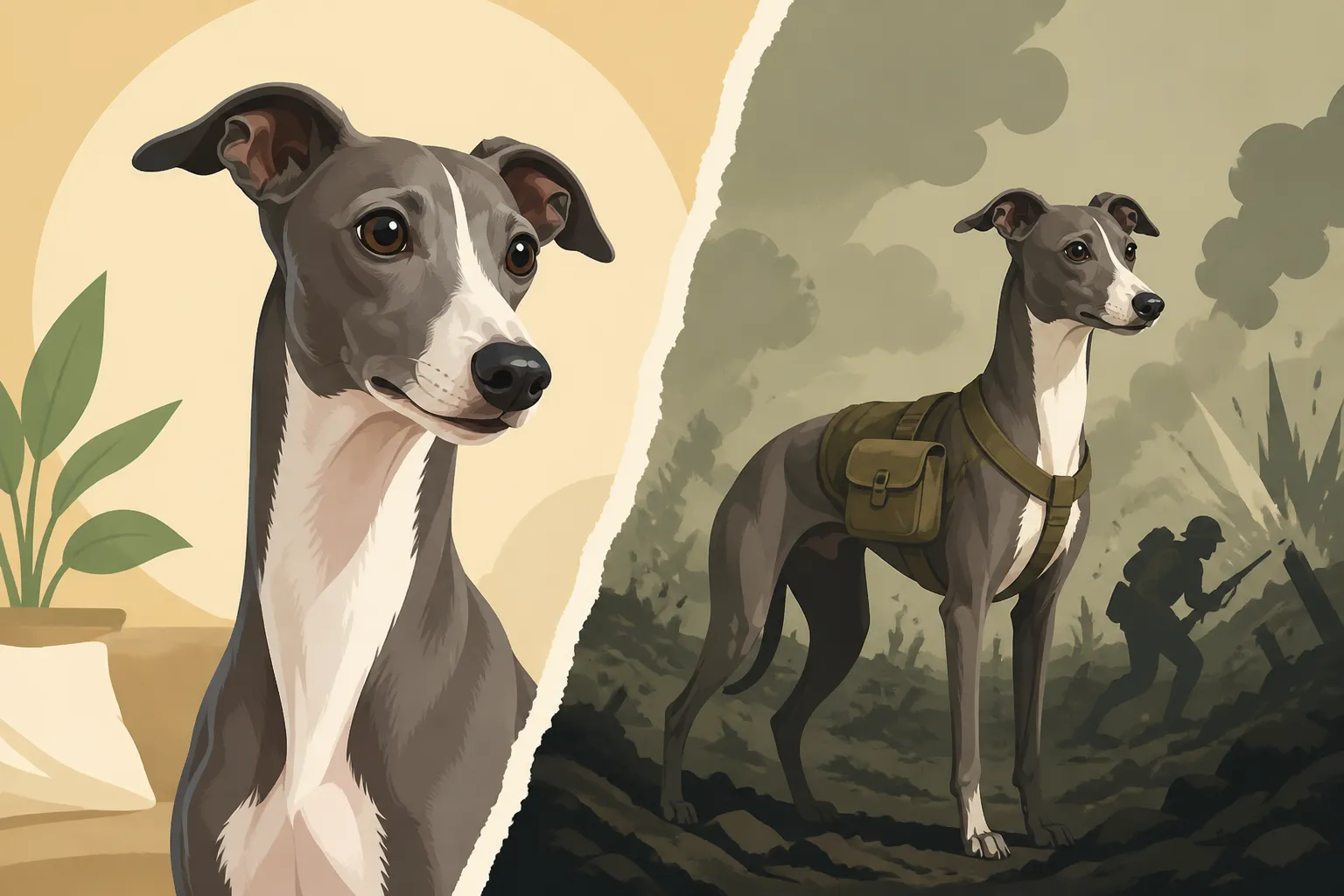
When people ask what World War One did to the Italian Greyhound, the answer is more complicated than “the breed disappeared.” War disrupted breeding, travel, food supplies and the lives of the people who kept these dogs. This guide explains how those pressures affected Italian Greyhounds in Europe, why survival varied by region, and what the breed’s postwar recovery can—and cannot—tell us.
The Italian Greyhound before the war
A fashionable companion with a fragile history
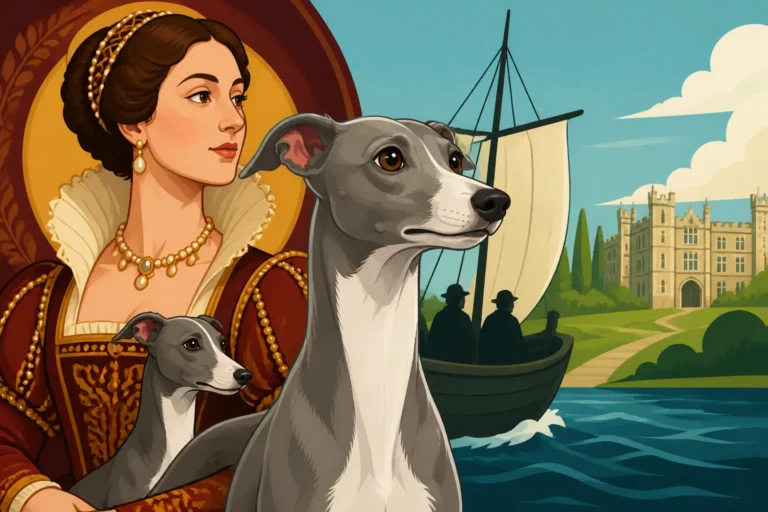
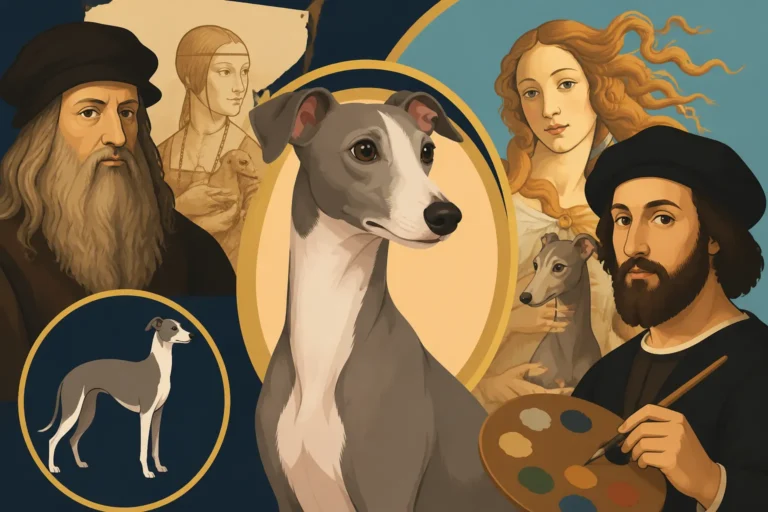
By the early twentieth century, Italian Greyhounds had a long history as companion dogs in Europe. They had appeared in aristocratic households and portraits, and the breed had also become part of the wider Victorian enthusiasm for small, elegant dogs. That popularity did not mean every population was secure. The number of active breeders, the quality of their records, and the condition of the dogs could vary substantially from place to place.
The breed had already experienced problems before the war. In some breeding circles, demand for extremely small, delicate dogs encouraged breeding choices that could compromise soundness. That background matters: a breed with a limited pool of healthy, carefully selected breeding animals has less room to absorb sudden disruption. The prewar story is explored in The Toy Sized Italian Greyhound Fad and What It Cost and The Italian Greyhound as a Victorian Status Dog.
Italian Greyhounds also depended on people to protect them from harsh conditions. Their fine coats and low body fat make them poorly suited to prolonged cold, and their small frames need careful handling. Those traits did not cause the wartime decline, but they help explain why keeping a breeding population going during scarcity and displacement could be difficult.
Breeding relied on networks that war could interrupt
A breed does not survive on individual dogs alone. It needs people who can keep breeding records, arrange matings, raise litters, exchange animals and preserve knowledge about which dogs are healthy and well built. Before modern transport and communication, these networks depended on travel and personal relationships. A European conflict could interrupt those connections even when individual dogs remained alive.
War also redirected people’s priorities. Families faced uncertainty, military service, displacement and shortages. Caring for a dog, let alone maintaining a planned breeding program, could become much harder. People might have had to leave home, move to another region, or give up animals they could no longer feed or house. These pressures affected many domestic animals, not just Italian Greyhounds.
How World War One disrupted Italian Greyhound breeding
Scarcity affected dogs as well as people
During wartime, food and household resources were under pressure in many places. A small dog still needs reliable nutrition and veterinary attention, and breeding adds further demands: a pregnant or nursing female and her puppies need consistent care. When a household is struggling to meet basic needs, preserving a kennel or planning a litter may no longer be possible.
The effects were not necessarily dramatic or visible all at once. A breeder might simply stop producing litters for several years. A promising young dog might never be bred. A family might keep a cherished pet but abandon plans to show or breed it. Over time, those separate decisions can shrink a local population and leave fewer related lines available when conditions improve.
Travel and record keeping became harder
War disrupted movement across borders and within countries. That mattered to dog breeding because breeders often relied on access to animals beyond their immediate neighborhood. If travel became unsafe, difficult or restricted, it was harder to arrange matings or obtain unrelated breeding stock. Communication and record keeping could also suffer when people were separated or forced to relocate.
This does not mean every Italian Greyhound population in Europe faced identical conditions. The effects depended on where people lived, whether their homes and kennels remained intact, and how much support they had. Historical records are uneven, so it is safer to describe the broad pressures than to claim a single experience for every country or breeder.
| Wartime pressure | Possible effect on Italian Greyhound breeding |
|---|---|
| Food and household shortages | Fewer resources for keeping and raising dogs |
| Displacement or military service | Kennels closed, owners separated from dogs, breeding plans abandoned |
| Interrupted travel | Fewer opportunities to exchange breeding animals |
| Lost or incomplete records | Harder to track pedigrees and maintain planned lines |
| Postwar rebuilding | Breeding resumed unevenly, depending on surviving dogs and breeders |
The breed was weakened, not simply erased
It is tempting to imagine a single moment when the Italian Greyhound nearly vanished. In reality, the effect of war was more likely cumulative: fewer litters, fewer active breeders, less exchange between regions, and a greater dependence on whatever dogs remained. A breed can continue to exist while its numbers and genetic options become much narrower.
That distinction helps make sense of accounts of repeated near-declines. The European population faced hardship during World War One, and later upheaval created another severe challenge. For the broader account, see The Italian Greyhound Nearly Died Out Twice in Europe and What World War Two Did to the Italian Greyhound. The two wars should not be collapsed into one event: each brought its own disruption, and the later conflict further complicated recovery.
Survival and recovery after the war
Survival depended on more than one country
There was no single, uniform recovery story. Some dogs and breeding households survived, while other lines may have been lost or become difficult to trace. In different regions, breed clubs, breeders and owners had different capacities to restart breeding. That unevenness makes it difficult to name one country as the sole rescuer of the Italian Greyhound.
The role of surviving breeding stock is central. A handful of dogs can keep a breed present, but a small number of related animals does not provide a strong foundation for healthy long-term breeding. The practical question was not just whether Italian Greyhounds existed after the war, but whether enough suitable dogs and knowledgeable breeders remained to rebuild a stable population. Whether Italian Breeding Stock Survived the War and Which Country Rebuilt the Italian Greyhound examine those questions more closely.
American breeding offered a separate population
The existence of Italian Greyhounds in the United States gave the breed another population outside the immediate European war zone. That does not mean American breeders single-handedly restored every European line, or that the American population was automatically large and genetically broad. It does mean the breed’s history was not confined to European households during a period of severe European disruption.
The relationship between populations matters because breeding animals and pedigrees can help preserve variety. But rebuilding a breed is not simply a matter of moving a dog from one country to another. Breeders must consider health, temperament, structure and relatedness, and they need reliable records to understand what they are combining. For the wider role of American breeders in the breed’s survival, see How American Breeders Saved the Italian Greyhound.
Recovery does not erase genetic bottlenecks
When a population contracts, the dogs used in later breeding may represent only a fraction of the animals that existed before the crisis. This is called a genetic bottleneck. Even if numbers increase afterward, the population may still carry less genetic diversity than before, especially if many descendants come from a small number of ancestors.
That is why a return in popularity does not necessarily prove that every old line survived or that the population recovered fully. Breeders working with a limited gene pool need to pay close attention to health and ancestry, not just appearance. The broader implications are discussed in How Narrow the Italian Greyhound Gene Pool Became. This history is also a reminder that preserving a breed means protecting a healthy population, not merely keeping the breed name in use.
What World War One means to Italian Greyhound owners today
The war shaped the breed’s history, not an individual dog’s fate
A modern Italian Greyhound is not destined to be unhealthy because its ancestors lived through a period of wartime disruption. The effects of a population bottleneck are complicated, and a dog’s health depends on many factors, including its specific ancestry, breeding choices, care and veterinary history. It would be misleading to use a broad historical event as a diagnosis for an individual pet.
For prospective owners, the practical lesson is to ask thoughtful questions about health testing, pedigrees and the breeder’s approach to maintaining genetic diversity. A responsible breeder should be willing to discuss the dogs’ health and ancestry without presenting historical survival as proof that every current line is equally sound. Related guidance appears in What an Italian Greyhound Breeder Should Have Tested.
Breed preservation is an ongoing responsibility
The story of World War One is not just a tale of loss. It shows how much a breed relies on ordinary, sustained care: people keeping dogs safe, maintaining records, making considered breeding decisions and supporting healthy populations across generations. Those tasks can seem less dramatic than surviving a war, but they are what make recovery possible.
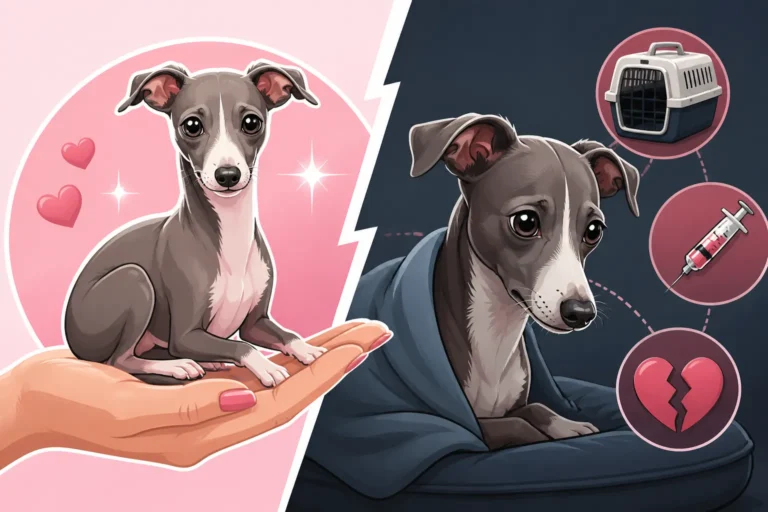
For today’s owners, that history can add context to the breed’s delicate reputation without turning it into a reason for fear. Italian Greyhounds are living companions, not relics. They need careful handling, appropriate protection from cold and thoughtful veterinary care, but their history should be understood as a story of vulnerability and persistence—not as a prediction of what will happen to any one dog.
Disclaimer
This article is for general informational purposes only and does not constitute professional advice. Laws, prices and regulations vary by location and change over time. Consult a qualified professional for guidance on your specific situation.