Whether an Oversized Italian Greyhound Can Be Shown
An Italian Greyhound can look “too big” beside a littermate and still fall within the show standard, because appearance and weight alone do not decide eligibility. The key question is usually the dog’s height at the withers, measured under the rules of the registry hosting the show. This guide explains how that measurement works, what happens if a dog is over the limit, and where an oversized Italian Greyhound can still compete.
What oversized means in the show ring
Height matters more than the impression of size
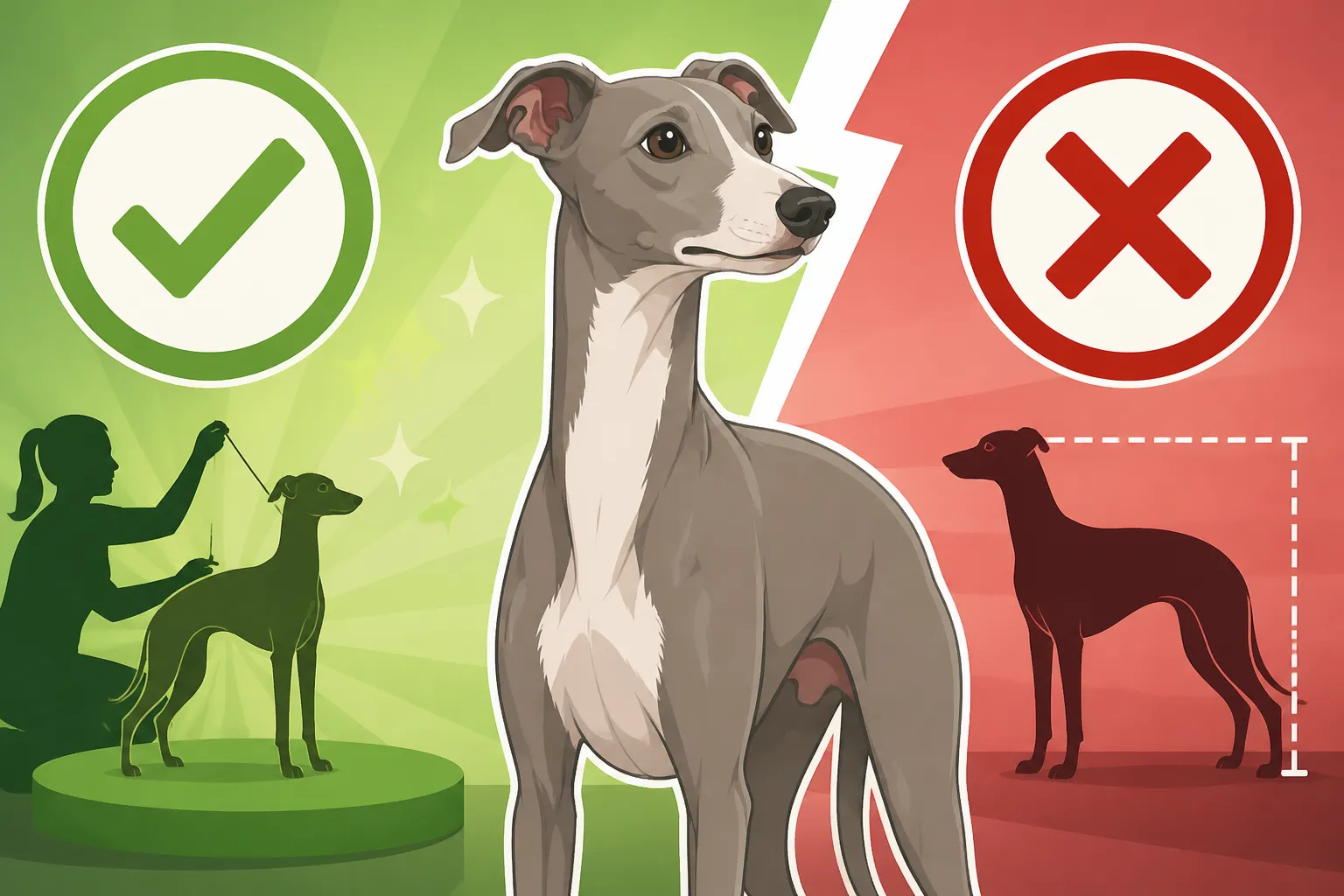
In American Kennel Club conformation, the Italian Greyhound standard calls for a height of 13 to 15 inches at the withers. The withers are the highest point of the shoulders, where the neck meets the back. A dog taller than the standard’s upper limit is disqualified from AKC conformation competition.
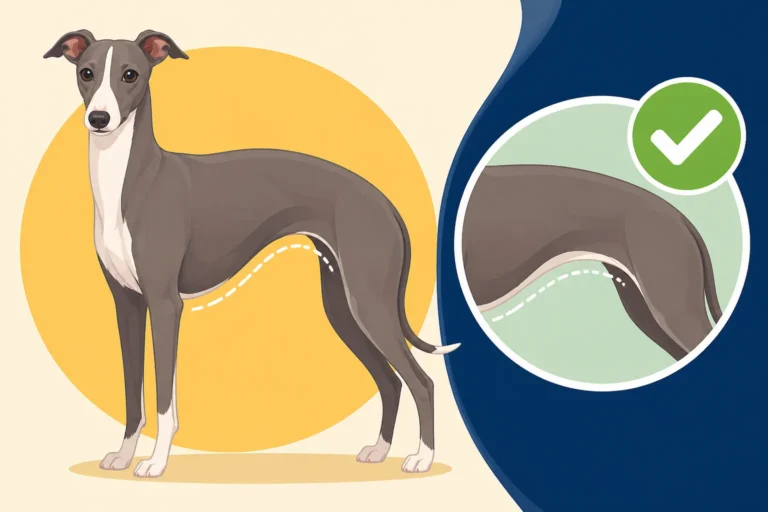
That is different from saying any Italian Greyhound who looks large cannot be shown. A dog may appear tall because of its long legs, lean outline, or stance, while its measured height remains within the limit. Conversely, a dog can look fairly compact and still measure over the limit when standing squarely on a level surface.
The measurement is not taken at the top of the head or from the floor to the back while the dog is stretched out. A dog’s posture matters, too. If the dog is leaning, crouching, or standing with its front feet unevenly placed, the result may not reflect its natural height. For a closer look at the breed’s measurements, see What Height the Italian Greyhound Standard Asks For and What an Italian Greyhound Weighs and How Tall It Stands.
A broad chest or a higher weight does not automatically mean disqualification
People often use “oversized” to mean several different things: taller than expected, heavier than a sibling, more substantial in bone, or simply less delicate-looking. Those are not interchangeable. In AKC conformation, height is the clear disqualifying measurement described in the standard. Weight, by itself, is not the same measurement as height.
A dog can weigh more than another Italian Greyhound and still stand within the height range. That extra weight might reflect muscle, body condition, frame, or simply normal variation between individual dogs. If a dog is carrying excess weight, that may affect its health and how well it moves, but it does not turn a scale reading into a height measurement.
Likewise, a dog that is tall should not be deliberately underfed to make it appear smaller. Nutrition cannot safely shorten a dog’s bones, and restricting food can harm a growing puppy. If you are unsure whether your dog is at a healthy weight, ask your veterinarian to assess body condition rather than trying to judge size from the show standard alone. What Weight Range an Italian Greyhound Should Fall In explains why weight and overall body condition deserve separate attention.
Breed standards and show rules can differ
The 13-to-15-inch range is relevant to AKC conformation in the United States. Other kennel clubs and national breed organizations may use different wording, measurement procedures, or eligibility rules. If you are entering a show outside the AKC system, check the specific standard and competition regulations that apply there rather than assuming the American rule carries over.
There is another distinction worth keeping in mind: a dog may be registered as an Italian Greyhound and still be ineligible for a particular conformation class. Registration identifies the dog within a registry; it does not guarantee that the dog meets every physical requirement for breed judging.
| Question | What it means for show eligibility |
|---|---|
| Is the dog taller than the AKC standard allows? | A measurement over the limit can disqualify the dog from AKC conformation. |
| Is the dog heavier than another Italian Greyhound? | Weight alone does not establish that the dog exceeds the height limit. |
| Does the dog look unusually tall? | Appearance is not a substitute for an accurate measurement. |
| Is the show run by another organization? | Check that organization’s own breed standard and rules. |
| Is the dog ineligible for conformation? | It may still be able to take part in eligible performance or companion events. |
Before planning a show entry, contact the show secretary or governing organization if you are uncertain about measurement requirements. This is especially useful if your dog is close to the stated limit. A local breed club or experienced conformation exhibitor may also help you understand how the rules are applied at that venue.
How to measure your Italian Greyhound accurately
Wait until the dog is mature enough for a meaningful measurement
A puppy’s current height does not tell you exactly how tall the adult dog will be. Young dogs are still growing, and their proportions can change considerably as they mature. A puppy that seems long-legged at one stage may look more balanced later, while another may continue to gain height after an owner first assumes growth is nearly finished.
If you are trying to decide whether a young dog may eventually be eligible, take measurements as observations, not as a final verdict. Keep a dated record and ask your veterinarian or breeder when the dog is likely to be near its adult size. The Age an Italian Greyhound Stops Growing offers more context on growth and why a single puppy measurement can be misleading.
A useful home measurement is still only an estimate. The dog may be fidgety, the floor may not be level, or the measuring tool may shift. If the result is close to the limit, do not make a major decision based on a rushed reading in the kitchen.
Set the dog up for a fair measurement
Use a firm, level surface and encourage your dog to stand naturally with its weight balanced across all four feet. The head should be in a comfortable position, not pulled sharply upward or pushed down. The dog should not be stretching its body forward or slouching at the shoulders.
A helper can keep the dog calm while you check the point at the withers. A rigid measuring device is generally easier to use consistently than guessing against a wall. If you use a soft tape to help track growth at home, make sure you are measuring vertically from the floor to the withers rather than following the curve of the dog’s body. Pet retailers such as Chewy carry basic measuring and handling supplies, but a home reading should not be treated as an official show measurement.
Try the measurement more than once, with short breaks if your dog becomes restless. Write down the result, the date, and whether the dog was standing comfortably. If two attempts differ noticeably, reset the dog’s position and check the surface and tool before drawing conclusions.
Ask the right person when the result is close
When a dog is near the maximum height, an experienced person can help you separate a real size concern from a measurement mistake. Your breeder may know how the dog’s close relatives matured, while a conformation handler or breed-club member can often demonstrate a steady, correct stance.
For an actual competition, follow the show’s official procedure. Do not assume that a casual measurement taken at home will settle an eligibility question. Ask the organizing club how height is handled and what options are available if the dog is measured at the event. Procedures can depend on the registry and the particular competition.
If the dog is still growing, it may make sense to wait before entering conformation. That avoids the disappointment of traveling, preparing, and then learning that the dog is over the limit. A travel crate, familiar bedding, and basic cleanup supplies can make show-day travel easier; owners sometimes source routine travel gear through retailers such as Chewy, while checking that any crate is appropriately sized and secure.
What being too tall means for a dog’s future
A show disqualification does not change the dog’s breed or value
If an Italian Greyhound measures above the AKC conformation limit, that does not make the dog less of a companion or mean there is something wrong with its identity. It means the dog does not meet a particular requirement for that kind of breed competition. Those are very different statements.
A household may have chosen a dog for companionship, not for the show ring, and an extra inch of height will not change the bond, personality, or daily routines that matter at home. Even for an owner who hoped to show, it is understandable to feel disappointed after investing time in training and preparation. But the dog’s worth is not defined by a conformation result.
Nor should size alone be treated as a reliable sign of health or poor breeding. A taller-than-standard dog may be healthy, while a dog within the standard can still have health needs. For a broader discussion of what breed type and soundness involve, see Whether a Correct Italian Greyhound Looks Fragile and Why Very Small Italian Greyhounds Are Unsound.
Performance events may offer other ways to participate
Conformation is only one kind of organized dog activity. Depending on the event and registry rules, an Italian Greyhound who is not eligible for breed judging may still be able to participate in performance or companion events. These can include activities that focus on a dog’s training, movement, or ability to work with its handler rather than its match to a breed’s height standard.
Eligibility is not automatic, so check the rules for the specific event before entering. Some activities have their own registration requirements, age limits, equipment rules, or health considerations. A dog who enjoys learning and spending time with its person may find these activities rewarding even if breed conformation is not an option.
For example, an owner whose young dog measures over the conformation limit might try beginner obedience or another suitable activity, provided the dog is comfortable and the event welcomes it. The goal is not to treat performance competition as a consolation prize. It is simply another way to build skills and have fun together.
Avoid trying to change a dog’s size
Do not restrict food, use supplements, or pursue any intervention intended to make a dog shorter or otherwise alter its frame for showing. A dog’s adult height is determined by its skeletal growth, and unsafe feeding practices can cause real harm without changing the outcome. For a growing Italian Greyhound, follow a complete, appropriate diet and discuss growth concerns with a veterinarian.
It is also unwise to make breeding decisions based on one measurement alone. A responsible breeding discussion considers health, temperament, structure, and the relevant registry’s standard, along with the dog’s overall suitability. If you are evaluating a puppy or considering breeding, consult the breeder and a veterinarian, and review the rules that apply to your country and registry. How Italian Greyhound Standards Differ Between Countries is useful if you are comparing standards across organizations.
Everyday supplies should support the dog’s comfort, not an attempt to disguise its size. A properly fitted harness, safe travel setup, and comfortable resting place matter more than choosing equipment to make a dog appear smaller. If you are assembling ordinary care supplies, Chewy is one place owners may look for basics, but fit and safety should guide the choice rather than brand or appearance.
Deciding whether to enter a show
Make the decision using the official standard
Start by identifying the exact organization and event you want to enter. Then review its Italian Greyhound standard and its measurement procedure. If you are entering an AKC conformation event and your adult dog is clearly above 15 inches at the withers, the dog is not eligible for that breed competition under the AKC standard.
If the measurement is borderline, get guidance before paying entry fees or arranging travel. A careful measurement by someone familiar with the process can help, but the show’s rules determine how eligibility is decided. Keep your expectations flexible until you have confirmed the requirements with the appropriate officials.
The traits judges assess extend beyond height, including the dog’s overall balance, movement, and breed characteristics. For a better sense of what judges consider, read What Judges Look For First in an Italian Greyhound. This can help you understand conformation as a whole rather than focusing only on one number.
Keep the dog’s comfort central
Show preparation can involve travel, unfamiliar buildings, crowds, waiting, and long stretches of standing. Italian Greyhounds are fine-coated dogs and may be sensitive to cold or stress, so make a plan that keeps your dog warm, secure, hydrated, and able to rest. Bring familiar bedding and take breaks when the event allows.
If you are measuring at home, use a calm approach and stop if your dog is distressed. If you are traveling, choose equipment that fits securely and gives the dog enough room to rest safely. Chewy and other pet retailers may carry travel accessories, but check dimensions and construction rather than assuming a product suits your individual dog.
Whether the dog enters conformation or another activity, the experience should remain positive. If the dog is uncomfortable, anxious, or simply not enjoying the process, stepping back is a reasonable choice. A show title is never more important than the dog’s wellbeing.
The practical answer
An Italian Greyhound can be shown in AKC conformation if it meets the standard, including the height requirement of 13 to 15 inches at the withers. A dog measured over 15 inches is disqualified from that conformation competition. Being heavier, looking tall, or standing awkwardly during a home measurement does not by itself establish that the dog is over the height limit.
Measure a mature dog carefully, confirm the rules for the specific registry, and ask the show organizer if the dog is close to the cutoff. If conformation is not available, explore other activities for which the dog qualifies. And whatever the measurement says, it describes show eligibility—not the value of the dog sharing your home.
Disclaimer
This article is for general informational purposes only and does not constitute professional advice. Laws, prices and regulations vary by location and change over time. Consult a qualified professional for guidance on your specific situation.