Which Faults Judges Penalize in an Italian Greyhound
A judge’s “fault” can sound like a harsh verdict, especially when you know your Italian Greyhound as a beloved companion rather than a show prospect. In the ring, though, a fault simply means a feature differs from the written breed standard. This guide explains which deviations judges notice, what counts as a disqualification, and why one imperfection may matter more than another.
How judges evaluate an Italian Greyhound
The breed standard is the measuring stick
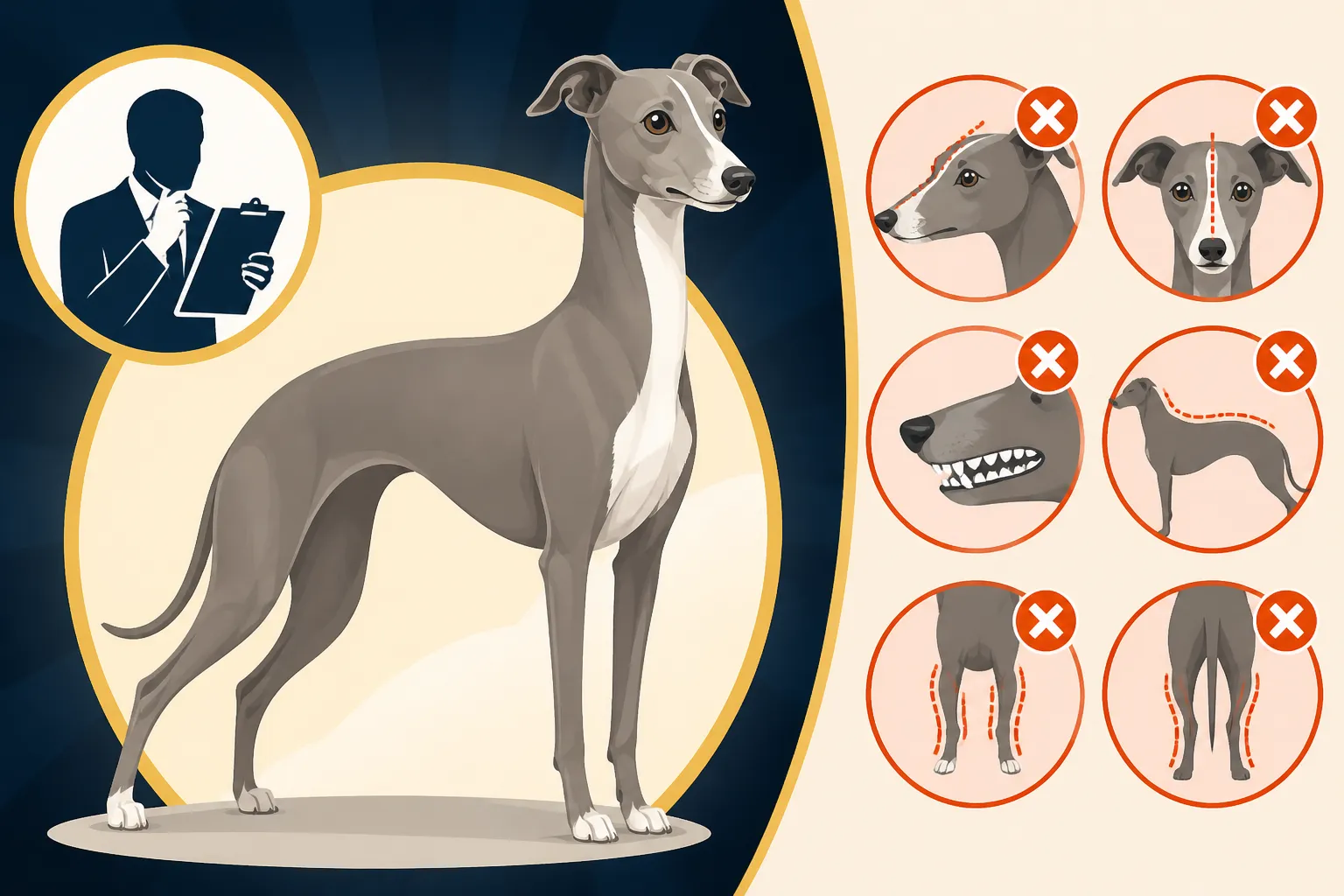
Conformation judges compare each dog with the Italian Greyhound breed standard, not with an imagined perfect dog or the other entries in the ring. They assess the whole animal: proportions, structure, movement, coat, and temperament. A feature that differs from the standard is a fault, but its importance depends on how noticeable it is and how much it affects the dog’s type or function.
The standard describes a small, fine-boned sighthound that is elegant without being weak. Its outline, head, legs, feet, and movement should work together. A dog can have a minor imperfection and still present a convincing overall picture. Conversely, several small departures can add up and make the dog less typical.
That is why a judge may examine the same feature differently in context. A slightly imperfect ear may be less consequential than a structural weakness that affects movement. The high-stepping gait is part of the breed’s distinctive presentation, but it should not come at the expense of efficient, balanced movement. For more on that characteristic, see The High Stepping Gait That Marks a Correct Italian Greyhound.
A fault is not the same as a disqualification
A fault is a deviation that may affect a dog’s placement. A disqualification is a specific condition named in the standard that makes a dog ineligible for competition under that standard. For the Italian Greyhound, listed disqualifications include brindle coloring, black-and-tan markings, and blue or partly blue eyes. These are different from ordinary faults: a judge does not simply weigh a disqualification against a dog’s other virtues.
Many other concerns, including a height outside the stated range or an incorrect bite, are treated as faults rather than automatic disqualifications. The distinction matters because owners sometimes hear that a dog has a “fault” and assume it cannot be shown. In many cases, it can still enter the ring, though the feature may count against it.
A show judge is assessing conformation, not deciding whether a dog is healthy, lovable, or suited to family life. A fault in the ring does not make a dog a poor companion. If you are learning the breed’s basic proportions, What an Italian Greyhound Weighs and How Tall It Stands offers useful context for understanding size and outline.
| Feature judges assess | What the standard generally favors | How a departure may be treated |
|---|---|---|
| Height | The stated range of 13 to 15 inches at the withers | Outside the range is a fault |
| Bite | A scissors bite | Overshot or undershot bite is a fault |
| Eyes | Dark, bright eyes | Blue or partly blue eyes are a disqualification |
| Ears | Small, fine ears folded back, with a rose-ear shape | Erect ears are a fault |
| Color | Accepted colors and markings | Brindle or black-and-tan markings are disqualifications |
| Movement | Free, coordinated movement with a characteristic spring | Restricted, unbalanced, or inefficient movement may be penalized |
Faults judges may notice in the head and expression
Bite, teeth, and muzzle proportions
The standard calls for a scissors bite. An overshot or undershot bite is a fault, and judges may also notice whether the head has the long, narrow, refined shape expected in the breed. The muzzle should balance with the skull rather than looking disproportionately short or blunt. These details help create the Italian Greyhound’s characteristic expression.
A puppy’s teeth and facial proportions can change as it matures, so a single early observation is not always the final picture. If you are preparing a young dog for a show, ask an experienced breeder or knowledgeable mentor to explain what they see and whether the feature is likely to be temporary or persistent. For more on the breed’s mouth structure, see What an Italian Greyhound's Bite Should Be.
A bite fault is a conformation issue; it is not a reason to try to alter a dog’s mouth or conceal what a judge needs to evaluate. Responsible presentation means letting the judge examine the dog honestly. If you have a health concern about your dog’s teeth or jaw, discuss it with a veterinarian rather than treating the show standard as a medical diagnosis.
Eyes, ears, and overall expression
Dark, bright eyes contribute to the breed’s alert but gentle expression. Blue or partly blue eyes are a disqualification under the standard. Other departures in eye shape or prominence may affect the overall expression, but a judge considers them alongside the entire head rather than in isolation.
The ears should be small and fine, folding back in the characteristic rose-ear shape when the dog is attentive or relaxed. Erect ears are a fault. Dogs naturally move their ears in response to sounds and surroundings, so handlers should not confuse a momentary ear position with a permanent structural feature. The judge considers the dog’s typical ear carriage during the examination.
Expression is not just a matter of a dog looking sweet in a photograph. It comes from the relationship among the skull, muzzle, eyes, and ears. A head that is too coarse or lacks the expected refinement may look less typical, even if each individual feature seems acceptable on its own. For a closer look at ear carriage, see How an Italian Greyhound's Ears Should Be Carried.
Structural faults in the body, legs, and feet
Height, proportions, and outline
The standard gives a height range of 13 to 15 inches at the withers. A dog outside that range has a fault, but being a little taller or shorter does not automatically mean it is disqualified. Judges also consider whether the dog’s overall proportions remain balanced and whether it retains the refined, compact outline of the breed.
The topline and body should read as a coordinated silhouette. A dog that appears too long, too short, coarse, or lacking in balance may lose some of the breed’s characteristic elegance. The goal is not fragility: fine bone is part of the type, but the dog should still look sound and capable of moving freely.
Owners sometimes mistake a dog’s naturally lean appearance for a fault, or assume that adding weight will make a dog look more substantial in the ring. Body condition should be appropriate for the individual dog, not manipulated to create an impression. Coat color and fashionable size are not substitutes for sound structure; Every Color an Italian Greyhound Is Allowed to Be explains the breed’s accepted colors and markings.
Legs, feet, and movement
The Italian Greyhound’s legs and feet are especially important to the outline and way of going. Judges look for a dog that stands and moves with coordination, without obvious weakness, imbalance, or awkwardness. Poorly aligned limbs, weak-looking pasterns, or feet that do not support the dog well may affect the overall impression. A judge assesses how the parts work together, not just how the dog looks while standing still.
In motion, the dog should move freely and with a springy, high-stepping action, while the front and rear legs remain coordinated. A dog that paddles, moves unevenly, crosses excessively, or appears stiff may be penalized because the movement does not match the standard’s picture of a free, balanced sighthound. Some movement faults become clearer when the dog is viewed from the front, side, and rear.
A handler can help the judge see the dog clearly by practicing a relaxed, controlled gait rather than rushing or pulling the dog into an artificial pose. Ring practice cannot change a structural fault, but calm handling can prevent nerves or poor pacing from obscuring the dog’s natural movement. For background on one health issue that can affect leg use, see Patellar Luxation in an Italian Greyhound.
Preparing for the ring without hiding the dog
Presentation can clarify, but it cannot correct structure
Good presentation helps a judge evaluate the dog fairly. Keep the coat clean, nails neat, and the dog comfortable with being examined and handled. Practice standing naturally and moving at a pace that shows the dog’s stride without forcing it into an exaggerated gait. A judge wants to see the dog, not a handler’s attempt to disguise a weakness.
Grooming for this short-coated breed is generally simple, but preparation still takes patience. If you are choosing basic coat or nail-care supplies, Chewy is one place owners may browse for everyday pet-care items. Whatever you use, introduce grooming tools gradually and keep sessions calm; show preparation should not turn routine care into a stressful struggle.
A nervous dog may flatten its ears, fidget, or move awkwardly, making it harder to assess its natural carriage. Short, positive practice sessions at home can help. You might rehearse a gentle mouth examination, a brief stand on a nonslip surface, and a short walk in a quiet area before adding the distractions of a show environment.
Learn what is cosmetic, structural, and disqualifying
It helps to sort concerns into three broad categories. Cosmetic details, such as coat cleanliness or nail length, can often be improved through routine care. Structural features, such as proportions or limb alignment, are part of the dog’s build and should not be presented as something training can fix. Disqualifications are specifically named in the standard and are not ordinary placement faults.
If you are new to showing, ask a reputable breeder, breed mentor, or experienced exhibitor to walk through the standard with you while looking at your dog. A good mentor can explain what is a matter of preference, what is a genuine departure, and what a judge is likely to notice. You can also compare the written standard with the breed’s hallmark silhouette in The Italian Greyhound Against the Whippet and the Greyhound.
For everyday upkeep, owners sometimes use Chewy to look for a suitable brush or nail-care tool, but the right choice depends on the dog and its comfort with handling. Keep any care routine gentle, and ask a veterinarian or qualified groomer for help if nails, skin, or handling sensitivity are difficult. Chewy may be a convenient place to explore general pet-care supplies, while breed-specific show advice is better discussed with a knowledgeable Italian Greyhound mentor.
The most useful mindset is to treat judging as an evaluation of a dog against a written ideal, not as a verdict on the dog’s worth. A fault may affect a ribbon; it does not define the animal you live with. The standard helps explain what judges reward, while a responsible owner keeps the dog’s comfort and well-being ahead of show presentation.
Disclaimer
This article is for general informational purposes only and does not constitute professional advice. Laws, prices and regulations vary by location and change over time. Consult a qualified professional for guidance on your specific situation.