What Judges Look For First in an Italian Greyhound
A judge’s first impression of an Italian Greyhound is usually its outline: a small, fine-boned dog with balanced proportions, an elegant curve through the topline, and an alert, graceful presence. But a striking silhouette is only the beginning. This guide explains what judges typically assess first, what they examine on the move and by hand, and how to prepare without trying to disguise your dog’s natural structure.
The first impression is the whole outline
Balance matters more than one dramatic feature
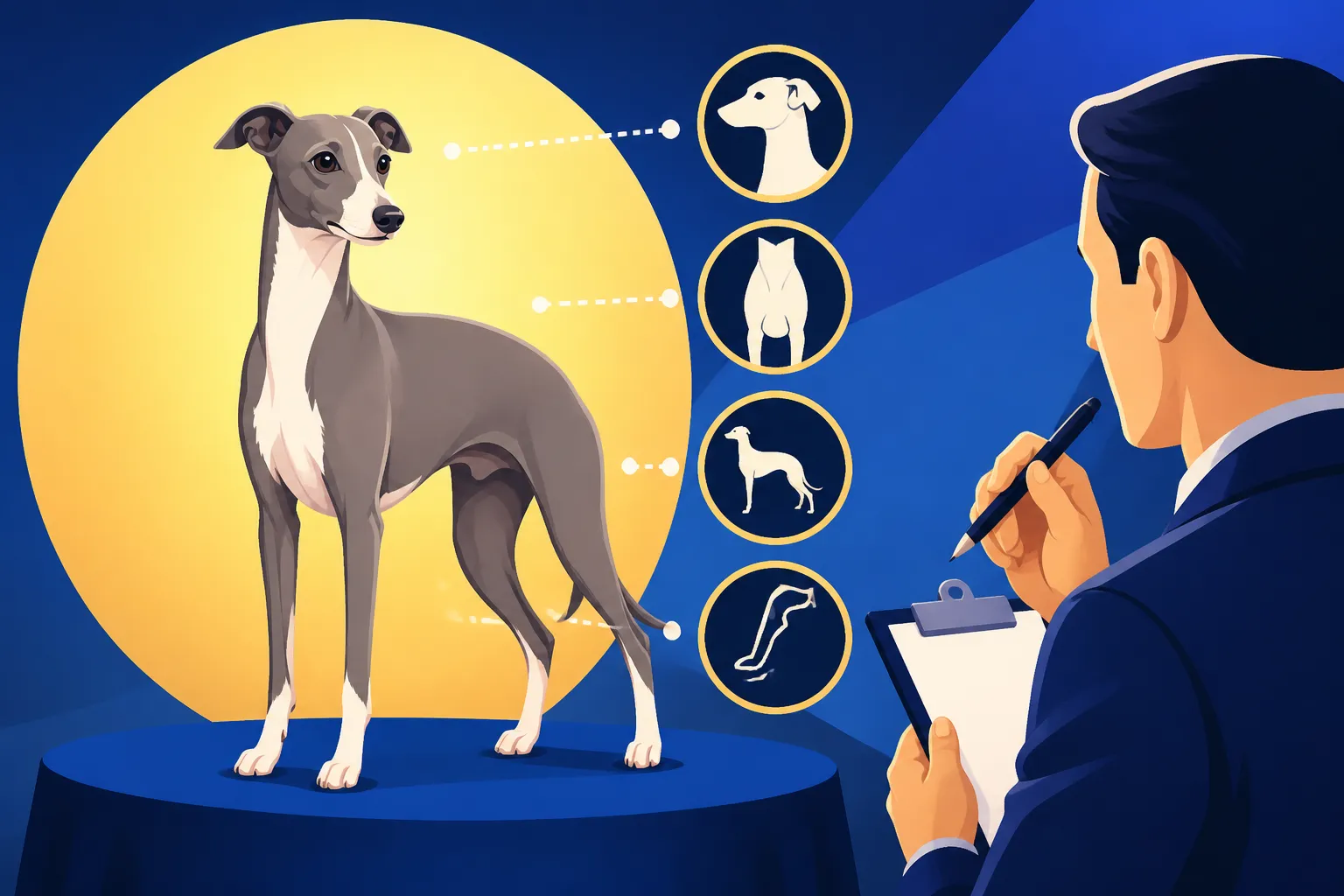
In the show ring, the judge generally sees the dog before touching it. The first impression is not just a pretty head or a long neck; it is how the dog’s parts fit together. Italian Greyhounds are meant to look refined and athletic, but not so slight that they seem weak or unbalanced. Their outline should read as one coordinated picture, rather than a collection of features competing for attention.
A dog with a lovely head may not make the strongest first impression if its body looks out of proportion or its stance is awkward. Likewise, a beautiful curve through the back does not compensate for poor balance elsewhere. Judges look at the dog as a whole, including its proportions, carriage, and condition. That overall picture is why a dog can look impressive in a still photograph but less convincing when standing naturally in the ring.
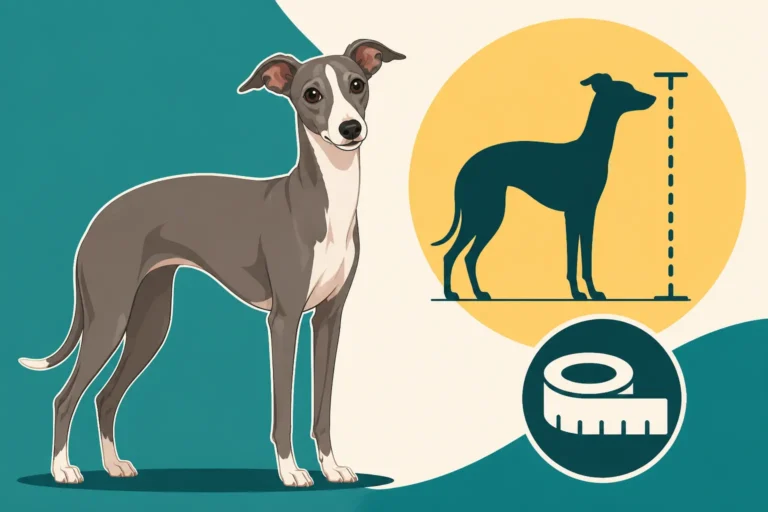
The breed’s size and proportions are part of that picture, not a contest to find the tiniest dog. For a closer look at the measurements and proportions, see What an Italian Greyhound Weighs and How Tall It Stands. In the ring, the key question is whether the dog appears to fit the breed’s intended type and standard, not whether it is smaller or more delicate than its competitors.
Elegance should not be mistaken for fragility
An Italian Greyhound is fine-boned, but “fine-boned” does not mean weak, unstable, or lacking substance. Judges are looking for refinement paired with functional structure. A dog should appear light and graceful while still standing securely and moving with ease. If the dog seems so fragile that it cannot comfortably support itself or travel freely, that is not the same thing as correct elegance.
This distinction can be tricky for new exhibitors. People sometimes assume that the most delicate-looking dog must be the best example of the breed. In practice, an extremely narrow or unsteady appearance may raise questions about balance and soundness. The goal is not to make a dog look heavier than it is, either. It is to present the dog naturally, with a healthy body condition and a stance that lets the judge assess its structure.
The comparison in Whether a Correct Italian Greyhound Looks Fragile can help clarify why a refined appearance and a sound, capable body are not opposites. A good first impression combines both: the dog looks elegant, but also composed and physically comfortable.
The head and expression contribute to type
Once the judge has taken in the outline, the head and expression add important detail to the overall impression. The Italian Greyhound’s head should look refined and in keeping with the dog’s proportions. The eyes, ears, muzzle, and general expression help create the breed’s characteristic alert, gentle look. No single detail should be judged in isolation from the rest of the dog.
Ears are especially noticeable because they can change the dog’s expression so much. A nervous dog may hold them differently from a relaxed one, and the way ears are carried can shift as the dog looks toward its handler or the judge. A brief change in ear position is not the same as a fixed structural feature, so a judge considers the dog’s presentation as a whole. For more detail, see How an Italian Greyhound's Ears Should Be Carried.
Color can catch the eye from across the ring, but it should not distract from structure and breed type. A striking shade is not a substitute for balanced proportions, sound movement, or a good overall outline. If you are learning the accepted colors, Every Color an Italian Greyhound Is Allowed to Be is useful background; in the ring, the dog’s physical qualities remain central.
What the judge checks on the move
Gait shows whether the structure works
A dog’s stance gives the judge one view of its construction. Movement shows how that construction works. As the Italian Greyhound travels, the judge can assess coordination, ease, balance, and whether the dog appears comfortable. The desired impression is light, free movement rather than stiffness, scrambling, or effortful travel.
The breed is known for a distinctive high-stepping action, but that should not be confused with exaggerated or uncontrolled leg lifting. The legs should move in a coordinated way, carrying the dog forward smoothly. A handler who rushes, pulls, or constantly changes speed can make it harder for the judge to see the dog’s natural gait. A steady pace that suits the individual dog is often more useful than trying to make the movement look dramatic.
For a fuller explanation of the breed’s characteristic action, read The High Stepping Gait That Marks a Correct Italian Greyhound and What an Italian Greyhound's Gait Should Look Like. These details matter because a dog’s movement is not decoration; it is evidence of how well the dog’s parts work together.
Straight lines and turns reveal different things
Judges commonly ask exhibitors to move their dogs in a pattern that lets them view the dog from more than one angle. Moving away and back toward the judge can show whether the dog tracks in a coordinated way. A side view gives a better look at the outline and stride. Turns help reveal whether the dog can change direction without losing balance or becoming tangled in its own movement.
This is one reason a calm, practiced ring routine helps. A dog that is unfamiliar with the lead may weave, pull toward another dog, or stop suddenly, making it difficult to assess its movement. Training does not change a dog’s structure, but it can help the dog show its natural movement more clearly. Short, pleasant practice sessions are often more productive than repeated drills that leave the dog tired or worried.
Footing matters, too. Slippery floors can make a dog brace or shorten its stride, while a crowded ring can distract it. A judge is assessing the dog under the conditions of the class, but exhibitors can still help by maintaining control and allowing enough space for the dog to move without being hurried or crowded.
Feet and limbs affect the whole picture
The feet may be small, but they help support the dog and influence how confidently it moves. Judges look at whether the dog stands securely and travels without an obvious irregularity. A dog that repeatedly slips, toes awkwardly, or appears uncomfortable can be harder to assess, and those signs may prompt a closer look at its movement and structure.
Routine care makes it easier to present the feet cleanly and comfortably. Keep nails at a practical length and check the pads for irritation or debris. Do not make a last-minute change to nail length or handling that could leave the dog uncomfortable on show day. For more detail on the breed’s foot shape, see What Shape an Italian Greyhound's Feet Are.
A basic preparation kit may include a comb or soft brush, nail-care tools, and a suitable lead. If you are comparing everyday grooming and care supplies, Chewy is one place owners may look; choose tools that suit your dog and introduce them gradually at home. A dog that has learned to tolerate gentle handling is generally easier to present and examine than one encountering every tool for the first time at a show.
What judges may examine by hand
The judge is checking structure, not just appearance
After the initial visual assessment and movement, a judge may examine the dog by hand. This gives them a chance to assess features that are difficult to judge from a distance, including the dog’s proportions and physical structure. The examination is a normal part of conformation showing, not a verdict on whether the dog is friendly or affectionate.
A dog that has practiced calm handling is more likely to stand comfortably while being examined. At home, you can gently accustom your dog to being touched around the body, feet, and head, while rewarding relaxed behavior. Keep sessions brief and stop if the dog becomes overwhelmed. If your dog is especially uneasy with unfamiliar people, work at a pace that keeps the experience safe and positive rather than forcing repeated contact.
Exhibitors should also avoid trying to physically place the dog into a strained pose. A natural, balanced stance is more useful than a forced one. If the dog is uncomfortable, the tension can show in its posture, expression, and movement, making the overall presentation less clear.
The topline is a feature to see in context
The topline is part of the Italian Greyhound’s recognizable outline. Judges look at how it appears from the side and how it fits with the rest of the body, rather than treating a particular curve as an isolated checklist item. The dog’s posture, tension, and stance can all affect how the topline looks at a given moment.
Handlers sometimes over-focus on setting the back and hindquarters, especially if they have seen a pose they admire in photographs. But a dog that is stretched too far or held rigidly may not show its natural balance. Practice a comfortable stack that lets the dog stand steadily, with its body visible and its weight distributed naturally. Small adjustments can help; forcing an exaggerated pose can obscure the dog’s actual outline.
For more on this feature, see What a Correct Italian Greyhound's Topline Looks Like. It is helpful to understand the intended outline, while remembering that the judge evaluates it as part of the complete dog.
Teeth and general condition are part of the assessment
A judge may also look at the bite and teeth as part of examining the dog. The goal is to assess the features according to the applicable breed standard, not to reward a dog for being unusually eager to have its mouth handled. Practicing gentle mouth handling at home can help make the examination less surprising, but avoid repeatedly forcing the mouth open if your dog is distressed.
The dog’s general condition matters throughout the judging process. A clean coat, trimmed nails, and a comfortable body condition help the judge see the dog clearly, but grooming cannot conceal structural differences. A dog that is too thin, too heavy, or visibly uncomfortable may not present its best overall picture. Good preparation is about care and clarity, not changing the dog’s natural appearance.
If you are unsure what a particular mouth feature means, What an Italian Greyhound's Bite Should Be offers useful background. Show rules and breed standards can differ by country, so exhibitors should check the standard and show requirements that apply to their event.
How to prepare without overhandling your dog
Build a relaxed ring routine
A helpful routine starts well before show day. Practice standing on a lead, walking at a comfortable pace, making simple turns, and allowing gentle handling. Keep sessions short enough that your dog remains engaged. If the dog gets distracted, worried, or tired, end on an easy success rather than repeating the same movement until it becomes frustrating.
Imagine a young dog that moves beautifully in the yard but freezes when asked to walk in a busy indoor ring. The structure has not changed; the environment has. Gradually practicing around mild distractions can help the dog stay composed, but progress may be uneven. Some dogs need more time to become comfortable with unfamiliar floors, voices, and dogs nearby.
The handler’s job is to help the judge see the dog, not to make every moment look perfect. A calm lead, consistent pace, and patient response to small mistakes can keep the dog’s movement and expression more natural. For owners preparing for a first event, understanding How Italian Greyhound Standards Differ Between Countries can also help avoid confusion when show expectations or wording vary.
Choose practical grooming and handling tools
Show preparation does not require an elaborate routine. Regularly checking nails, coat, ears, and general cleanliness is usually more useful than trying a new product right before the event. Introduce brushes and handling tools during calm moments at home, so the dog does not associate them only with the pressure of show day.
Chewy can be a convenient place to compare basic grooming supplies, but the best choice is the one your dog tolerates and that suits its needs. A gentle brush is preferable to one that irritates delicate skin, and nail tools should be used carefully. If you are unsure how to trim nails safely, ask a veterinarian or experienced groomer to demonstrate rather than guessing.
Avoid using a grooming product or new handling method for the first time on the morning of a show. That is when a mild skin reaction, a dog’s dislike of a tool, or an unexpected change in coat appearance becomes an unnecessary stress. Familiar, simple care is usually easier on both dog and handler.
Use the standard as a guide, not a reason to force a pose
A breed standard is a guide to the features judges assess; it is not a script for making every dog stand identically. Individual dogs have different temperaments, and an Italian Greyhound may need a moment to settle before it shows its best outline. Give the dog time to stand naturally, then make small adjustments if needed.
| What the judge notices | What it helps show | What the handler can do |
|---|---|---|
| Overall outline | Balance, proportions, and breed type | Let the dog stand naturally without over-stretching |
| Head and expression | Breed character and refinement | Keep the dog attentive without constantly baiting |
| Movement | Coordination, ease, and soundness | Use a steady pace and allow room to travel |
| Feet and limbs | Support and movement quality | Keep nails manageable and check for discomfort |
| Handling response | Comfort during examination | Practice brief, gentle handling at home |
| General condition | Health, care, and presentation | Maintain routine grooming and a comfortable body condition |
Chewy may be useful when you are assembling everyday care items, but no supply can replace patient practice or change the dog’s underlying structure. Let the dog’s natural qualities come through. A composed, comfortable dog is easier to assess than one being constantly repositioned, hurried, or distracted.
Ultimately, judges look for a complete Italian Greyhound: refined but capable, balanced in outline, and able to move freely. The first impression matters because it gives the judge an immediate sense of type, but the examination and movement fill in the picture. Preparing thoughtfully helps your dog show what it is, rather than asking it to perform a pose it cannot comfortably hold.
Disclaimer
This article is for general informational purposes only and does not constitute professional advice. Laws, prices and regulations vary by location and change over time. Consult a qualified professional for guidance on your specific situation.