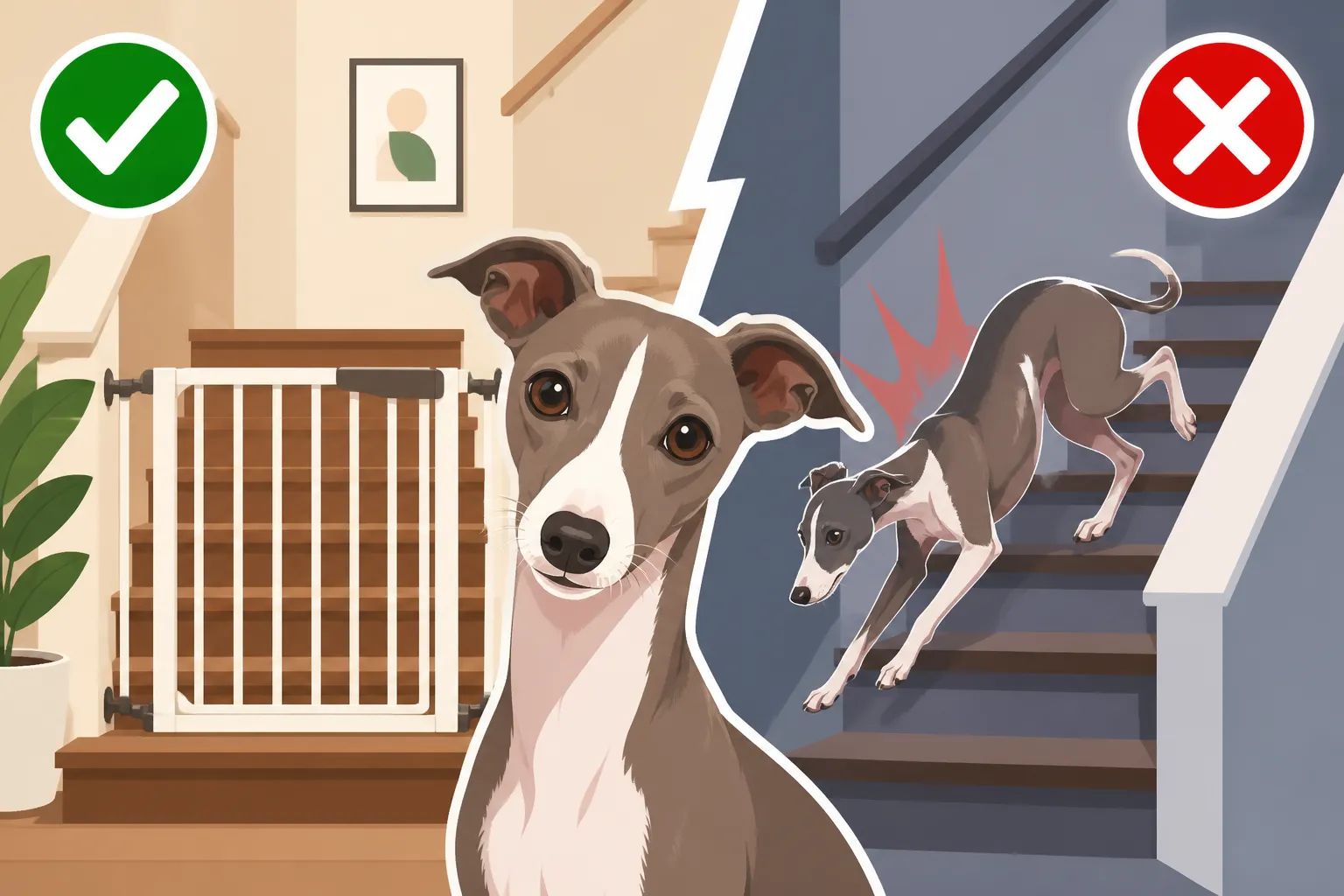
Whether Stairs Should Be Gated for an Italian Greyhound
For Italian Greyhound owners, the sight of a staircase can often bring a subtle pang of anxiety. We adore their boundless energy and graceful leaps, but we're also acutely aware of their delicate bone structure. The fear of a misstep, a clumsy tumble, or an enthusiastic dive off a stair leading to a broken leg is a very real, constant worry that many of us live with. This guide aims to tackle that specific frustration head-on, delving into why stairs pose such a risk for Italian Greyhounds and offering practical, real-world solutions, including whether stair gates are the definitive answer for maintaining your beloved Iggy's safety and your own peace of mind.
The Inherent Risk of Stairs for Italian Greyhounds
Let's be honest, Italian Greyhounds are built for speed and elegance, not necessarily for navigating treacherous indoor landscapes like stairs. Their unique physique, combined with their playful and often oblivious nature, creates a perfect storm for potential accidents, especially when it comes to elevated surfaces.
The Fragility of Italian Greyhound Bones
It's no secret that Italian Greyhounds are known for their slender, almost porcelain-like bones. Unlike many other breeds, their long, delicate limbs, particularly the radius and ulna in their front legs, are surprisingly susceptible to fractures from seemingly minor incidents. Imagine a playful puppy, full of beans, tearing down a flight of stairs, missing a step, and landing awkwardly. What might be a bruise or a sprain for a stockier dog can easily result in a clean break for an Iggy. This isn't just a puppy problem; even a fully mature adult Italian Greyhound has bones that remain relatively fragile. Many owners have faced the heartbreak of a sudden fracture, often from a height as innocuous as a sofa, let alone a flight of stairs. It's why we spend so much time discussing Why an Italian Greyhound's Leg Bones Break So Easily.
How Jumps and Falls Happen on Stairs
It's not always about outright falls. Italian Greyhounds are incredibly athletic, often jumping off surfaces rather than carefully descending them. A stair landing, to them, might look like a perfectly acceptable launchpad. We've all seen our Iggies get a case of the "zoomies" – those sudden bursts of energy where they tear around the house at top speed. If this happens near a staircase, the risk dramatically increases. They might misjudge a step, slip on a slick surface, or simply get too excited and launch themselves. They also lack the heavy, low-slung body that provides stability for many other breeds. Their high center of gravity and long legs mean a loss of balance can quickly escalate into a serious tumble down an entire flight. This isn't just hypothetical; many owners can tell stories of their Iggy trying to navigate stairs too quickly, miscalculating a jump, or simply not paying attention during play. The potential impact of even a small drop for an Iggy is significant, echoing the dangers of The Jump Off the Sofa That Breaks an Italian Greyhound's Leg.
Age-Related Vulnerabilities
While Italian Greyhounds are typically graceful, their vulnerability around stairs changes with age. Puppies, especially those under two years old, are at the highest risk. Their growth plates are still developing, and their coordination isn't fully honed. A young Italian Greyhound might be clumsy, over-confident, or simply too small to manage the height and depth of standard stairs safely. This is a critical period where The Age an Italian Greyhound Is Most Likely to Break a Leg becomes a stark reality. Restricting their access and training them carefully during this stage is paramount.
On the other end of the spectrum, senior Italian Greyhounds also face increased risks. As they age, many Iggies experience a decline in vision, particularly night vision, making dimly lit stairs a hazard. Arthritis can set in, making each step painful or difficult, leading to hesitation, missteps, or a loss of balance. Muscle weakness can also contribute to instability. For an older Iggy, a simple flight of stairs can become an insurmountable and dangerous obstacle. This is why discussions around Caring for an Italian Greyhound Past Eleven often include modifications to the home environment to ensure continued safety and comfort.
Why Stair Gates Are an Essential Safety Measure
Given the inherent risks, many Italian Greyhound owners find themselves gravitating towards physical barriers to ensure their dog's safety. Stair gates, when chosen and installed correctly, can be an absolute lifesaver, offering peace of mind that a simple "no" or watchful eye cannot always guarantee.
Preventing Unsupervised Access
The primary benefit of stair gates is the complete prevention of unsupervised access to stairs. We can't be everywhere at once, and our Iggies are notoriously quick and opportunistic. One minute they're snoozing on the sofa, the next they've decided to explore the upstairs, or dash down to greet a visitor. A properly installed stair gate eliminates this risk entirely. It means you can leave the room to answer the door, step away to the kitchen, or even sleep soundly at night, knowing your Italian Greyhound won't attempt a dangerous climb or descent without you there to supervise, or without an approved ramp or alternative method. This control is especially vital during their most vulnerable periods, such as when you are Restricting an Italian Greyhound Under Two years old.
Training and Reinforcement
While gates primarily serve as a physical barrier, they also play a crucial role in training. By consistently gating off stairs, you are clearly defining boundaries for your Italian Greyhound. This teaches them that stairs are not a free-for-all area. When you do decide to allow them on the stairs, it can be a controlled, supervised experience, perhaps using a ramp or carrying them, reinforcing that direct, independent stair use is not permitted. This consistency is key to helping them understand which areas are safe for their playful antics and which are not. Over time, even without the gate, some Iggies will learn to avoid the stairs, although a physical barrier remains the safest bet.
Choosing the Right Type of Gate
Not all stair gates are created equal, especially when it comes to securing them for a determined or agile Italian Greyhound. Here's what to consider:
- Hardware-Mounted Gates: These are hands-down the safest option for stairs. They screw into the wall or banister, creating a secure, immovable barrier. This is critical for preventing an Iggy from nudging or pushing a gate open, or from a gate giving way if they lean on it. For the top of stairs, a hardware-mounted gate is non-negotiable for safety.
- Pressure-Mounted Gates: While easier to install (no drilling!), these are generally not recommended for the top of stairs due to the risk of being pushed down. They can be acceptable for the bottom of stairs, or for blocking off doorways within a single level, but always use with caution and regularly check their security.
- Height Considerations: Italian Greyhounds can jump surprisingly high. A standard baby gate might not be sufficient if your Iggy is a jumper. Look for gates with extra height to ensure they can't simply leap over the top. Some pet gates are specifically designed for taller dogs or jumpers.
- Bar Spacing: Ensure the gate's bar spacing is narrow enough that your Italian Greyhound cannot squeeze through or get their head stuck. This is particularly important for small puppies.
- Material and Durability: Choose a gate made from sturdy materials like metal or solid wood that can withstand an Iggy's occasional pawing or leaning. You can find a wide range of suitable options through retailers like Chewy, who often carry specialized pet gates.
Here's a quick comparison of common gate types:
| Gate Type | Pros | Cons | Best Use Case |
|---|---|---|---|
| Hardware-Mounted | Most secure; permanent installation; no trip bar | Requires drilling; not easily moved; more complex installation | Top of stairs, bottom of stairs, high-traffic areas |
| Pressure-Mounted | Easy to install/remove; no drilling; portable | Can be pushed over; trip hazard at base; less secure | Bottom of stairs (with caution), doorways, low-risk areas |
| Retractable | Disappears when not in use; clean look | Less rigid than hardware-mounted; can sag over time; not always jump-proof | Wide openings, areas where aesthetics are key |
| Freestanding | No installation; easily moved | Not secure; easily pushed aside by a determined dog | Temporary barriers, room dividers (not for stairs) |
Beyond Gates: Comprehensive Stair Safety Strategies
While gates are a cornerstone of stair safety, a truly comprehensive approach involves multiple layers of protection and training to keep your Italian Greyhound safe around any elevated surfaces.
Training for Safe Stair Use
Some owners, for various reasons, may need their Italian Greyhound to be able to navigate stairs. In these cases, extremely careful and positive reinforcement training is essential. This is a slow, methodical process that should only begin once your Iggy is mature and has solid bone density, typically past two years old.
- Desensitization: Start by simply having them near the stairs, rewarding calm behavior.
- Controlled Ascent/Descent: Teach them to go up and down one step at a time, on a leash, with constant verbal encouragement and high-value treats. Avoid any rushing or forced movements.
- "Wait" and "Slowly" Cues: Teach specific commands for navigating stairs, ensuring they understand to take their time.
- Never Allow Running or Jumping: The rule must be absolute: no running, no jumping, ever, on the stairs.
- Consistent Supervision: Even after training, never allow unsupervised stair access if they are using them independently.
Remember, the goal is not to encourage them to use stairs, but to teach them to do so in the safest, most controlled manner possible if absolutely necessary. For most Iggies, avoiding stairs is the safest approach.
Alternative Access: Ramps and Lifting
For many Italian Greyhound owners, the ideal solution isn't training for stair use, but providing safe alternatives.
- Ramps: Pet ramps are fantastic for allowing your Iggy to access furniture safely, and they can also be used to provide gradual slopes instead of stairs. If you have just a few steps, a custom-built ramp could be a consideration. The angle of the ramp is crucial; it needs to be very gentle to prevent slipping and to reduce impact on their joints. You can learn more about Ramps and Steps for an Italian Greyhound's Furniture.
- Lifting: For many Iggies, being carried up and down stairs is the safest method. This requires you to be physically able to do so reliably and to teach your Iggy to accept being picked up calmly. Always support their body completely, especially their delicate spine and legs, when lifting. Be mindful of their weight and your own physical limits.
Addressing Underlying Issues
Sometimes, stair safety isn't just about the stairs themselves, but about your Iggy's physical condition or the environment.
- Traction: Hardwood or tiled stairs can be extremely slippery for an Italian Greyhound's paws, leading to falls. Consider adding carpet runners or non-slip treads to stairs. Ensure their nails are kept short to improve grip.
- Vision: For older Iggies, reduced vision can make stairs a minefield. Ensure stairs are well-lit, day and night. Consider adding contrasting tape to the edges of steps to make them more visible.
- Mobility: If your Italian Greyhound is showing signs of arthritis or other mobility issues, consult your vet. Pain management or joint supplements might make a significant difference in their overall stability. This also ties into comprehensive care for Whether an Old Italian Greyhound Needs Steps Everywhere.
Living with Stairs and an Italian Greyhound: Practical Considerations
Integrating stair safety into daily life with an Italian Greyhound requires a realistic and long-term perspective. It's not a one-time fix but an ongoing commitment to their well-being.
When to Remove Gates (or Keep Them Forever)
Many owners wonder if there will come a time when they can remove the stair gates. For Italian Greyhounds, the answer is often "never" or "only under very specific, controlled circumstances." While an adult Iggy's bones are stronger than a puppy's, they still retain that inherent fragility. The risk of a fall, a misjudgment, or a sudden burst of energy causing a fracture always remains. Most experienced Iggy owners choose to keep gates permanently installed for any stairs their dogs could access unsupervised. It's a small inconvenience for a lifetime of safety and avoiding the heartache and significant vet bills associated with A Broken Leg Is the Emergency Every Italian Greyhound Owner Fears.
Travel and Visiting Other Homes
Your safety protocols at home should extend to travel and visits to other people's houses. If you're staying with family or friends who have stairs, you need to either bring portable gates or be prepared to supervise your Iggy constantly. Explain the breed's fragility to your hosts so they understand why you might need to gate off areas or carry your dog. This might also involve bringing your Iggy's familiar ramp if they are accustomed to using it for furniture access. The goal is to create a Setting Up a House an Italian Greyhound Cannot Break a Leg In wherever you go.
Cost and Installation of Safety Measures
Investing in good quality stair gates is a small fraction of the cost you would face if your Italian Greyhound broke a leg. While prices vary, a sturdy, hardware-mounted gate is a long-term investment in your dog's safety. Installation can be a DIY project for many, but if you're uncomfortable drilling into walls or banisters, professional installation might be an option. Ramps also come in various price points, from basic models available at pet supply stores like Chewy to custom-built solutions. Thinking proactively about these costs is part of the larger picture of What an Italian Greyhound Costs Over Fifteen Years, and it’s an expense that can ultimately save you thousands in emergency veterinary care. While pet insurance providers like Healthy Paws can certainly help with unexpected accident costs, prevention is always the best strategy.
Ultimately, the decision of whether to gate stairs for an Italian Greyhound isn't just a recommendation; for many, it's a necessary part of responsible ownership. Their delicate nature, combined with their spirited personalities, means that vigilance and physical barriers are often the most effective ways to protect them from preventable injuries.
Disclaimer
This article is for general informational purposes only and does not constitute professional advice. Laws, prices and regulations vary by location and change over time. Consult a qualified professional for guidance on your specific situation.