How Long an Italian Greyhound’s Tail Should Be
An Italian Greyhound’s tail should be naturally long, slender, and tapered, with its tip reaching around the hock when the dog is standing. But measuring it at home can be confusing: posture, coat, and a tucked or curled tail can change what you see. This guide explains the breed’s usual tail shape, how to assess it gently, and when a change may need veterinary attention.
The typical Italian Greyhound tail
Length and shape
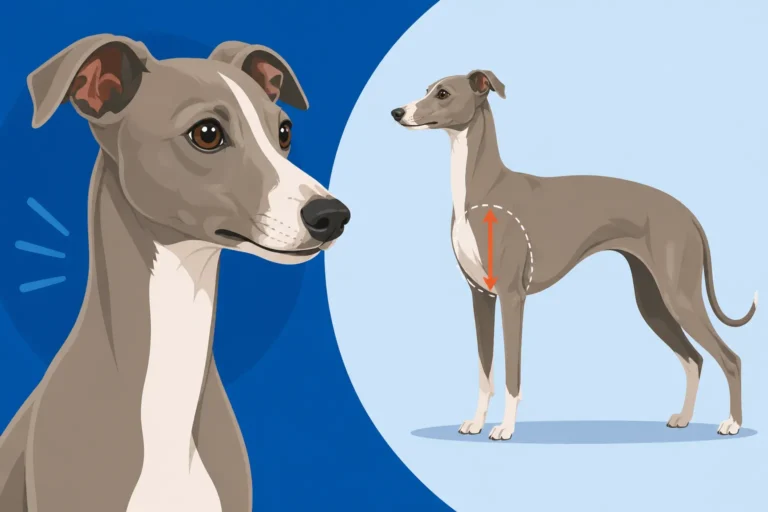
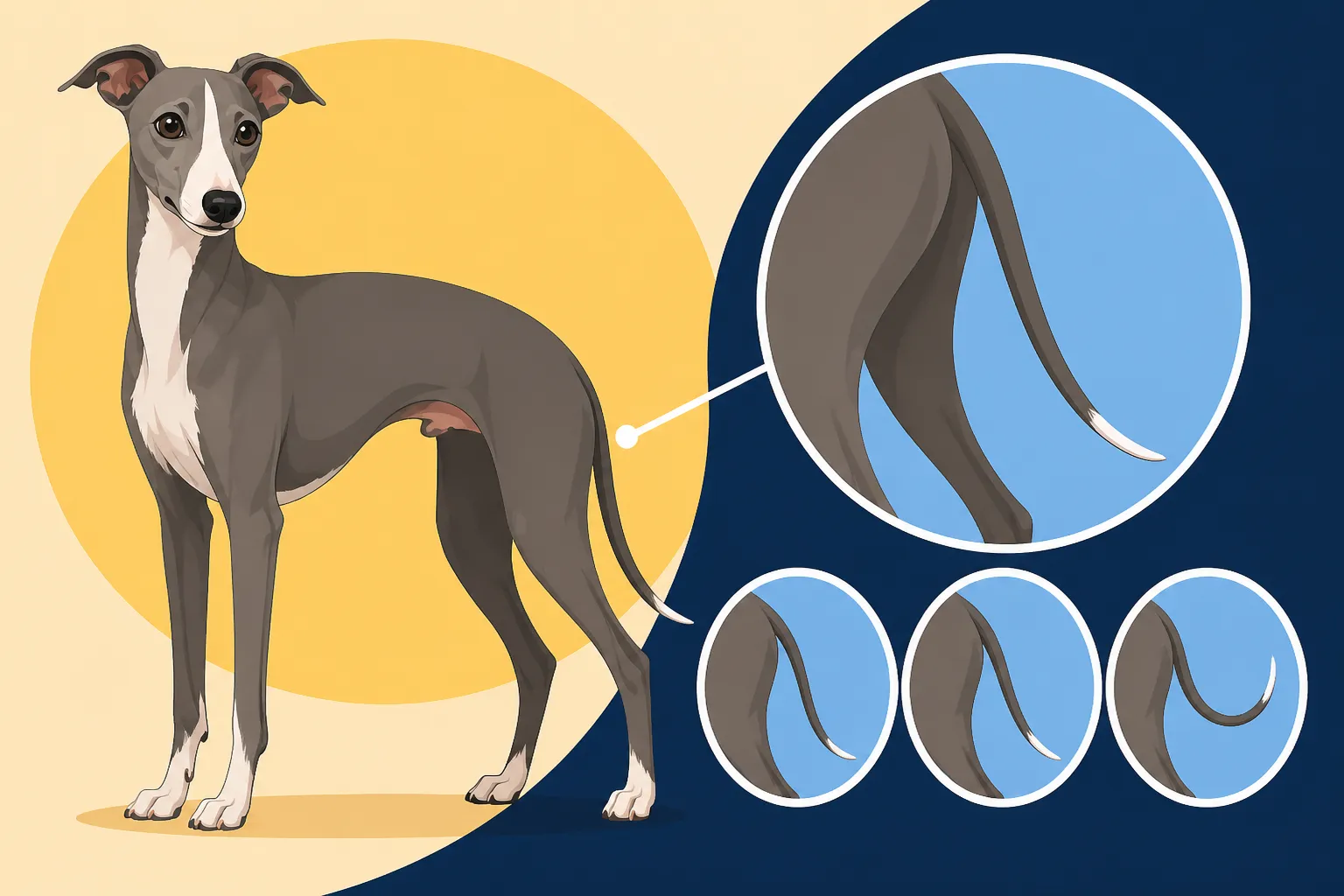
Italian Greyhound breed standards generally describe a tail that is low-set, long, and tapering, reaching to about the hock. The hock is the joint partway down the dog’s rear leg, above the foot. In practical terms, the tail should look long in proportion to the dog’s fine-boned body—not like a short nub.
The tail narrows toward its tip. It is not meant to be thick, blunt, or heavily feathered, and its natural appearance is not usually altered by docking. Italian Greyhounds have a short, smooth coat, so the tail’s outline is typically easy to see.
There is some natural variation. Two healthy Italian Greyhounds may not have tails that look identical in length or curve, and judging a dog from a single photograph can be misleading. Camera angle, stance, and whether the dog is relaxed all affect how long the tail appears.
How the tail is carried
A relaxed Italian Greyhound commonly carries its tail low, with a gentle curve, especially toward the end. The tail may move or lift when the dog is alert, excited, or running. A tail held differently for a moment does not by itself mean that it is too short or incorrectly shaped.
A frightened, uncomfortable, or cold dog may tuck its tail close to the body. That posture can make a perfectly ordinary tail look much shorter than it is. Give the dog time to settle before assessing its natural carriage; don’t pull the tail down or try to straighten its curve.
Tail carriage is only one detail of a dog’s overall build. For broader context on breed proportions, see What a Correct Italian Greyhound's Topline Looks Like and What Height the Italian Greyhound Standard Asks For.
What breed standards can and cannot tell you
A breed standard describes the traits expected in the show ring. It helps explain why a long, low-set, tapered tail is considered typical, but it does not provide a simple home test for whether a particular pet’s tail is “right.” Standards and wording can differ between kennel organizations, and a pet’s health and comfort matter more than a show-ring comparison.
If you are comparing standards, How Italian Greyhound Standards Differ Between Countries offers useful context. And if you are looking at a dog’s overall appearance rather than one feature, What Judges Look For First in an Italian Greyhound is a more complete place to start.
How to assess your Italian Greyhound’s tail at home
Check the tail while your dog is standing naturally
Choose a calm moment when your dog is standing on a level, nonslip surface. Let the tail hang in its usual position; don’t position your dog or hold the tail in place. From the side, look at where the tail begins, how it tapers, and where its tip falls in relation to the hock.
A relaxed stance is important. If your dog is crouching, leaning, sitting, or tucking its tail, the apparent length can change. A photo taken from above can also distort proportions, making the tail look shorter or longer than it is.
If you want to keep a record, take a clear side-on photo while your dog is standing comfortably. Repeat it later under similar conditions rather than comparing pictures taken at very different angles. This is a more useful way to notice a change than repeatedly handling a sensitive tail.
Measure gently if you need a reference
For a simple home measurement, use a soft measuring tape. Note the length from the base of the tail to the tip without stretching or bending it. The measurement can help you describe a concern to a veterinarian or compare your dog’s tail over time, but it does not determine whether the tail meets a show standard.
Never tug on the tail, press on the joints, or force it straight to get a number. If your dog pulls away, tenses, yelps, or seems worried, stop. Tail handling should be brief and comfortable.
A flexible tape is more suitable than a rigid ruler, which may press awkwardly against the dog. If you are ordering a coat from a retailer such as Chewy, use the garment maker’s specific sizing instructions; tail length alone does not tell you whether a coat will fit the chest, back, or neck.
Consider the whole dog, not one measurement
A tail should be viewed in proportion to the dog’s body and rear-leg structure. Size, stance, and individual build can affect how the tail appears relative to the hock. Other features matter too, including height and overall proportions; What Weight Range an Italian Greyhound Should Fall In can help put the breed’s general build in context.
A tail that looks different from a breed-standard description is not automatically a medical problem. Conversely, a tail that appears typical in length can still be injured or uncomfortable. Focus on whether it moves normally for your dog and whether there has been a sudden change in shape, position, or behavior.
| What you notice | What it may mean | A sensible next step |
|---|---|---|
| Long, tapered tail reaching around the hock | Common Italian Greyhound proportions | Observe it in a relaxed standing position |
| Tail looks short while tucked | Posture may be hiding its full length | Give your dog space to settle and reassess |
| Tail suddenly hangs differently or your dog guards it | Possible pain or injury | Contact your veterinarian for advice |
| A kink or unusual shape has always been present | Individual variation or an old change may be possible | Ask your veterinarian if it affects comfort or movement |
| Tail is cut, swollen, bleeding, or visibly injured | A problem that needs attention | Seek veterinary guidance promptly |
When a tail difference deserves attention
A short-looking tail is not always a short tail
The tail may look unusually short when it is tucked under the body, curled tightly, or hidden by the angle of a photo. Check again when your dog is calm and standing naturally. If the tail has always looked that way and your dog moves it comfortably, appearance alone may not indicate an urgent problem.
If you recently adopted your dog and don’t know its history, ask the rescue, breeder, or previous caregiver what they know about its tail. A naturally unusual shape, a previous injury, or an operation may explain what you see. Don’t assume the tail was intentionally shortened just because it appears shorter than expected.
When asking a breeder about body structure, it can help to discuss the dog’s overall health and family history too. Which Questions to Ask an Italian Greyhound Breeder covers questions that extend beyond appearance.
Watch for a sudden change or signs of pain
A new droop, swelling, wound, bleeding, or reluctance to let the tail be touched is more concerning than a stable difference in length. Your dog may also react by turning toward the tail, holding it unusually still, or changing its posture. These signs don’t identify the cause, but they are good reasons to contact a veterinarian.
Avoid trying to straighten a tail that looks kinked or manipulating it to see whether it hurts. If the tail has been caught, stepped on, or injured, keep your dog calm and arrange veterinary advice. Tail injuries can be painful, and a vet can assess movement and decide whether an examination or further care is needed.
Keep the tail safe in everyday life
Italian Greyhounds are slim, quick dogs, and a tail can be vulnerable to accidental knocks in a busy home. Avoid closing the tail in doors, sitting on it, or letting it become trapped beneath furniture or bedding. When lifting your dog, support the body securely rather than using the tail or limbs for leverage.
If you are shopping for clothing or a harness through Chewy, check that the item does not pull at the tail or restrict its natural position. A well-fitted garment should allow comfortable movement and should not bunch tightly around the tail base. Remove it if your dog seems uncomfortable or the fabric rubs.
A home with clear walking paths and comfortable resting spots can make it easier for a dog to move without catching its tail. If you are reviewing breed structure more broadly, Which Faults Judges Penalize in an Italian Greyhound explains why show evaluations consider multiple features together. Keep in mind that show-ring terminology is not a substitute for a veterinary assessment.
Common questions about Italian Greyhound tail length
Should the tail reach the ground?
Not necessarily. The usual standard description refers to the tail reaching the hock, not to a requirement that it touch the floor. A dog’s height, stance, and the curve of the tail affect where the tip appears. Looking for floor contact is therefore not a reliable way to judge whether a tail is typical.
Is a curled tail normal?
A gentle curve, particularly toward the tip, can be part of the breed’s usual appearance. A tail may also curl more when a dog is alert or excited. What matters at home is whether the shape is longstanding and comfortable, rather than whether it looks perfectly straight in every moment.
If the tail develops a new sharp bend, becomes painful, or stops moving as it normally does, ask your veterinarian rather than trying to correct its position yourself.
Is an Italian Greyhound’s tail ever docked?
The breed is generally described with a naturally long tail. If you encounter a dog with a noticeably short tail, ask about its history and have a veterinarian assess any concern about pain, healing, or function. Avoid inferring why the tail is short from appearance alone.
Does tail length affect a dog’s health?
Tail length by itself does not tell you whether an Italian Greyhound is healthy. Comfort, movement, skin condition, and any recent change are more useful things to notice. For a wider perspective on physical traits, Whether a Correct Italian Greyhound Looks Fragile discusses why the breed’s fine build should be understood as part of its overall structure, not judged from one feature.
How should I describe a concern to the vet?
Say what changed and when you first noticed it. Mention whether your dog is holding the tail differently, avoiding touch, or showing a visible wound or swelling. A photo or short video of the tail in its usual position can help show what you mean, especially if the posture changes at the clinic.
If you are shopping for a soft measuring tape or basic grooming supplies, Chewy is one place owners may look. But a measurement or product cannot diagnose an injury. When the tail is painful, damaged, or suddenly different, veterinary guidance is the appropriate next step.
Disclaimer
This article is for general informational purposes only and does not constitute professional advice. Laws, prices and regulations vary by location and change over time. Consult a qualified professional for guidance on your specific situation.