Whether an Italian Greyhound Needs Traction Socks
It's a fear many Italian Greyhound owners know all too well: that heart-stopping moment when your sleek, delicate companion slips and slides across a slick floor, potentially leading to a devastating injury. The thought alone can send shivers down your spine. This guide is here to tackle that anxiety head-on, exploring whether traction socks are a viable and necessary solution to keep your beloved Iggy safe and confident in your home.
The Perilous Dance of the Italian Greyhound on Slick Floors
Owning an Italian Greyhound is a joyful experience, filled with their quirky antics, loving snuggles, and breathtaking bursts of speed. But it also comes with a unique set of challenges, especially concerning their physical fragility. One of the biggest concerns for many Iggy parents is navigating a home with hard, slippery surfaces.
Why Hardwood and Tile Are a Hazard for Iggies
Let's be real, our homes are often designed for human comfort and aesthetics, not necessarily for a tiny, athletic sighthound. Those beautiful hardwood floors, gleaming tiles, and polished concrete can be an invisible minefield for an Italian Greyhound. Their delicate, pencil-thin leg bones simply aren't built for sudden impacts or uncontrolled slides. Unlike many breeds, Iggies carry very little body fat, offering minimal natural padding if they fall. Their high-stepping, elegant gait, while beautiful, also means they often land with more impact on their tiny paws, which then struggle to find purchase on slick surfaces.
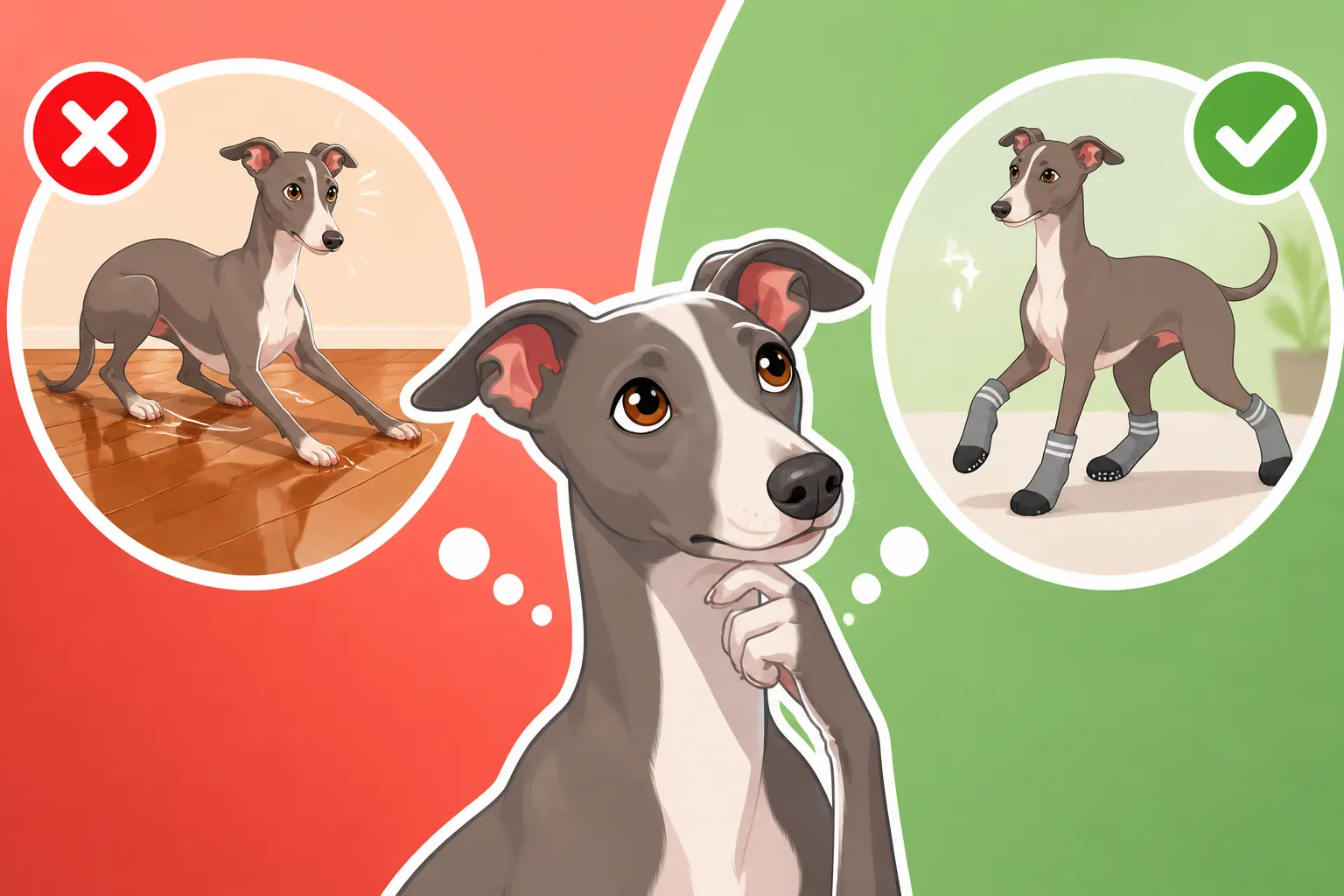
Imagine your Iggy doing a sudden "zoomie" — that exhilarating burst of energy that sends them flying around the house at warp speed. On carpet, it's pure joy. On hardwood, it can quickly turn into a terrifying ballet of splayed legs and desperate attempts to regain control. Even a simple jump off a sofa or a quick turn while playing can result in a slip that ends in a broken leg. We've all heard the stories, and the fear is valid. Why an Italian Greyhound's Leg Bones Break So Easily is a reality every owner faces, and a slippery floor amplifies that risk dramatically.
Recognizing Signs Your Italian Greyhound Struggles with Traction
Sometimes, the signs that your Italian Greyhound is struggling with slippery floors aren't as dramatic as a full-blown fall. Our Iggies are incredibly resilient and can be masters at hiding discomfort or fear. You might notice subtle changes in their behavior that indicate they're having trouble. Are they hesitant to walk into certain rooms? Do they approach furniture cautiously, rather than leaping on with their usual gusto?
Perhaps you've observed them "tiptoeing" or walking with stiff, unnatural movements, almost like they're trying to walk on ice. Their legs might splay out from under them even during slow, deliberate movements. They might even refuse to play chase or fetch indoors, preferring to stick to rugs or carpeted areas. These aren't just quirks; they're often clear signals that your Iggy feels insecure on your floors. Ignoring these early warnings could lead to more serious consequences down the line. Keep an eye out for limping or guarding a leg, which could indicate they've already had a minor slip. For a detailed look at what a severe injury might look like, check out Signs an Italian Greyhound Has Broken a Leg.
Understanding Traction Socks: A Practical Solution
Given the inherent risks, many Iggy owners look for practical ways to mitigate the danger. One solution that has gained popularity is the use of traction socks. These aren't just cute accessories; they can be a genuine game-changer for your dog's safety and confidence.
How Traction Socks Work and Their Benefits
Traction socks are essentially miniature socks for dogs, specifically designed with anti-slip material on the pads – think of them like tiny grip socks for humans. The gripping material, often silicone or rubberized dots, provides the necessary friction on slick surfaces that your Iggy's natural paw pads might lack. Instead of sliding, their paws can now "grab" the floor, allowing for more stable movement.
The benefits extend far beyond just preventing slips. With improved traction, your Italian Greyhound will likely gain a significant boost in confidence. They'll be more willing to move freely, play, and even jump on and off appropriate furniture (though ramps and steps are always a better choice for reducing impact; see Ramps and Steps for an Italian Greyhound's Furniture). This newfound stability can reduce anxiety, encourage more natural movement, and ultimately enhance their overall quality of life. For older Iggies, or those with early signs of arthritis, the extra grip can make a huge difference in managing mobility and preventing aggravating existing conditions.
Beyond safety, some traction socks also offer a layer of warmth, which is a welcome bonus for our thin-skinned Iggies, especially in cooler homes or during winter months. They can also protect sensitive paw pads from irritants or minor abrasions.
Choosing the Right Traction Socks for Your Iggy
Selecting the right pair of traction socks is crucial for both effectiveness and your dog's comfort. It's not a one-size-fits-all situation, especially with the unique anatomy of an Italian Greyhound. Here's what to consider:
First and foremost, fit is everything. The socks need to be snug enough to stay on without impeding circulation or causing discomfort. Too loose, and they'll slip off or bunch up, becoming a tripping hazard themselves. Too tight, and they'll be miserable. Look for socks that have elastic cuffs or even adjustable Velcro straps around the ankle to ensure a secure fit that can withstand zoomies and active play. Many owners find brands available on platforms like Chewy offer a good range of sizes and features specifically for smaller breeds.
Material matters too. You want durable, yet breathable fabrics. Cotton blends are common, but some socks incorporate spandex for a better stretch and fit. The grip material on the bottom should be substantial enough to provide real traction and withstand repeated washing. Consider how high the socks come up on your Iggy's leg; a higher cuff often helps them stay on better. It might take a bit of trial and error to find the perfect pair, so don't be afraid to try a few different styles. You can often find multi-packs on sites like Amazon, allowing you to test out different options without a huge commitment.
Here’s a quick guide to features to look for:
| Feature | Why It Matters for Italian Greyhounds |
|---|---|
| Secure Fit | Essential to prevent slipping off; look for elastic, Velcro straps, or high cuffs. |
| Grip Material | Silicone or rubberized dots for maximum friction on slick floors. |
| Breathable Fabric | Prevents paws from overheating and excessive sweating. |
| Durability | Needs to withstand daily wear, tear, and frequent washing. |
| Comfort | Soft, non-irritating material; no rough seams inside. |
| Water Resistance | A bonus for quick trips outside, but not essential for indoor use. |
Overcoming Challenges and Maximizing Success with Traction Socks
While traction socks offer a fantastic solution, getting your Italian Greyhound to accept wearing them can sometimes be a journey. Our Iggies can be notoriously sensitive about their feet, and introducing something new can be met with suspicion.
Introducing Socks to a Reluctant Italian Greyhound
Let's face it, most Iggies aren't going to happily trot around in socks on day one. They might do the "sock dance" – a hilarious but frustrating display of high-stepping, shaking their feet, or trying desperately to chew them off. The key is patience and positive reinforcement.
Start slow. Don't try to put all four socks on at once. Begin by simply letting your Iggy sniff the socks. Offer a high-value treat every time they show curiosity without fear. Next, gently touch their paw, then offer a treat. Gradually work up to putting one sock on for a very short period, maybe just a minute or two, immediately followed by praise and a treat. Distraction can be your best friend here – try putting the sock on just before mealtime or a favorite play session. Keep the first few sessions extremely brief and always end on a positive note, even if it means taking the sock off sooner than planned.
Gradually increase the time they wear the socks, always associating them with good things. If they get good treats or playtime only when the socks are on, they'll start to form a positive association. Remember, consistency is key, and never punish them for trying to remove the socks; simply redirect their attention. If your Iggy is particularly sensitive about their paws, you might find tips for Teaching an Italian Greyhound to Accept Nail Trims helpful, as the principles of desensitization are similar.
Maintenance, Hygiene, and Longevity of Socks
Once your Italian Greyhound is accustomed to wearing their traction socks, regular maintenance becomes important to ensure they remain effective and hygienic. Just like our own socks, dog socks need to be washed regularly. They can pick up dirt, debris, and certainly some doggie smells! Follow the washing instructions provided by the manufacturer, but generally, a gentle cycle with mild detergent and air-drying is best to preserve the grip material.
It’s a good idea to have several pairs on hand. This allows you to rotate them, ensuring you always have a clean, dry set ready while others are in the wash. Having multiple pairs also helps extend the life of each individual sock. You can easily stock up on multi-packs from retailers like Amazon, which often offer competitive pricing. Regularly inspect the socks for any signs of wear and tear, especially the grip pads. If the pads are worn smooth, the socks will lose their effectiveness and need to be replaced.
Beyond the socks themselves, maintaining your Iggy's paw health is paramount. Keep their nails trimmed short; long nails can actually reduce traction on floors, even with socks on, and can be uncomfortable. For more on this, check out How Often an Italian Greyhound's Nails Need Trimming. Also, routinely check their paw pads for any dryness, cracks, or irritation, as these issues can be exacerbated by wearing socks if not addressed. Good paw hygiene ensures the socks can do their job comfortably and effectively.
Other Traction Solutions and a Holistic Approach
Traction socks are a fantastic tool, but they're part of a larger strategy to create a safe home environment for your Italian Greyhound. Sometimes, a combination of solutions works best to fully protect your delicate companion.
Beyond Socks: Other Ways to Improve Home Safety
While socks provide direct paw-level traction, addressing the floor surfaces themselves can also make a huge difference. Investing in strategically placed rugs and runners, especially in high-traffic areas or wherever your Iggy likes to play, can transform a slippery zone into a safe haven. Consider non-slip rug pads underneath to prevent the rugs themselves from becoming a hazard. For an in-depth look at this, read Whether Rugs Help an Italian Greyhound on Hardwood.
Additionally, proper nail care is a subtle but significant factor. Long nails act like ice skates on hard floors, reducing natural grip. Keeping your Iggy's nails trimmed short, even if it means frequent dremeling or clipping, will improve their natural traction significantly, even without socks. Regular grooming of paw pad hair can also help, as excessive hair between the pads can sometimes reduce grip.
For areas where rugs aren't practical, such as certain kitchen or bathroom floors, consider applying non-slip treatments or waxes designed for flooring. These can create a less slick surface without altering the aesthetic dramatically.
The Importance of a Secure Environment
No matter how many traction solutions you implement, supervision remains a critical component of Italian Greyhound safety. Their instinct to dart and play is powerful, and accidents can happen in an instant. This is particularly true during their famous "zoomies," when they seemingly defy gravity, often without concern for slippery landings.
Utilize baby gates to restrict access to particularly hazardous areas, especially when you can't actively supervise. Ensure that any furniture they jump on or off (ideally with the aid of ramps or steps) has a stable surface nearby or is covered by a rug. Consider a soft, supportive dog bed or blanket pile on the floor in their favorite hangout spots to cushion any accidental tumbles. Ultimately, the goal is to create a home where your Italian Greyhound can move with confidence and joy, free from the constant threat of a slip or fall. For a comprehensive overview of making your home safe, refer to Setting Up a House an Italian Greyhound Cannot Break a Leg In. Combining traction socks with these other proactive measures provides the best possible protection for your beloved Iggy.
Disclaimer
This article is for general informational purposes only and does not constitute professional advice. Laws, prices and regulations vary by location and change over time. Consult a qualified professional for guidance on your specific situation.