Why an Italian Greyhound Still Runs on a Broken Leg
It’s a heart-stopping moment for any Italian Greyhound owner: you see your beloved companion take a bad jump, land awkwardly, or get jostled during play. You expect to see immediate, undeniable lameness, perhaps even hear a yelp of pain. Yet, to your utter bewilderment and alarm, your Italian Greyhound might still get up and run on what appears to be a broken leg. This incredibly confusing and terrifying scenario leaves many owners questioning what they saw, doubting their instincts, and wondering if their delicate dog is truly injured. This guide will delve into the complex reasons why an Italian Greyhound might exhibit this behavior, what it means for their well-being, and how you can respond effectively.
The Astonishing Reality of an Italian Greyhound's Pain Tolerance
It’s easy to project human responses onto our canine companions, assuming that a broken bone would elicit an immediate, undeniable yelp and refusal to bear weight. However, Italian Greyhounds, much like their sighthound relatives, possess a unique physiological and psychological makeup that can make diagnosing injuries incredibly challenging. They often exhibit a remarkable, almost alarming, stoicism in the face of pain, which can mislead even the most vigilant owner.
The Instinct to Mask Weakness
Deep within every dog, including our pampered Iggies, lies an ancient instinct for survival. In the wild, showing weakness or injury makes an animal vulnerable to predators or ostracization from the pack. While your Italian Greyhound isn't facing a saber-toothed tiger in your living room, this primal programming still influences their behavior. They may try to "tough it out" or minimize their discomfort, even with a significant injury. This isn't because they don't feel pain, but because their instinct tells them to hide it.
Imagine a scenario where your Italian Greyhound, startled by a sudden noise, leaps off the sofa and lands awkwardly. You might hear a small yelp, see them land hard, and your stomach drops. But then, almost immediately, they might shake it off, perhaps even take a few tentative steps, and then bound away to investigate the noise or join you. This brief period of apparent normalcy can be incredibly deceptive. You might think, "Oh, maybe it wasn't as bad as I thought," when in reality, their tiny body just flooded with adrenaline, temporarily overriding the signals of pain. This masking behavior is one of the most frustrating and dangerous aspects of Italian Greyhound ownership, making it difficult to discern a minor sprain from something truly catastrophic like A Broken Leg Is the Emergency Every Italian Greyhound Owner Fears.
Adrenaline and Shock: A Temporary Shield
When a sudden, traumatic injury occurs, an Italian Greyhound's body, much like a human's, releases a cascade of stress hormones, including adrenaline. Adrenaline acts as a powerful, natural painkiller and stimulant. It prepares the body for a "fight or flight" response, temporarily dulling pain sensation and boosting energy levels. This can allow an injured dog to move, even run, for a short period despite a significant injury.
Consider a dog who has just been hit by a car, or perhaps fell from a significant height. In the immediate aftermath, they might stumble, even run a short distance, before the adrenaline subsides and the full brunt of the pain and shock sets in. For a fragile breed like an Italian Greyhound, this phenomenon can be particularly misleading. Their slender bones, especially the radius and ulna, are notoriously delicate, and a bad fall can easily result in a severe fracture. Yet, in the initial moments, fueled by adrenaline, they might still attempt to move with surprising speed. This makes it absolutely critical to observe your dog closely after any potential injury, understanding that their initial reaction might not fully reflect the extent of their pain or damage. The concern is, once the adrenaline wears off, the pain can become excruciating, and the damage from continued movement can worsen.
The Delicate Structure of an Italian Greyhound's Legs
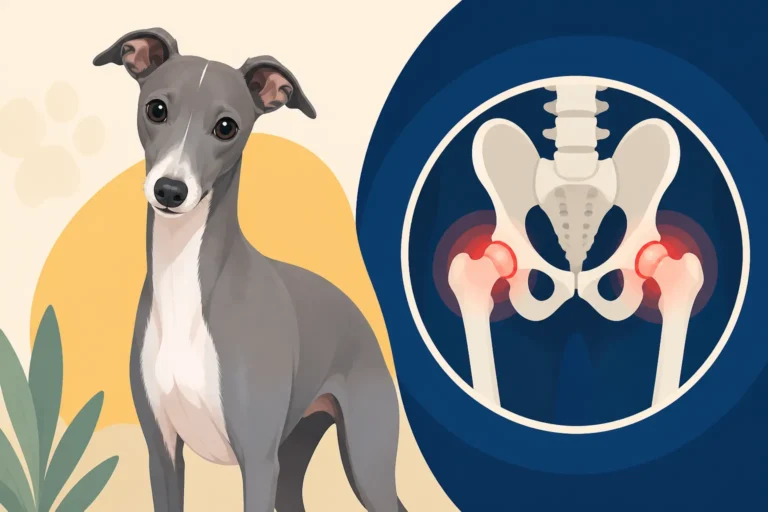
To understand why an Italian Greyhound might still move on an injured leg, we also need to look at the unique — and unfortunately, often fragile — anatomy of their limbs. These graceful, elegant dogs are built for speed and agility, but their delicate construction comes with inherent vulnerabilities.
Fragile Bones and Delicate Structure
Italian Greyhounds possess extremely fine, slender bones, particularly in their front legs. Unlike many other breeds, their bones are quite dense but thin, offering less resilience against rotational forces or direct impact. The radius, one of the two long bones in their forearm, is particularly susceptible to fractures. This is why you often hear specific warnings about Why an Italian Greyhound's Radius Is the Bone That Breaks. This bone has a relatively poor blood supply compared to other bones, which can complicate healing.
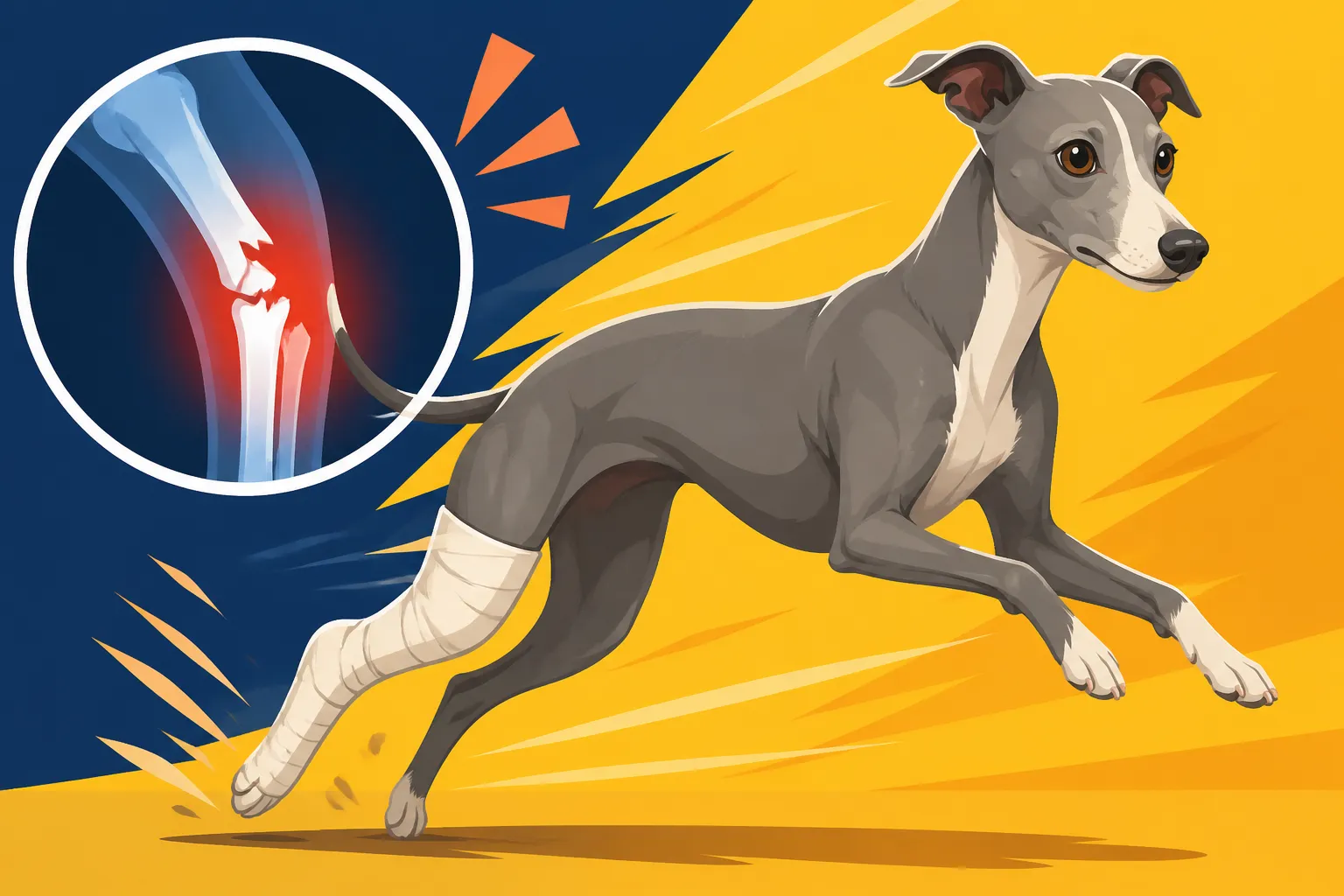
When a fracture occurs in these delicate bones, especially in the mid-shaft of the radius and ulna, the surrounding muscles and tissues might still provide enough temporary structural integrity for the dog to place some weight on the limb, albeit awkwardly. It's not true weight-bearing in a healthy sense, but rather a combination of muscle tension and the other bone (if only one is fully broken) providing just enough support to allow for a hobbling "run" or a quick hop. They might favor the leg, but the instinct to move and adapt can be powerful, often masking the true severity of the break. An owner might misinterpret this as the dog being "fine," when in fact, the bone is compromised.
The Role of Soft Tissue Support (or lack thereof)
Italian Greyhounds are famously lean, with very little body fat and minimal muscle mass compared to many other breeds. While this contributes to their athletic build and speed, it also means they lack the protective cushioning that more heavily muscled or fatter dogs possess. There's less soft tissue (muscle, fat, connective tissue) around their limb bones to absorb impact or provide stability in the event of an injury.
In the case of a fracture, this lack of robust soft tissue support means that the broken bone might not be as "splinted" by surrounding muscle as it might be in a bulkier dog. However, paradoxically, it also means that sometimes a fracture can occur with less visible external trauma, and the existing skin and minimal muscle might still hold the limb in a semi-functional position, allowing for limited movement. The bone might be completely snapped internally, but the skin and tendons can sometimes keep the limb from dangling entirely, allowing for that confusing, painful attempt at movement. This distinction between external appearance and internal reality is crucial for Italian Greyhound owners to understand.
Distinguishing Fracture Types and Perceived Mobility
Not all broken legs are created equal, and the type of fracture an Italian Greyhound sustains can significantly impact their ability – or perceived ability – to move on it. It’s vital for owners to understand these distinctions, even if only to realize that any abnormal movement after trauma warrants immediate veterinary attention.
Hairline Fractures vs. Complete Breaks
A "hairline fracture," also known as a stress fracture or a fissure, is a small crack in the bone that doesn't completely sever it. In such cases, the bone retains much of its structural integrity. An Italian Greyhound with a hairline fracture might experience pain and a noticeable limp, but they could still be capable of putting some weight on the leg and even running, albeit with discomfort. The pain might be intermittent, worsening with activity.
In contrast, a "complete break" means the bone is fully separated into two or more pieces. This is typically far more debilitating. However, even with a complete break, especially in the long bones of the leg (radius and ulna), if the fracture is "clean" and the ends are still somewhat aligned due to soft tissue, or if only one of the two bones is severely displaced, an Italian Greyhound's instinct to move can lead them to attempt to use the leg. This isn't true running, but more of a desperate, painful hobble, hop, or three-legged sprint, which can appear deceptively similar to normal movement in a panicked or adrenaline-fueled moment. Owners often recall seeing their dog "run off" after an accident, only to discover later the full extent of the damage. This initial mobility is a cruel trick, often delaying critical care.
Weight-Bearing vs. Non-Weight-Bearing Fractures
A weight-bearing fracture is one where the dog can still put some, even minimal, weight on the injured limb. This is more likely with hairline fractures, greenstick fractures (where the bone bends and cracks but doesn't completely break), or certain types of spiral fractures where the bone ends are still somewhat interlocked. In these cases, your Italian Greyhound might move cautiously, but they won't typically hold the leg completely off the ground.
A non-weight-bearing fracture, on the other hand, means the dog cannot or will not put any weight on the limb. This usually indicates a more severe, unstable break or significant displacement of the bone fragments. While an Italian Greyhound with a truly non-weight-bearing fracture would not be able to "run" in the traditional sense, they might still move quickly on three legs. The distinction lies in whether the injured paw actually touches the ground with any force. If your dog is moving swiftly on three legs, it’s still an emergency, as it indicates severe pain and an inability to use a limb that should be functional. The initial confusion for owners often stems from this quick, compensatory movement which can be mistaken for the dog being perfectly fine. Even if they are touching the ground, the way they move will be distinctly unnatural, often with a shortened stride, favoring the good legs, and a reluctance to fully extend the injured limb.
The Grave Dangers of Undiagnosed or Unattended Fractures
The Italian Greyhound’s stoicism and ability to move on an injured limb, while confusing, is actually a significant danger. Every moment an injury goes undiagnosed or untreated can compound the problem, leading to far more severe outcomes.
Worsening the Injury: From Simple to Complex
Allowing an Italian Greyhound to continue moving on a fractured leg, even for a short period, can have catastrophic consequences. What might have started as a relatively straightforward fracture—perhaps a clean break with minimal displacement—can quickly become far more complicated. Bone fragments can shift, causing further soft tissue damage, severing nerves, or puncturing skin. A "closed" fracture (where the skin remains intact) can become an "open" or "compound" fracture (where the bone breaks through the skin), introducing a high risk of infection.
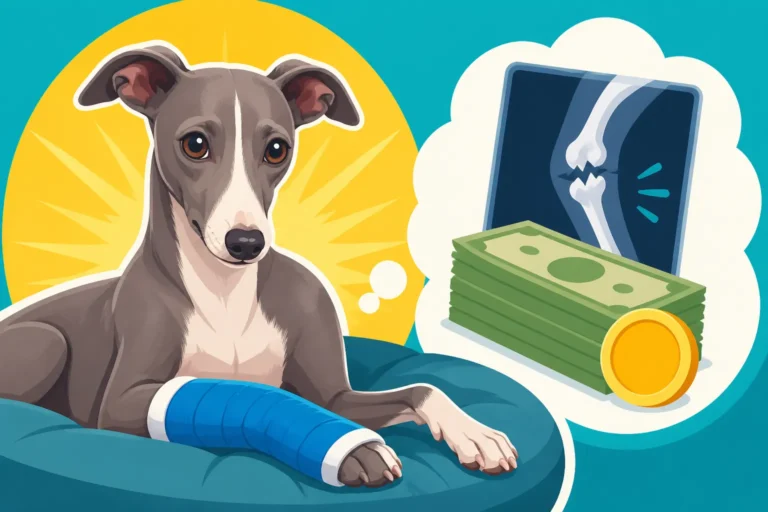
Consider a scenario where your Italian Greyhound hops off a chair and lands hard. You see a slight limp, but then they run off to grab a toy. If you don't intervene immediately and restrict their movement, those initially aligned bone fragments can easily grind against each other, causing further damage. This can turn a clean break that might have required a simpler plating procedure into a severely comminuted (shattered) fracture that is much harder, if not impossible, to repair. The difference in complexity directly impacts the cost and prognosis. A simple break might require standard surgery, but a complex, shattered bone can incur massive bills, sometimes leading to discussions about What Fracture Repair Costs on an Italian Greyhound that are beyond most owners' budgets. In the most severe cases, where the bone is too damaged or the blood supply compromised, the discussion tragically turns to When Amputation Is Discussed for an Italian Greyhound.
Delayed Healing and Complications
Timely and appropriate intervention is paramount for bone healing. When a fractured limb continues to be used, the constant movement prevents the bone from forming a stable callus—the natural bridge of new bone that forms across a fracture site. This significantly delays healing and can lead to a host of complications. The bone might fail to heal altogether, a condition known as a "non-union," or heal incorrectly, forming a "mal-union." Both scenarios often require more extensive and costly corrective surgeries, if repair is even possible.
Furthermore, continued weight-bearing on an unstable fracture causes ongoing inflammation and pain. It can damage surrounding cartilage, leading to premature arthritis in the joint. Infections are a constant threat if the skin is compromised, and these can be notoriously difficult to treat in bone, sometimes requiring long courses of antibiotics or even removal of infected bone fragments. The longer the delay in treatment, the higher the risk of permanent lameness, chronic pain, and a significantly reduced quality of life for your Italian Greyhound. Owners must understand that even if their Iggy can move, it doesn't mean they should, and allowing them to do so is actively harmful.
Navigating an Emergency: What to Do When You Suspect a Break
The moment you suspect your Italian Greyhound has broken a leg, whether they're running or not, is critical. Your immediate actions can make a significant difference in their prognosis and comfort. Don't second-guess yourself—act swiftly and calmly.
Immediate Actions and Safe Handling
If you witness an accident or suspect your Italian Greyhound has sustained an injury to a leg, your first priority is to prevent further damage. Even if they are attempting to move, you must restrict their activity immediately.
- Secure Them Gently: If possible, confine your Italian Greyhound to a small, enclosed space like a crate or a small room. This limits their ability to run or jump, minimizing further stress on the injured limb. If they are in severe pain and trying to bite, use extreme caution, or drape a blanket over them to safely move them.
- Avoid Amateur Splinting: Resist the urge to try and splint the leg yourself. Improper splinting can cause more harm than good, increasing pain and potentially damaging nerves or blood vessels. Leave this to veterinary professionals.
- Support and Comfort: When moving your dog, support their body gently, trying to keep the injured limb as stable as possible. A towel or blanket can be carefully placed under their belly to create a sling, lifting some weight off their legs if you need to carry them. Speak in a calm, soothing voice to reduce their anxiety, as fear can intensify their pain and make them resist handling. Wrap them warmly, as shock can cause their body temperature to drop.
- Observe for Other Signs: Look for other signs of injury beyond the obvious limb issue. Are they panting heavily? Are their gums pale? Is there any swelling or obvious deformity? Are they showing other Signs an Italian Greyhound Has Broken a Leg? All this information will be valuable for your veterinarian.
Seeking Veterinary Care Promptly
Once your Italian Greyhound is safely contained, the very next step is to contact your veterinarian or the nearest emergency veterinary clinic immediately. This is not a "wait and see" situation. Even if your Iggy seems to be "fine" or "running," it's crucial to get professional assessment.
When you call, clearly explain what happened and describe your dog’s behavior, including the perplexing fact that they are still moving or trying to run. This information helps the veterinary team prepare for your arrival. Upon reaching the clinic, they will likely perform a physical examination, gently palpating the leg to identify areas of pain or instability. X-rays are almost always necessary to confirm a fracture, determine its type, location, and severity.
It's particularly helpful if your veterinarian has experience with sighthounds. Their unique anatomy and physiology, including how they metabolize certain anesthetics and their stoicism regarding pain, mean they require specialized care. You might even need to consider Finding a Surgeon Who Has Plated an Italian Greyhound if the injury requires specialist orthopedic intervention. Having a reliable pet insurance plan, such as one from Healthy Paws, can significantly ease the financial burden of these unexpected emergency visits and complex surgeries, allowing you to focus on your dog's recovery without the added stress of crushing vet bills. Early diagnosis and intervention are critical not only for saving the limb but also for ensuring the best possible outcome for your beloved Italian Greyhound.
Proactive Prevention: Safeguarding Your Italian Greyhound's Fragile Bones
While accidents can happen to any dog, Italian Greyhounds are uniquely predisposed to fractures due to their delicate build. Therefore, proactive prevention is not just a good idea—it's an essential part of responsible ownership. Creating a safe environment and supervising interactions can drastically reduce the risk of your Italian Greyhound ever needing to run on a broken leg.
Managing Environmental Risks
One of the most significant factors in preventing Italian Greyhound fractures is managing their environment, particularly indoors. Most breaks happen within the home, often involving jumps from furniture or falls on slippery surfaces.
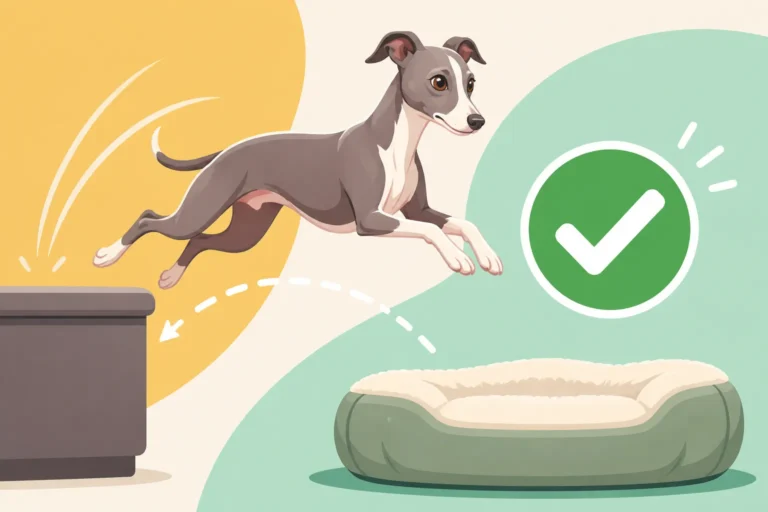
- Ramps and Steps: Italian Greyhounds love to be close to their people, which often means being on the sofa or bed. However, their long, thin legs are not designed for repeated jumping, especially off high surfaces. Invest in Ramps and Steps for an Italian Greyhound's Furniture to provide safe access to elevated areas. Teach them to use these aids consistently from a young age.
- Non-Slip Flooring: Hardwood, tile, and laminate floors are common culprits for slips and falls. Use rugs or runners, especially in high-traffic areas and around furniture, to provide traction. Consider paw pads or traction socks for older dogs or those with mobility issues.
- Secured Windows and Doors: Italian Greyhounds have an incredibly strong prey drive and can be surprisingly quick to bolt. Ensure all windows are securely screened and doors are kept closed. A loose Italian Greyhound running into the street or a wooded area is at extreme risk of injury from traffic or encounters with other animals.
- Supervised Outdoor Time: Even in a fenced yard, supervise your Iggy. They can scale fences surprisingly well and can be injured digging under them. Check your yard regularly for potential hazards like holes, sharp objects, or uneven ground.
Supervising Play and Interactions
Socializing your Italian Greyhound is important, but careful supervision during playtime is crucial, especially with other dogs or children.
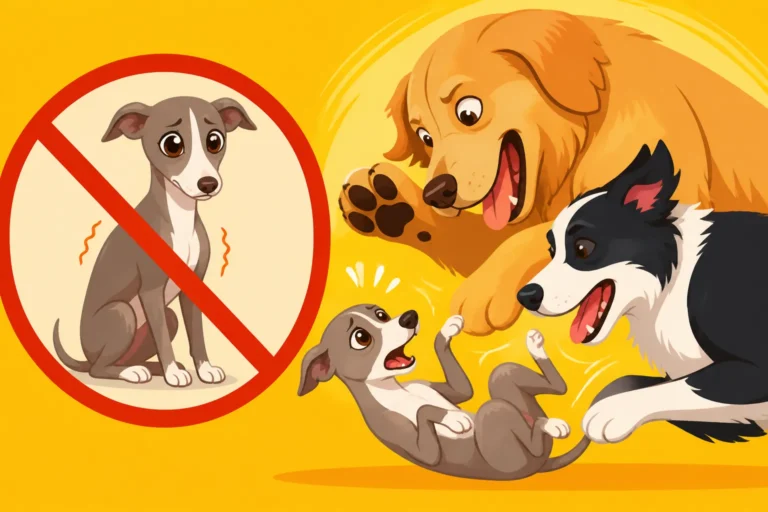
- Appropriate Playmates: Italian Greyhounds are often oblivious to their own fragility. They love to play rough, but a playful tumble with a larger, heavier dog can easily result in a broken bone. Avoid dog parks or unsupervised play with larger breeds. If they play with other dogs, ensure the play is gentle and with similarly sized, compatible companions. This means understanding Why an Italian Greyhound Puppy Should Not Wrestle Big Dogs and guiding their social interactions.
- Children and Handling: Children, no matter how well-meaning, may not fully grasp an Italian Greyhound's delicate nature. They might try to pick them up incorrectly, drop them, or play too roughly. Always supervise interactions between your Iggy and children, teaching kids gentle handling and the importance of not picking up the dog without supervision. Emphasize Why Children Should Not Carry an Italian Greyhound without adult guidance, or ideally, not at all until they are older and properly instructed.
- Your Own Handling: Even as adults, we can inadvertently cause injury. Always support your Italian Greyhound's body when picking them up, one hand under the chest and the other under the hindquarters. Avoid lifting them by their front legs or under their armpits. Be mindful of sudden movements or putting them down too quickly from a height.
Early Health Monitoring
Regular veterinary check-ups are not just for vaccinations; they're an opportunity to monitor your Italian Greyhound's overall health, including their musculoskeletal system. Your vet can assess their gait, discuss any subtle lameness you might have noticed, and provide guidance on nutrition to support bone health. While calcium supplements are generally not recommended without a vet's specific instruction, ensuring a balanced diet is important.
If your Italian Greyhound is insured with a plan like Healthy Paws, you might feel more comfortable scheduling regular check-ups and addressing any minor concerns early, rather than waiting for a major incident. These preventative visits can sometimes catch early signs of issues or help you refine your care routine to further minimize risks. Protecting your Italian Greyhound's fragile bones is a lifelong commitment, but with diligence and awareness, you can significantly reduce the chances of them ever having to endure the pain and recovery of a broken leg.
| Fractured Right Foreleg (Complete, Stable) | Yes (may be a bit slower or more deliberate, depending on pain) | Yes (though perhaps more hesitantly) | Immediate (within minutes to hours) | Get to an emergency vet now. Immediate rest, pain meds, and potentially surgery needed. Healthy Paws is great for these costs. |
|---|---|---|---|---|
| Hairline Fracture Left Hindleg | Yes (often less stable, might hobble) | No (will try to keep all weight off) | Immediately (within minutes to hours) | Vet visit ASAP. X-rays and potentially a cast or surgical repair needed. |
| Severely Displaced Break Right Foreleg | No (cannot bear any weight) | Yes (will move fast on three legs) | Urgently (within minutes) | Vet visit ASAP. X-rays, splinting, and possibly extensive surgical repair needed. |
| Mild Sprain Left Hindleg | Yes (mild limp, might shake it off) | Yes (might try to use it cautiously) | If persistent or worsening, consult vet within 24 hours. | Rest, observation, and potentially anti-inflammatories. If no improvement, vet visit. |
This table illustrates that an Italian Greyhound's ability to move is NOT always an indicator of a minor injury. When in doubt, always seek veterinary advice promptly.
Disclaimer
This article is intended for informational purposes only and does not constitute veterinary advice. If you suspect your Italian Greyhound has sustained an injury, please contact your veterinarian or an emergency veterinary clinic immediately.