Why an Italian Greyhound’s Teeth Need Brushing Daily
If you're an Italian Greyhound owner, you've probably heard the whispers, or perhaps even experienced the frustrating reality: these delicate little dogs have notoriously tricky teeth. It's a common struggle to keep their pearly whites healthy, and many of us feel like we're fighting a losing battle against plaque and tartar, often leading to costly and painful vet visits. This guide is here to shed light on why daily tooth brushing isn't just a recommendation for Italian Greyhounds—it's an absolute necessity for their comfort, health, and overall longevity.
The Unique Vulnerabilities of the Italian Greyhound Mouth
Let's be honest, Italian Greyhounds are built for speed and elegance, not necessarily for chewing through tough bones or maintaining pristine dental health without help. Their unique facial structure and genetic predispositions create a perfect storm for dental problems, making them far more susceptible than many other breeds. Understanding these specific vulnerabilities is the first step in truly appreciating why daily brushing is non-negotiable.
Crowded Conditions and Tiny Jaws
Take a good look at your Italian Greyhound's mouth. What do you see? Often, it's a lot of teeth packed into a very small, narrow jaw. This isn't just an aesthetic observation; it's a significant health concern. Because their teeth are so close together, they tend to rub against each other more, creating tiny crevices and tight spaces where food particles, bacteria, and debris love to hide. Unlike larger breeds with more spacious mouths, an Italian Greyhound's crowded dentition makes it incredibly difficult for their natural chewing action (or even for their tongue) to adequately clean these areas. It's like trying to sweep a floor covered in intricate furniture—you just can't get into all the nooks and crannies. This overcrowding is a primary reason Why an Italian Greyhound's Teeth Crowd and sets the stage for rapid dental decline.
Imagine trying to floss your own teeth if they were constantly crammed together, with hardly any space in between. That's essentially what your Italian Greyhound is dealing with. The roots of these tiny teeth are often long relative to the jawbone, making them less stable in the long run, especially as gum disease takes hold. Many Italian Greyhounds also retain their baby teeth, which further exacerbates the crowding issue. When the permanent teeth try to erupt alongside the deciduous (baby) teeth, it creates even more tight spots for bacteria to flourish, essentially creating a double layer of dental problems from a young age. This is why Retained Baby Teeth in an Italian Greyhound need careful monitoring and often early intervention.
Rapid Tartar Buildup
It feels like no matter what you do, tartar just appears overnight on your Italian Greyhound's teeth, doesn't it? You're not imagining it. Italian Greyhounds are notoriously prone to rapid tartar buildup, often starting at a surprisingly young age. I've seen puppies with visible tartar before they even hit their first birthday, which can be incredibly disheartening for diligent owners. This quick accumulation is directly linked to the breed's oral anatomy and specific saliva chemistry.
Plaque is a sticky film of bacteria, food particles, and saliva that constantly forms on teeth. If plaque isn't removed within about 24-48 hours, it starts to mineralize, turning into hard, crusty tartar (calculus). Once tartar forms, you can't just brush it away; it requires professional dental cleaning under anesthesia to remove. For Italian Greyhounds, this transformation from soft plaque to hard tartar seems to happen in warp speed. How Early Tartar Appears on an Italian Greyhound is a common concern among owners. The rough surface of tartar then provides an even better adhesion point for more plaque, creating a vicious cycle that accelerates dental disease. This rapid progression means that waiting even a few days between brushings can allow a significant amount of plaque to harden into tartar, making your efforts feel futile and paving the way for serious issues like Periodontal Disease Is the Italian Greyhound's Most Common Diagnosis.
Understanding the Consequences of Neglecting Dental Care
It’s easy to dismiss a little yellowing on your dog’s teeth as merely cosmetic, but for Italian Greyhounds, ignoring dental hygiene has profound and far-reaching consequences that extend far beyond their mouths. It’s not just about bad breath; it’s about chronic pain, systemic infections, and a diminished quality of life. As a dedicated Italian Greyhound owner, you want your companion to be happy and healthy for as long as possible, and that means taking their dental care seriously.
Pain, Infection, and Tooth Loss
Imagine living with a constant toothache or having infected gums. It's a miserable thought, yet many Italian Greyhounds suffer in silence because dogs are masters at hiding pain. The unchecked buildup of plaque and tartar leads directly to gingivitis, which is inflammation of the gums. If gingivitis isn't addressed, it progresses to periodontitis, a much more severe and irreversible form of gum disease. Periodontitis destroys the supportive structures around the teeth, including the gums, ligaments, and bone. This is incredibly painful. Your dog might show subtle signs like reluctance to chew hard kibble, preferring softer food, or simply becoming a bit quieter than usual.
As the infection deepens, abscesses can form, which are pockets of pus that can erode the jawbone. This is particularly dangerous for Italian Greyhounds, whose delicate jaws are already thin. In severe cases, particularly during dental extractions, their jaw can even fracture due to the bone loss caused by periodontal disease. How Many Teeth an Italian Greyhound Loses by Eight is a stark reminder of how quickly things can deteriorate without proper care. Once the disease takes hold, teeth become loose, painful, and ultimately fall out or need to be extracted by a vet. This impacts their ability to eat comfortably and can lead to a lifetime of soft food or even hand-feeding.
Systemic Health Risks Beyond the Mouth
The mouth isn't an isolated part of the body. What happens in your Italian Greyhound's mouth can, and often does, affect their entire system. The bacteria thriving in infected gums don't just stay put; they can enter the bloodstream through inflamed tissues and travel to major organs, causing serious secondary infections. This is a crucial, yet often overlooked, aspect of dental health.
These bacteria can impact the heart, leading to conditions like endocarditis (an infection of the heart valves). They can also put a strain on the kidneys and liver, potentially contributing to organ damage over time. It's a silent threat that can shave years off your Italian Greyhound's life. This is why it's so important to understand How Dental Disease Shortens an Italian Greyhound's Life. Regular brushing helps keep these bacterial loads down, reducing the risk of them spreading throughout the body and protecting your Italian Greyhound from these insidious systemic illnesses. A healthy mouth contributes directly to a healthier, longer life, preventing not just dental pain but a whole host of other medical complications that no owner wants to face.
The Proactive Power of Daily Brushing
Given the Italian Greyhound's predispositions, daily tooth brushing isn't just good practice—it's your most powerful weapon in the fight against dental disease. Think of it as preventative medicine, offering a multitude of benefits that far outweigh the small daily effort required. It might seem daunting at first, but with consistency and the right approach, it becomes a routine that protects your beloved companion.
Mechanical Removal of Plaque
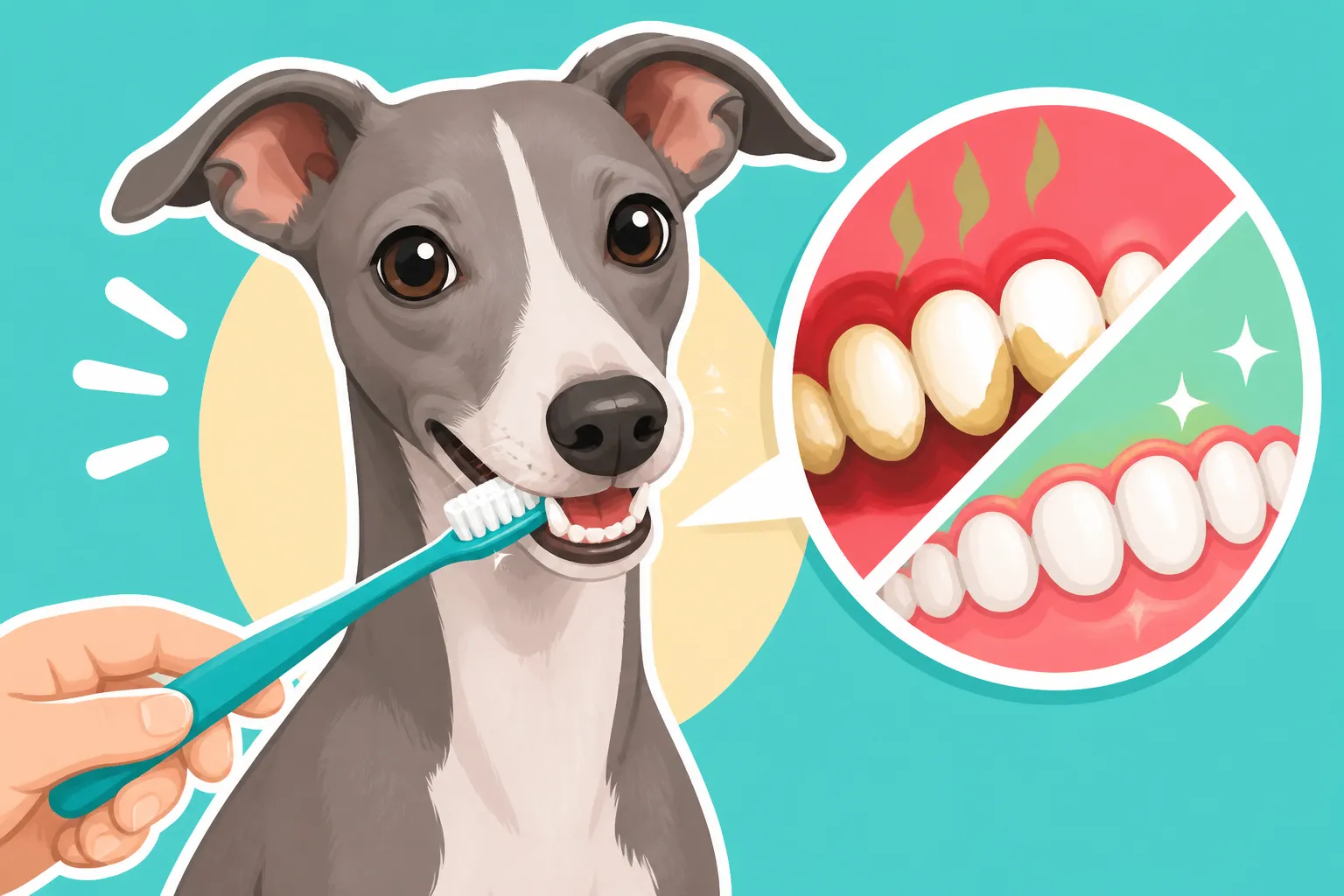
The core benefit of daily brushing is simple yet profound: the mechanical removal of plaque. Plaque is soft and sticky, making it easy to brush away before it has a chance to harden into tartar. When you brush your Italian Greyhound's teeth, you're physically dislodging these bacterial films and food particles, preventing them from clinging to the tooth surface and mineralizing. This direct, hands-on action is far more effective than any dental chew or water additive alone.
Using a toothbrush specifically designed for small dogs, perhaps even a finger brush if your IG's mouth is particularly tiny, allows you to reach those crowded spaces we discussed earlier. Brands like Virbac offer enzymatic toothpastes specifically formulated for dogs (never use human toothpaste!), and you can often find these, along with a variety of brushes, on sites like Chewy or Amazon. Remember, it's not just about applying the toothpaste; it's the gentle scrubbing action of the bristles against the tooth surface and gum line that does the real work. Consistent daily effort significantly slows down the progression of dental disease, helping to maintain healthy gums and extend the life of each tooth. Even if you miss a day, just pick up where you left off. Every brushing session helps.
Building a Positive Routine
Establishing a daily brushing routine might feel like a chore initially, but with patience and positive reinforcement, it can become a surprisingly calm and even enjoyable interaction for both you and your Italian Greyhound. Start slowly, perhaps just by touching their muzzle and then their lips, gradually introducing the toothbrush and a small amount of dog-specific toothpaste. Use plenty of praise and high-value treats (like a dollop of peanut butter on the roof of their mouth after brushing, or a tiny bit of their favorite wet food). You might find a brand like Ollie offers particularly enticing toppers that can serve as a great reward.
The goal is to associate tooth brushing with positive experiences, not fear or discomfort. Keep sessions short, especially in the beginning—even 30 seconds of effective brushing on the outer surfaces of the teeth is better than nothing. Consistency is key; doing it daily helps desensitize them and makes it a normal part of their day, just like mealtime or walks. Over time, your Italian Greyhound will learn to tolerate, and perhaps even look forward to, the routine. This proactive approach not only keeps their mouth healthier but also strengthens the bond you share through gentle, consistent care. For tips on how to start, check out Teaching an Italian Greyhound Puppy to Have Its Teeth Brushed.
What Happens During an Italian Greyhound's Dental (and Why Daily Care Helps Prevent It)
Despite your best efforts with daily brushing, an Italian Greyhound will almost certainly need professional dental cleanings throughout their life. It's just the nature of the breed. However, consistent home care can drastically reduce the frequency and invasiveness of these procedures, making them safer, less stressful, and less costly for you and your dog. Knowing what a professional dental entails can further motivate that daily brushing habit.
The Anesthesia Component
One of the biggest concerns for Italian Greyhound owners when it comes to dental procedures is the anesthesia. Because Italian Greyhounds are sighthounds with very little body fat, they metabolize anesthesia differently than many other breeds. This makes Why an Italian Greyhound's Dental Requires Anesthesia a particular point of stress for many of us. Vets experienced with sighthounds often use different protocols and closely monitor them throughout the procedure and during recovery to ensure their safety and warmth.
Professional dental cleaning, unlike home brushing, allows the veterinary team to thoroughly clean all tooth surfaces, including below the gum line where periodontal disease truly takes hold. This comprehensive cleaning is impossible on an awake dog, hence the necessity of anesthesia. While advances in veterinary medicine have made anesthesia much safer, it's never without some degree of risk. This is precisely why your daily brushing efforts are so critical. By keeping plaque and tartar at bay, you can potentially extend the time between professional cleanings, reducing your dog's exposure to anesthesia over their lifetime. It also means that when they do go in for a cleaning, the procedure is likely to be much shorter and less involved, with fewer extractions, which is a win for everyone.
Scaling, Polishing, and Extractions
When your Italian Greyhound goes in for a professional dental, a lot happens. First, the vet or vet tech will perform a thorough oral examination. Then, under anesthesia, they use ultrasonic scalers, similar to those your own dentist uses, to remove tartar from all tooth surfaces, both above and below the gum line. This subgingival cleaning is absolutely vital, as it's where the most damaging bacteria reside. After scaling, the teeth are polished to smooth out any microscopic etches left by the scaling process, making it harder for plaque to adhere in the future.
This is also the time when the vet takes dental X-rays to assess the health of the tooth roots and jawbone, as much of periodontal disease happens unseen beneath the gum line. If significant disease or damage is found, extractions may be necessary. This can involve removing loose, broken, or severely infected teeth, which is a common part of What Happens During an Italian Greyhound's Dental. Each extraction adds to the complexity, duration, and cost of the procedure. While necessary to alleviate pain and prevent systemic infection, extractions are never ideal. Daily brushing helps minimize the amount of tartar buildup, reduces gum inflammation, and can significantly decrease the likelihood of needing multiple extractions, saving your Italian Greyhound from pain and you from a hefty vet bill. It’s an investment in their comfort and your peace of mind.
Disclaimer
This article is for general informational purposes only and does not constitute professional advice. Laws, prices and regulations vary by location and change over time. Consult a qualified professional for guidance on your specific situation.