How High an Italian Greyhound Will Climb Indoors
One of the most surprising things about living with an Italian Greyhound is their incredible vertical ambition. These sleek, delicate dogs, often weighing less than ten pounds, have an uncanny ability to scale heights you never imagined possible, turning your home into a personal parkour course. This guide will explore just how high your Italian Greyhound might climb, unravel the motivations behind their aerial escapades, and provide practical strategies to keep them safe and your sanity intact.
Understanding the Italian Greyhound's Vertical Ambition
It's easy to look at an Italian Greyhound and assume their delicate build means they'll stick to ground level. That assumption, my friends, is where many new Iggy owners get a rude awakening. These dogs are sighthounds, yes, but they also possess an athletic prowess that belies their dainty appearance. They are agile, springy, and remarkably determined to reach elevated vantage points, whether it's for comfort, curiosity, or simply because they can.
The Physics of an Italian Greyhound's Jump
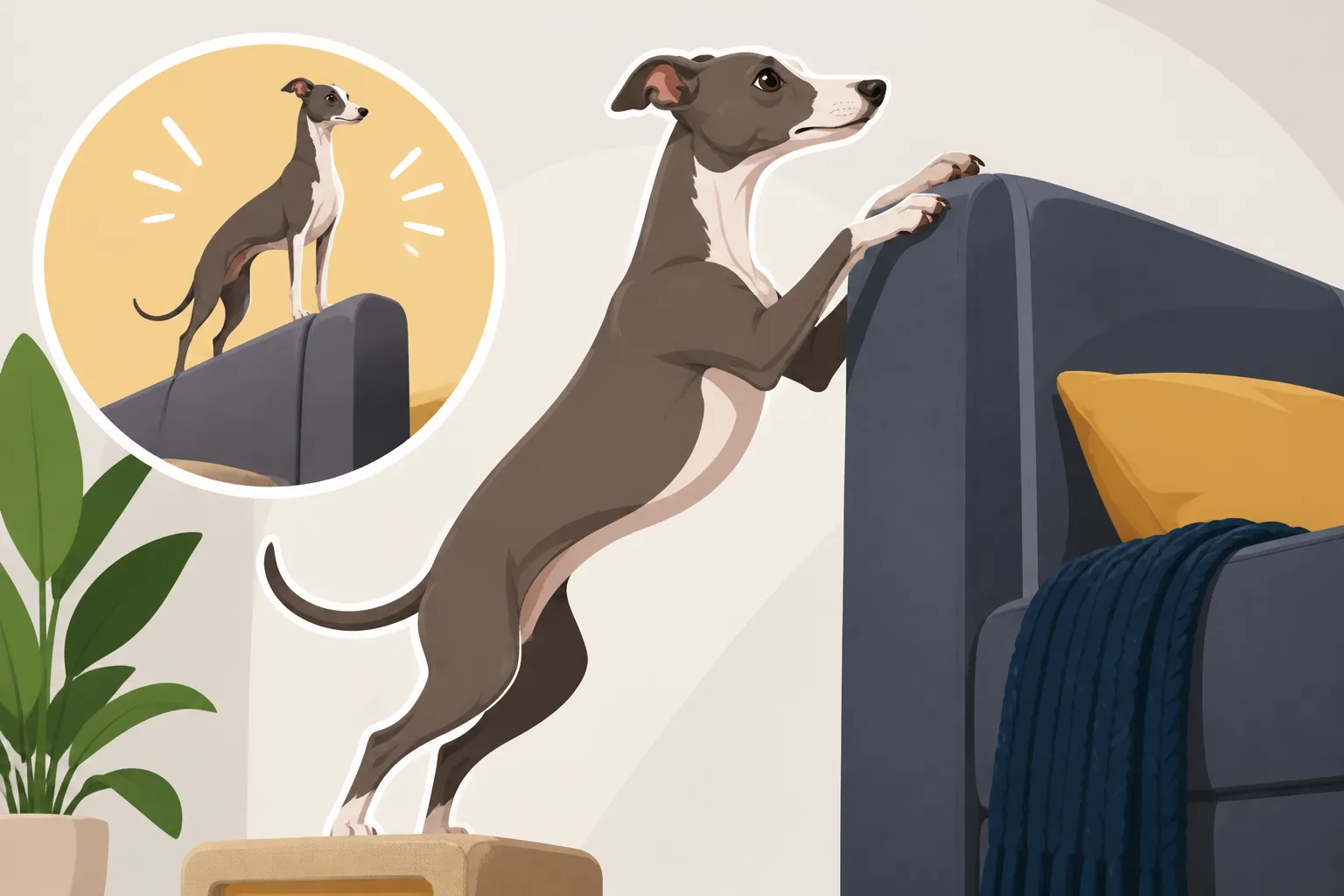
Italian Greyhounds are built for speed, but that lean, muscular frame also translates into impressive jumping ability. Their long, slender legs are like coiled springs, capable of launching them upward with surprising force. While they may not have the brute strength of a larger dog, their agility and light weight make them adept at finding purchase and leveraging themselves onto surfaces. Think less "power jump" and more "elegant vault." They often use intermediate objects, like a stack of books next to a counter, or a chair pushed up against a table, as stepping stones to reach their desired height. You might leave a chair tucked under a table, only to come back to find your Iggy perched on top, surveying their kingdom. This isn't usually a single leap; it's often a calculated series of smaller jumps and climbs.
Why Italian Greyhounds Love High Places
There are several reasons why your Italian Greyhound might develop a penchant for heights. First and foremost, they are naturally curious creatures. A higher vantage point offers a better view of their domain, whether it's out a window to watch squirrels or simply to keep an eye on you. Remember, Italian Greyhounds are often called "Velcro dogs" for a reason; they want to be where you are, and if you're standing at the kitchen counter, they might try to join you. The Velcro Dog: What Constant Company Means With an Italian Greyhound. Secondly, warmth plays a huge role. Heat rises, and an Italian Greyhound is almost always seeking warmth. A sunny windowsill, the top of a warm laundry pile, or a spot directly under a heating vent often becomes a prized elevated perch. Thirdly, it can be about comfort and security. Some Iggies feel safer observing from above, away from the hustle and bustle of floor-level activity, especially in busy households. Lastly, it can simply be an instinctual desire to explore their environment fully.
Common Indoor Climbing Hazards
While their climbing antics can be amusing, there are significant risks involved when an Italian Greyhound starts scaling your furniture. Their delicate bone structure, particularly in their legs, makes them highly susceptible to fractures from falls. A Broken Leg Is the Emergency Every Italian Greyhound Owner Fears. Many owners learn this the hard way.
Counter Surfing and Tabletop Treachery
Ah, the classic counter surfer. It's not just Labradors who excel at this. An Italian Greyhound, given the right set of circumstances (like a chair left slightly out), can easily launch themselves onto kitchen counters or dining tables. This isn't just about stealing a rogue treat; it's a huge safety concern. Imagine a hot stove, sharp knives, or cleaning supplies left within reach. Even an empty counter can be dangerous if they slip and fall. I've heard countless stories of Iggies getting onto a table, then realizing they're stuck or losing their footing in a moment of panic, leading to a nasty tumble. They might climb up using How an Italian Greyhound Gets Onto Furniture, but getting down can be far more dangerous, especially if they try to jump rather than climb back down the way they came.
Windowsills, Shelves, and Bookcases
Windowsills, particularly those that offer a sunbath or a prime viewing spot, are incredibly appealing. An Italian Greyhound might jump from a nearby chair or sofa onto a windowsill, sometimes even using curtains as a ladder! While this seems harmless, a slip on a smooth sill, or an unexpected loud noise outside, could send them tumbling. Similarly, low shelves, open bookcases, or even laundry piles can become temporary climbing frames. If these items aren't sturdy, or if they contain breakable or hazardous objects, your Italian Greyhound could easily knock things over or get injured. Think about what's on those shelves – could a falling object hit your dog, or could they ingest something dangerous?
The Danger of Jumping Down
Perhaps the greatest hazard isn't the climb itself, but the descent. Italian Greyhounds, especially when they're young and full of boundless energy, often lack a sense of self-preservation. They'll jump off high surfaces without a second thought, completely oblivious to the impact on their fragile legs. A jump off a sofa might seem benign, but imagine it if they misjudge the landing, or land on a hard surface, or even worse, land awkwardly on another pet or a person's foot. The Age an Italian Greyhound Is Most Likely to Break a Leg often coincides with a period of peak adventurousness. They don't have the heavy bone structure to absorb such impacts, and a simple jump from a bed can result in a spiral fracture. This is why Why an Italian Greyhound Jumps Out of Your Arms is such a concern – any uncontrolled fall is a risk.
Preventing Unwanted Climbing
The key to preventing unwanted and dangerous climbing is a combination of environmental management, training, and understanding your Italian Greyhound's natural inclinations. It's about proactive safety, not reactive punishment.
Environmental Management and Puppy-Proofing
Your first line of defense is making your home as safe as possible. This means thinking like an Italian Greyhound and identifying all potential climbing routes and hazards.
- Secure furniture: If chairs can be easily pulled out and used as steps, consider securing them, or ensuring they are always pushed flush against tables.
- Clear surfaces: Keep kitchen counters, coffee tables, and low shelves clear of anything valuable, breakable, or dangerous. This includes food, medications, plants, and small trinkets.
- Ramps and Steps: For beloved pieces of furniture like sofas and beds, invest in ramps or pet stairs. These provide a safe, controlled way for your Iggy to access these elevated spots without jumping. You can find a wide variety of options on platforms like Amazon, from carpeted ramps to cushioned stairs, ensuring they match your home decor and your dog's size. Teaching your Italian Greyhound to use these from a young age is crucial. Ramps and Steps for an Italian Greyhound's Furniture.
- Baby Gates: Use baby gates to block access to rooms where climbing is a particular concern, or to areas with many potential hazards. This is especially important for young puppies still learning boundaries. Restricting an Italian Greyhound Under Two is vital for their bone development and safety.
- Window Barriers: If your Italian Greyhound loves a windowsill, ensure it's not too high for a safe fall, and consider putting a bolster or soft bed directly under it. Never rely on screens alone to prevent falls through an open window.
Training for Safer Habits
While environmental management is crucial, training plays a vital role in shaping your Italian Greyhound's behavior around heights. Positive reinforcement is always the way to go with this sensitive breed. Why Raising Your Voice Sets an Italian Greyhound Back a Month.
Teaching "Off" and "Stay"
Basic obedience commands like "off" and "stay" are incredibly useful. "Off" means all four paws on the floor, no matter what they're currently on. Practice this command consistently, rewarding them lavishly when they comply. Start with lower surfaces and gradually increase the challenge. "Stay" can be used to prevent them from jumping onto forbidden furniture in the first place. You can get excellent guidance on these foundational commands through online training programs, such as those offered by BAXTER & Bella, which provide structured lessons and support for teaching your dog impulse control and good manners around the house.
Encouraging Safe Entry and Exit from Furniture
Instead of outright banning them from all furniture, focus on teaching them how to use it safely. If you have ramps, consistently guide them to use the ramp for both getting on and off. Praise and reward them every single time they choose the ramp over jumping. This might take patience, but it's an investment in their long-term health. Some Italian Greyhounds will naturally prefer the easy route once they learn it. Teaching an Italian Greyhound to Use a Ramp can be a slow but rewarding process.
Safe Climbing and Exploration: Providing Appropriate Outlets
Completely stifling an Italian Greyhound's natural instinct to explore and observe can lead to frustration. Instead, channel that energy into safe, acceptable outlets.
Designated High Perches
Consider creating safe, designated high spots for your Italian Greyhound. This could be a sturdy, low-profile pet staircase leading to a comfortable dog bed on top of a secured ottoman, or a special bolster bed on a window bench that's not too high. The idea is to satisfy their desire for a vantage point in a controlled manner. Make these spots extra appealing with soft blankets (Iggies love to burrow!) and maybe even a warm heating pad set on low. This encourages them to use the safe spots rather than inventing their own dangerous ones.
Interactive Toys and Enrichment at Ground Level
Sometimes, climbing is a symptom of boredom or a need for mental stimulation. Ensure your Italian Greyhound has plenty of engaging toys and opportunities for enrichment at ground level. Puzzle toys that dispense treats, snuffle mats, and engaging chew toys can keep them occupied and less inclined to seek out trouble vertically. Regular, short play sessions with you can also help burn off some of that boundless energy and satisfy their desire for interaction.
When to Seek Professional Help
If your Italian Greyhound's climbing behavior is extreme, compulsive, or accompanied by other signs of anxiety (like destructive chewing when left alone, or excessive barking), it might be time to consult a professional dog trainer or veterinary behaviorist. They can help identify underlying causes and develop a tailored behavior modification plan. Sometimes, what looks like stubbornness is actually a deeper behavioral issue that needs expert guidance. Organizations like BAXTER & Bella also offer one-on-one coaching, which can be invaluable for tackling specific behavioral challenges.
Here's a quick summary of common climbing behaviors, their potential dangers, and solutions:
| Behavior | Motivation | Potential Danger | Solutions |
|---|---|---|---|
| Counter Surfing | Food, curiosity, seeking attention | Ingesting toxins, hot objects, sharp items, falls | Keep counters clear, use baby gates, teach "off" |
| Table Jumping | Food, joining family, higher vantage | Falls, injuries, knocking over hot drinks/sharp items | Push chairs in, use gates, positive "off" training |
| Windowsill Perching | Warmth, sun, watching outside | Falls, injuries, getting stuck, sunburn | Secure sills, provide soft landing, safe window beds |
| Bookcase/Shelf Scaling | Curiosity, exploration | Falling objects, ingesting small items, falls | Secure items, block access, provide alternative climbs |
| Jumping Off Furniture | Play, excitement, impatience | Fractures, sprains, impact injuries | Use ramps/steps, consistent training, supervise |
By being proactive, observant, and patient, you can help your Italian Greyhound navigate their world safely and satisfy their curious, climbing nature without putting them at undue risk. Remember, the goal is a happy, healthy Iggy, and that often means setting them up for success in a world not always designed for their unique needs. Setting Up a House an Italian Greyhound Cannot Break a Leg In is truly a lifestyle adjustment!
Disclaimer
This article is for general informational purposes only and does not constitute professional advice. Laws, prices and regulations vary by location and change over time. Consult a qualified professional for guidance on your specific situation.