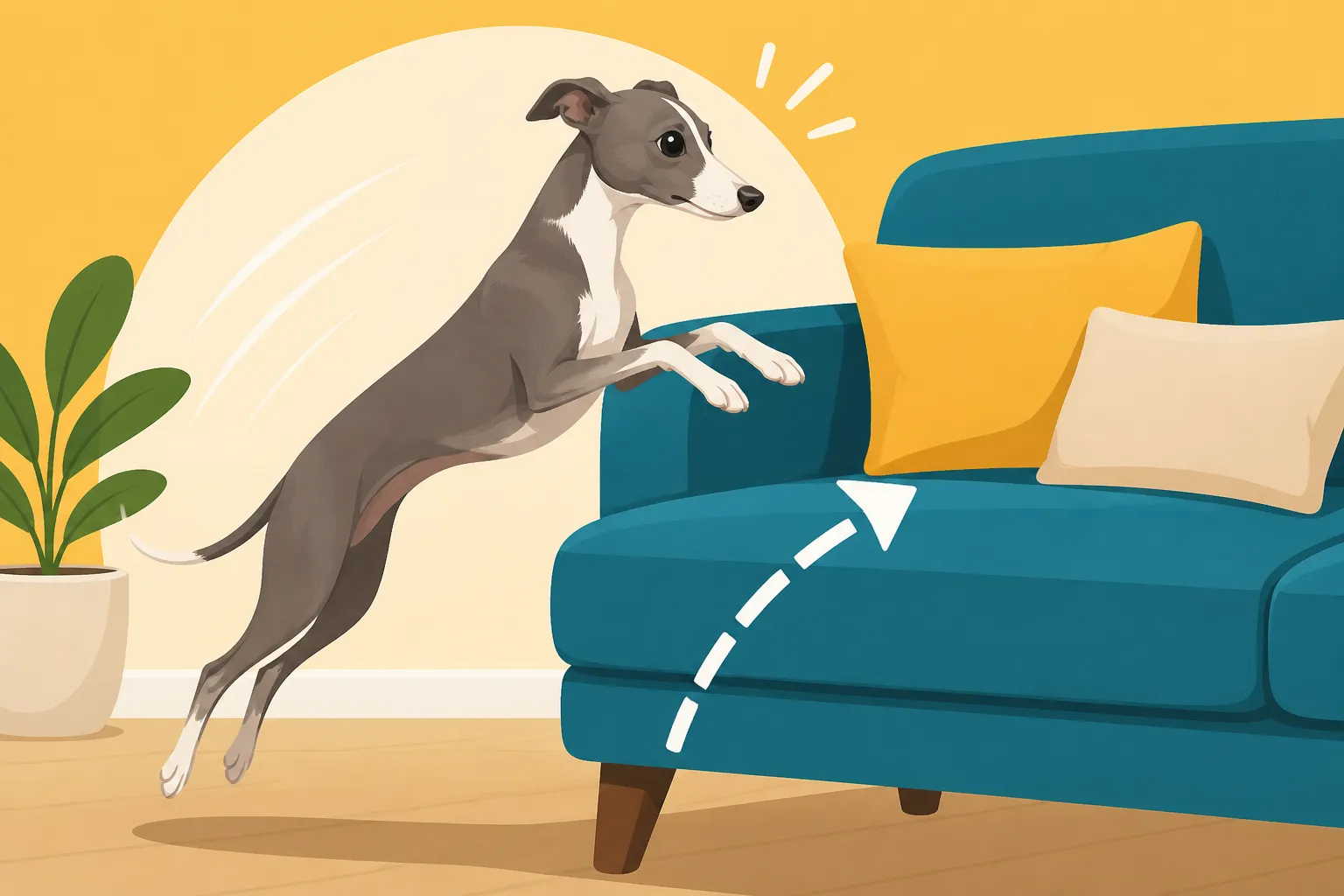
How an Italian Greyhound Gets Onto Furniture
One of the most charming, yet sometimes anxiety-inducing, aspects of living with an Italian Greyhound is their incredible athleticism and their desire to be right there with you, often on your furniture. It's a dance between their natural instincts and our need to keep them safe, especially given their delicate build. This guide is all about understanding why your Italian Greyhound seems to defy gravity to get onto every available surface, and more importantly, how to manage this behavior for their safety and your peace of mind.
Why Italian Greyhounds Love High Places
Italians Greyhounds are sighthounds, and like many sighthounds, they have a natural inclination towards elevated positions. It's not just about comfort; it's deeply ingrained in their historical role and their physical makeup.
Instinctual Perch Seeking
Think about their sighthound heritage: a dog bred to spot prey from a distance. While our modern Iggies aren't typically hunting gazelles in the savanna, that instinct to survey their surroundings remains. A sofa, a chair, or even your bed offers a vantage point. From up high, they can see what's happening outside, keep an eye on you, and feel secure in their little kingdom. It’s their way of keeping tabs on their world, making sure everything is in order, and observing any potential "intruders" (like the mail carrier or a passing squirrel) from a safe, elevated position. This isn't naughtiness; it's simply a fulfillment of a deep-seated behavioral need to perceive their environment.
Comfort and Warmth
Italian Greyhounds are notoriously thin-skinned with very little body fat, which means they get cold easily. You've probably noticed your Ig burrowing under blankets or seeking out sunbeams. Furniture, especially upholstered pieces, offers a soft, insulated surface that holds warmth better than a cold floor. Imagine snuggling into a plush armchair on a chilly day—that's exactly what your Italian Greyhound is seeking. They are masters of finding the warmest, coziest spot in the house, and often, that spot happens to be elevated on your sofa or bed. This isn't just a preference; it's a physiological need to regulate their body temperature, and your furniture provides the perfect solution.
Seeking Company and Connection
More than just warmth or a vantage point, Italian Greyhounds are famously "velcro dogs." They thrive on human companionship and want to be as close to you as possible. When you're sitting on the sofa, standing in the kitchen, or even just relaxing in a chair, your Ig wants to be at your level, sharing your space. This desire for proximity often translates into them jumping onto furniture. It's their way of saying, "I'm part of your pack, and I want to be right here with you." Being up on the sofa next to you isn't just about comfort; it's about emotional connection and strengthening their bond with you. They feel safer, more loved, and more engaged when they can literally be shoulder-to-shoulder (or hip-to-hip) with their favorite human.
The Mechanics of the Italian Greyhound Jump
Watching an Italian Greyhound launch itself onto a sofa or bed can be truly astounding. They possess an almost spring-like quality, but this athleticism also comes with inherent risks, especially when it comes to their delicate bone structure.
Explosive Launch Power
Italian Greyhounds are built for speed and agility, and this translates into an incredible ability to propel themselves upwards. Their long, powerful hind legs act like coiled springs, allowing them to gather momentum and launch their lightweight bodies surprisingly high. It's a quick, efficient movement that can get them from the floor to the top of a sofa in a blink. They don't typically "climb" in the traditional sense; they jump, often needing only a small amount of floor space for a running start, or even from a standing position. This explosive power is a marvel to watch, but it's also where a lot of the danger lies, especially for young Iggies whose bones are still developing. You might have seen them do a 'standing broad jump' onto a counter or table if given the slightest opportunity.
The Dangerous Landing
While the jump up is impressive, the jump down is often where accidents happen. Italian Greyhounds aren't always graceful on the descent, and their slender leg bones, particularly the radius and ulna in their forelegs, are incredibly fragile. A bad landing, a misjudgment of distance, or slipping on a smooth surface can easily result in a catastrophic fracture. They often land hard on their front legs, absorbing the impact, and if the angle is wrong or they land awkwardly, a tiny bone can snap. This is especially true if they're startled while on the furniture and jump off unexpectedly, rather than making a controlled descent. The seemingly benign act of jumping off a couch can lead to an emergency vet visit, which is a situation no Italian Greyhound owner ever wants to face. A Broken Leg Is the Emergency Every Italian Greyhound Owner Fears is a reality many have experienced.
Measuring the Vertical Leap
It's astonishing just how high an Italian Greyhound can jump. While individual dogs vary, many can easily clear heights equivalent to standard sofa backs or even low counter tops. Their lean bodies and powerful muscles make them exceptionally capable jumpers. However, just because they can jump that high doesn't mean it's safe for them. The critical factor isn't just the height they can reach, but the safety of the landing. A jump of even two or three feet can be risky, especially for puppies whose growth plates are still open or older dogs with developing arthritis. Understanding How High an Italian Greyhound Can Safely Land is crucial for preventing injuries. We want them to enjoy their athleticism, but always within safe boundaries.
Common Furniture Hazards for Iggies
Our homes, designed for humans, often contain hidden perils for a delicate Italian Greyhound. What seems like an ordinary piece of furniture can become a significant risk.
Slippery Surfaces and Unstable Furniture
Many modern homes feature sleek hardwood, tile, or laminate flooring, which can be incredibly dangerous for an Italian Greyhound attempting to jump on or off furniture. Their delicate paws struggle to gain traction, leading to slips and falls that can result in sprains, strains, or even fractures. Imagine a fast, elegant dog trying to land on a polished floor after a sudden jump – it’s a recipe for disaster. Similarly, unstable furniture like wobbly side tables, rocking chairs, or even poorly constructed dog steps can pose a serious threat. If the landing surface shifts or gives way, it can throw off their balance mid-jump, leading to a nasty accident. Even a throw blanket that slips can be enough to cause a bad fall.
Heights Too Great for Safe Landing
While Italian Greyhounds are phenomenal jumpers, there's a limit to what their delicate bone structure can withstand. A standard sofa or bed might seem like a manageable height, but repeated jumps, or a single awkward landing, can cause serious harm. Consider the difference between jumping onto a low ottoman versus leaping off a tall bed onto a hard floor. The impact force increases dramatically with height. Furthermore, some Italian Greyhounds might attempt to jump from even higher places, like windowsills, kitchen counters, or even the back of a tall armchair, often driven by curiosity or the desire to be close to you. These greater heights exponentially increase the risk of injury, as their slender legs are simply not designed to absorb such impact.
Hidden Dangers: Jumping Off Furniture When Startled
One of the most insidious dangers is when an Italian Greyhound jumps off furniture not by choice, but out of fear or surprise. A sudden loud noise, an unexpected visitor, another pet barging into the room, or even just dropping something can cause an Italian Greyhound to bolt from a perceived threat. In their panic, they don't think about a safe landing or where they are going. They just react. This reactive, uncontrolled leap from a sofa or bed is far more dangerous than a calculated jump, as they are less likely to land properly. Owners need to be mindful of potential startling events, especially if their Ig is prone to nervousness or easily spooked. This sudden, undirected movement can lead to a particularly nasty fall, emphasizing the need to create a secure environment where they feel safe and won't feel the need to flee from elevated spots.
Training and Management Strategies
Managing your Italian Greyhound's desire to be on furniture requires a combination of clear training and thoughtful environmental management. It's about teaching them safe alternatives and giving them boundaries.
Teaching the "Off" Command
While you might not want to prevent your Italian Greyhound from ever being on the sofa with you, teaching a reliable "off" command is essential. This command gives you control and teaches your dog that furniture access is on your terms. Start by luring them off the furniture with a high-value treat, saying "off" as they move. As soon as all four paws are on the floor, reward them enthusiastically. Practice this consistently, even when they jump up. The goal isn't to punish them for being on the furniture, but to teach them that "off" means coming down and getting a reward. With enough repetition and positive reinforcement, they'll learn to associate the command with leaving the furniture politely. Consistency is key, and every family member needs to use the same cue and reward system. For more detailed training methods, resources like BAXTER & Bella can offer structured online training programs that cover foundational commands like "off."
The Importance of Ramps and Steps
This is perhaps the single most important safety measure for Italian Greyhound owners. Providing sturdy, non-slip ramps or steps next to sofas, chairs, and beds gives your Ig a safe way to ascend and descend without jumping. This completely eliminates the dangerous impact on their delicate joints and bones. Look for ramps with a gentle incline and textured surfaces, or steps with wide treads and a low rise, to make them easy and inviting to use. Place them strategically at all furniture your Italian Greyhound uses. It might take some time and gentle encouragement, using treats and praise, to teach them to use the ramps or steps. But once they learn, it becomes second nature, drastically reducing the risk of a broken leg. You can find many suitable options on Amazon, designed for small dogs. Ramps and Steps for an Italian Greyhound's Furniture are an absolute must-have.
Crate Training and Designated Safe Spaces
Even with the best training and ramps, there will be times when you can't actively supervise your Italian Greyhound. This is where crate training or setting up designated safe spaces becomes invaluable. A comfortable crate can be a cozy retreat where your Ig feels secure and is prevented from making risky furniture jumps when you're busy or away. Ensure the crate is large enough for them to stand, turn around, and lie down comfortably, with soft bedding and perhaps a safe chew toy. Similarly, a puppy-proofed room with their bed, water, and toys can serve as a safe haven. This isn't punishment; it's responsible management that ensures their safety when direct supervision isn't possible. Crating an Italian Greyhound Overnight or during the day can offer invaluable peace of mind.
Making Your Home Italian Greyhound-Safe
Preventing injuries isn't just about training; it's about proactively adapting your home environment to mitigate risks for your delicate Italian Greyhound.
Strategically Placed Furniture and Barriers
Take a good look at your home from an Italian Greyhound's perspective. Are there pieces of furniture positioned too close to other objects, creating tempting but dangerous launchpads or landing zones? Sometimes simply rearranging furniture can make a huge difference. Move end tables away from sofas, or place chairs further from windowsills. Consider using pet gates or other barriers to restrict access to certain rooms or areas when you're not able to supervise. For instance, if your kitchen counters are a tempting height, a gate at the kitchen doorway can prevent unauthorized (and dangerous) jumping sessions. The goal is to minimize opportunities for unsafe jumping while still allowing your Italian Greyhound to be part of the family in safe areas. This involves some creative thinking, but it's vital for Setting Up a House an Italian Greyhound Cannot Break a Leg In.
Non-Slip Solutions and Protective Coverings
Slippery floors are a major hazard. Lay down rugs, runners, or carpet tiles in high-traffic areas, especially near furniture your Italian Greyhound might jump on or off. These provide crucial traction for their delicate paws and help absorb impact during a playful burst of "zoomies" or an unexpected jump. You can also use non-slip mats under existing rugs to prevent them from sliding. For furniture itself, consider using snug-fitting sofa covers or blankets secured in place. Not only do these protect your furniture from wear and tear, but they also provide a grippier surface for your Italian Greyhound to land on or launch from, reducing the chance of a slip. You can find excellent non-slip rug pads and furniture covers on Amazon that can make a real difference.
Supervision and Puppy-Proofing
Especially during their active puppy and adolescent phases, Italian Greyhounds require diligent supervision. Their bones are still hardening, making them particularly vulnerable to fractures from falls or jumps. The Age an Italian Greyhound's Bones Finish Hardening is crucial to understand. During this period, it's wise to limit their access to furniture unless you're right there to supervise and ensure they use ramps or are lifted down safely. Puppy-proofing goes beyond just securing electrical cords; it means viewing every surface as a potential jumping hazard. Use playpens or crates when you can't keep an eye on them. For young, energetic Iggies, Restricting an Italian Greyhound Under Two is not overly cautious; it's a necessary step to protect their fragile limbs. Constant vigilance and proactive measures are key to keeping them safe.
When Jumping Becomes a Problem
While jumping onto furniture is a natural Italian Greyhound behavior, there are times when it escalates into a genuine concern, demanding more direct intervention.
Recognizing the Signs of Risky Behavior
It's one thing for your Italian Greyhound to calmly use a ramp or be invited onto the sofa. It's quite another when they're repeatedly leaping from precarious heights, ignoring cues, or seemingly treating your home like an agility course. Signs of risky behavior include frequent, uncontrolled jumps off high furniture, attempting to scale surfaces that are clearly too high or unstable, or exhibiting frantic jumping when excited or anxious. If your Ig seems to "forget" their training or becomes increasingly reckless, it's a red flag. Pay close attention to any changes in their jumping habits, especially if they start attempting new, higher, or more dangerous leaps. A dog that continually puts itself in harm's way needs a reassessment of its environment and management strategies before an injury occurs.
Addressing Injury Concerns
The biggest fear for any Italian Greyhound owner is a broken leg. If your Italian Greyhound has already sustained an injury from jumping, or if you're constantly worried about it, it's time to get serious about prevention. This might involve a stricter "no jumping" rule, even for sofas, and ensuring every single piece of furniture they could access has a safe ramp or set of steps. Consult your veterinarian for advice on bone health and injury prevention. They might suggest dietary supplements or specific exercise routines to strengthen muscles surrounding the bones. Sometimes, persistent risky jumping also points to underlying anxiety or a lack of appropriate outlets for their energy. In such cases, consulting with a certified professional dog trainer or a veterinary behaviorist might be beneficial to address the root cause of the behavior, not just the symptom.
Managing Multi-Dog Households
Adding another dog to the mix, especially a larger or more boisterous breed, can complicate things. A larger dog might inadvertently knock your Italian Greyhound off a sofa, or their playful roughhousing could lead to a fall. Different breeds also have different levels of physical robustness and different rules regarding furniture. If you have a multi-dog household, you'll need to establish clear boundaries and potentially create "Iggy-only" safe zones. This might mean investing in taller gates that a larger dog can't jump over, or setting up a cozy, gated off-area with your Ig's bed and water where they can retreat safely. Training all dogs in the household to respect each other's space and teaching the larger dog to play gently with your Italian Greyhound is paramount. It’s about creating a harmonious environment where all pets can coexist without putting the more fragile Italian Greyhound at undue risk of jumping-related injuries.
| Furniture Access Method | Pros | Cons | Best For |
|---|---|---|---|
| Jumping (Unassisted) | Natural for Iggies, quick | High risk of fracture, especially on landing; joint strain | Not recommended for regular use due to high injury risk |
| Ramps | Safest method, gradual incline, low impact | Can be bulky, may take training for dog to use consistently | High furniture (beds, tall sofas), dogs with joint issues, puppies |
| Steps | Less bulky than ramps, easy to position | Still some impact if dog rushes; steepness can vary | Mid-height furniture (standard sofas), confident dogs |
| Being Lifted | No impact on dog's body, direct control | Requires owner presence, risk of being dropped if not held securely; dog may jump from arms if startled | Intermittent use, elderly dogs, very young puppies, owners who are always present |
| Designated Dog Bed | Completely safe, no risk of falling/injury | May not satisfy Ig's desire for proximity/height | When owner is not present, for dogs that prefer their own space |
Understanding why your Italian Greyhound gets onto furniture is the first step in creating a safer, happier home for them. It's not about stifling their natural instincts, but about channeling them into safe behaviors and providing secure alternatives. With a bit of proactive planning, consistent training, and the right tools like ramps and cozy beds, you can ensure your beloved Iggy enjoys all the comforts of home without the risk of a trip to the emergency vet. These little sighthounds bring so much joy, and keeping them safe is a labor of love that is absolutely worth every effort. What an Italian Greyhound Does All Day often involves finding the best perch!
Disclaimer
This article is for general informational purposes only and does not constitute professional advice. Laws, prices and regulations vary by location and change over time. Consult a qualified professional for guidance on your specific situation.