What an Italian Greyhound Does When Bored
It’s a scene many Italian Greyhound owners know all too well: you come home, or even just walk into another room, to find a pillow shredded, a shoe meticulously deconstructed, or hear a persistent, mournful whine. These aren't just random acts of canine mischief; more often than not, they are flashing neon signs pointing to one culprit: boredom. This guide will walk you through understanding why your delicate Italian Greyhound might be bored, how to spot the subtle and not-so-subtle cues, and what practical steps you can take to bring peace back to your home and joy back to your sensitive companion.
Identifying the Red Flags of Italian Greyhound Boredom
Italian Greyhounds are often described as elegant, gentle, and utterly devoted companions. What many don't realize until they live with one is just how incredibly intelligent and sensitive they are, and how much mental stimulation they actually crave. When these needs aren't met, their distress can manifest in ways that are frustrating for us but are simply their way of trying to cope. It’s crucial to recognize these signals early.
Destructive Chewing and Shredding
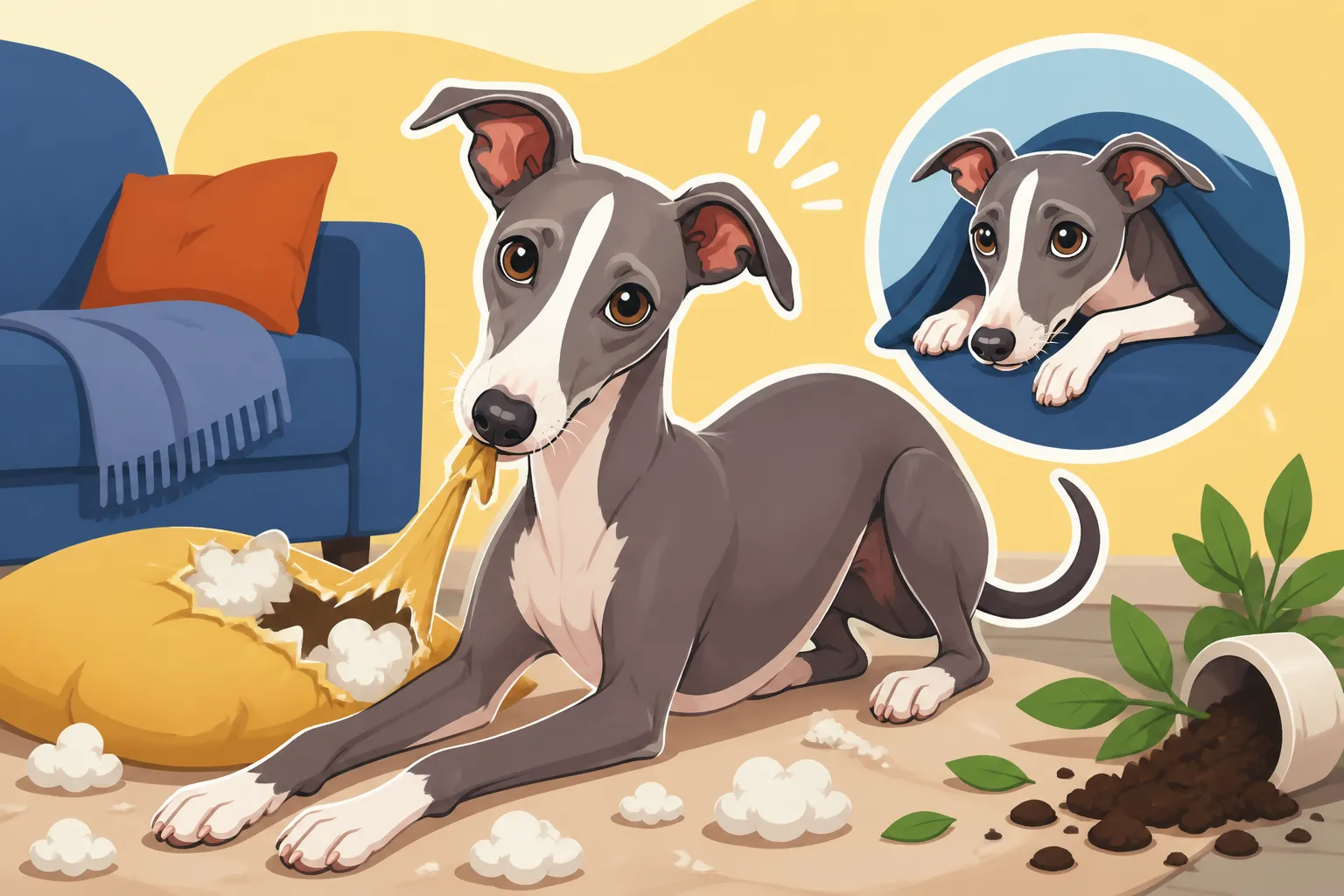
One of the most common and often exasperating signs of boredom in an Italian Greyhound is destructive chewing or shredding. This isn't just a puppy exploring its world; this is a dog with energy to burn and a mind looking for a job. You might find anything from your favorite pair of slippers reduced to fragments to the corners of your sofa cushion looking suspiciously gnawed. Blankets, towels, remote controls, books – if it’s accessible and offers some tactile satisfaction, a bored IG might turn it into their next project. They aren't trying to be "bad"; they're trying to relieve pent-up energy and mental frustration. This can be especially disheartening when you’ve invested in lovely bedding or blankets for them, only to find them torn to bits.
This kind of chewing often goes beyond simple teething. An adult Italian Greyhound who suddenly starts gnawing on furniture legs or tearing apart soft furnishings is telling you, loud and clear, that they need more to do. It’s a self-soothing behavior, almost like a child fidgeting, but with much more expensive consequences. They might focus on a single item, meticulously stripping it, or they might move from one forbidden object to another, leaving a trail of destruction in their wake. It’s their equivalent of saying, "Hey, I'm here, and I'm bored!" For more on this, check out What an Italian Greyhound Chews.
Excessive Vocalization and Attention-Seeking
An Italian Greyhound who is bored can also become incredibly vocal. This isn't the occasional alert bark; it's often a persistent whine, a high-pitched plea for attention, or even a drawn-out howl that echoes through the house. They might stand by you and just stare, then let out a little "oof" or "roo" to get your eye. If ignored, this can escalate. They might follow you from room to room, nudging your hand or dropping toys at your feet, escalating their efforts to engage you.
This vocalization can be particularly trying for owners, especially those who work from home or have neighbors close by. It stems from their strong need for companionship; Italian Greyhounds are famously "Velcro dogs" who thrive on interaction. If you're busy with work, chores, or simply enjoying a quiet moment, their persistent attempts to get your attention can feel demanding. But remember, it’s coming from a place of unfulfilled need, not malice. They truly believe that if they just make enough noise, you'll eventually realize they require entertainment.
Restlessness and Odd Behaviors
Beyond the obvious, boredom can manifest in more subtle, restless behaviors. An Italian Greyhound might pace back and forth, unable to settle even when you're present. They might repeatedly go to their water bowl, take a sip, and then walk away, only to repeat the process minutes later. Some will start to obsessively lick themselves, often at their paws or legs, which can lead to skin irritation or hot spots. Others might dig at carpets or blankets, attempting to create a nest or simply to expel energy.
Another less common but equally telling sign is a sudden regression in housetraining, or deliberately having accidents indoors, particularly if you have an indoor potty setup for them. While this can point to many issues, if it's accompanied by other boredom signals, it could be a cry for more engagement. Sometimes, a bored IG will just lay around, but with a palpable sense of discontent, sighing heavily or looking utterly dejected. They’re not relaxed; they’re under-stimulated.
Why Italian Greyhounds Get Bored So Easily
Understanding why your Italian Greyhound might be prone to boredom helps you tailor effective solutions. It's not just about energy levels; it's about their unique breed characteristics, intelligence, and deep need for connection.
The Paradox of Their Energy Levels
Italian Greyhounds are sighthounds, which means they are built for speed and short bursts of intense activity, followed by long periods of rest. They aren't endurance runners like some other breeds. This can be a paradox for owners: they need exercise, but a long, slow walk might not truly satisfy their energetic drives. They'll do a few "zoomies" around the house or yard, sprint at top speed for a minute or two, and then crash out on the sofa for hours.
However, those short bursts of energy, if not adequately expressed, can leave them feeling restless and under-stimulated. They might not need hours of hiking, but they do need opportunities to run freely in a safe, enclosed space or engage in short, intense play sessions. If they're only getting leashed walks that don't allow them to stretch their legs and satisfy their instinct to chase, that physical energy remains untapped, contributing to boredom. For details on their daily activity needs, you might find How Much Exercise an Italian Greyhound Needs helpful.
High Intelligence and Sighthound Instincts
Don't let their delicate appearance fool you; Italian Greyhounds are incredibly intelligent. They are quick learners and problem-solvers, which means they need mental challenges just as much as they need physical activity. A lack of mental stimulation can be just as detrimental as a lack of exercise, leading to frustration and boredom. Their sighthound instincts also play a role; they are wired to spot movement and react. If their environment offers no interesting visual stimuli or "prey" (even a toy mouse on a string), their minds can become under-occupied.
This intelligence, when not directed, can be turned towards less desirable activities. They figure out how to open cabinets, how to get to forbidden treats, or how to meticulously remove the stuffing from a cushion. Their keen observation skills, inherited from generations of sighthounds, mean they are always "on" and taking in their surroundings. If those surroundings are static and uninteresting, they’ll create their own excitement, usually at your expense.
The Strong Need for Companionship
Italian Greyhounds are famous for being "Velcro dogs" – they want to be with their people, often literally attached at the hip. They thrive on companionship and can struggle immensely with being left alone for extended periods. This isn't just a preference; it's a deep-seated characteristic of the breed. They are sensitive and prone to separation anxiety, which can often be confused with or exacerbate boredom. A lonely IG is very often a bored IG.
Even when you are home, if you're not actively engaging with them, they can feel neglected and become bored. They want to be involved in whatever you're doing, whether it's snuggled on your lap while you read or "helping" you with chores. Ignoring this need for interaction can lead to the attention-seeking behaviors mentioned earlier. How Many Hours an Italian Greyhound Will Tolerate Alone delves deeper into their need for company.
Effective Strategies to Combat Italian Greyhound Boredom
The good news is that boredom in Italian Greyhounds is highly manageable with the right approach. It requires a combination of physical activity, mental stimulation, and consistent companionship.
Mental Stimulation Through Training and Puzzle Toys
Mental enrichment is perhaps the most critical component for an intelligent breed like the Italian Greyhound. Regular training sessions, even short ones, can do wonders. Teach them new tricks, practice obedience commands, or even try scent work. Services like BAXTER & Bella offer online puppy and dog training programs that can provide structured mental exercise, teaching you how to engage your dog's brain with positive reinforcement. Even just 10-15 minutes a day of focused training can tire them out more effectively than a much longer walk.
Puzzle toys and treat-dispensing toys are also invaluable. These toys require your IG to use their brain to figure out how to get a reward, slowing down their eating and engaging their problem-solving skills. Look for toys that can be filled with kibble or healthy treats and require manipulation – rolling, nudging, or lifting parts. Rotating these toys keeps them fresh and exciting. You can find a wide variety of interactive toys on platforms like Amazon, offering different levels of difficulty to keep your Italian Greyhound challenged.
Here's a quick comparison of mental enrichment options:
| Enrichment Type | Description | Benefits | Drawbacks |
|---|---|---|---|
| Puzzle Feeders | Toys that dispense food/treats as the dog interacts with them. | Slows eating, engages problem-solving, quiet. | Can be easily "solved" if too simple, needs cleaning. |
| Snuffle Mats | Fabric mats with many hiding spots for kibble or treats. | Promotes natural sniffing/foraging, relatively quiet. | Can be messy, needs washing, some dogs try to eat the mat. |
| Interactive Games | Shell games, "find the treat," hide-and-seek with toys or people. | Strong human-dog bond, highly engaging, no special equipment. | Requires active human participation, can be noisy. |
| Trick Training | Teaching "shake a paw," "spin," "play dead," etc. | Builds confidence, strengthens bond, burns mental energy. | Requires consistency, not all dogs are equally motivated. |
| Scent Work | Hiding treats or specific scents for the dog to find. | Utilizes natural canine abilities, mentally exhausting, quiet. | Requires training, can be time-consuming to set up initially. |
Structured Play and Safe Exercise Opportunities
While Italian Greyhounds don't need endless hours of strenuous exercise, they do need opportunities for safe, vigorous play. This means short bursts of running and chasing in a securely fenced area. If you have a yard, ensure the fence is high enough and there are no gaps they can squeeze through, as they are expert escape artists when motivated. Take them to a local park that has a secure, designated off-leash area, but always supervise closely and ensure they are comfortable with other dogs. Remember, they can hit surprising speeds, so a long line in an open field might be another option if fenced areas aren't available.
Interactive play with you is also key. Fetch with a soft toy, a flirt pole that mimics chasing prey, or even just vigorous tug-of-war with a sturdy but soft toy can help burn off that sighthound energy. Vary the type of play and the toys you use to keep things interesting. Don't forget their sensitive frames; choose soft toys and avoid rough play with larger dogs, as their delicate bones are prone to injury. For insights into safe play, consider Why an Italian Greyhound Should Not Play With Large Dogs.
Providing Companionship and Comfort
Because Italian Greyhounds are so deeply attached to their humans, companionship is a non-negotiable aspect of preventing boredom. If you work long hours, consider hiring a dog walker to break up their day or exploring doggy daycare options. Even if you're home, make sure you're scheduling dedicated interaction time, not just passive coexistence. This could be cuddle sessions, grooming, or simply letting them "help" you with tasks around the house.
For Italian Greyhounds prone to separation anxiety, creating a comforting environment when you do have to leave can also mitigate boredom-induced behaviors. This might involve leaving on a radio or TV for background noise (see Whether Leaving the Radio On Helps an Italian Greyhound), providing a favorite, safe chew toy that only comes out when you leave, or ensuring they have a comfortable, familiar space to rest, like a soft bed with blankets for burrowing. Sometimes, a second Italian Greyhound can provide invaluable companionship, as they often thrive in pairs, but that's a significant commitment. Signs an Italian Greyhound Has Separation Anxiety offers more guidance on this complex issue.
Setting Up an Enriched Environment
Beyond direct interaction and scheduled activities, the environment you create for your Italian Greyhound plays a huge role in preventing boredom. A thoughtfully designed home can offer continuous, passive enrichment.
Safe and Stimulating Indoor Spaces
Your Italian Greyhound's indoor environment should be both safe and stimulating. This means having a variety of appropriate toys available, but not all at once. Rotate their toys weekly to keep them novel and exciting. Include different textures – soft plushies, tougher rubber toys, and perhaps a crinkly or squeaky option. Think about their natural behaviors: do they like to dig? A fabric digging mat (often called a snuffle mat) can be a great outlet. Do they like to chew? Provide durable, safe chew toys designed for strong chewers, appropriate for their mouth size, and always supervise.
Consider their vertical space too. Italian Greyhounds are natural climbers and often enjoy being up high to survey their domain. Safe, sturdy ramps or steps leading to approved furniture like sofas or beds not only protect their fragile legs from jumps (see Ramps and Steps for an Italian Greyhound's Furniture) but also give them more areas to explore and rest. Window perches or access to a secure sunbeam can also provide visual stimulation throughout the day.
Outdoor Access and Sensory Gardens
While not every Italian Greyhound owner has a sprawling yard, any outdoor access can be incredibly enriching. Even a small, securely fenced patio or balcony (supervised, of course, to prevent climbing or jumping) can offer fresh air and new smells. For those with yards, consider creating a "sensory garden" for your IG. This doesn't have to be elaborate. It could involve planting dog-safe herbs like basil or mint for them to sniff, placing different textured surfaces (smooth stones, soft grass, a patch of sand for digging), or even hanging a wind chime for auditory stimulation.
Remember, every sniff tells a story to a dog. Allowing them safe opportunities to explore new scents in a controlled environment can be incredibly mentally stimulating. Even if it's just a few minutes in a securely fenced yard, sniffing around the perimeter for new smells from the neighborhood can be a fantastic way to engage their brains. Just be mindful of weather conditions, as IGs feel the cold intensely and can sunburn easily. An Italian Greyhound in Summer and in Snow covers this in more detail.
Consistent Routine and Predictability
Dogs thrive on routine, and Italian Greyhounds are no exception. A predictable schedule for meals, potty breaks, walks, and playtime can significantly reduce anxiety and boredom. When they know what to expect, they are less likely to become stressed or act out. This doesn't mean every minute of every day has to be planned, but establishing general times for their key activities creates a sense of security.
For example, if they know they always get a puzzle toy after your morning coffee, or a short play session before your lunch break, they're more likely to relax during the interim periods. Regular routines also help manage their energy levels, ensuring they get their physical and mental exercise when they need it most, preventing the build-up of unspent energy that often leads to destructive boredom behaviors. This consistency also helps with other training aspects, such as housetraining, where unpredictability can lead to confusion and accidents.
Disclaimer
This article is for general informational purposes only and does not constitute professional advice. Laws, prices and regulations vary by location and change over time. Consult a qualified professional for guidance on your specific situation.