How an Italian Greyhound Handles a Toddler
Bringing an Italian Greyhound into a home with a toddler, or welcoming a new baby when you already have an Italian Greyhound, is a source of immense anxiety for many owners. The concern is real and valid: these delicate dogs can be easily injured, and toddlers are, by nature, unpredictable. This guide aims to offer realistic advice and practical strategies for safely integrating your Italian Greyhound with a toddler, focusing on prevention, education, and management to ensure a happy, secure environment for everyone.
The Italian Greyhound's Delicate Nature and Temperament Around Children
Let's be honest, Italian Greyhounds are not built like tanks. Their breed standard emphasizes refinement, and that means thin skin, slender bones, and a generally delicate constitution. This isn't just about their physical fragility; it also influences their emotional and behavioral responses, especially to the boisterous energy of a toddler.
Fragility: More Than Just a "Small Dog"
It’s not just that Italian Greyhounds are small dogs; they are inherently fragile in a way many other small breeds are not. Their long, slender legs and fine bones are beautiful, yes, but they also make them incredibly susceptible to fractures. We’re not talking about a robust terrier that can take a tumble or a bump with no issue. An Italian Greyhound's radius bone, in particular, is notoriously prone to breaking. A simple fall from a sofa, a misstep, or even an accidental kick can lead to a serious injury. Imagine a toddler, still learning coordination and spatial awareness, stumbling or accidentally stepping on a delicate paw or leg. The consequences can be heartbreakingly severe. This isn't meant to scare you, but to highlight why constant vigilance and careful management are absolutely non-negotiable in a household with both Iggys and very young children. Their fragility means they require a very different approach to safety than, say, a Beagle or a Labrador. It's a foundational truth about the breed that simply can't be overlooked when considering their interaction with the chaotic energy of a toddler. If you're wondering Why an Italian Greyhound's Leg Bones Break So Easily, it comes down to their fine bone structure and density.
The IG's Sensitive Soul: Reacting to Noise and Sudden Movements
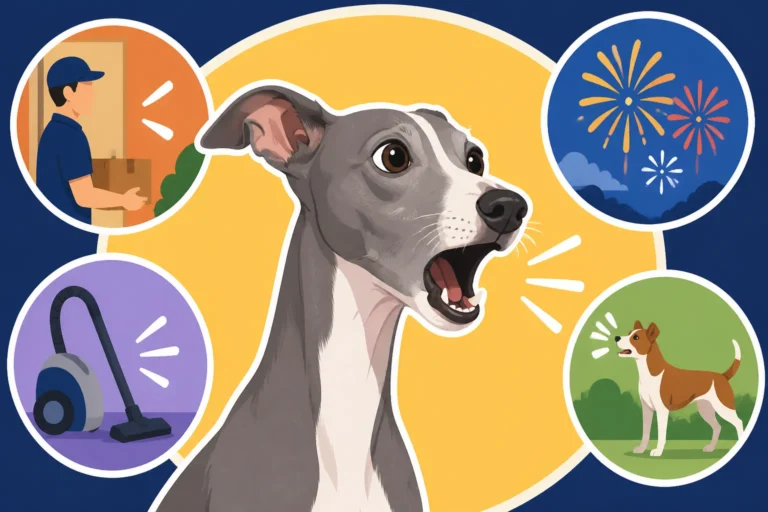
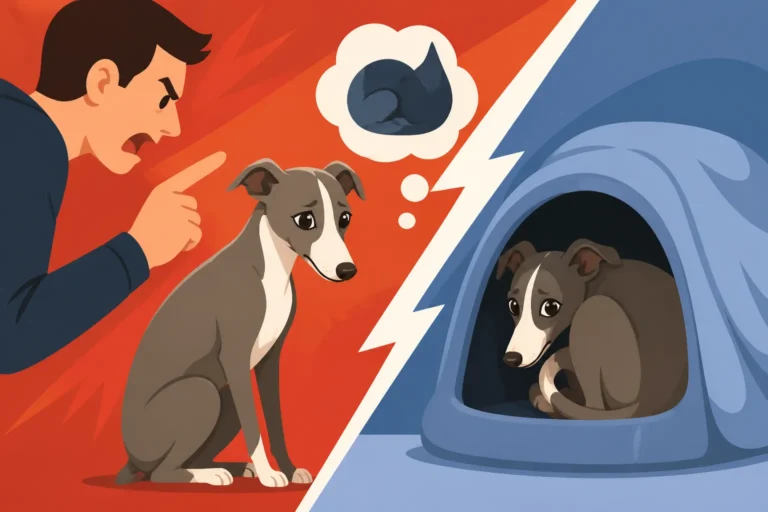
Beyond their physical vulnerability, Italian Greyhounds are often incredibly sensitive creatures. They are sighthounds, bred to be companions and watchdogs, not rough-and-tumble playmates. This sensitivity manifests in several ways: they can be easily startled by loud noises, sudden movements, or unexpected touches. A toddler's world is full of these things – sudden shrieks of delight or frustration, quick dashes across a room, enthusiastic (and often clumsy) attempts at petting, or even just dropping a toy can send a sensitive Italian Greyhound scrambling for cover. They might interpret these actions as threatening, even if no harm is intended.
This isn't about aggression, but often about fear and self-preservation. A frightened Italian Greyhound might yelp, cower, or try to escape the situation. In extreme cases, a cornered or highly stressed dog might nip out of fear, though this is less common with Italian Greyhounds who tend to be flight-oriented. Their instinct is usually to flee rather than fight. Understanding this inherent sensitivity is crucial for parents, as it informs how you set up their environment and how you teach your child to interact with them. It also means that a home with constant, unpredictable noise and movement can be a source of chronic stress for an Italian Greyhound, which no pet owner wants for their beloved companion. Knowing What a Raised Voice Does to an Italian Greyhound can help you understand how even common household interactions can be perceived by your sensitive dog.
Prey Drive vs. Playmate: Understanding Their Instincts
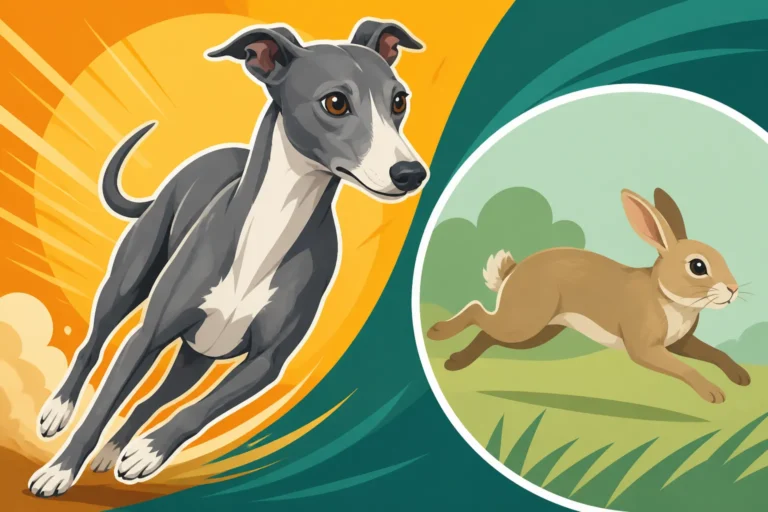
While Italian Greyhounds are undeniably sweet and affectionate, they are still sighthounds with an innate prey drive. This isn't to say they'll hunt your toddler, but their instinct to chase small, fast-moving objects is very strong. A toddler darting across the room, especially if making high-pitched noises, can unintentionally trigger this chasing instinct. This isn't aggression; it's a hardwired response. The danger here isn't malicious intent, but rather the potential for an accidental collision. An Italian Greyhound running at top speed, which they can do surprisingly quickly, could easily knock a toddler over, or injure themselves in the process.
It’s vital to distinguish between a playful interaction and a prey-driven response. A well-socialized IG might enjoy a gentle game of fetch with an older child, but a toddler’s unpredictable movements are a different story. For many Italian Greyhound owners, the thought of their precious dog getting hurt, or worse, inadvertently hurting a child, is terrifying. This instinct means that even with the best intentions, a loose Italian Greyhound and a running toddler can create a very risky scenario. This is why strict supervision and physical barriers are often the best solutions, allowing your IG to express their natural instincts in a safe, controlled environment, separate from tiny humans still learning how the world works.
Toddler Behavior: An Unpredictable Challenge for Any Dog
Toddlers are adorable, full of wonder, and driven by curiosity. They are also, developmentally, a force of nature when it comes to unpredictability, a trait that can pose significant challenges for a delicate and sensitive breed like the Italian Greyhound. Their actions, though innocent, can easily lead to injury for a dog like an IG.
The World Through a Toddler's Eyes: Grabbing, Falling, and Loud Noises
Think about how a toddler experiences the world. Everything is new, exciting, and needs to be touched, explored, and often, put in their mouth. Their fine motor skills are still developing, meaning their movements can be jerky, uncoordinated, and sometimes forceful. A toddler's attempt to "pet" a dog might involve grabbing handfuls of fur, poking, slapping, or even pulling a tail or ear. To them, it's an exploration; to the Italian Greyhound, it can be painful, frightening, or both. Their understanding of cause and effect is limited, so they don't yet grasp that pulling fur hurts, or that running into a dog can knock it down.
Furthermore, toddlers are prone to falling. They stumble, trip, and sometimes simply flop to the ground. If an Italian Greyhound is nearby, this sudden collapse or flailing limb can easily result in an accidental injury to the dog. Add to this the sudden, piercing screams or loud babbling that are a normal part of toddler communication, and you have an environment that can be overwhelming for a quiet, sensitive Italian Greyhound. It’s not malice; it’s just childhood, but it’s a reality that owners must actively manage to protect their fragile companions.
Lack of Impulse Control and Understanding Dog Signals
One of the biggest challenges with toddlers is their almost complete lack of impulse control. They see something, they want it, they go for it. They don't have the cognitive ability to stop themselves, to understand boundaries, or to read subtle canine body language. An Italian Greyhound might be giving clear signals of discomfort – a yawn, lip lick, turning away, or even a low growl – but a toddler won't understand these warnings. They'll likely continue with whatever interaction they initiated, potentially escalating the dog's stress.
This is where the burden falls entirely on the adult. You cannot expect a toddler to be "good" around the dog; they simply aren't capable of that level of self-regulation. You also cannot expect your Italian Greyhound to be infinitely patient or tolerant. While many Iggys are incredibly sweet, every dog has a limit, especially when feeling vulnerable or threatened. This developmental stage of children makes constant, proactive supervision and management absolutely essential. Without it, you are setting both your child and your dog up for a potentially negative and even dangerous experience.
The Danger of Accidental Injury to the Italian Greyhound
Given the previous points, it becomes clear that the primary danger in an Italian Greyhound-toddler household is accidental injury to the Italian Greyhound. These aren't just minor bumps. We’re talking about potential fractures from being fallen on, stepped on, or even from being accidentally kicked or dropped. Why Children Should Not Carry an Italian Greyhound cannot be stressed enough; their delicate bones are simply not meant for such precarious situations, and a toddler's grip is anything but secure. The statistics around broken legs in Italian Greyhounds often involve falls or accidental rough play, and a toddler's presence can inadvertently increase these risks if not meticulously managed.
Beyond immediate physical harm, there’s the risk of psychological injury. A dog that is constantly stressed or fearful due to unpredictable interactions with a child can develop anxiety, fear-aggression (though rare with Iggys, it’s a possibility with any dog), or simply become withdrawn and unhappy. This is a cruel fate for a breed that thrives on companionship and feeling secure. Preventing accidental injuries requires a multi-faceted approach, focusing on creating safe spaces, teaching boundaries, and ensuring constant, responsible adult supervision. Understanding the Signs an Italian Greyhound Has Broken a Leg is also crucial, so you know what to look for in the unfortunate event of an accident.
Strategies for Safe Integration and Coexistence
Successfully integrating an Italian Greyhound with a toddler isn't about hoping for the best; it's about intentional, proactive strategies. It requires commitment, patience, and a constant focus on safety for both your child and your fragile companion.
Setting Up a "Safe Zone" for Your Italian Greyhound
The most fundamental strategy for a peaceful coexistence is to establish a dedicated "safe zone" for your Italian Greyhound. This is a place where your dog can retreat, relax, and know they will not be disturbed by the toddler, ever. This isn't just a suggestion; for an Italian Greyhound in a busy household, it's a necessity for their physical and mental well-being.
This safe zone could be a comfortable crate, an elevated dog bed with a baby gate around it, or an entire room blocked off from the toddler. Fill it with their favorite blankets (Iggys love to burrow!), a cozy bed, water, and perhaps a special chew toy. Make it clear to the toddler, even at a young age, that this space is the dog's personal sanctuary and is strictly off-limits to them. Use baby gates, such as those found on Amazon, to physically enforce these boundaries. Your Italian Greyhound needs to know that there is always an escape route, a place where they can feel completely safe from unpredictable tiny hands and feet. This helps prevent stress and provides a sense of security, which is paramount for this sensitive breed. Think of it as creating a custom-designed, stress-free haven within your home. For more on preventing accidents, check out Setting Up a House an Italian Greyhound Cannot Break a Leg In.
Teaching Children How to Interact Safely and Respectfully
While you can't expect a toddler to have perfect impulse control, you can begin teaching the foundations of respectful interaction as soon as they are old enough to understand simple commands. This is an ongoing process that requires endless repetition and patience.
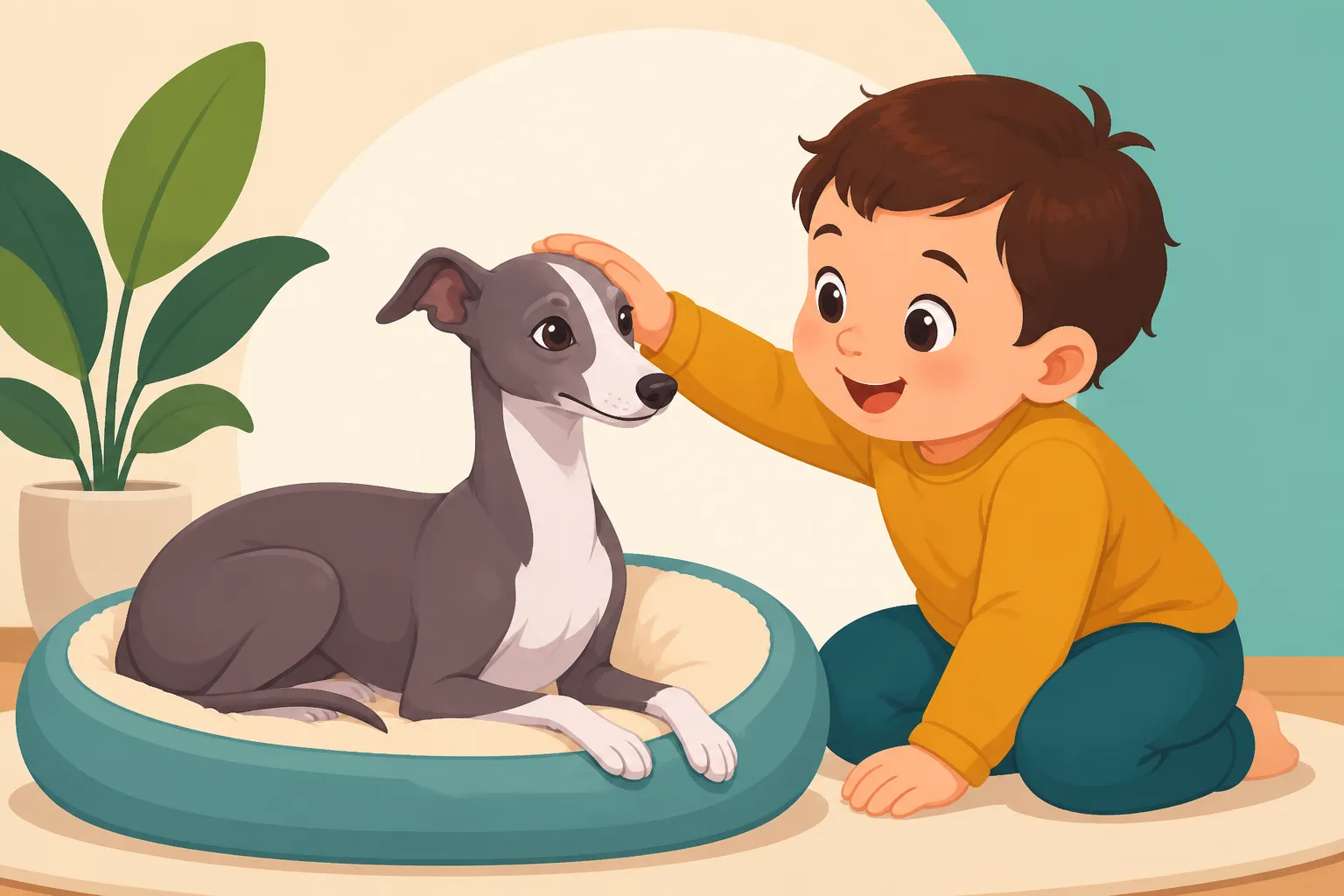
- Gentle Hands: Teach your child to use "gentle hands" from day one. Guide their hand to softly stroke the dog's back or chest, never the head, tail, or ears. Reinforce this with positive praise.
- No Chasing or Grabbing: Explain (and physically prevent) chasing, running at, or grabbing the dog. Use phrases like "quiet feet" and "calm body."
- Respect Boundaries: Teach them that when the dog is in its bed or crate, or eating, they are not to be approached. This builds a foundation of respecting personal space, a lesson important for all relationships.
- Supervised Interactions Only: Never leave a toddler and an Italian Greyhound unsupervised, not even for a second. This is the golden rule. Any interaction should be a planned, supervised teaching moment.
- "Leave It" and "Drop It" for Toddlers: Just like you'd train your dog, you can train your toddler with similar concepts. "Leave it" for when they're tempted to grab the dog's toy or approach them too fast.
Remember, you are the protector and educator for both your child and your dog. Consistency is key, and every interaction is an opportunity to reinforce positive habits.
Constant Supervision and Active Management
I know it sounds exhausting, but when you have an Italian Greyhound and a toddler, constant, active supervision is truly the cornerstone of safety. This isn't passive watching; it's being actively involved in every interaction.
- Physical Barriers are Your Friend: Use baby gates, playpens, and crates liberally. These aren't just for toddlers; they protect your dog too. If you can't actively supervise, separate them. This isn't punishment; it's responsible management.
- Leash Indoors: For brief periods, if your Italian Greyhound tends to dart or is too curious about the toddler's space, a light leash tethered to you or a secure object can provide an extra layer of control during busy moments.
- Rotate Attention: Make sure both your child and your dog feel loved and attended to. An Italian Greyhound thrives on attention, and if they feel neglected, they might try to get attention in ways that put them in proximity to the toddler unsafely.
- Read Dog Body Language: Become an expert in reading your Italian Greyhound's stress signals. Are their ears back? Are they lip licking? Yawning? Looking away? Tensing up? These are all signs they are uncomfortable and need space. Immediately intervene and separate them if you see these signals.
- Educate Others: Make sure any caregivers, grandparents, or visitors understand your rules about dog-toddler interactions. Your rules must be consistently enforced by everyone.
It's a lot of work, but the safety and peace of mind it provides are invaluable. This is why many Italian Greyhound owners stress Why an Italian Greyhound Suits Older Children Better, as older children have developed the self-control and understanding necessary for safer interactions.
Training Your Italian Greyhound for a Toddler-Friendly Home
While the primary responsibility for safety lies with the adults and managing the toddler, preparing your Italian Greyhound can also contribute to a calmer home.
- Desensitization to Noise: Start early by playing recordings of typical toddler sounds (crying, screaming, loud play) at a low volume and gradually increasing it, associating the sounds with positive things like treats or praise. This can help them habituate to the auditory chaos of a toddler.
- "Place" Command: Teach a strong "place" command, so your dog can go to their designated safe zone on cue. Reward them heavily for staying there calmly. This is invaluable when the toddler is particularly active or has friends over.
- Recall: A reliable recall is always important for an Italian Greyhound. In a busy household, being able to call your dog away from a potentially risky situation (e.g., the toddler dropping food or a toy) is critical. For training resources, programs like BAXTER & Bella offer comprehensive online courses that can help you with foundational obedience and socialization, which are incredibly beneficial in a multi-species household.
- Calmness Around Movement: Practice having your Italian Greyhound stay calm while you or others move quickly around them. Reward them for remaining settled rather than darting around. This is especially useful for preventing collisions.
- Positive Reinforcement Only: Italian Greyhounds are extremely sensitive. Use only positive reinforcement methods for training. Harsh corrections or loud voices will only increase their anxiety and could make them more fearful around unpredictable children. Remember What a Raised Voice Does to an Italian Greyhound and how detrimental it can be.
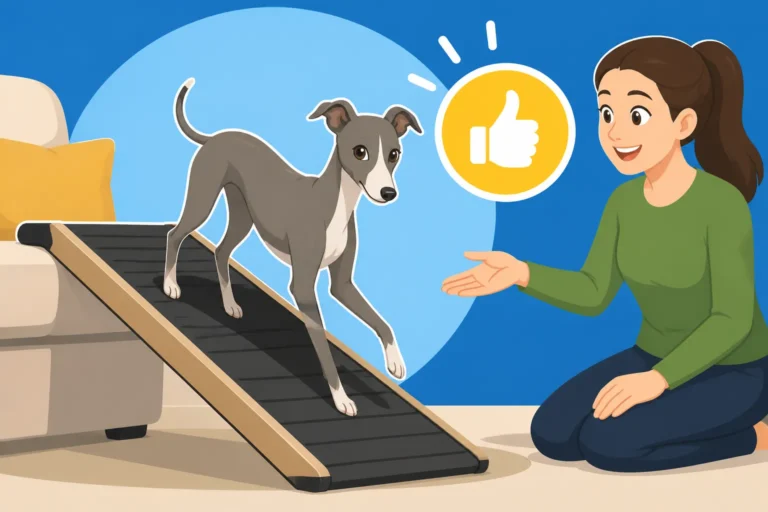
By investing time in these training aspects, you're not just training your dog; you're building a more resilient and confident companion better equipped to handle the unique dynamics of a home with a toddler. This dual approach of managing the child and preparing the dog offers the best chance for a harmonious household. Consider training them to avoid jumping off furniture without assistance, as detailed in Teaching an Italian Greyhound Not to Jump Down, further mitigating potential injuries.
When an Italian Greyhound and Toddler Dynamic Doesn't Work
Despite best efforts, sometimes the combination of a delicate Italian Greyhound and a rambunctious toddler proves too challenging. It's a difficult reality to face, but acknowledging when a situation isn't working is a crucial, responsible, and loving decision for everyone involved.
Recognizing Stress Signals in Your Italian Greyhound
Your Italian Greyhound will tell you if they're struggling, but you need to be fluent in their language. These aren't always dramatic growls or snaps; often, they are subtle signs of discomfort or anxiety that escalate over time if ignored.
Look for:
- Avoidance: Constantly moving away from the toddler, hiding under furniture, or retreating to their safe zone more often.
- Body Language: Lip licking, yawning when not tired, holding ears back, turning their head or body away, tail tucked low, stiffness in their posture, whale eye (showing the whites of their eyes).
- Changes in Behavior: Increased clinginess (to you), loss of appetite, changes in house training habits, excessive grooming, or even destructive chewing (though Italian Greyhounds typically do not chew much, as explored in What an Italian Greyhound Chews).
- Subtle Warnings: A low growl, a quick snap in the air (not making contact), or a quick dart and hide after a toddler interaction. These are clear indications that their patience has run out and they feel threatened.
- Increased Nervousness: Generalized anxiety, trembling when the toddler approaches, or being easily startled by normal household sounds.
If you consistently observe several of these signs, especially if they are intensifying, your Italian Greyhound is telling you they are deeply unhappy and stressed. Living in a constant state of fear or anxiety is not fair to any animal, particularly a breed as sensitive as an Italian Greyhound that relies so heavily on feeling secure with their people. Consider how much How Long an Italian Greyhound Copes Alone even in a quiet house; a toddler's presence can exponentially increase stress.
Prioritizing Safety for Both Child and Dog
The ultimate priority in any home with children and pets must be safety. This means both the physical safety of your Italian Greyhound from accidental injury and the safety of your child from any potential fear-based reaction from the dog. If, despite implementing all the management strategies, you find that:
- Your Italian Greyhound is consistently showing severe stress signals.
- Your toddler is unable to follow even the simplest rules about dog interaction, despite your best efforts.
- You are constantly stressed and anxious about potential accidents.
- An incident has occurred (a serious injury to the dog or a snap at the child), indicating a breakdown in the system.
Then it's time to seriously consider if this living arrangement is truly sustainable or fair to either party. While it’s agonizing to think about, sometimes the most responsible decision is to find an alternative living situation for your Italian Greyhound. This is not a failure on your part, but a courageous act of love for both your child and your dog. You might need to budget for potential emergencies, as detailed in What an Italian Greyhound's Emergency Vet Visit Costs, if accidents become a recurring concern.
The Realistic Outlook: Making Tough Decisions
No one wants to rehome a beloved pet, and it's certainly not the first option. However, facing the reality of a mismatch between an Italian Greyhound's needs and a toddler's developmental stage can prevent future heartache and ensure both live their best lives. Italian Greyhounds thrive in calm, predictable environments where they feel safe and cherished. A home with a busy, unpredictable toddler, even with the best intentions, may simply not be that environment for every individual Italian Greyhound.
If you reach this point, explore all avenues. Can a trusted family member or friend provide a quieter home? Are there breed-specific rescues, such as those found through organizations like the Italian Greyhound Club of America, that specialize in finding suitable homes for Iggys in need? These rescues often understand the specific needs of the breed and can carefully vet new families. The decision to rehome is never easy, but it comes from a place of deep love and responsibility. It ensures that your Italian Greyhound can live free from fear and stress, and your child can grow up in a safe, calm environment, without the constant need for vigilant management around a delicate pet. It’s a testament to putting their well-being above your own emotional attachment.
| Factor | Italian Greyhound | Toddler | Compatibility Challenges | Mitigation Strategies |
|---|---|---|---|---|
| Physical Build | Fragile, fine bones | Uncoordinated, clumsy | Risk of accidental injury to IG (fractures, sprains) | Constant supervision, separate spaces, ramps & steps. |
| Temperament | Sensitive, startled | Loud, sudden moves | IG stress, fear, potential nipping (fear-based) | Safe zones, desensitization, teach gentle interactions. |
| Impulse Control | Some prey drive | None | Toddler grabs IG, IG chases toddler, accidental collisions | Leash control, baby gates, "leave it" command for toddler. |
| Understanding | Reads body language | Doesn't read signals | Toddler ignores IG warnings, escalates stress | Adult intervention, educate child, supervise all contact. |
| Need for Predictability | High | Low | IG constantly on edge, withdrawal, behavioral issues | Consistent routine for IG, enforced quiet times. |
Disclaimer
This article is for general informational purposes only and does not constitute professional advice. Laws, prices and regulations vary by location and change over time. Consult a qualified professional for guidance on your specific situation.