Why an Italian Greyhound Slips a Flat Collar
One of the most heart-stopping moments for any Italian Greyhound owner is when their beloved pup suddenly backs out of their collar, leaving you with an empty leash and a surge of panic. It’s a common, frustrating, and incredibly dangerous problem that stems from their unique physique, but rest assured, you're not alone in experiencing this. This guide will delve deep into why traditional flat collars are often a poor fit for Italian Greyhounds, explore the very real dangers a slipped collar presents, and, most importantly, provide actionable solutions and safety tips to keep your quick-footed companion secure.
The Unique Anatomy That Makes Flat Collars a Hazard for Italian Greyhounds
Let's be honest, Italian Greyhounds are built differently. Their elegant, slender bodies are part of what makes them so captivating, but these very traits also create some unique challenges, especially when it comes to finding appropriate walking gear. A standard flat buckle collar, which works perfectly fine for many other breeds, is often an accident waiting to happen for an IG.
The "Sighthound Head" and Slender Neck
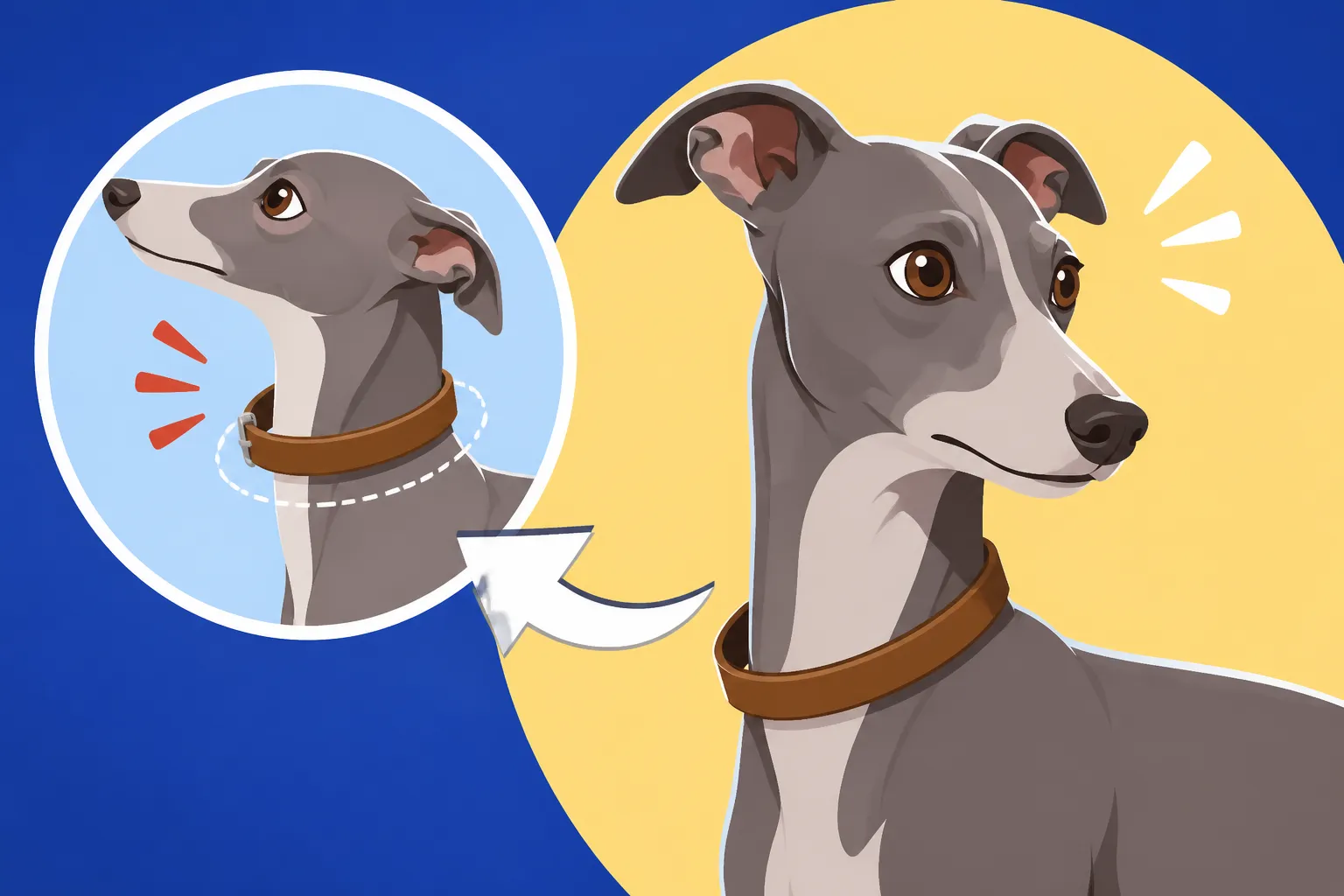
If you've ever looked closely at an Italian Greyhound, you'll notice their heads are rather narrow, almost cone-shaped, especially when compared to the broader part of their neck. This distinct feature is often called a "sighthound head" and it's a critical factor in collar escapes. Many breeds have a head that's wider than their neck, creating a natural stopper that prevents a collar from easily sliding off. Not so with our Iggies.
Their necks are also incredibly delicate and thin, yet surprisingly strong for their size. This combination of a slender neck that's often thicker than their narrow head means that a flat collar, even one that seems snug, can often be pulled forward and over the ears with surprising ease, especially if your Italian Greyhound suddenly stops, pulls back, or gets startled. Imagine trying to keep a rubber band on a champagne bottle – it might sit there, but with any slight pressure or movement, it's just going to pop right off. That's essentially what happens with a flat collar on an Italian Greyhound's neck.
The Deep Chest and Narrow Body
Beyond the neck and head, an Italian Greyhound's overall body structure further complicates collar fitting. They possess a famously deep chest that tapers dramatically into a very slender waist, often referred to as their "tuck up." This deep chest and narrow rib cage mean that if a flat collar does manage to slip past the ears, it has very little resistance from the rest of their body to prevent it from sliding completely off.
Most dogs, even when a collar slips, might get it caught around their front legs or shoulders, giving you a precious second to react. With an Italian Greyhound, that deep chest and sleek, aerodynamic build means there's often nothing to snag on. Once it's over the head, it's often entirely off the dog in a flash. This unique build is why a specialized approach to walking equipment is absolutely essential for their safety and your peace of mind.
The Serious Risks When a Collar Slips
A slipped collar isn't just an inconvenience; it can be a terrifying and life-threatening event for an Italian Greyhound. Their instincts, combined with their incredible speed, turn a simple collar malfunction into a full-blown emergency in mere seconds. The consequences can range from lost pets to serious injury or worse.
Immediate Escape and Danger
The moment a collar slips, an Italian Greyhound's instinct, particularly their powerful prey drive, can take over. They are sighthounds, bred to chase, and a sudden escape can trigger this hardwired response. Imagine you're walking along, and suddenly your Ig sees a squirrel dart across the street or a leaf blowing in the wind. That quick lunge, combined with their ability to back out of a flat collar, means they can be across a busy intersection before you've even registered what's happened. What an Italian Greyhound Does When It Sees a Rabbit is a stark reminder of how quickly their focus can shift to the chase.
This immediate bolt for freedom often means running into traffic, getting lost in unfamiliar territory, or encountering other hazards like aggressive dogs or even getting stuck in thorny bushes. Their thin skin is prone to tears, and such incidents can lead to painful injuries. The sheer speed of an Italian Greyhound means that once they're off-leash and spooked, catching them can be nearly impossible. Why an Italian Greyhound Cannot Be Trusted Off Leash, Ever highlights this crucial safety concern.
Potential for Injury and Trauma
Beyond the immediate escape risk, a slipping collar can also cause physical harm. If the collar is pulled suddenly as it's coming off, it can snap back and injure your dog's delicate neck or even cause a "whiplash" effect. While IGs have strong necks for their size, they are not designed for the abrupt jerking and pressure that can occur during a collar escape.
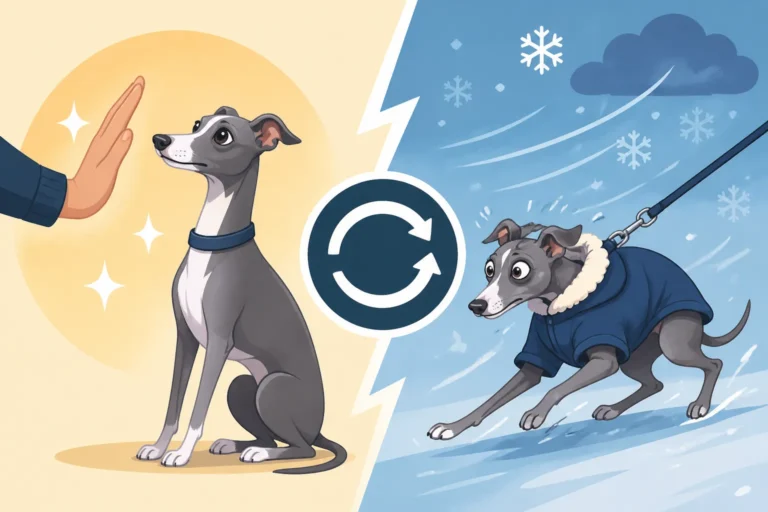
Furthermore, the trauma of getting lost or experiencing a near-miss with a car can be deeply unsettling for a sensitive Italian Greyhound. They are creatures of routine and comfort, and such a frightening experience can lead to increased anxiety, fearfulness on walks, or even behavioral regression. Some Italian Greyhounds who've experienced a frightening escape may become more prone to bolting through doors or becoming harder to handle on a leash, reinforcing the need for prevention over reactive measures.
Choosing the Right Gear: Martingales and Specialty Harnesses
Given the unique challenges of an Italian Greyhound's build, the solution isn't to simply tighten a flat collar until it's uncomfortable. Instead, it's about selecting equipment specifically designed to prevent escapes while ensuring comfort and safety. This usually means opting for a martingale collar or a specialized harness.
The Martingale Collar: A Sighthound's Best Friend
For many Italian Greyhound owners, the martingale collar is the gold standard for leash walking. Unlike a flat collar that maintains a constant circumference, a martingale collar has two loops. The larger loop slips over your dog's neck, and the smaller loop is where the leash attaches. When your dog pulls on the leash, or tries to back out, the smaller loop tightens the larger loop just enough to prevent it from slipping over their head, but without choking them.
The beauty of the martingale is that it tightens to a snug fit when needed, then relaxes when the pressure is off. This means it's comfortable for your Ig when they're walking calmly, but provides a secure hold if they lunge or try to escape. It’s designed to be escape-proof without causing undue pressure or discomfort. You can find many varieties of martingale collars, from plain nylon to decorative fabric, on platforms like Amazon. When fitting, ensure that when the collar is tightened (by pulling the small loop), the two metal rings on the larger loop do not touch. This ensures there's enough room for it to tighten without becoming too constricting.
Specialized Harnesses for Italian Greyhounds
While martingales are excellent for neck safety, some owners prefer harnesses, especially if their Italian Greyhound has a history of neck issues or if they're still a young puppy. However, not just any harness will do. Many standard harnesses are designed for broader-chested breeds and can still be easily backed out of by a determined Ig. Look for harnesses that are specifically designed for sighthounds or deep-chested, narrow-bodied dogs.
Key features to look for in a specialized harness include:
- A "Y" shaped front: This prevents pressure on the delicate throat area.
- Multiple adjustable straps: To ensure a snug fit around the chest and waist, preventing your Ig from slipping out.
- A belly strap positioned further back: Many standard harnesses have a belly strap that sits too far forward on an Ig's deep chest, allowing them to back out. A strap that sits further back, closer to their rib cage, provides better security.
- A secure buckle system: Look for sturdy buckles that won't easily snap or come undone.
Brands known for producing harnesses suitable for sighthounds often have these features. The goal is a harness that fits snugly enough that your Italian Greyhound can't back out, but loose enough for comfort and full range of motion. Which Harness Suits an Italian Greyhound's Neck goes into more detail on selecting the perfect harness.
Double-Leashing for Extra Security
For ultimate peace of mind, especially if you're new to Italian Greyhound ownership or have an Ig with a strong flight instinct, consider double-leashing. This technique involves using both a martingale collar and a harness, with separate leashes attached to each.
Here’s how it works:
- Attach one leash to the ring of the martingale collar.
- Attach a second leash to the back clip of the harness.
- Hold both leashes, one in each hand, or connect them to a dual-clip leash.
If your Italian Greyhound somehow manages to slip one piece of equipment, you still have the other as a backup. This strategy is particularly useful in high-traffic areas, new environments, or during early training phases. It provides redundancy and significantly reduces the risk of an escape, allowing you to walk with greater confidence.
| Equipment Type | Pros | Cons | Best For |
|---|---|---|---|
| Flat Collar | Widely available, inexpensive, traditional look | Highly prone to slipping off IGs, can cause neck injury if pulled | Not recommended for walking an Italian Greyhound; useful for tags only |
| Martingale Collar | Designed to prevent escape without choking, comfortable when loose | Requires proper fitting, less suitable for dogs with severe tracheal issues | Everyday walking, IGs prone to backing out of collars |
| Specialized Harness | Distributes pressure across the chest, ideal for neck protection | Can still be slipped if not fitted correctly or is a poor design | Puppies, IGs with neck sensitivity, for added security during travel |
| Double-Leashing | Maximum security, provides backup if one piece of gear fails | Requires managing two leashes, can feel a bit cumbersome | High-risk areas, anxious IGs, new environments, initial training |
Beyond the Collar: Training and Safety Protocols
Even with the perfect collar or harness, a comprehensive safety strategy for your Italian Greyhound extends to training and establishing secure habits. These highly intelligent, yet sometimes independent, dogs benefit greatly from consistent routines and a mindful approach to their environment.
Reinforcing Recall and Boundary Training
While no one recommends trusting an Italian Greyhound off-leash in an unfenced area, a solid recall can be a life-saver in an emergency. Consistent, positive reinforcement training for recall is crucial. Start in a very controlled, safe environment, like a securely fenced yard or even indoors. Use high-value treats and enthusiastic praise every single time your Ig comes when called. Practice frequently, gradually introducing more distractions. Even if they're leashed, practicing recall builds a strong foundation for communication.
Beyond recall, boundary training can also be incredibly helpful, especially for preventing door dashing. Teaching your Italian Greyhound to "wait" at open doors or to respect visual boundaries inside your home can be invaluable. This might involve using gates, designated "safe zones," or simply consistent verbal cues. Resources like BAXTER & Bella offer excellent general training programs that emphasize positive reinforcement and could be adapted to your Ig's specific needs, focusing on building a reliable response to commands. This kind of training is an ongoing process, but it truly pays off.
Creating a Safe Environment at Home and Out
Preventing collar slips often starts before you even leave the house. Ensure your Italian Greyhound always wears their collar or harness (or both!) when outside, even in a fenced yard, as unexpected events can happen. Regularly check the fit of their gear; dogs can lose or gain a little weight, and puppies are constantly growing. A collar that fit perfectly last month might be loose today.
Consider your walking routes carefully. If you know a particular path is highly distracting with squirrels or other small animals, it might be better to choose a quieter route until your Ig's leash manners and recall are impeccable. Always be aware of your surroundings – loose dogs, fast-approaching bicycles, or sudden loud noises can all trigger a flight response in a sensitive Italian Greyhound. Having a secure grip on the leash and being prepared to react calmly can make all the difference. What an Italian Greyhound Does All Day can give insight into their energy levels and potential for sudden bursts of activity.
Emergency Protocols for an Accidental Slip
Despite all precautions, accidents can still happen. It’s important to have a plan in place if your Italian Greyhound does manage to slip their collar. First and foremost, stay calm. Panicking and chasing them often makes them run faster and further, as they perceive your pursuit as part of the chase game or as a threat. Instead, try to squat down, call their name in a happy, excited voice, and offer their favorite high-value treat. If you have another dog, try to get that dog to come to you, as your Ig might follow their companion.
Always ensure your Italian Greyhound is microchipped and that your contact information is up-to-date with the chip registry. A visible ID tag on their collar, with your phone number, is also non-negotiable. If your Italian Greyhound does get loose, immediately put up "Lost Dog" signs with a clear, recent photo, and notify local shelters, vet clinics, and online lost pet groups. Knowing what to do in that terrifying moment can significantly increase the chances of a happy reunion. What to Do When an Italian Greyhound Gets Loose provides a detailed guide for this very scenario.
Disclaimer
This article is for general informational purposes only and does not constitute professional advice. Laws, prices and regulations vary by location and change over time. Consult a qualified professional for guidance on your specific situation.