How Easily an Italian Greyhound Gains Weight
It’s a common misconception, isn’t it? Many of us picture Italian Greyhounds as these perpetually slender, ethereal creatures, almost too delicate to ever carry an ounce of extra weight. So, when your beloved IG starts to fill out, or even gasp develop a little paunch, it can be genuinely surprising, even disheartening. You might wonder if you're doing something wrong. The truth is, despite their lean physique, Italian Greyhounds can gain weight quite easily if their diet and exercise aren't carefully managed. This guide will walk you through why this happens and what you can do to keep your long-legged companion at their optimal, healthy weight.
The Italian Greyhound's Unique Build and Metabolism
Italian Greyhounds are sighthounds, bred for speed and agility. Their physical structure is designed for quick bursts of movement, not for carrying extra bulk. This gives them that famously lean, muscular appearance with very little body fat, often described as having "skin over bone." However, this very characteristic can be a bit of a double-edged sword when it comes to weight management.
Built for Speed, Not for Fat Storage
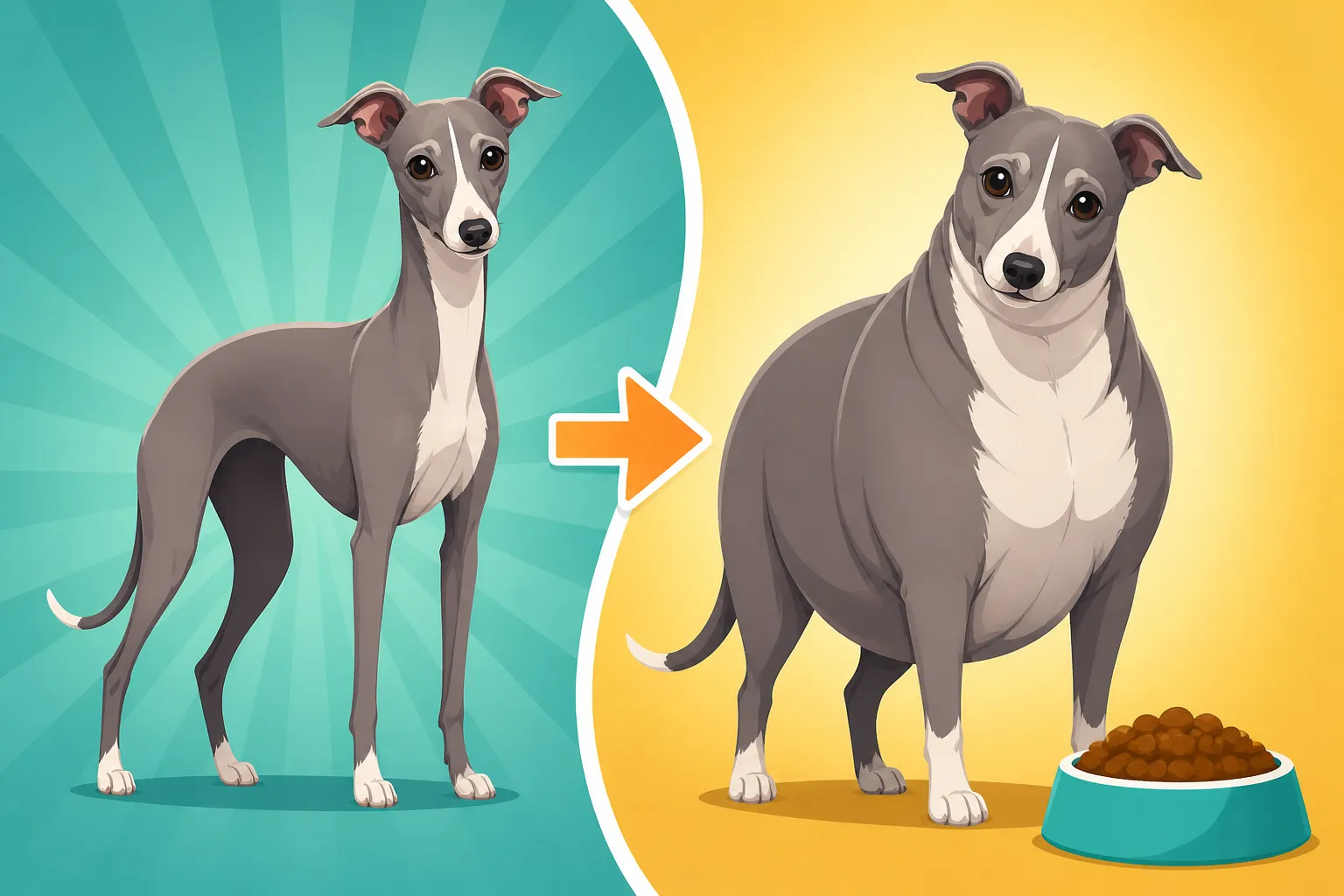
Think about their ancient lineage: these dogs were never meant to be heavy. They have a naturally high metabolism that burns through calories efficiently, especially when they're active. Their bodies are optimized for lean muscle mass. You should be able to easily feel your Italian Greyhound's ribs when you run your hand along their side, but not see them protruding sharply. Their hips should be distinct, and they should have a significant "tuck-up" where their abdomen rises sharply from their rib cage to their hind legs.
The problem arises when their caloric intake surpasses what their efficient metabolism needs, especially if their activity levels don't match. That seemingly tiny bit of extra food or just a few too many treats can quickly add up for a dog that naturally carries so little fat. They don't have a huge buffer zone, meaning even a small increase in body weight can be disproportionately significant to their overall health and joint structure.
The Deceptive Nature of Their Small Size
One of the biggest hurdles for Italian Greyhound owners, myself included, is the sheer ease with which we overestimate their caloric needs. They are small dogs, typically weighing between 7 to 14 pounds. What might seem like a minuscule portion of a human snack or an extra scoop of kibble for a larger breed can be a substantial calorie bomb for an Italian Greyhound. A single small bite of cheese, for instance, might be negligible for a Labrador, but it can represent a significant percentage of an IG's daily caloric allowance, especially if it's high in fat.
It's easy to fall into the trap of thinking, "Oh, it's just a tiny piece, it won't hurt." But those tiny pieces, given consistently, stack up quickly. Their small stomach size also means that rich, high-calorie foods can fill them up prematurely without providing balanced nutrition, or worse, lead to digestive upset. It's crucial to remember that their small size doesn't make them immune to weight gain; it actually makes them more susceptible to the effects of even slight overfeeding. Why an Italian Greyhound Eats Less Than You Expect is a great article to dive into if you find yourself surprised by their small portion sizes.
Individual Variations in Metabolism
While Italian Greyhounds, as a breed, are known for their lean build, it's important to remember that every dog is an individual. Just like people, some IGs might have a slightly slower metabolism than others, or they might simply be less naturally inclined to boundless energy. Genetics can play a role, as can their specific activity level within your household. You might have one IG that burns through calories like a furnace, darting around the house and garden, while another might be more of a couch potato, preferring to snuggle under blankets than sprint.
These individual differences mean that what works for one Italian Greyhound might not work for another. It's not a one-size-fits-all approach to feeding and exercise. You'll need to pay close attention to your dog's unique needs, energy output, and body condition to determine the right balance. What one Italian Greyhound should weigh, for instance, can vary slightly based on their individual frame and muscle mass, but the underlying principle of a lean, healthy body condition remains the same.
Common Reasons an Italian Greyhound Gains Weight
Understanding why your Italian Greyhound might be packing on pounds is the first step toward addressing the issue. It's rarely malicious, often just a misunderstanding of their specific needs.
Dietary Miscalculations and Treat Overload
This is, hands down, the most frequent culprit. We love our dogs, and showing affection often involves food. But for an Italian Greyhound, even small dietary indiscretions can quickly lead to weight gain.
- Measuring Mistakes: Are you truly measuring your dog's food, or are you just eyeballing it? A "scoop" can vary wildly depending on the scoop itself and how packed it is. Even an extra ¼ cup of kibble per day, for a small dog, is a significant increase.
- Too Many Treats: Treats are wonderful for training and bonding, but they often come with a high caloric cost. If you're giving several high-value treats a day, plus dental chews, plus a bit of table scrap here and there, those calories add up alarmingly fast. Remember, for an IG, a small training treat is often a fraction of a larger dog's equivalent.
- Rich Human Foods: A piece of toast, a bite of cheese, a lick of ice cream – these are incredibly tempting for an IG, and incredibly high in calories and fat for their tiny systems. They can also lead to pancreatitis or other digestive issues, so it's best to avoid them altogether.
It's easy to forget how potent these extra calories are. For an Italian Greyhound, every calorie counts. Many owners find success using a high-quality small breed kibble, carefully portioned. Brands like Royal Canin or Hill's Science Diet often have formulas specifically for small breeds, and you can even look into fresh food options from services like Ollie which deliver pre-portioned meals. For a wide variety of options and to check ingredients, sites like Chewy offer extensive selections.
Reduced Activity Levels
An Italian Greyhound needs exercise, even if they sometimes seem like they'd prefer to nap all day. While they aren't endurance athletes in the same way some larger breeds are, they do need regular opportunities to run and play.
- Aging Dogs: As Italian Greyhounds get older, their activity naturally slows down. What Changes in an Old Italian Greyhound's Care often includes a decrease in energy. They might not tear around the house like they used to, and their walks might become shorter and slower. If their food intake isn't adjusted to match this decreased energy expenditure, weight gain is almost inevitable.
- Seasonal Changes: Winter can be a real challenge for Italian Greyhound owners. These thin-skinned dogs despise the cold, rain, and snow. Exercising an Italian Greyhound Indoors in Winter becomes crucial, as outdoor walks might be less frequent or shorter. If they're moving less but eating the same amount, the pounds will creep on.
- Owner Lifestyle: Our own activity levels directly impact our dogs. If you're going through a period of less activity, it's likely your IG is too. While they might do "zoomies" indoors, this isn't always enough to burn off all their energy and calories. How Much Exercise an Italian Greyhound Needs can vary, but consistency is key.
Age-Related Metabolic Slowdown
Just like us, a dog's metabolism tends to slow down as they age. This isn't just about reduced activity; it's a physiological change. A senior Italian Greyhound might require fewer calories to maintain their weight than a spry two-year-old, even if both have similar activity levels. This is why it's so important to regularly assess your senior dog's body condition and adjust their diet accordingly. What worked for them at five years old might lead to weight gain at ten. This metabolic shift is a natural part of Caring for an Italian Greyhound Past Eleven, and requires thoughtful adjustments from us.
Hormonal Changes Post-Neutering/Spaying
Neutering or spaying an Italian Greyhound is a responsible decision for population control and often for health benefits, but it does come with a common side effect: an increased propensity for weight gain. The hormonal changes that occur after these procedures can lead to a decrease in metabolic rate and an increase in appetite for some dogs.
Many vets recommend reducing a dog's caloric intake by about 20-30% after neutering or spaying to prevent weight gain. If your Italian Greyhound was recently altered and you're noticing them gaining weight, discussing diet adjustments with your vet is a critical step. Whether a Neutered Italian Greyhound Gains Weight is a very common concern among owners, and understanding these hormonal shifts is important for proactive management.
Underlying Health Conditions
While less common than dietary or activity issues, sometimes an Italian Greyhound's weight gain can be a symptom of an underlying health problem.
- Hypothyroidism: An underactive thyroid gland can slow metabolism significantly, leading to weight gain, lethargy, and sometimes coat changes. This is a condition that can be diagnosed with a simple blood test and is typically managed with daily medication. If your IG is gaining weight despite appropriate diet and exercise, and seems generally sluggish, it's worth discussing Hypothyroidism in an Italian Greyhound with your veterinarian.
- Cushing's Disease: While less common in Italian Greyhounds, Cushing's disease (hyperadrenocorticism) can also lead to a pot-bellied appearance and weight redistribution.
- Fluid Accumulation: In very rare cases, a sudden increase in weight could be due to fluid retention related to heart or kidney issues, rather than fat. This would typically be accompanied by other serious symptoms.
These medical causes underscore the importance of regular veterinary check-ups, especially if weight gain is sudden or unexplained.
Recognizing When Your Italian Greyhound Is Overweight
Sometimes, it's hard to be objective about our own dogs. We see them every day, and changes can be subtle. But for Italian Greyhounds, maintaining a healthy weight is paramount to their joint health and overall well-being. Knowing how to assess their body condition is essential.
The Rib Test: Your First Indicator
This is one of the easiest and most reliable ways to check your Italian Greyhound's weight.
- How to do it: Gently run your flat palms along your Italian Greyhound's sides, over their rib cage.
- What you should feel: You should be able to easily feel each individual rib under a thin layer of skin and muscle, almost like feeling the knuckles on your hand. You shouldn't have to press hard to feel them.
- What it means if you don't: If you have to press firmly to feel the ribs, or if they feel spongy and covered by a significant layer of fat, your Italian Greyhound is likely carrying too much weight. Conversely, if the ribs are visibly protruding without you even touching them, your dog might be too thin. How to Feel an Italian Greyhound's Ribs provides more detailed guidance on this important assessment.
Assessing the Waistline and Abdominal Tuck
Beyond the ribs, the shape of your Italian Greyhound's body provides critical clues.
- The Waistline: Look at your Italian Greyhound from above, while they are standing. A healthy Italian Greyhound should have a distinct "waist" where their body narrows in front of their hips. If their body looks like a straight cylinder from ribs to tail, or even bulges out, they are overweight.
- The Abdominal Tuck-Up: Now, look at your Italian Greyhound from the side. Their abdomen should "tuck up" sharply from their rib cage, creating an elegant, curved line toward their hind legs. If their belly hangs low or is mostly flat, lacking that characteristic upward curve, they've likely put on excess weight. This can significantly impact their delicate joint structure and ability to run freely. What an Italian Greyhound Should Weigh is not just a number on a scale, but a reflection of this ideal body condition.
Behavioral Clues
Sometimes, the signs aren't just physical; they're behavioral too. An overweight Italian Greyhound might:
- Be Less Energetic: They might be more reluctant to play, run, or engage in their usual "zoomies." You might notice them sleeping more than usual.
- Have Difficulty Moving: Jumping onto furniture (though they shouldn't jump off!), climbing stairs, or even just getting up from a lying position might become more labored.
- Breathe Heavily: Even with moderate exertion, they might pant more than a dog at a healthy weight.
- Groom Less: It can become difficult for an overweight dog to reach certain areas for self-grooming.
These changes are signals that their body is under stress, and it's time to take action.
Using a Body Condition Score Chart
Veterinarians often use a Body Condition Score (BCS) chart, typically on a scale of 1 to 9 (with 5 being ideal) or 1 to 5 (with 3 being ideal). These charts provide visual and descriptive guidelines to help objectively assess a dog's weight. Many veterinary websites and pet food manufacturers, including some brands available on Chewy or Amazon, offer printable BCS charts. Taking a few moments to review one of these charts and compare it to your Italian Greyhound can provide valuable insight into their current condition and help you determine if they fall into the "overweight" category. It helps to take the emotional aspect out of it and focus on objective criteria.
Practical Strategies for Managing and Preventing Weight Gain
The good news is that weight gain in Italian Greyhounds is almost always manageable with consistent effort and a few key adjustments. The key is to be proactive and disciplined.
Precise Portion Control
This is foundational. You absolutely must measure your Italian Greyhound's food.
- Use a Kitchen Scale: The most accurate way to portion kibble is by weight, not volume. Different kibbles have different densities. A kitchen scale (easily found on Amazon) will give you the most precise measurement.
- Follow Veterinary Guidelines: Your veterinarian is the best resource for determining your Italian Greyhound's ideal daily caloric intake, especially if they need to lose weight. They can help you calculate how many cups a day an adult Italian Greyhound eats based on their target weight. It's often less than you think!
- Stick to High-Quality Food: Choose a reputable brand of dog food designed for small breeds, ideally with moderate fat and protein content. Avoid overly rich foods. If you're considering a fresh food diet from a company like Ollie, their portioning is usually very precise.
Consistency is vital. Don't eyeball it one day and measure it the next. Make precise portioning a daily habit for every meal.
Smart Snacking and Treat Alternatives
Treats don't have to be eliminated entirely, but they need to be chosen and given wisely.
- Low-Calorie Options: Opt for small pieces of plain cooked chicken breast, green beans, carrots, or air-popped popcorn (no butter or salt). Many pet stores (or Chewy) also carry low-calorie training treats specifically designed for small dogs.
- Use Meal Kibble as Treats: During training sessions, use a portion of your Italian Greyhound's daily kibble ration as rewards. This way, you're not adding extra calories, just redistributing them.
- Interactive Toys: Instead of food, offer praise, a favorite toy, or a short play session as a reward. A puzzle toy can make a small portion of their meal last longer and provide mental stimulation.
- Avoid Table Scraps: Seriously, no matter how much those big, expressive eyes beg, resist giving human food. It's often too high in fat, salt, and calories, and can be dangerous for their digestive system.
Consistent Exercise Regimen
Even if your Italian Greyhound isn't an outdoor enthusiast in cold weather, they still need regular opportunities to move their body.
- Daily Walks: Aim for two to three short walks a day, even just 15-20 minutes each, if the weather permits. On colder days, the need for a sweater (When an Italian Greyhound Needs a Sweater Indoors) will be obvious, and proper outer layers are essential for walks.
- Indoor Play: When outdoor conditions are bad, engage in vigorous indoor play. Fetch in a long hallway, chasing toys, or even structured games like hide-and-seek can get their heart rate up. What an Italian Greyhound Does All Day should include periods of activity, not just napping.
- Safe Running Opportunities: If you have access to a secure, fenced area, let them sprint! Italian Greyhounds love to run and it's excellent for burning calories and maintaining muscle tone. Always ensure the area is truly escape-proof, as Why an Italian Greyhound Cannot Be Trusted Off Leash, Ever is a cardinal rule.
- Consider Activities: Lure coursing, if available in your area, is a fantastic way for IGs to burn off energy in a safe, breed-appropriate way.
Regular Veterinary Check-ups
Your veterinarian is your most valuable partner in managing your Italian Greyhound's weight.
- Annual Wellness Exams: Make sure your Italian Greyhound has regular check-ups. How Often an Italian Greyhound Needs a Wellness Exam is typically yearly for adult dogs, and these appointments are crucial for monitoring weight trends, discussing diet, and catching any underlying health issues early.
- Discuss Weight Concerns: If you suspect your Italian Greyhound is gaining weight, don't hesitate to bring it up with your vet. They can help you create a safe and effective weight loss plan.
- Rule Out Medical Causes: As discussed, certain health conditions can lead to weight gain. Your vet can perform tests to rule these out, ensuring you're treating the right problem.
- Advice on Food and Exercise: Your vet can recommend specific diets, including therapeutic weight-loss foods if necessary, and give tailored advice on exercise based on your dog's age and health.
Utilizing Tools and Resources
There are many resources available to help you keep your Italian Greyhound at a healthy weight.
- Pet Scales: A small pet scale can be a great investment (check Amazon) for accurately tracking your dog's weight at home between vet visits. This allows you to catch slight gains before they become significant problems.
- Slow Feeder Bowls: If your Italian Greyhound eats too quickly, a slow feeder bowl can help them feel fuller by prolonging mealtime. Again, these are widely available on sites like Chewy or Amazon.
- Food Journals/Apps: Keeping a journal of everything your Italian Greyhound eats, including treats, can be a real eye-opener. There are also many pet care apps that can help you track food intake and exercise.
- Professional Guidance: If you're struggling to get weight off your Italian Greyhound, don't be afraid to ask your vet for a referral to a veterinary nutritionist or a certified professional dog trainer for exercise ideas. Sometimes a fresh perspective can make all the difference when Getting Weight Off an Overweight Italian Greyhound feels like an uphill battle.
| Feature | Healthy Italian Greyhound | Overweight Italian Greyhound |
|---|---|---|
| Ribs (Palpation) | Easily felt, like knuckles | Hard to feel, covered by fat |
| Waistline (Top View) | Distinct, pronounced tuck | Straight, cylindrical, or bulging |
| Tuck-Up (Side View) | Sharp, defined upward curve | Flat or sagging, lacking curve |
| Energy Level | Eager to play, active, "zoomies" | Lethargic, less interested in play |
| Breathing | Regular, quiet | May pant more easily, even at rest |
| Movement | Agile, light-footed, easy jumps | Labored, reluctant to jump/move |
| Body Fat | Minimal (around 17%) | Noticeable layers, fatty deposits |
Disclaimer
This article is for general informational purposes only and does not constitute professional advice. Laws, prices and regulations vary by location and change over time. Consult a qualified professional for guidance on your specific situation.