Whether the Italian Greyhound Was Ever Bred Too Small
Italian Greyhounds have always been small, but that does not mean they were deliberately bred down to the frail “teacup” size sometimes advertised today. This guide separates the breed’s longstanding toy-dog build from later pressure for extreme miniaturization, explains why very small size can be harmful, and offers practical ways to assess a puppy’s health and proportions.
The Italian Greyhound’s small size has a long history
Small was part of the breed’s purpose
The Italian Greyhound was developed as a small companion dog, not as a miniature version of a modern racing Greyhound. Its fine frame, tucked-up waist and long legs are part of a distinct breed type. Those features can make the dog look exceptionally delicate, especially beside sturdier small breeds, but a refined appearance is not the same as being undersized or unhealthy.
People sometimes look at a slim Italian Greyhound and assume the breed must have been created by continually breeding the smallest puppies in each litter. That oversimplifies the history. The breed’s small stature is longstanding, while deliberate selection for an extreme, exceptionally tiny size is a different issue. The important question is not simply whether an Italian Greyhound is small. It is whether the dog is sound, proportionate and able to live comfortably.
A toy breed is not automatically a “teacup” breed
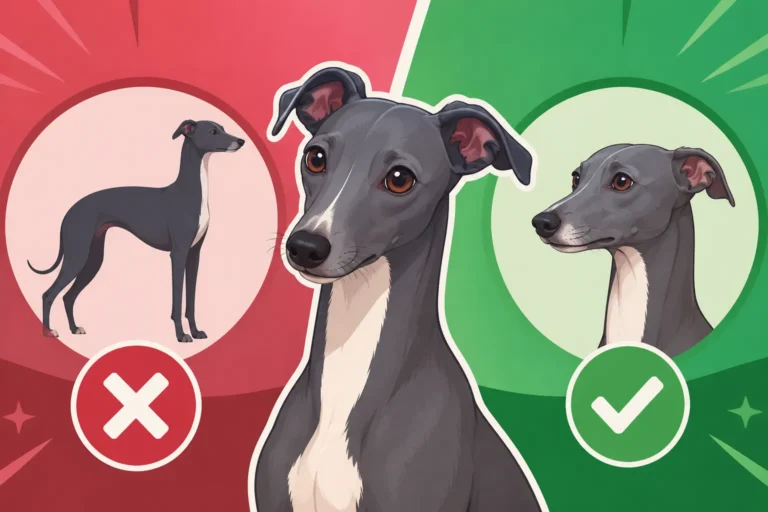
“Teacup” is not a separate recognized Italian Greyhound variety. The label is generally used to suggest a dog will be unusually tiny, but it does not guarantee adult size, health or temperament. A very small puppy may be the result of normal variation, but it may also be unusually underweight, immature, ill or from breeding that prioritizes size over soundness.
That distinction matters because families may hear “teacup” and imagine a standard Italian Greyhound in an especially convenient package. In reality, selecting for extreme smallness can put health and structural soundness at risk. The historical appeal of a delicate companion dog should not be confused with a modern promise to produce the smallest puppy possible. For more background on the marketing label, see Whether a Teacup Italian Greyhound Exists.
Small does not mean fragile by design
Italian Greyhounds are naturally fine-boned, and their anatomy does require thoughtful handling. A puppy can be vulnerable to injury if it is dropped, jumps from furniture or plays roughly with a much larger dog. But that does not mean every small Italian Greyhound is poorly bred, or that the breed’s normal build is itself a defect.
It helps to separate three things that are often lumped together: the breed’s naturally slight frame, an individual dog’s normal variation in size, and extreme size selection that may compromise health. A sound dog can be petite. The warning sign is not merely a low number on the scale; it is a breeder treating extreme tininess as the main selling point while offering little information about health, structure or family history.
When breeding for smaller size becomes a concern
The difference between petite and undersized
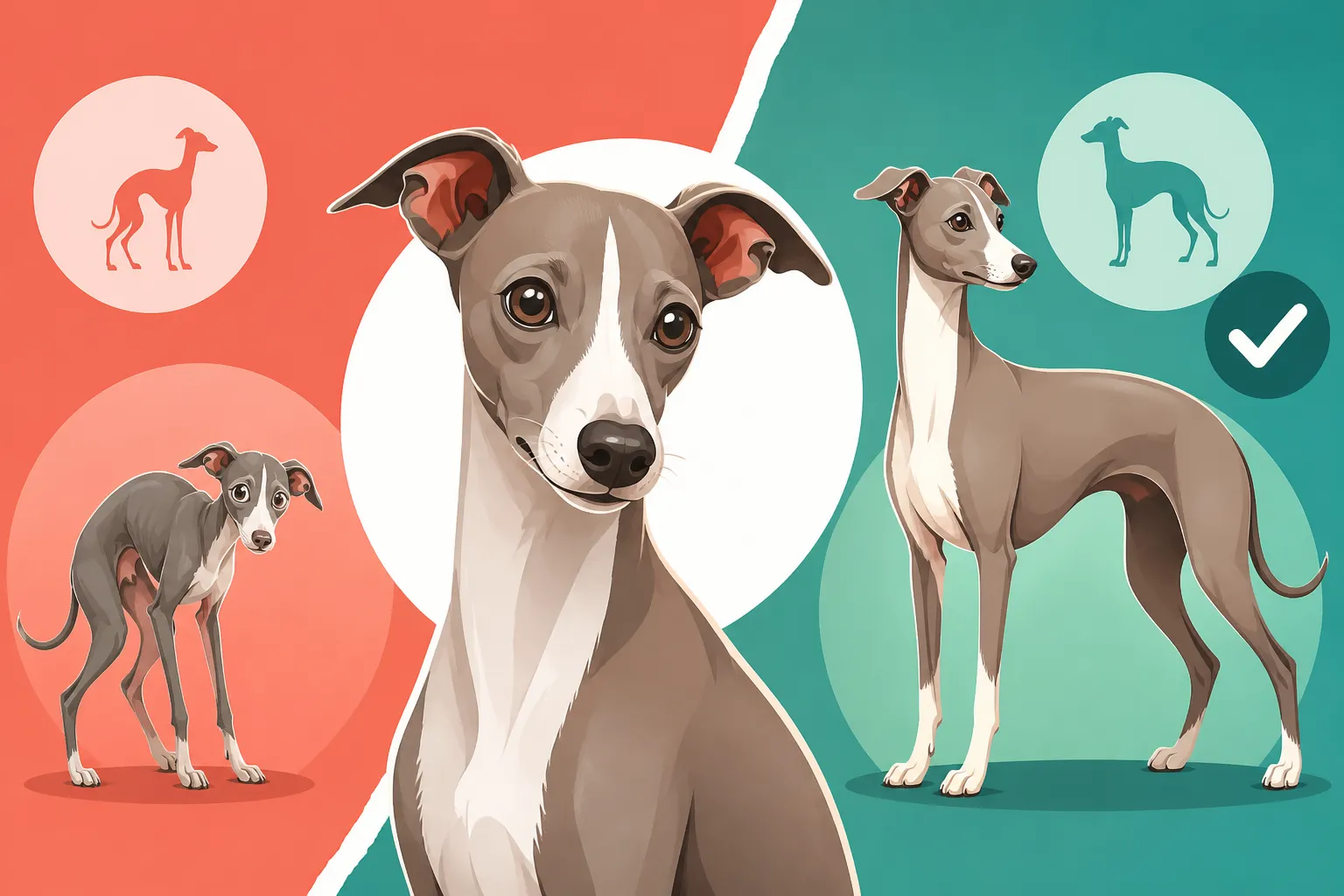
A healthy Italian Greyhound should be evaluated as a whole dog. Body condition, proportions, movement, growth and overall vitality matter alongside weight. A puppy that looks tiny compared with its littermates might simply be a smaller individual. A puppy that is weak, poorly growing or disproportionately built deserves closer attention and veterinary assessment.
Be cautious if a seller promises an adult weight with unusual certainty, advertises “micro” or “teacup” puppies as a special category, or implies that smaller is always better. Responsible breeders should be able to discuss the parents, the puppies’ development and the reasons they make breeding decisions. They should not rely on a size label as a substitute for health information.
For an overview of soundness concerns, read Why Very Small Italian Greyhounds Are Unsound. For a practical comparison of breed size, What Weight Range an Italian Greyhound Should Fall In and What an Italian Greyhound Weighs and How Tall It Stands provide useful context. Neither should be used to diagnose a puppy from a single measurement; a veterinarian can assess whether an individual dog is growing appropriately.
Why extreme miniaturization can carry risks
Breeding toward an extreme can narrow the pool of dogs selected for qualities beyond size. If a breeder repeatedly favors the tiniest animals, other priorities—such as healthy development, stable temperament, sound movement and appropriate structure—may receive less attention. The concern is not that every small dog will have a medical problem. It is that breeding choices made primarily for a marketing feature may increase the chance of poor outcomes.
Very small puppies can also be more vulnerable during ordinary household life. They may be easier to injure through rough play, accidental falls or being stepped on. For an Italian Greyhound, whose legs are fine-boned, safe handling and supervision matter at any size, and especially so when the dog is unusually small or still growing. See The Age an Italian Greyhound's Bones Finish Hardening for more on why a young dog needs careful management.
A breeder’s approach to health testing and the wider family line is more informative than a catchy size claim. The breed’s history also includes periods when its population became vulnerable, making thoughtful breeding and genetic diversity important topics. How Narrow the Italian Greyhound Gene Pool Became explores that concern.
What to ask a breeder
Before placing a deposit, ask how the breeder defines “small,” whether they are promising a specific adult weight, and what information supports that estimate. Ask to see the puppy with its mother and, when possible, learn about the health and longevity of relatives. A breeder should welcome reasonable questions and explain their priorities without pressuring you to decide quickly.
Useful questions include:
- What health screening has been done on the parents, and can I review the results?
- How are the puppies growing, and has a veterinarian examined them?
- How do you choose which dogs to breed beyond their size?
- Have close relatives had recurring health or structural problems?
- What support do you offer if the puppy’s development differs from expectations?
A conscientious breeder may not be able to predict an exact adult weight. That is a more realistic answer than a guarantee based on a puppy’s size at a young age. For more about evaluating a breeder’s priorities, see What Height the Italian Greyhound Standard Asks For and Why Very Small Italian Greyhounds Are Unsound.
How to assess size without chasing a label
Look at proportion, movement and condition
When you meet a puppy, notice whether it moves freely and evenly, appears alert and engages comfortably with its surroundings. These observations cannot replace a veterinary exam, but they are more helpful than deciding based on which puppy looks tiniest. Ask about the puppy’s growth history and whether the breeder has concerns that need follow-up.
Do not interpret visible ribs or a narrow waist in isolation. Italian Greyhounds are naturally lean, but a puppy’s body condition should be assessed by someone familiar with growth and the breed. If a puppy seems unusually bony, weak or slow to develop, ask the breeder and veterinarian rather than assuming that extreme thinness is simply the correct look.
It is also wise to consider the dog’s expected adult life, not just the size that seems appealing in a photo. A slightly larger, well-proportioned puppy may be a better fit than one selected because it is the smallest in the litter. A sound individual’s needs are easier to plan for than a marketing promise that the dog will remain exceptionally tiny.
Compare responsible evidence, not sales language
| What you hear or see | Why it matters | A sensible next step |
|---|---|---|
| “Teacup” or “micro” used as a special breed type | These labels do not establish health or adult size | Ask what the breeder means and request health information |
| A guaranteed adult weight for a young puppy | Growth varies, and predictions can be unreliable | Ask how the estimate was made and whether it is a guarantee |
| The smallest puppy is presented as the best choice | Tiny size alone does not show soundness or temperament | Compare health, structure, behavior and breeder support |
| Health testing is discussed openly | It suggests the breeder is prepared to explain their choices | Review results and ask what they mean |
| Questions are discouraged or a quick deposit is demanded | Pressure can distract from careful evaluation | Take time and seek advice from a veterinarian or breed mentor |
The same caution applies to online listings and informal advertisements. Photos can make a dog look smaller or more delicate than it is, and a seller’s description cannot establish how the puppy will grow. If a breeder will not explain health screening or lets size claims stand in for broader information, consider looking elsewhere.
Prepare for the dog you meet, not the size promised
A prospective owner may be drawn to a tiny puppy because they live in an apartment or want a dog that is easy to carry. But Italian Greyhounds need safe movement, comfortable resting places and careful supervision regardless of their adult weight. Their small frame does not eliminate the need for exercise, training, veterinary care or a secure home.
Practical preparation is more useful than trying to predict an exact number. Measure a harness carefully and check the manufacturer’s sizing guidance; a retailer such as Chewy may be one place to compare product dimensions, but fit should be judged on the individual dog. For a bed or carrier, verify the interior measurements rather than relying on a “small dog” label. Chewy listings can also help you compare dimensions, while your puppy’s breeder or veterinarian can advise on safe handling and growth. If you are shopping there, use Chewy’s size information as a starting point, not as a substitute for trying a properly fitted item.
At home, reduce avoidable risks: supervise interactions with children and larger dogs, block unsafe access to high furniture, and use a secure harness and leash outdoors. Those precautions are sensible for the breed generally, not only for dogs described as unusually small. For breed-size comparisons, see Whether an Italian Greyhound Is Smaller Than a Whippet and The Toy Sized Italian Greyhound Fad and What It Cost.
What the history does and does not tell us
The breed has faced changing fashions
The Italian Greyhound’s history has not been a straight line of breeding toward ever-smaller dogs. Breed populations and preferences have shifted over time, and periods of popularity can bring pressure for particular looks. But that does not support the claim that the breed as a whole was simply engineered to become smaller and smaller.
It is more accurate to distinguish the traditional small companion breed from later fads that celebrate unusually tiny dogs. Fashion can affect what buyers ask for and what some sellers promote. That pressure is one reason prospective owners should look beyond size and ask what a breeder values in a healthy adult dog.
The history of the breed includes both popularity and vulnerability. The Italian Greyhound Nearly Died Out Twice in Europe offers a broader account of how changing circumstances affected the breed. That context reinforces why preserving soundness and responsible breeding practices matters more than chasing a novelty label.
The practical answer for future owners
Was the Italian Greyhound ever bred too small? The clearest answer is that the breed has long been intentionally small as a companion, but breeding toward extreme tininess is a separate and potentially harmful practice. A naturally petite, healthy Italian Greyhound is not automatically “too small.” The concern arises when a breeder or seller makes extreme size the primary goal and gives little attention to health, development and sound structure.
If you are choosing a puppy, prioritize transparent health information, careful socialization and a breeder who can explain their decisions. If you already live with a very small Italian Greyhound, do not assume a problem from size alone; ask your veterinarian to assess body condition, growth and any individual risks. Good care is based on the dog in front of you, not on a label.
Disclaimer
This article is for general informational purposes only and does not constitute professional advice. Laws, prices and regulations vary by location and change over time. Consult a qualified professional for guidance on your specific situation.