Whether an Italian Greyhound Carries Its Tail Up
An Italian Greyhound’s tail is usually carried low, with a gentle curve, rather than held upright over the back. That can look unusual if you expect a happy dog to wag with its tail high, but it is generally normal for the breed. This guide explains the breed’s typical tail carriage, what movement can mean, and when a change deserves a closer look.
What normal Italian Greyhound tail carriage looks like
The breed’s tail is set low and carried low
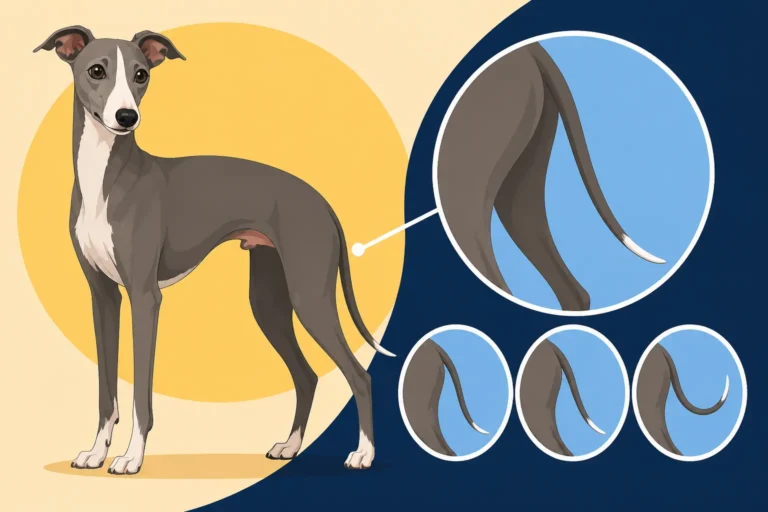
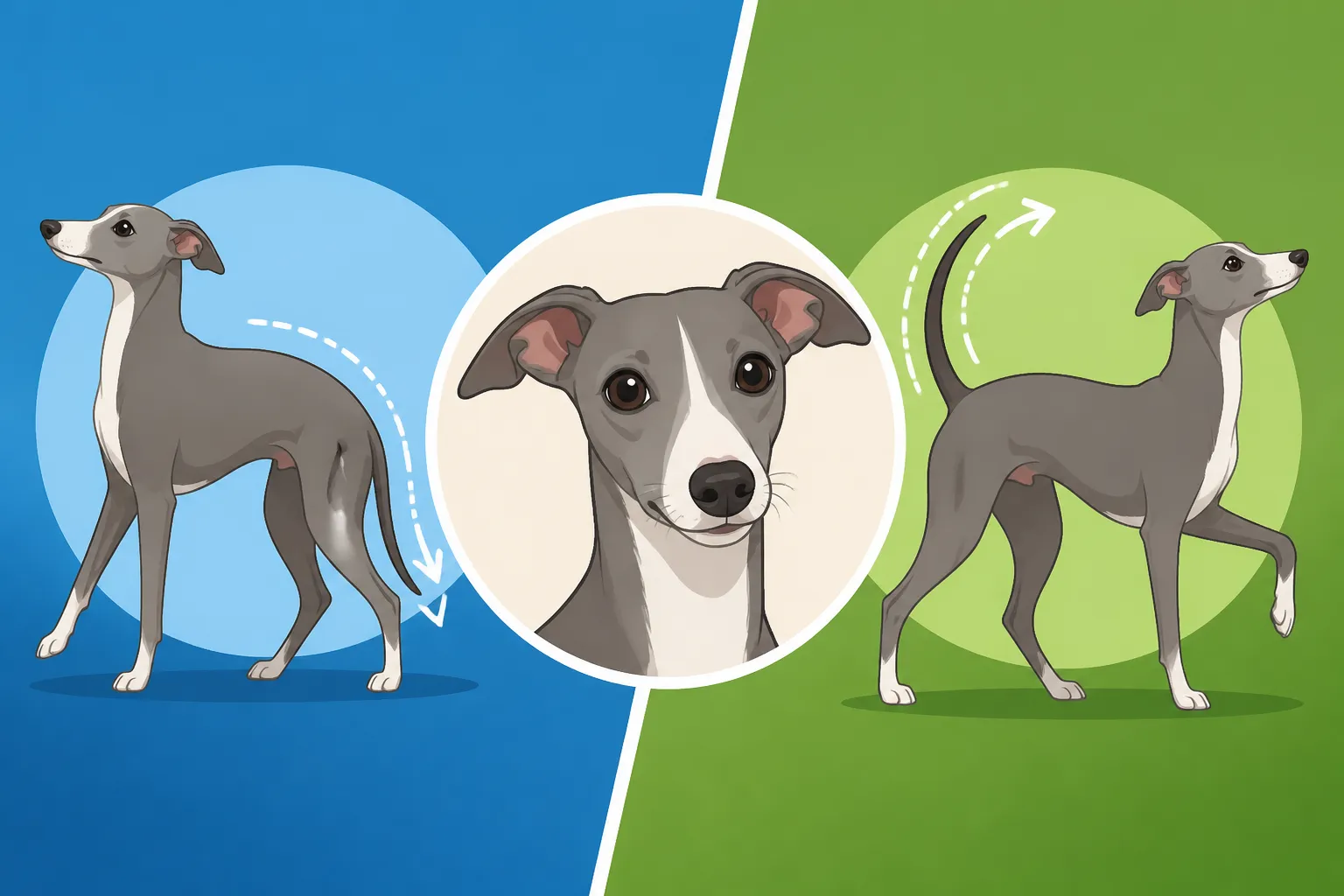
The Italian Greyhound has a fine, tapering tail that sits low on the body and reaches toward the hock. In a relaxed stance, it commonly hangs down with a soft curve rather than pointing straight up. That low carriage is part of the breed’s outline, not automatically a sign that the dog is fearful, unhappy, or unwell.
The tail may curve toward the body, especially near the tip. Its exact shape can vary from one dog to another, and a still photograph may make the curve look more pronounced than it does in person. What matters is the overall impression: a slender, low-set tail that is not persistently carried high over the back.
This is different from some breeds whose standard or typical body language includes an upright or curled tail. If you are comparing your dog with another breed, a low tail can look like a mood signal when it is simply the Italian Greyhound’s usual carriage. The breed’s body shape and movement are described further in The High Stepping Gait That Marks a Correct Italian Greyhound.
Tail carriage can shift with mood and movement
A dog’s tail is not a fixed posture indicator. An Italian Greyhound may lift or move the tail more when greeting someone, anticipating a walk, investigating an interesting smell, or playing. A relaxed dog may keep it low; an alert dog may hold it more firmly or raise it somewhat. Neither moment on its own tells the whole story.
Look at the rest of the dog. A loose body, soft eyes, relaxed mouth, and willingness to approach suggest a different emotional picture from a tense body, tucked tail, pinned ears, or attempts to retreat. Tail position is one part of communication, and it can be easy to misread when you focus on it alone.
Some Italian Greyhounds wag subtly, while others make their excitement obvious. A small wag does not mean a dog is less affectionate, and a raised tail does not necessarily mean the dog is confident or friendly. Consider the setting and the dog’s usual habits. If you are also learning to read the breed’s behavior, How an Italian Greyhound Greets a Stranger offers useful context for interpreting a greeting as a whole.
Why an Italian Greyhound may carry its tail higher
Brief changes are often ordinary
A tail that rises briefly during a burst of excitement is not necessarily a concern. Your dog might lift it when you pick up the leash, when a familiar person comes through the door, or when a toy appears. The tail may also move while the dog is walking, trotting, or turning, so posture can look different from one moment to the next.
Compare what you see with your dog’s normal pattern. If the tail is usually low but rises for a short time in a familiar, happy situation and then settles again, that may simply be expressive movement. A quick look at the dog’s whole body and behavior can help you decide whether the moment seems relaxed or tense.
It is useful to avoid judging posture from a single photo or a short video clip. A camera can catch the tail at the peak of a movement, making a temporary lift appear like the dog’s everyday stance. If you want to understand a pattern, observe your dog in several ordinary situations, such as resting, walking, greeting, and playing.
Persistent high carriage deserves context, not a quick diagnosis
If an Italian Greyhound consistently carries its tail higher than usual, that alone does not identify a specific health problem. Some individual variation is normal, and posture can change with excitement or surroundings. More important questions are whether the change is new, whether the dog seems uncomfortable, and whether anything else about movement or behavior has changed.
Take note if the tail is held rigidly, the dog reacts when the area is touched, or the change appears alongside trouble sitting, walking, toileting, or settling. Those details are more useful to a veterinarian than the tail position by itself. If you are unsure, record a short video of the dog standing and moving naturally, without trying to position or handle the tail.
A sudden change should be considered alongside any recent fall, collision, rough play, or other injury. Italian Greyhounds have a fine-boned build, so a concerning event or sign of pain warrants care rather than home experimentation. For broader breed-specific health context, Whether the Italian Greyhound Is a Healthy Breed discusses why individual symptoms should be assessed on their own merits.
Reading tail posture alongside the whole dog
Look for clusters of body-language signs
Tail position is most helpful when you combine it with other signals. A low tail with a loose, wiggly body may simply be your dog’s natural stance. A low, tightly tucked tail accompanied by crouching, avoidance, trembling, or repeated attempts to hide may suggest worry. A lifted tail with stiffness, intense staring, or growling can communicate tension rather than friendliness.
Pay attention to what happens immediately before and after the posture. If a dog lowers its tail when a noisy truck passes, then relaxes once the sound is gone, the surrounding event helps explain the change. If the tail stays in a new position throughout the day or the dog seems unlike itself, keep track of that pattern instead of relying on one isolated signal.
Children and visitors may assume that a wagging tail always means “come closer.” It does not. Teach them to ask before approaching and to give the dog space if it turns away, stiffens, hides, or appears unsettled. The same careful approach applies when dogs meet: let them move away freely, and do not hold one dog still while another investigates.
Pay attention to comfort during handling
Italian Greyhounds are slim, fine-skinned dogs, so handling should be gentle. Do not pull, lift, or repeatedly test the tail to see whether it moves. If you are checking your dog after a possible injury, observe from the outside and contact a veterinarian if there is pain, swelling, bleeding, a visible wound, or a sudden change in how the dog moves.
You can make the situation easier for a vet by noting when the change began, whether it is constant or intermittent, and what else you have observed. A calm video can show the tail at rest and during ordinary walking. Avoid staging a reaction or repeatedly provoking the posture to capture footage.
If you also notice limping or reluctance to move, treat that as a separate concern rather than assuming it is caused by the tail. The breed’s legs deserve particular care; Signs an Italian Greyhound Has Broken a Leg explains signs that call for prompt veterinary attention. For general guidance on helping your dog feel comfortable during routine handling, see How to Pick Up an Italian Greyhound Safely.
When to call a veterinarian about tail posture
Changes that should not be ignored
Contact a veterinarian if the tail carriage changes suddenly and the dog seems painful, distressed, or unable to move comfortably. Other reasons to seek advice include a visible injury, swelling, repeated licking of the area, sensitivity when approached, or a change that follows a fall or collision. Do not give human pain medication unless a veterinarian specifically instructs you to do so.
A new posture combined with difficulty sitting, walking, or toileting also deserves attention. These signs do not prove that the tail itself is injured, and they can have different causes. A veterinary examination is the right way to sort out what is happening, especially if the dog’s normal behavior has changed.
If the tail is simply carried a little higher in an exciting moment and your dog is otherwise comfortable and acting normally, there may be nothing to treat. Still, if you know your dog well and a change feels unusual or persists, it is reasonable to ask your clinic for guidance. You do not need to wait for a dramatic symptom before raising a concern.
| What you notice | What it may mean | A sensible next step |
|---|---|---|
| Tail hangs low with a soft curve while the dog is relaxed | Typical breed carriage | Observe your dog’s normal pattern |
| Tail lifts briefly during play or greeting | Temporary excitement or alertness | Read the whole body and the situation |
| Tail is newly held stiffly or differently | A change that needs context | Note when it began and watch for other signs |
| Tail posture changes with pain, a wound, or difficulty moving | Possible injury or another health concern | Contact a veterinarian promptly |
| Tail is tucked with hiding, trembling, or avoidance | Possible fear or distress | Give the dog space and assess the trigger |
How to describe the change clearly
When you call the clinic, describe the change in plain terms: “She normally carries her tail low, but since yesterday she holds it stiffly when walking.” Include when you first noticed it, whether it happens all the time, and whether there was a possible injury or unusual activity. Mention any other changes, even if they seem small, such as reluctance to jump, appetite changes, or hiding.
If the dog is comfortable moving, a short video can help show what you mean. Film from a respectful distance and let the dog behave naturally. Do not force a particular position, tug on the tail, or delay care to make a better recording if the dog appears painful or distressed.
A vet may ask questions or recommend an examination based on the full picture. Tail position alone rarely tells you exactly what is wrong, so avoid trying to diagnose from breed descriptions or online photos. The practical takeaway is simple: a low, gently curved tail is typical for many Italian Greyhounds, temporary changes can be normal, and a persistent change paired with discomfort deserves professional attention.
Related reading: Why the Italian Greyhound Is a Toy and Not a Hound, What an Italian Greyhound Weighs and How Tall It Stands, and What Italian Greyhound Owners Wish They Had Known.
Disclaimer
This article is for general informational purposes only and does not constitute professional advice. Laws, prices and regulations vary by location and change over time. Consult a qualified professional for guidance on your specific situation.