How Suddenly an Italian Greyhound Starts Limping
That gut-wrenching moment when you see your lively, zippy Italian Greyhound suddenly hobbling, refusing to put weight on a paw, or just moving "off" – it’s a universal fear for Iggy owners. One minute they’re doing their signature zoomies or leaping effortlessly onto the sofa, and the next, a limp appears out of nowhere, leaving you frantically wondering what just happened. This guide will walk you through why Italian Greyhounds are so prone to sudden lameness, what the most common culprits are, and what urgent steps you need to take to help your beloved companion.
The Alarming Reality of Sudden Limping in Italian Greyhounds
Italian Greyhounds are magnificent creatures, renowned for their sleek elegance, incredible speed, and affectionate nature. But beneath that graceful exterior lies a fragility that can be a constant source of worry for their human companions. A sudden limp isn't just a minor inconvenience; it can signal a serious injury that requires immediate attention.
Why Italian Greyhounds Are Prone to Sudden Injuries
Our darling Iggies are built for speed and agility, not brute strength. Their delicate, pencil-thin leg bones and slender frames are surprisingly strong for their purpose, but they simply aren't designed to withstand the same impacts as a more robust breed. It's a cruel irony that their boundless energy and love for play often put them at risk. They’ll launch themselves off furniture, careen around corners at top speed, and leap with joyous abandon, sometimes without a second thought for the landing. This inherent build makes them uniquely susceptible to injuries that might seem trivial for another dog. It's not uncommon for an Italian Greyhound to injure themselves simply by jumping off a standard-height sofa or taking an awkward tumble during a playful wrestling match with another dog. Their eagerness to follow you, often right underfoot, can also lead to accidental steps or kicks that can cause severe damage. If you've ever wondered Why an Italian Greyhound's Leg Bones Break So Easily, it truly comes down to their delicate skeletal structure combined with their active lifestyle.
Distinguishing Between Mild Pain and a Serious Emergency
When your Italian Greyhound suddenly starts limping, the immediate challenge is discerning whether it’s a temporary ouchie or something far more critical. A temporary lameness might manifest as a slight favoring of a leg for a few steps after an awkward landing, then dissipating as quickly as it appeared. Perhaps they just landed wrong and shook it off. However, if the limp is sustained, if they refuse to put any weight on the limb, or if they cry out in pain when you try to gently examine them, it’s highly likely to be more serious.
Look for other accompanying symptoms: is there any swelling? Is the leg held at an unusual angle? Are they vocalizing, whining, or visibly shaking? Are they reluctant to move at all, choosing to remain still rather than shift position? These are all red flags that warrant urgent veterinary attention. It’s better to be overly cautious than to delay care for what could be a severe injury. The financial aspect of an unexpected vet visit can be daunting, but having pet insurance can make a world of difference. Companies like Healthy Paws can provide peace of mind, knowing that if a serious injury occurs, you'll be supported in getting your IG the best care without financial strain.
Common Causes Behind an Italian Greyhound's Sudden Limp
The speed at which an Italian Greyhound can go from perfectly fine to severely limping is often shocking. It's rarely a gradual onset of pain like arthritis (though that can happen in older Iggies) but rather an acute event. Understanding the most common causes can help you act quickly and effectively.
Fractures: The Italian Greyhound's Achilles' Heel
Without a doubt, fractures are the most dreaded and prevalent cause of sudden, severe limping in Italian Greyhounds. Their delicate long bones, especially the radius and ulna in their front legs, are notoriously fragile. Imagine your Iggy taking a seemingly harmless leap off a chair, landing awkwardly, and suddenly collapsing with a yelp. What might be a bruise for a sturdier breed can easily result in a complete break for an Italian Greyhound. This vulnerability is why A Broken Leg Is the Emergency Every Italian Greyhound Owner Fears.
The symptoms of a fracture are usually unmistakable: extreme pain, an inability or extreme reluctance to bear any weight on the affected limb, and sometimes a visible deformity or unnatural angle of the leg. Swelling will often develop rapidly. While some Iggies, surprisingly, might try to hop on three legs, don't let their stoicism fool you; the pain is immense, and the injury is severe. It’s also important to know that The Age an Italian Greyhound Is Most Likely to Break a Leg is often under two years old, when their bones are still hardening, but fractures can occur at any age. When you hear about an Italian Greyhound's leg breaking, it's often the Why an Italian Greyhound's Radius Is the Bone That Breaks because it's a long, slender bone taking a lot of impact from their playful leaps and sprints.
Sprains, Strains, and Soft Tissue Injuries
While less dramatic than a bone fracture, soft tissue injuries like sprains and strains can also cause a sudden limp. These occur when ligaments (which connect bones to other bones) or tendons (which connect muscles to bones) are stretched or torn. Your Iggy might have twisted their paw awkwardly during a fast turn, overextended a leg while playing fetch, or simply taken a bad step.
Symptoms of a sprain or strain typically include mild to moderate limping, often with some weight-bearing still possible, though it will clearly be painful. You might notice tenderness to the touch in the affected area, and some localized swelling. Unlike a fracture, the limb usually won't appear at an odd angle. These injuries, while not immediately life-threatening, can worsen if not given proper rest and care. For instance, a minor sprain could become a chronic issue if your Iggy isn't prevented from re-injuring it.
Patellar Luxation: A Slipping Kneecap
Patellar luxation, or a "slipping kneecap," is a condition common in many small dog breeds, including Italian Greyhounds. This happens when the patella (kneecap) dislocates or slips out of its normal groove in the thigh bone. It can be congenital, meaning your Iggy was born with a predisposition, or it can be caused by trauma.
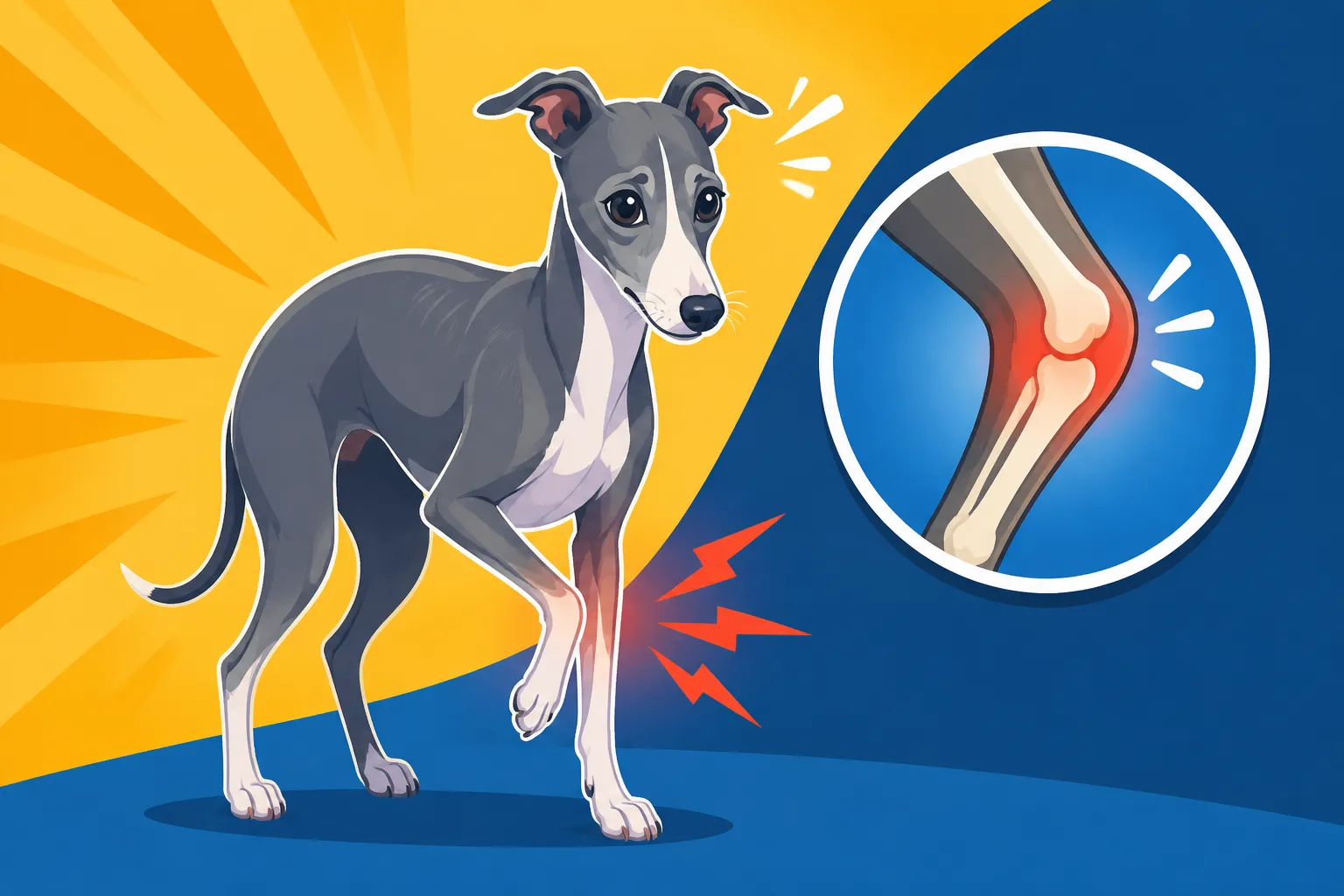
What makes patellar luxation particularly tricky is its often intermittent nature. You might observe your Italian Greyhound running along perfectly fine, then suddenly skip a step, hold one hind leg up for a few strides, and then seemingly "pop" it back into place and continue as if nothing happened. This sudden, temporary lameness can be quite alarming the first time you see it. However, in more severe cases or if the kneecap remains dislocated, the limp will be continuous and the pain more pronounced. It's important to understand Patellar Luxation in an Italian Greyhound and recognize the Signs an Italian Greyhound's Kneecap Slips so you can get appropriate veterinary assessment.
Other Less Common but Urgent Causes
Beyond the big three of fractures, sprains, and luxations, other acute incidents can cause a sudden limp. These might include:
- Puncture Wounds or Foreign Objects: A sharp stick, a piece of glass, or even a thorn can become embedded in your Iggy's paw pad, causing immediate pain and limping. Inspecting their paws carefully, especially after walks, is crucial.
- Nail Injuries: A torn, broken, or ingrown nail can be excruciating. If the nail is torn close to the quick, it can bleed profusely and cause significant pain, leading to a sudden limp.
- Insect Stings or Bites: A bee sting or spider bite on a paw can cause rapid, localized swelling and pain, making your Iggy reluctant to put weight on the limb.
- Infections: While usually not as sudden, an infection in the paw or leg, sometimes stemming from an unnoticed cut or abrasion, can cause acute pain and limping as it flares up.
- Arthritis Flare-up: In older Italian Greyhounds, while arthritis is generally a chronic condition, a sudden increase in activity or a change in weather can sometimes trigger an acute flare-up, leading to a noticeable limp.
What to Do When Your Italian Greyhound Suddenly Limps
Seeing your Italian Greyhound suddenly limp is terrifying, but knowing how to respond can make a huge difference in their comfort and recovery. Your calm, swift actions are paramount.
Immediate First Steps at Home
The very first thing you need to do is stay calm. Panicking will only stress your Iggy further, making them more fearful and harder to handle. Take a deep breath. Your calm demeanor will reassure them, even if they are in pain. The next crucial step is to restrict their movement immediately. This means no more walking around, no jumping, and ideally, gentle placement into a crate or a small, confined area where they can't move much. Crate rest is often essential to prevent further injury or aggravation.
Once they are secure, you can attempt a very gentle visual inspection. Look for obvious signs of injury: Is there any bleeding? Any visible swelling? Is the leg held at an unnatural angle? Do not try to palpate (feel) the leg extensively if they are showing signs of severe pain, vocalizing, or trying to snap. If it's a fracture, any manipulation could cause more damage and immense pain. Never try to "set" a bone or force the leg into a different position. Also, under no circumstances should you give your Italian Greyhound human pain medication; many common over-the-counter drugs are toxic to dogs.
When to Seek Emergency Veterinary Care
There are clear scenarios where immediate emergency veterinary care is not just recommended, but absolutely essential. If you suspect a fracture – meaning there's severe pain, the leg is dangling or at an odd angle, or your Iggy cannot bear any weight whatsoever – you need to get to an emergency vet right away. Time is critical in these situations.
Other red flags for emergency care include rapid swelling, visible open wounds, or if your Italian Greyhound is crying out continuously or showing other signs of extreme distress. If the limping is sustained for more than a couple of hours and shows no signs of improvement, it’s best to err on the side of caution and seek professional help. Remember that Signs an Italian Greyhound Has Broken a Leg aren't always dramatic; sometimes they will still try to put some weight on it, but the pain is evident. Swift action can prevent complications and improve recovery outcomes. Emergency vet visits can be expensive, often costing hundreds to thousands of dollars, particularly for something like a fracture requiring surgery. This is where a robust pet insurance policy, like those offered by Healthy Paws, truly proves its worth, helping to cover unexpected and substantial medical bills.
Preparing for the Vet Visit and Diagnosis
Once you've determined that a vet visit is necessary, careful preparation is key. Gently place your Italian Greyhound in a carrier or wrap them in a blanket to provide support and minimize movement during transport. If you have an Elizabethan collar, putting it on (if they will tolerate it without undue stress) can prevent them from licking or chewing a painful area, though this is less critical if a fracture is suspected.
When you arrive at the vet, be prepared to provide a detailed account of what happened. When did the limping start? What were they doing just before? What have you observed since? The more information you can give, the better. The veterinary team will conduct a thorough physical examination, carefully palpating the limb to identify the source of pain. They will almost certainly recommend X-rays to get a definitive diagnosis, especially if a fracture is suspected. Depending on the diagnosis, treatment might range from strict crate rest and pain medication for a sprain to surgical intervention for a fracture or severe luxation. Understanding What Fracture Repair Costs on an Italian Greyhound is vital, as it can be a significant financial undertaking. Be prepared for a recovery period that could involve weeks or even months of careful management, potentially including extended crate rest or physical therapy. Patience and diligent adherence to veterinary instructions are crucial for ensuring How Long an Italian Greyhound Takes to Heal a Fracture is as quick and complete as possible.
Here's a quick comparison of common limping causes:
| Cause | Onset | Pain Level | Key Symptoms | Immediate Action |
|---|---|---|---|---|
| Fracture | Sudden | Severe | Non-weight bearing, swelling, abnormal angle | Emergency vet immediately, restrict movement, do not touch limb. |
| Sprain/Strain | Sudden | Mild to Moderate | Limping, tenderness, slight swelling | Restrict movement, monitor, vet if pain persists >few hours or worsens. |
| Patellar Luxation | Intermittent | Variable | "Skipping" step, holds leg up, then fine | Monitor, vet for diagnosis/management, especially if persistent or painful. |
| Puncture/Paw Injury | Sudden | Moderate to Severe | Limping, visible wound, licking paw | Inspect paw carefully, clean minor wounds, vet for deep punctures or embedded objects. |
| Insect Sting/Bite | Sudden | Mild to Moderate | Swelling, limping, licking site | Cold compress, monitor for allergic reaction, vet if severe swelling or distress. |
Disclaimer
This article is intended for informational purposes only and does not constitute medical advice. Always consult a qualified veterinarian for any health concerns or before making any decisions about your Italian Greyhound's care.