What Dental Work a Rescue Italian Greyhound Usually Needs
Bringing a rescue Italian Greyhound into your home is an incredibly rewarding experience, full of love and a fresh start for a dog who truly needs it. However, it's also common for these sweet, fragile souls to arrive with a hidden problem that can cause a lot of pain and health issues down the line: dental disease. Often, rescue Iggys have never had proper dental care, and tackling their oral health can seem overwhelming. This guide will walk you through the typical dental work a rescue Italian Greyhound usually needs, explaining why it's so common, what to expect, and how to set your new family member up for a lifetime of better oral health.
The Unfortunate Reality: Why Rescue Iggys Often Face Dental Distress
It's a sad truth that many dogs in rescue situations come with a history of neglect or simply a lack of routine veterinary care. For Italian Greyhounds, this oversight often manifests most visibly and painfully in their mouths. Their delicate, crowded teeth are already a recipe for disaster without diligent care, and when that care is absent, problems escalate quickly.
A Lifetime of Neglect and Unknown History
When you adopt a rescue Italian Greyhound, especially an adult or senior one, their past dental care can be a complete mystery. You might not know if they've ever had their teeth brushed, if they've had any professional cleanings, or even if they've been fed a diet that might have contributed to dental issues. This unknown history means that many rescue Iggys arrive with years of plaque and tartar buildup, which can lead to severe gum disease and tooth loss. It's not uncommon for a new owner to discover a rescue Iggy's mouth is a mess, often hidden behind a brave face and a wagging tail.
Imagine taking in a sweet older Iggy named Bella, who just wants to cuddle. Her previous owners gave her up because they could no longer care for her, and while they loved her, routine vet visits for preventative care like dentals might have fallen by the wayside. When you take Bella for her first vet visit, the doctor might gently lift her lip and discover heavy brown tartar, red, inflamed gums, and maybe even a few loose teeth. This isn't a reflection on Bella; it's a testament to the silent progression of dental disease without intervention. This is why a thorough veterinary check-up, including a look in the mouth, is one of the first things a rescue Iggy needs.
Breed Predisposition to Dental Problems
Italian Greyhounds, despite their generally robust health in some areas, are particularly prone to dental issues. Their elegant, narrow muzzles are often too small to properly house all 42 adult teeth, leading to overcrowding. When teeth are packed too tightly, food particles and bacteria get trapped more easily, creating prime conditions for plaque and tartar to form rapidly. This anatomical predisposition means that even with good care, Italian Greyhounds can develop dental problems faster and more severely than many other breeds. Why an Italian Greyhound's Teeth Crowd explains this in more detail.
Consider a young rescue Iggy, perhaps only two or three years old, who might not have had a long history of neglect. Even at this relatively young age, if their teeth haven't been meticulously cared for, you could still find significant tartar buildup and early signs of gum disease. This isn't because they were necessarily abused or ignored, but simply because their breed genetics stack the odds against them. Their teeth are just that susceptible. This breed characteristic means that dental care isn't a "nice-to-have" but an absolute necessity for an Italian Greyhound's well-being throughout their life.
The Cycle of Pain and Infection
Untreated dental disease is far more than just bad breath or cosmetic issues. It's a source of chronic pain and a gateway for systemic infections. Bacteria from the mouth can enter the bloodstream through inflamed gums, traveling to vital organs like the heart, kidneys, and liver, causing serious secondary health problems. Many rescue Iggys have been silently suffering with this pain for months or even years, masking it with their gentle demeanor.
A dog with severe dental pain might become withdrawn, reluctant to eat hard kibble, or even shiver more than usual due to the discomfort. You might notice they chew on one side of their mouth, drop food, or become head-shy when you try to pet them. Their chronic pain can also make them less playful or affectionate, leading to misunderstandings about their personality. Addressing their dental health isn't just about cleaning their teeth; it's about alleviating constant suffering and preventing life-threatening conditions. When you finally get their teeth cleaned and infected teeth extracted, you'll often see a remarkable transformation in their overall demeanor and energy levels, as if a huge burden has been lifted. How Dental Disease Shortens an Italian Greyhound's Life elaborates on these serious health implications.
Common Dental Woes in Adopted Italian Greyhounds
When you finally get your rescue Iggy in for their first comprehensive veterinary dental exam, your vet will likely outline a few common issues they see in the breed, especially those with an unknown history. It's important to be prepared for this conversation and understand what each problem entails.
Accumulation of Tartar and Plaque
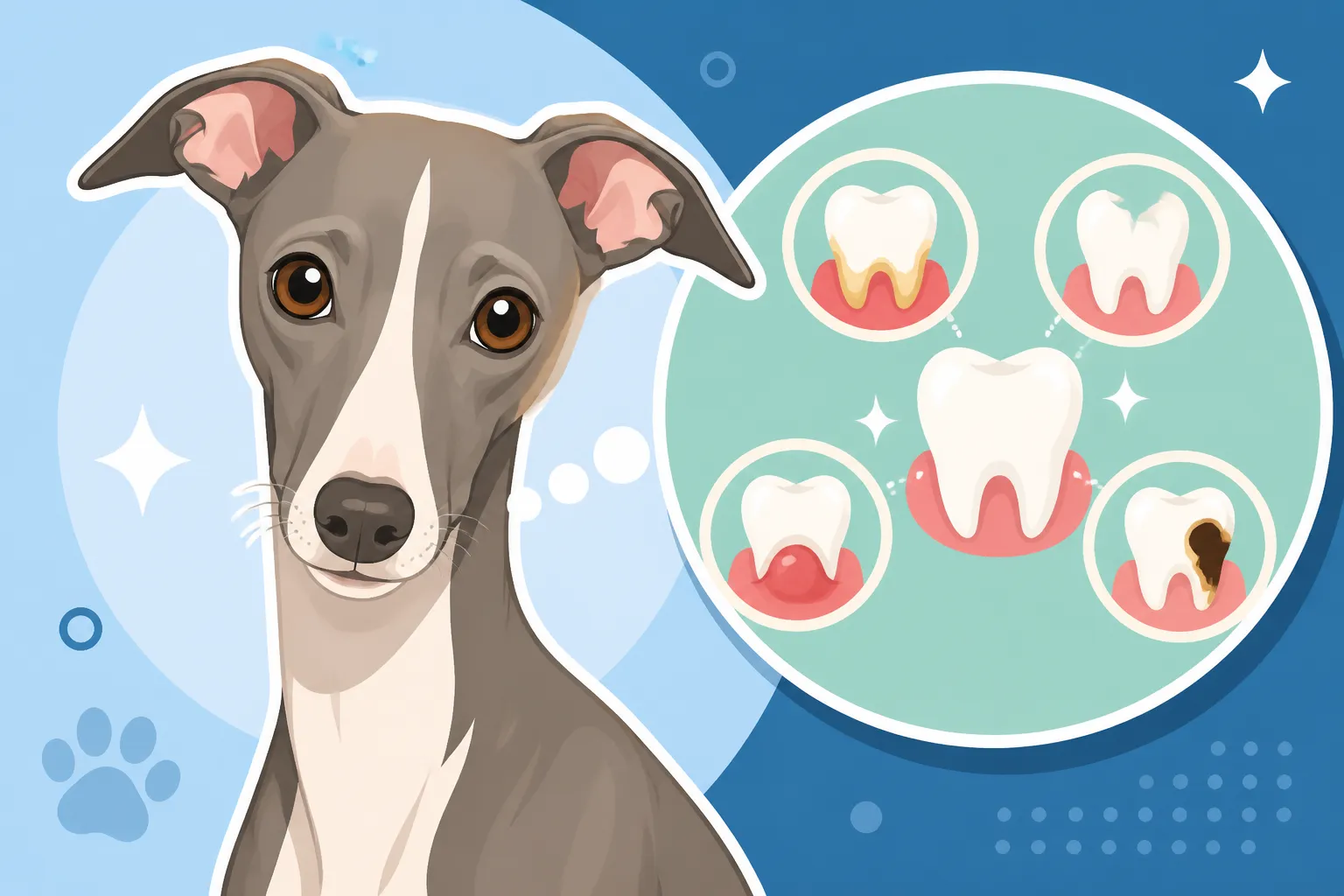
This is almost a given for any rescue Italian Greyhound without a documented history of regular dental cleanings. Plaque, a sticky film of bacteria, constantly forms on teeth. If not removed daily through brushing, it hardens into tartar (calculus), which is a rough, porous substance that adheres strongly to the tooth surface. Tartar cannot be brushed away; it requires professional scaling by a veterinarian.
Heavy tartar buildup acts like a magnet for more bacteria, pushing the gums away from the teeth and creating pockets where infection thrives. It often appears as a yellow, brown, or even black crust, especially on the outside surfaces of the upper canine teeth and molars. While it might look "just cosmetic" to an untrained eye, this buildup is the foundation of much more serious disease. Many new rescue owners are shocked by how quickly tartar can accumulate, and how much there is in their new dog's mouth.
Gingivitis and Periodontal Disease
Gingivitis is the inflammation of the gums, often the first stage of periodontal disease. It's reversible with professional cleaning and good home care. You'll see gums that are red, swollen, and might bleed easily. However, in many rescue Iggys, gingivitis has already progressed to full-blown periodontal disease, where the supporting structures of the teeth (gums, ligaments, and bone) are being destroyed. Periodontal Disease Is the Italian Greyhound's Most Common Diagnosis is a vital read on this topic.
Periodontal disease is categorized into stages, with Stage 1 being gingivitis and Stage 4 involving severe bone loss, deep pockets, and loose teeth. In advanced cases, the infection can be so deep that it reaches the jawbone, leading to jaw fractures during extractions or even spontaneously. This is why a vet must perform radiographs (X-rays) under anesthesia to fully assess the extent of the disease below the gumline, as what you see on the surface is often just the tip of the iceberg. Your vet will explain that simply cleaning the visible tartar isn't enough; the hidden infection needs to be addressed.
Fractured or Missing Teeth
It's not unusual for rescue Italian Greyhounds to have fractured or missing teeth. Fractures can occur from chewing on inappropriate hard objects, trauma, or even due to severe decay weakening the tooth structure. A fractured tooth, especially if the pulp (nerve) is exposed, is extremely painful and can lead to infection that spreads to the root and jawbone.
Missing teeth are also common, either due to previous extractions (hopefully by a vet) or because they fell out due to advanced periodontal disease. Sometimes, they're simply broken off at the gumline, leaving a retained root that can become a source of ongoing infection and pain. A vet will meticulously probe each tooth and take X-rays to identify these hidden issues. Finding a broken tooth or a retained root during a dental procedure is a common scenario, and it's essential to address these to prevent further pain and infection. You might not even realize your Iggy has a problem until the vet finds it, as dogs are masters at hiding discomfort.
Oral Pain and Behavioral Changes
Living with constant oral pain can profoundly impact an Italian Greyhound's quality of life and even their behavior. They might shy away from affection that involves touching their head or muzzle, become irritable, or even snap if their mouth is accidentally bumped. Eating can become a chore, with many Iggys preferring softer foods or even eating on one side of their mouth. Some might develop a picky eating habit not out of fussiness, but due to pain.
When your rescue Iggy undergoes dental work and has diseased or painful teeth removed, you might witness a complete personality shift. They could become more outgoing, playful, and affectionate, simply because they are no longer in constant discomfort. This transformation is one of the most heartwarming aspects of providing dental care for a rescue dog, highlighting just how much they were suffering in silence. It truly emphasizes that addressing dental pain is about improving their entire well-being.
Navigating the Dental Treatment Process
Getting dental work done for your rescue Italian Greyhound is a significant undertaking, but it's one of the most impactful things you can do for their health. The process typically involves several stages, all designed to ensure their safety and provide the most thorough treatment possible.
Initial Veterinary Assessment and Diagnostics
Your journey begins with a comprehensive physical exam with your veterinarian. They'll perform a conscious oral exam, which means they'll lift your Iggy's lips and have a preliminary look at their teeth and gums without sedation. This gives them a general idea of the severity of the problem. However, this is just the start. To truly understand the extent of the dental disease, your vet will need to perform bloodwork and full mouth dental X-rays under anesthesia.
The bloodwork is crucial to ensure your Italian Greyhound is a good candidate for anesthesia, checking their organ function to make sure they can safely process the anesthetic drugs. Why Anesthesia Is Handled Differently in an Italian Greyhound offers some important insights into this. Given the breed's delicate nature and minimal body fat, careful anesthetic protocols are essential. Once under anesthesia, the real work begins with dental X-rays, which reveal issues below the gum line that are impossible to see with the naked eye, such as root abscesses, bone loss, retained roots, and impacted teeth. These diagnostics are vital for planning the necessary procedures.
The Necessity of Anesthesia for a Thorough Cleaning
Many owners worry about anesthesia, and rightly so, especially with a small, delicate breed like an Italian Greyhound. However, a truly effective dental cleaning and examination absolutely must be done under general anesthesia. It’s not just about keeping your Iggy still; it's about protecting them and allowing the veterinary team to work effectively and safely.
Under anesthesia, the vet can perform a full and precise scaling of all tooth surfaces, both above and below the gum line, using specialized ultrasonic and hand instruments. This also allows for thorough charting of each tooth, identifying any pockets, fractures, or mobility. Without anesthesia, scaling below the gum line—where periodontal disease does the most damage—is impossible and painful. Moreover, it prevents your Iggy from accidentally inhaling bacteria-laden water or debris, which could lead to pneumonia. Why an Italian Greyhound's Dental Requires Anesthesia dives deeper into the safety considerations.
Cleaning, Scaling, and Extractions
Once your Italian Greyhound is safely under anesthesia and X-rays have been taken, the dental procedure moves into its active phase. This involves several steps:
- Supragingival and Subgingival Scaling: Using ultrasonic and hand scalers, the veterinary team removes plaque and tartar from above (supragingival) and below (subgingival) the gum line. This is where most of the harmful bacteria reside.
- Polishing: After scaling, the teeth are polished to smooth out any microscopic etches left by the scaling instruments. A smooth surface helps to prevent plaque from re-adhering quickly.
- Oral Surgery/Extractions: Based on the X-rays and a thorough oral exam, the vet will decide which teeth need to be extracted. Teeth that are severely diseased, fractured, or loose with significant bone loss will be carefully removed. This can sometimes be a surprise to owners who only saw external tartar. The vet might need to perform surgical extractions, which involve making an incision in the gum, removing some bone, and then stitching the gum back up. What Happens During an Italian Greyhound's Dental provides a good overview of the whole process.
- Flushing and Recovery: The mouth is thoroughly rinsed, and your Iggy is carefully monitored during recovery from anesthesia.
It's common for rescue Italian Greyhounds to need several teeth extracted, sometimes even a full mouth extraction in severe, older cases. While this might sound drastic, removing diseased teeth alleviates pain and eliminates sources of infection, dramatically improving your Iggy's health and comfort. They adapt remarkably well to eating with fewer teeth, especially if you feed them soft food, or perhaps high-quality fresh food like Ollie during their recovery and beyond.
Long-Term Dental Health for Your Rescue Iggy
Getting dental work done is a huge step, but it's just the beginning of ensuring your rescue Italian Greyhound lives a long, healthy life. Their breed predisposition means ongoing, diligent care is absolutely critical. Think of it as a fresh slate that you now need to protect.
Establishing a Consistent Home Care Routine
The single most effective thing you can do to prevent the rapid return of dental disease is to establish a consistent home care routine. And yes, for an Italian Greyhound, that means daily tooth brushing. It might sound daunting, especially with a dog new to your home, but it's truly essential. Start slowly, making it a positive experience with plenty of praise and high-value treats. Use a soft, small toothbrush designed for pets or even a finger brush, and pet-specific toothpaste. Never use human toothpaste, as it can be toxic. Brushing an Italian Greyhound's Teeth Every Day is your go-to guide for getting started.
Beyond brushing, you can explore other dental aids available on platforms like Chewy, such as dental wipes, oral rinses, or specialized dental diets. However, always remember that these are supplementary and do not replace brushing. The mechanical action of brushing is key to disrupting plaque before it hardens into tartar. Consistency is far more important than intensity; a gentle, quick brush every day is better than a vigorous one once a week.
Regular Professional Dental Cleanings
Even with the most diligent home care, due to their genetics and tiny mouths, most Italian Greyhounds will still need regular professional dental cleanings under anesthesia throughout their lives. For many, this could mean an annual cleaning, or perhaps every 18-24 months if their home care is exceptional and their disease progression is slow. Your veterinarian will advise you on the optimal schedule based on your Iggy's individual needs.
These routine cleanings allow your vet to address any new tartar buildup, monitor for signs of periodontal disease progression, and take new X-rays as needed to catch problems early. Catching issues early means less invasive procedures and often fewer extractions down the line. It's an investment in their long-term health and prevents the buildup of pain and infection that your rescue Iggy likely experienced before finding you. Being prepared for these ongoing costs, perhaps with pet insurance from providers like Healthy Paws, can help manage the financial aspect of this crucial care. How Often an Italian Greyhound Needs a Dental Cleaning is an important read to set expectations.
Nutritional Support and Dental-Friendly Products
While no food can replace brushing, certain diets and products can play a supportive role in your Iggy's dental health. Look for dental-specific kibbles that are formulated to mechanically scrub the teeth as your dog chews, or contain ingredients that reduce plaque formation. However, be cautious with hard chews or bones, as Italian Greyhounds' delicate teeth can easily fracture on them. Soft chew toys or VOHC (Veterinary Oral Health Council) approved dental treats can be safer options.
For Italian Greyhounds who have had multiple extractions, especially if they have few teeth left, a soft diet is often more comfortable and practical. High-quality wet food or fresh food options, like those offered by Ollie, can be excellent choices. These ensure they get proper nutrition without having to struggle with hard kibble, which can be painful or impossible for a dog with a compromised mouth. Discuss food choices with your vet to ensure it meets both their nutritional and dental needs. How an Italian Greyhound Eats With No Teeth provides more tips for pups with fewer chompers.
No matter the state of your rescue Iggy's mouth when they arrive, know that you have the power to give them a pain-free future. It might take some effort and financial commitment upfront, but the transformation in their comfort and happiness will be immeasurable.
| Dental Issue | Description | Common in Rescue Iggys? | Typical Treatment | Long-term Management (Post-Treatment) |
|---|---|---|---|---|
| Plaque/Tartar Buildup | Sticky film (plaque) hardens into mineral deposits (tartar) on teeth. | Very Common | Professional scaling and polishing under anesthesia. | Daily brushing, dental rinses, VOHC-approved chews. |
| Gingivitis | Inflammation of the gums, often reversible. | Common | Professional cleaning, improved home care. | Daily brushing, regular vet checks. |
| Periodontal Disease | Destruction of tooth-supporting tissues (gums, bone) due to infection. | Very Common | Deep scaling, root planing, extractions, antibiotics. | Lifelong diligent home care, frequent professional cleanings. |
| Fractured Teeth | Broken teeth, potentially exposing the pulp. | Common | Extraction or root canal (less common for Iggys due to size). | Avoid hard chews, monitor play, regular oral exams. |
| Retained Roots/Impacted Teeth | Tooth roots left behind or teeth that failed to erupt, often infected. | Common | Surgical extraction of root/impacted tooth. | Regular dental X-rays to monitor remaining roots. |
| Oral Pain/Abscesses | Severe pain from infection in gums, teeth, or jawbone. | Very Common | Extraction of affected teeth, antibiotics, pain medication. | Treat underlying dental disease to prevent recurrence. |
Disclaimer
This article is for general informational purposes only and does not constitute professional advice. Laws, prices and regulations vary by location and change over time. Consult a qualified professional for guidance on your specific situation.