Whether a Rescue Italian Greyhound Is House Trained
One of the biggest worries new Italian Greyhound owners face is housetraining, and for good reason – these exquisite little sighthounds can be notoriously challenging! When you're considering bringing a rescue Italian Greyhound into your home, it's natural to hope they might come with some basic manners already in place, especially regarding their potty habits. This guide will dive deep into the realities of housetraining a rescue Italian Greyhound, helping you understand what to expect and how to set both of you up for success, regardless of their past.
The Housetraining Reality for Italian Greyhounds, Rescue or Not
Let's be brutally honest: Italian Greyhounds are often touted as one of the hardest breeds to housetrain. It's a widely known frustration among owners, and it's not because they aren't intelligent or eager to please. It's a combination of their unique physiology, sensitive nature, and a few environmental quirks that make it a genuine challenge. This truth applies whether you bring home a puppy from a reputable breeder or an adult from a rescue.
Why Iggies Are Notoriously Hard to Housetrain
First off, Italian Greyhounds have famously tiny bladders. You might feel like you're taking your little friend out every fifteen minutes, especially a puppy, and still finding puddles. This isn't an exaggeration; their small size means they simply can't hold it for long periods. On top of that, Iggies have incredibly thin skin and very little body fat, making them highly susceptible to cold. Imagine stepping barefoot onto freezing pavement in the dead of winter—that's how an Italian Greyhound feels about venturing out in chilly weather. Rain? Forget about it. Many will actively refuse to go outside in anything less than perfect conditions. This inherent aversion to cold and wet weather can undo even the most diligent housetraining efforts, leading to them seeking relief indoors. Why an Italian Greyhound Refuses to Go Out in Rain is a real phenomenon you'll encounter.
Another factor is their subtle nature. Unlike some breeds that will sit by the door and bark or scratch to let you know they need to go, many Italian Greyhounds are incredibly quiet about it. They might give one little look in your direction, or perform a barely perceptible dance by the door, and if you miss it, they'll simply find a quiet corner to do their business. This isn't defiance; it's often just their polite, understated way of communicating. They also have a strong instinct to keep their den clean, which, ironically, can mean they try to hide their indoor accidents from you, making it harder to catch them in the act and redirect. Understanding Why an Italian Greyhound Is Slow to Housetrain means acknowledging these innate breed traits rather than blaming the dog.
The "Housetrained" Claim from a Rescue – What It Really Means
When a rescue organization describes an Italian Greyhound as "housetrained," it's crucial to understand that this often comes with caveats. "Housetrained" is a relative term, and what it means in one environment might not translate perfectly to another. For a rescue, it could mean the dog was reliably clean in its foster home, which had a very specific schedule, type of yard, or indoor potty setup. Or, it could mean the previous owner claimed the dog was housetrained, but perhaps they had a doggy door, or were simply very tolerant of indoor accidents.
The biggest challenge with any rescue dog, especially an Italian Greyhound, is the concept of regression in a new environment. Moving to a new home, even a loving one, is incredibly stressful for a dog. New sights, sounds, smells, people, and routines can cause even a perfectly housetrained dog to "forget" their manners temporarily. They might not understand where the designated potty spot is, or they might be too anxious to signal appropriately. The stress can manifest as accidents, even if they truly know better. So, while a rescue may have been housetrained in their foster home, assume you'll need to go back to basics for at least a few weeks, treating them like a puppy, to ensure a smooth transition. How Long Housetraining an Italian Greyhound Takes is a journey, not a sprint, especially with a rescue.
Common Housetraining Scenarios with Rescue Italian Greyhounds
Rescue Italian Greyhounds come from all sorts of backgrounds, and their previous living situations will heavily influence their housetraining needs. It's not a one-size-fits-all approach. Understanding their likely history can help you prepare for the specific challenges and tailor your training strategy.
The Puppy Mill Survivor or Shelter Dog
These are often the toughest cases, but also some of the most rewarding. Italian Greyhounds rescued from puppy mills or overcrowded shelters may have lived in conditions where they had no choice but to eliminate in their living space. This means they often haven't developed the natural instinct to keep their "den" clean. They've learned that urinating or defecating wherever they are is normal, simply because they never had an alternative. This isn't a reflection of their intelligence; it's a reflection of their environment.
For these Iggies, you're not just teaching them where to go; you're teaching them that there's a designated place to go, and that holding it is an option. This requires immense patience and a complete reset. You'll need to treat them exactly like a very young puppy, with constant supervision, extremely frequent potty breaks, and lavish praise for any success outdoors. They've often missed critical periods for learning appropriate behavior, so their concept of a "potty area" may need to be built from the ground up. This is where options like Litter Box Training an Italian Greyhound or setting up Whether Indoor Pads Work for an Italian Greyhound can be incredibly useful as temporary or even permanent solutions, especially if outdoor conditions are frequently inhospitable.
The Owner Surrender with a "Known History"
Sometimes, a rescue Italian Greyhound comes with a story from their previous owner. They might say, "He's housetrained, but he has accidents when it rains," or "She's mostly good, but sometimes marks when visitors come over." This "known history" can be a double-edged sword. On one hand, you have some insight into potential triggers or areas of weakness. On the other, the previous owner's definition of "housetrained" might have been very lenient, or they might have unknowingly reinforced bad habits.
For these dogs, you're often dealing with existing habits that need to be broken and replaced with new ones. This requires consistent management and vigilant observation. If the previous owner mentioned rain being an issue, you know to immediately begin implementing strategies for inclement weather, like sweaters and covered outdoor areas, or a designated indoor potty spot. If marking was an issue, addressing potential anxiety or underlying medical conditions with your vet will be crucial, alongside strict management. It’s also vital to remember that dogs don't generalize well; just because they knew the rules in one home doesn't mean they'll immediately apply them in yours. Every new home is a completely different landscape to navigate.
The Foster Home Success Story
These are often the most promising scenarios. An Italian Greyhound that has spent time in a dedicated foster home has had the benefit of a stable environment, consistent routines, and often, specific housetraining efforts by experienced foster parents. Foster parents are usually very good at assessing a dog's true housetraining status and can provide detailed insights into their habits, signals, and preferences.
However, even with a successful foster home background, vigilance is key in your home. The layout is different, the smells are different, and your schedule, even if similar, isn't identical. Your rescue Iggy will still need time to adjust and understand your household's specific rules. Continue the routines the foster parent established, if possible. Ask about the type of food they were eating – sometimes a new diet can upset a sensitive stomach and lead to accidents. Even an Iggy that was clean for months in a foster home might have a few mishaps during the first week or two in their forever home. It's not a failure on their part or yours, but a normal part of the adjustment process.
Strategies for Success: Housetraining Your Rescue Italian Greyhound
No matter your rescue Italian Greyhound's history, the fundamental principles of successful housetraining remain the same: consistency, patience, positive reinforcement, and understanding the unique needs of the breed. Don't get discouraged if progress isn't immediate; this is a marathon, not a sprint.
Setting Up for Success from Day One
The moment your Italian Greyhound walks through your door, your housetraining plan should be in full effect.
- Establish a Schedule: This is paramount. Take your IG out frequently – first thing in the morning, last thing at night, after waking from naps, after playing, after eating and drinking. Keep a log if it helps you track patterns. For many Italian Greyhounds, especially those with small bladders, you might need to aim for hourly outings initially, gradually extending the time as they become more reliable. How Often an Italian Greyhound Puppy Needs Out offers a good baseline, even for an adult rescue initially.
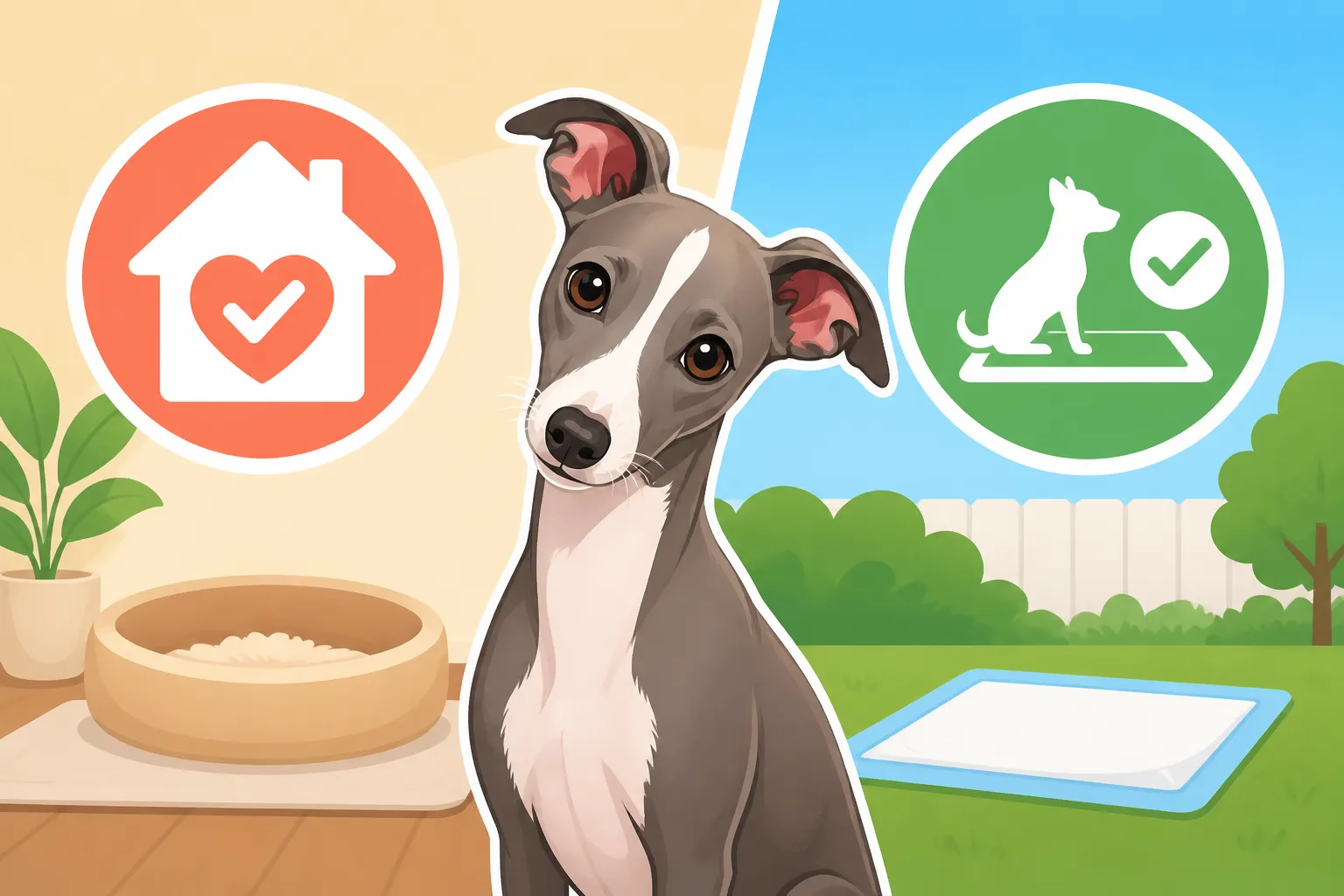
- Designated Potty Area: Choose a specific spot in your yard (or indoor potty area) where you consistently take your dog. This helps them associate that location with elimination. Always go to this spot, wait patiently, and avoid playing until business is done.
- Supervision, Supervision, Supervision: This cannot be stressed enough. When your Italian Greyhound is not crated, they should be either on a leash with you (even indoors) or closely supervised in the same room. This allows you to catch them in the act of needing to go, and immediately redirect them outside.
- Crate Training: A well-sized crate (just big enough to stand up, turn around, and lie down comfortably) can be an invaluable tool. Dogs generally do not like to soil their sleeping area. Use the crate for short periods when you can't actively supervise. Remember, an Italian Greyhound has a small bladder, so "short periods" means just that. Never use the crate as punishment. For more on this, check out Crating an Italian Greyhound Overnight.
- Indoor Potty Options: Given their aversion to cold and wet, having an indoor potty option can be a lifesaver, particularly in winter or rainy seasons. This could be pee pads, a real grass patch, or even a litter box designed for dogs. Setting Up an Indoor Bathroom for an Italian Greyhound is often a non-negotiable for many Iggy owners. Brands like Chewy offer a wide variety of indoor potty solutions, from simple pads to more elaborate grass systems.
- Clean Up Thoroughly: Use an enzymatic cleaner specifically designed for pet accidents. Regular household cleaners might remove the smell for humans, but dogs can still detect residual odors, which can encourage them to soil the same spot again.
Patience, Consistency, and Positive Reinforcement
Italian Greyhounds are sensitive souls. They don't respond well to harsh corrections or yelling. In fact, shouting at an Iggy for an accident can be counterproductive; it might just teach them to hide their accidents from you or to be fearful of eliminating in front of you, making housetraining even harder. Why Punishment Makes an Italian Greyhound Hide to Go is a critical concept to understand for this breed.
Instead, focus entirely on positive reinforcement. When your Italian Greyhound eliminates in the correct spot, immediately praise them enthusiastically and offer a high-value treat. Make it a party! This creates a positive association with going potty in the right place. Don't dwell on accidents. If you catch them in the act indoors, calmly interrupt them ("Oops! Outside!"), pick them up, and rush them to their designated potty area. If they finish outside, great! If not, just clean up the mess and resolve to supervise more closely next time.
Consistency is the bedrock of all successful training. Everyone in the household must follow the same rules, use the same cues, and adhere to the same schedule. Inconsistency will only confuse your Italian Greyhound and prolong the housetraining process. Remember, they want to please you, but they need clear guidance.
Addressing Environmental Factors
Beyond the training itself, adjusting your environment to suit your Italian Greyhound's specific needs will make a world of difference in housetraining success.
- Wardrobe for Weather: Invest in a good collection of sweaters and coats. Even indoors, if your home runs cool, your Iggy might shiver, which distracts from their ability to focus on potty needs. When it's cold or wet outside, a properly fitted coat can make the difference between a successful potty trip and a stubborn refusal. You might even consider booties for snow and ice to protect their delicate paws. How Cold Weather Undoes an Italian Greyhound's Training is a common story for Iggy owners.
- Outdoor Shelter: If you have a yard, consider a covered area for your Iggy to do their business. A small awning or even an umbrella over their potty spot can offer enough protection from rain or snow to encourage them to go outside.
- Regular Bladder Emptying: Make sure their last potty trip at night is as late as possible, and their first one in the morning is as early as possible. For some Iggies, this might mean a quick midnight trip if they seem restless. Consider the implications of Why an Italian Greyhound Has a Small Bladder when planning your routine.
When to Consider Professional Help or Veterinary Consultation
Sometimes, despite your best efforts, housetraining issues persist. This isn't a sign of failure; it's a signal to investigate further. There are times when professional guidance, either from a vet or a certified dog trainer, is absolutely warranted.
Persistent Marking or Submissive Urination
If your Italian Greyhound is consistently marking indoors, especially after being neutered/spayed, or if they urinate when excited, fearful, or greeting people (submissive urination), it's time for a vet visit. These behaviors can be linked to underlying medical conditions like urinary tract infections, bladder stones, or hormonal imbalances. It's always best to rule out physical causes first. Additionally, anxiety or insecurity can manifest as marking. Why an Italian Greyhound Marks Indoors can have multiple roots beyond simple housetraining.
If medical issues are ruled out, a behaviorist or trainer can help address anxiety-related urination or persistent marking with behavior modification techniques. This might involve environmental changes, calming supplements, or specific training protocols to build confidence and reduce stress.
Working with a Certified Professional Dog Trainer
If you've hit a wall, feel overwhelmed, or simply aren't seeing progress despite consistent effort, don't hesitate to reach out to a certified professional dog trainer or a veterinary behaviorist. Look for someone who has experience with sighthounds or with small, sensitive breeds. They can observe your Italian Greyhound in your home environment, identify subtle cues you might be missing, and offer tailored strategies that work for your specific dog and lifestyle.
Sometimes, an outside perspective is all it takes to break through a plateau. A good trainer won't judge you or your dog but will provide compassionate, effective solutions. They can help you refine your communication, manage the environment, and build a stronger, more trusting relationship with your rescue Italian Greyhound, leading to lasting housetraining success. Moreover, some pet insurance plans, like those offered by Healthy Paws, may cover behavioral consultations recommended by a vet, which can ease the financial burden of seeking specialized help. For dogs that require specific dietary support due to stress or other factors, brands like Ollie offer customizable meal plans that can be gentle on sensitive stomachs and support overall well-being.
| Scenario | Common Housetraining Challenges | Recommended Approach |
|---|---|---|
| New Puppy | Small bladder, frequent accidents, learning where to go. | Extreme frequency of potty breaks, constant supervision, crate training, positive reinforcement. |
| Adult Rescue (Unknown) | Previous habits unknown, stress of new home, regression likely. | Treat like a puppy (back to basics), strict schedule, supervision, crate, positive reinforcement. |
| Puppy Mill/Shelter Survivor | No concept of "den clean," may eliminate anywhere. | Complete reset, focus on teaching the concept of designated potty, indoor options crucial, immense patience. |
| Owner Surrender (Known) | Specific triggers (rain, fear), existing bad habits. | Address known triggers directly, consistent management, vet check for underlying issues, positive reinforcement. |
| Foster Home Success | Adjustment to new environment, minor regression possible. | Follow foster home routines, initial close supervision, reinforce good habits, consistent schedule. |
Housetraining an Italian Greyhound, especially a rescue, is a journey. There will be good days and frustrating days. But with patience, understanding, and the right strategies, you can absolutely achieve success and enjoy a clean, happy home with your beloved Iggy.
Disclaimer
This article is for general informational purposes only and does not constitute professional advice. Laws, prices and regulations vary by location and change over time. Consult a qualified professional for guidance on your specific situation.