Whether Insurance Covers an Italian Greyhound’s Broken Leg
The sheer panic of seeing your beloved Italian Greyhound suddenly yelp, collapse, and then hold up a dangling, impossibly fragile leg is a nightmare many of us Italian Greyhound parents unfortunately know too well. It’s an instant, gut-wrenching dread, quickly followed by the terrifying realization of the massive veterinary bills that are about to hit. This guide aims to demystify whether pet insurance can actually be a lifeline when your Italian Greyhound suffers a broken leg, giving you peace of mind in those stressful moments.
The Unfortunate Reality: Italian Greyhounds and Broken Legs
Let's be brutally honest: Italian Greyhounds are notoriously fragile. Their delicate, finely-boned structure, combined with their incredible athleticism and sometimes reckless abandon, makes them uniquely susceptible to orthopedic injuries. It’s not a matter of if your Italian Greyhound might break a leg, but often when. This isn't fear-mongering; it's a realistic understanding of the breed we adore.
Why an Italian Greyhound's Leg Bones Break So Easily
The anatomy of an Italian Greyhound's leg is simply not built for impact. Their long, slender bones, particularly the radius and ulna in the forearm, are remarkably thin, almost like bird bones. They don't have the heavy, dense bone structure you'd find in many other breeds. When you combine this inherent delicacy with their high-energy bursts, their love for leaping from furniture, and their tendency to get underfoot, you have a perfect storm for fractures. Many owners sadly learn that Why an Italian Greyhound's Radius Is the Bone That Breaks because it's the most common site for these devastating breaks.
Beyond the bone structure itself, the surrounding muscle and fat provide minimal cushioning. A more muscular or stocky breed might absorb an impact better, but an Italian Greyhound often lacks that protective layer, making the bones more exposed to direct force. This means even seemingly minor incidents can lead to significant injury.
Common Scenarios Leading to Fractures
It's heartbreaking how easily these fractures can occur. We're not talking about extreme sports or high-impact activities. Often, it's everyday occurrences in a typical home. A common culprit is a jump off the sofa that goes wrong, particularly if the landing is awkward or onto a hard surface. You might be surprised to learn that The Jump Off the Sofa That Breaks an Italian Greyhound's Leg is a leading cause.
Other scenarios include:
- Being dropped: Even from a short height, if an Italian Greyhound is dropped or jumps from someone's arms, the impact can be severe. This is why Why Children Should Not Carry an Italian Greyhound is such crucial advice.
- Rough play: While Italian Greyhounds love to play, roughhousing with larger, heavier dogs can easily result in accidental injury. A misplaced paw or an enthusiastic tumble can have dire consequences.
- Falls from stairs or heights: A misstep on stairs, or even a fall from a bed or counter (yes, they can climb!), can lead to fractures.
- Slipping on smooth floors: Hardwood or tile can be treacherous for their delicate gait, especially during a sudden burst of zoomies.
These are not uncommon accidents, but rather risks that are part and parcel of Italian Greyhound ownership. The unfortunate truth is that for many, A Broken Leg Is the Emergency Every Italian Greyhound Owner Fears.
Understanding Pet Insurance and Accident Coverage
When you're reeling from the shock of a broken leg, the last thing you want to worry about is how you're going to pay for it. This is precisely where pet insurance steps in. It's designed to help mitigate the financial burden of unexpected veterinary care, which for an Italian Greyhound owner, often means dealing with a fracture.
What "Accident-Only" Policies Entail
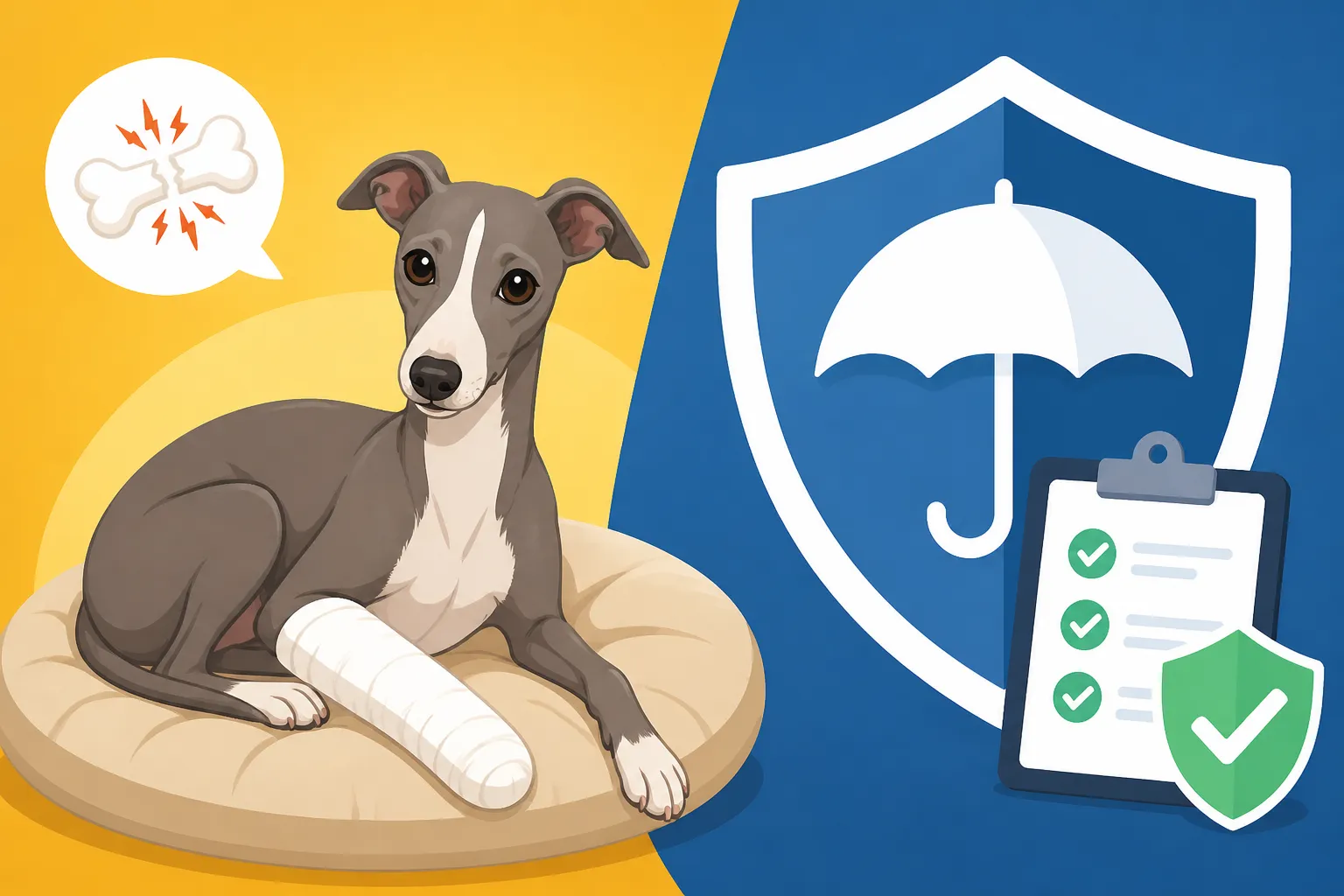
Accident-only pet insurance plans are exactly what they sound like: they provide coverage exclusively for injuries that result from unforeseen accidents. For an Italian Greyhound owner, this type of policy can be particularly appealing, given the breed's propensity for fractures. These plans typically cover things like:
- Broken bones: This is the primary concern for Italian Greyhounds, and accident-only plans are designed to cover the diagnostics, surgery, and follow-up care.
- Cuts and lacerations: Their thin skin can tear easily, and accident-only plans often cover stitches and wound care.
- Ingestion of foreign objects or toxins: If your curious Italian Greyhound eats something it shouldn't, these plans can cover emergency treatment.
- Car accidents or other trauma: More severe, but still accidental, injuries would also fall under this umbrella.
The key benefit of accident-only plans is that they are generally more affordable than comprehensive policies. For many, it's a way to safeguard against the most common and expensive emergency an Italian Greyhound faces. However, it's crucial to remember they won't cover illnesses, chronic conditions, or routine wellness care.
Comprehensive vs. Accident-Only Plans
Deciding between a comprehensive plan and an accident-only plan is a significant choice for any pet owner, but especially for those with an Italian Greyhound. Here's a breakdown to help you weigh your options:
| Feature | Accident-Only Plan | Comprehensive (Accident & Illness) Plan |
|---|---|---|
| Coverage | Accidental injuries only (fractures, cuts, toxic ingestion, etc.) | Accidental injuries and illnesses (infections, chronic diseases, cancer, etc.) |
| Cost | Generally lower monthly premiums | Higher monthly premiums |
| Peace of Mind | Protection against high-cost emergencies like broken bones | Protection against all unexpected vet bills, both injury and illness |
| Best For | Owners primarily concerned with accidental injuries, those on a tighter budget | Owners wanting full protection, including for breed-specific illnesses like Periodontal Disease Is the Italian Greyhound's Most Common Diagnosis or Epilepsy and Thyroid Disease in an Italian Greyhound |
| Typical Add-ons | N/A | Wellness plans for routine care (optional) |
For an Italian Greyhound, a comprehensive plan often makes sense because while broken legs are a huge concern, they are also prone to dental issues and certain eye conditions. However, if your budget is tight, an accident-only plan is still a very smart investment purely for the fracture risk. Many owners feel a huge sense of relief knowing that the financial sting of What Fracture Repair Costs on an Italian Greyhound would be lessened.
Navigating the Nuances of Coverage for Broken Legs
Simply having pet insurance isn't always enough; understanding the fine print is vital. Policies vary wildly between providers, and what one company covers, another might exclude or handle differently. This is especially true when it comes to a common, yet expensive, issue like a broken leg in an Italian Greyhound.
Waiting Periods and Their Impact
Almost every pet insurance policy comes with a "waiting period." This is a specific amount of time you must wait from the policy's effective date before certain types of coverage kick in. For accidents, this period is often much shorter than for illnesses – sometimes as little as 24-48 hours, but it can be longer, like 14 days, depending on the provider.
The critical takeaway here is that any injury that occurs during the waiting period will not be covered. Imagine signing up for a policy today, and your Italian Greyhound breaks its leg tomorrow. Even if you have accident coverage, if it happens within a 24-hour waiting period, you're on the hook for the full cost. This is why it’s so important to purchase pet insurance before you need it. Don't wait until you've brought home your new Italian Greyhound puppy – consider it a priority as soon as they join your family. The younger their bones are, the higher the risk, as The Age an Italian Greyhound Is Most Likely to Break a Leg is often surprisingly young.
Deductibles, Reimbursement Rates, and Annual Limits
These three terms are the cornerstone of how pet insurance actually pays out. Understanding them is key to managing your expectations and your budget.
- Deductible: This is the amount you, the pet owner, must pay out of pocket before your insurance company starts reimbursing you. Think of it like the deductible on your car or health insurance. Most policies offer a range of deductibles, from a lower amount which typically means a higher monthly premium, to a higher amount with a lower premium. For an Italian Greyhound, knowing that What an Italian Greyhound's Emergency Vet Visit Costs can be substantial, choosing a deductible you're comfortable with is crucial.
- Reimbursement Rate: After you've met your deductible, this is the percentage of the remaining vet bill that the insurance company will pay. Common reimbursement rates are 70%, 80%, or 90%. So, if your vet bill is, say, $5,000 for a fracture repair and you have an 80% reimbursement rate after a $500 deductible, the insurance would pay 80% of ($5,000 – $500 = $4,500), which is $3,600. You'd pay the deductible plus the remaining 20% of the $4,500 ($900), for a total of $1,400.
- Annual Limit: This is the maximum amount your insurance company will pay out in claims over a 12-month policy period. Limits can range from a few thousand dollars to unlimited. Given that complex fracture surgeries, follow-up care, and physical therapy can be very expensive, especially if pins loosen in an Italian Greyhound's bone and require further intervention, a high annual limit or even an unlimited one is a strong consideration for an Italian Greyhound.
It’s essential to review these figures carefully when comparing plans from providers like Healthy Paws or Chewy, as they directly impact your out-of-pocket expenses during an emergency.
Pre-Existing Conditions
This is perhaps the most significant hurdle when it comes to pet insurance coverage, and it's vital for Italian Greyhound owners to grasp. A "pre-existing condition" is any illness or injury that showed symptoms or was diagnosed before your coverage started or during your waiting period. Pet insurance policies almost universally exclude pre-existing conditions from coverage.
What does this mean for an Italian Greyhound's broken leg?
- If your Italian Greyhound breaks its leg before you get insurance or during the waiting period, that specific fracture (and any related issues with that leg) will be considered pre-existing and likely won't be covered. This highlights the urgency of getting a policy in place early.
- If your Italian Greyhound has a history of previous fractures on a specific leg, a new fracture on that same leg might also be deemed a pre-existing condition, even if it's a new break. This is where it gets tricky, and policy language needs careful examination. Some policies might cover a new break if it's unrelated to the old one (e.g., a different bone, or a completely different type of trauma), but many will err on the side of caution and consider the limb compromised. Understanding Whether an Italian Greyhound Breaks the Same Leg Twice is important here, as it can influence future claims.
The best defense against pre-existing condition exclusions is proactive enrollment. Insure your Italian Greyhound as a puppy, when they are less likely to have any documented injuries or illnesses. This ensures that any future accidents, including the dreaded broken leg, are much more likely to be covered.
The Claim Process for an Italian Greyhound's Fracture
Dealing with a broken leg is incredibly stressful, and the thought of navigating insurance claims on top of it can feel overwhelming. However, understanding the basic process can make it a little less daunting when you're in the thick of it. Most pet insurance companies, including popular ones like Ollie, strive to make the process as straightforward as possible.
Documenting the Injury and Treatment
The cornerstone of a successful insurance claim is thorough documentation. Your vet's records are paramount here.
- Immediate Vet Visit: The moment you suspect a broken leg (look for Signs an Italian Greyhound Has Broken a Leg), get your Italian Greyhound to the vet immediately. Don't delay. The initial examination, diagnosis (including X-rays), and treatment plan form the essential evidence for your claim.
- Detailed Records: Ensure your veterinarian documents everything comprehensively. This includes:
- The date and time of the injury, if known.
- A clear description of how the injury occurred (e.g., "fell off sofa," "awkward landing").
- Physical exam findings.
- Radiograph (X-ray) reports confirming the fracture.
- The specific diagnosis (e.g., "distal radial and ulnar fracture").
- The recommended treatment plan (e.g., "surgical repair with plating," "external fixator").
- All invoices for consultations, diagnostics, medications, surgery, and follow-up appointments.
- Communication with Specialists: If your Italian Greyhound needs to see a specialist veterinary surgeon – which is highly recommended, as Finding a Surgeon Who Has Plated an Italian Greyhound is vital for success – ensure all records are seamlessly transferred and updated. The specialist's reports will be crucial for covering the high costs associated with their expertise.
Keep copies of everything for your own records, just in case. A well-documented history helps prevent delays or disputes with your insurance provider.
Submitting Your Claim
Once your Italian Greyhound has received initial treatment, it's time to submit your claim. While the exact steps might vary slightly by provider, the general process is quite similar:
- Obtain Claim Form: Most insurance companies offer online portals, mobile apps, or downloadable claim forms. Some vets may even submit claims directly on your behalf, which is a wonderful time-saver.
- Fill Out the Form Accurately: Provide all requested information, including your policy number, your Italian Greyhound's details, the date of injury, and a brief description of the incident.
- Attach Documentation: Upload or mail copies of all relevant veterinary invoices and medical records (X-rays, surgical reports, follow-up notes). This is where your diligent record-keeping pays off.
- Submit: Send in your claim. Many companies process claims quickly, often within a few days to a couple of weeks. You'll typically be reimbursed directly for the covered amount.
Remember that pet insurance operates on a reimbursement model: you pay the vet first, and then the insurance company pays you back. This means you need to have funds available upfront to cover the costs, even if you have insurance. This is why having an emergency fund is so important, as discussed in Budgeting for an Italian Greyhound's Broken Leg Before It Happens.
Choosing the Right Pet Insurance for Your Italian Greyhound
With so many pet insurance options available, finding the "right" one can feel like a daunting task. However, for an Italian Greyhound owner, there are specific considerations that can help narrow down the field and ensure you're adequately covered for their unique vulnerabilities. It’s not just about finding any policy; it’s about finding the best policy for your specific breed.
Questions to Ask Potential Providers
When you're comparing pet insurance companies, don't be afraid to ask detailed questions. This isn't just a generic dog; it's an Italian Greyhound with specific needs. Here are some questions tailored for our delicate companions:
- "What are your specific waiting periods for accident coverage, especially for orthopedic injuries?" Some companies might have longer waiting periods for orthopedic issues, even if they're considered accidents.
- "How do you handle repeat fractures on the same limb, or in cases where a leg has been surgically repaired previously?" As discussed under pre-existing conditions, this is critical. You want to understand if a previously broken leg will impact future coverage, even if the initial break was covered.
- "Do you have a per-incident limit, or just an annual limit?" Some policies might cap coverage per injury, regardless of the annual limit, which could be problematic for complex fracture repairs that require multiple surgeries.
- "Do you cover specialist vet care, including orthopedic surgeons?" Many Italian Greyhound fractures require the expertise of a board-certified orthopedic surgeon, and you need to be sure their fees are covered.
- "Is rehabilitation therapy (e.g., hydrotherapy, laser therapy) covered after fracture repair?" Physical rehabilitation is often crucial for an Italian Greyhound to regain full use of its leg after surgery. This can be a significant cost. How Long an Italian Greyhound Takes to Heal a Fracture often includes weeks or months of diligent aftercare.
- "Are there any specific exclusions related to breed-specific conditions or hereditary issues, even for accidents?" While a broken leg is generally an accident, sometimes underlying conditions could be debated, so clarity is key.
- "Do you offer direct-to-vet payment options?" Some providers are starting to offer this, which means they can pay the vet directly, reducing your upfront out-of-pocket expense, which is a huge benefit for expensive procedures.
Companies like Healthy Paws and Ollie are known for their strong coverage options, but it’s always best to delve into the specifics of their policies for an Italian Greyhound.
Considering Breed-Specific Risks
Tailoring your pet insurance to the unique risks of your Italian Greyhound is perhaps the most important piece of advice. This breed isn't like a Labrador or a Bulldog; its vulnerabilities are distinct.
- Fractures are paramount: As we've extensively covered, a broken leg is a very real and financially devastating possibility. Your chosen policy must have robust accident coverage with high reimbursement rates and a generous annual limit. Skimping here could leave you with thousands of dollars in uncovered expenses.
- Dental Disease: Beyond fractures, Italian Greyhounds are incredibly prone to dental issues. While not related to broken legs, if you opt for a comprehensive plan, ensure it offers good dental coverage. How Common Dental Disease Is in an Italian Greyhound is a question every IG owner should know the answer to, as it's another major health expense.
- Anesthesia: Due to their low body fat and potential sensitivities, Italian Greyhounds require careful anesthetic protocols. Ensure your policy doesn't have unusual exclusions or limitations for anesthesia-related procedures. Why Anesthesia Is Handled Differently in an Italian Greyhound is a critical piece of knowledge for any owner.
- Early Enrollment: This cannot be stressed enough. Enroll your Italian Greyhound as early as possible, ideally before they are even a year old. This minimizes the chance of any issues being labeled as pre-existing. Since The Age an Italian Greyhound's Bones Finish Hardening isn't until well into their second year, the risk is highest when they're still growing. Many policies will consider anything before the age of two to be a "puppy" and at higher risk.
By focusing on these breed-specific risks, you can choose a policy that truly acts as a safety net, allowing you to focus on your Italian Greyhound's recovery rather than crippling vet bills. Platforms like Chewy often allow you to compare multiple providers, making it easier to see what different companies offer in terms of tailored coverage.
Disclaimer
This article is for general informational purposes only and does not constitute professional advice. Laws, prices and regulations vary by location and change over time. Consult a qualified professional for guidance on your specific situation.