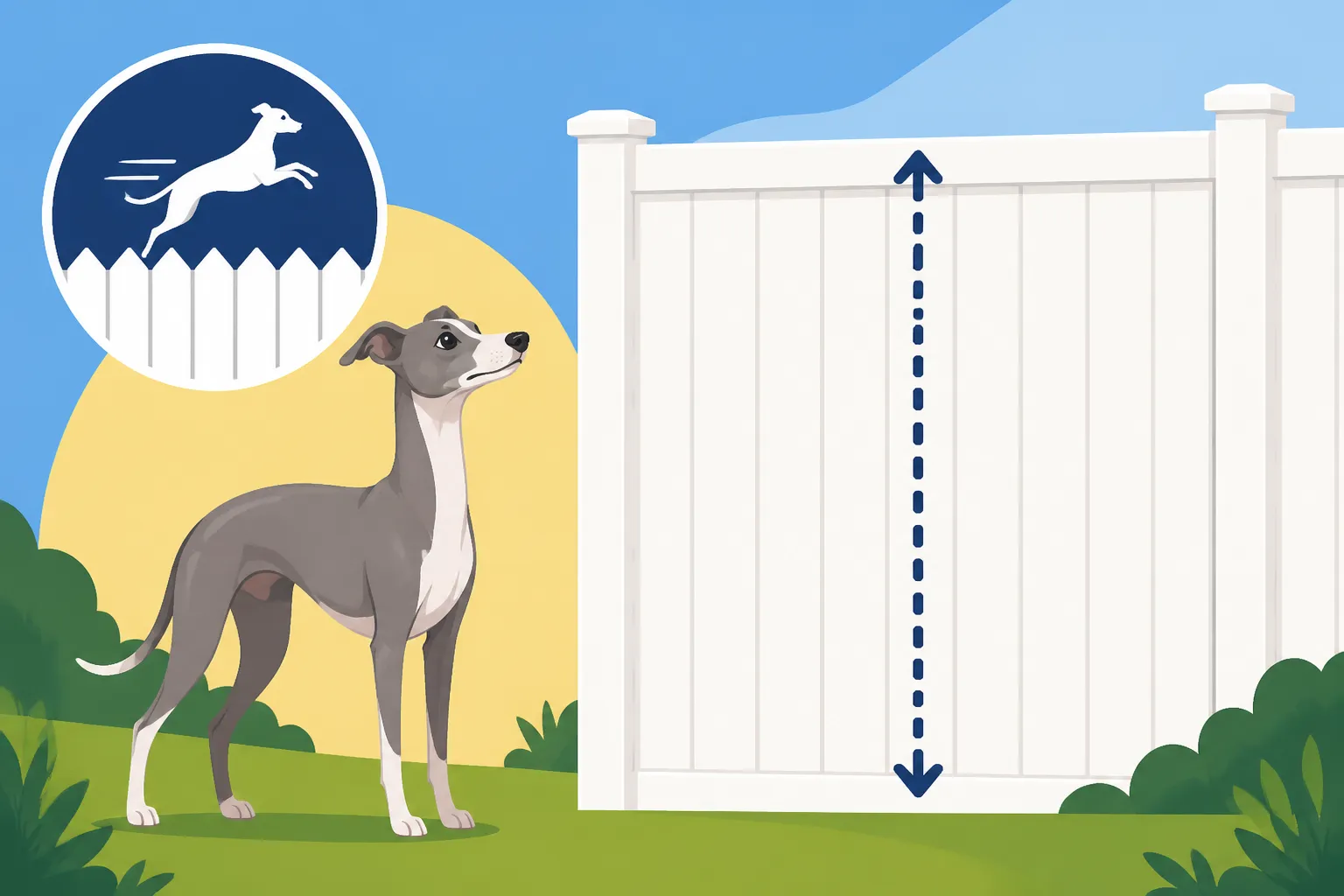
How High a Fence an Italian Greyhound Needs
It's a common and completely understandable worry for Italian Greyhound owners: how do you keep such a lightning-fast, incredibly agile, and surprisingly vertical little dog safe and sound in your yard? You build a fence, naturally, but the question quickly becomes, how high does that fence really need to be? This isn't just about marking a boundary; it's about protecting a breed known for its incredible athletic ability and strong prey drive from the dangers beyond your property line. This guide will walk you through the essential considerations for fencing for your Italian Greyhound, ensuring their safety and your peace of mind.
Understanding the Italian Greyhound's Athleticism and Escape Artistry
Italian Greyhounds are often underestimated when it comes to their physical capabilities. Their delicate appearance belies an incredibly athletic and agile nature, honed over centuries. This means their ability to navigate obstacles, including fences, is far more sophisticated than many people initially assume.
The Unexpected Jumping Prowess of a Small Dog
Don't let their dainty legs fool you; Italian Greyhounds are exceptional jumpers. Their powerful hindquarters act like springs, launching their lightweight bodies with surprising verticality. What might seem like a perfectly adequate fence for many small breeds can be easily cleared by an Italian Greyhound. They don't need a running start, either. Many an owner has witnessed their IG spring straight up from a standstill, clearing heights that seem impossible for a dog of their stature. This isn't just a party trick; it's a serious consideration for any outdoor enclosure. A simple hop can turn a perceived barrier into an easy exit, leading to potentially dangerous situations on a busy street or in unfamiliar territory.
The Italian Greyhound's Natural Sighthound Instinct to Chase
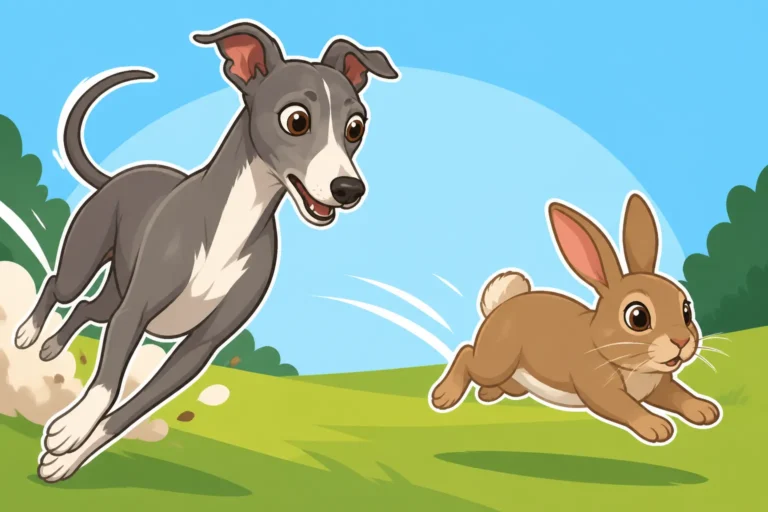
As sighthounds, Italian Greyhounds are hardwired to spot and pursue movement. This deeply ingrained prey drive is a powerful motivator that can override even the most consistent training. A squirrel darting up a tree, a rabbit hopping through the neighbor's yard, or even a blowing leaf can trigger an immediate, instinctual chase response. When that prey drive kicks in, your Italian Greyhound isn't thinking about fence heights or property lines; they're thinking about the chase. This means a fence that allows a clear line of sight to tempting distractions will be challenged more frequently and with greater determination. It’s not about disobedience; it’s about ancient instincts taking over, making the fence a crucial line of defense. Remember, What an Italian Greyhound Does When It Sees a Rabbit is often a full-throttle pursuit.
The "Zoomies" and Unpredictable Bursts of Speed
Anyone who lives with an Italian Greyhound is familiar with the "zoomies" – those sudden, exhilarating bursts of speed and frantic running that appear out of nowhere. These episodes are a natural way for IGs to burn off energy, and they often happen in the yard. During a zoomie session, an Italian Greyhound's movements can be incredibly erratic and fast, making them less aware of their surroundings. A sudden turn or an unplanned trajectory can send them careening towards a fence line with incredible force and momentum. This combination of speed and unpredictable movement can lead to accidental fence breaches or even injuries if the fence isn't sturdy or high enough. They can reach surprising speeds, and What Speed an Italian Greyhound Reaches can make stopping on a dime challenging, especially if something catches their eye.
Minimum Fence Height Recommendations: More Than Just a Number
When it comes to securing your yard for an Italian Greyhound, simply picking a number off a chart won't cut it. Their unique blend of athleticism, prey drive, and slender build means that what's adequate for one small dog breed might be completely inadequate for an IG. We need to think about not just preventing jumps, but deterring them.
The Absolute Bare Minimum for a Casual Boundary
Let's be blunt: a 4-foot fence is almost never sufficient for an Italian Greyhound. While it might serve as a visual deterrent for a very docile, older dog with no prey drive and limited mobility, it offers little real security for the typical active IG. This height is easily cleared by many IGs, especially if they are motivated by a squirrel, a curious neighbor, or simply a burst of energy. Thinking of it as a casual boundary is dangerous. If you have a 4-foot fence, assume your Italian Greyhound can and will clear it if given the right incentive. You might get away with it for a while, but it's like playing Russian roulette with their safety. The risks of them escaping into traffic or encountering unknown dangers far outweigh the convenience of a shorter fence. For most Italian Greyhounds, especially those under two years old when their energy and daring are at their peak, this height is simply an invitation to adventure.
The Recommended Height for Standard Security
For most Italian Greyhounds, a fence height of 5 to 6 feet is a much more realistic and responsible baseline. At this height, most IGs will find it considerably more challenging to clear the fence, even with a strong motivation. A 5-foot fence can be adequate, but a 6-foot fence offers a significantly greater margin of safety. This extra foot can be the difference between an attempted jump that falls short and a successful escape. However, even with a 5 or 6-foot fence, vigilance is still key. An Italian Greyhound with a running start, or one who finds a slight foothold, might still surprise you. This height aims to deter, rather than merely contain, and often requires owners to still be present and observant during outdoor time. It's about making the decision to jump a much harder, less appealing one for your clever companion.
Considering the "Jump From Standing" Factor
What makes Italian Greyhounds particularly challenging to fence is their ability to jump with very little lead-up. They don't always need a long run to gain momentum; sometimes, a quick spring from a standstill is all it takes. This means that merely calculating their running jump ability isn't enough. You need to consider their vertical leap potential. How High an Italian Greyhound Can Jump From Standing can be quite remarkable, and it means that a fence needs to be high enough to make even an impulsive, stationary leap unsuccessful. If your IG can place their front paws on the top of a 4-foot fence from a standing position, a 5-foot fence might still be within their capabilities to clear if they can get that initial boost. This is why a 6-foot fence is often recommended as the gold standard; it significantly reduces the chances of them being able to get enough lift to clear the barrier.
Beyond Height: Other Critical Fencing Considerations
While fence height is undoubtedly paramount, focusing solely on the vertical aspect would be a mistake. Italian Greyhounds are intelligent, curious, and incredibly determined when they set their minds to something, especially if there's a compelling squirrel-shaped reason to do so. A truly secure yard requires a holistic approach that addresses all potential points of egress.
Preventing Digging and Going Under
Italian Greyhounds aren't typically champion diggers like terriers, but never underestimate a sighthound's determination when prey is involved. If they spot a critter on the other side of the fence, or if they simply become bored, they might start investigating the ground level. A fence that stops abruptly at the soil line is an open invitation for a determined IG to dig their way out. To prevent this, consider extending your fencing below ground level. This can be achieved by burying a portion of the fence material (at least 6-12 inches deep) or by adding an "L-footer" extension. An L-footer is a section of wire mesh or solid material that extends horizontally inward from the bottom of the fence, buried just below the surface. When the dog tries to dig, they immediately hit this barrier and are deterred. Without such precautions, even a tall fence can be rendered useless by a persistent IG who finds a weak spot at the base.
Preventing Climbing and Scaling
Some fence materials, while tall, inadvertently provide footholds for agile climbers. Chain-link fences, for example, offer a perfect ladder for an Italian Greyhound to scale. The same can be said for some types of wooden fences with horizontal rails on the interior side. If your Italian Greyhound can get a purchase with their tiny but strong paws, they might just climb their way to freedom. To mitigate this risk, opt for smooth, vertical surfaces like solid wood panels or vinyl fences where possible. If chain-link is your only option, consider adding privacy slats to eliminate climbing opportunities, or install an inward-facing "coyote roller" or angled extension at the top. These make it impossible for them to get a firm grip and hoist themselves over. Always inspect your fence for any gaps, loose boards, or points where your IG could get a toehold and leverage themselves up.
Securing Gates and Avoiding "Bolt Through" Incidents
Gates are often the weakest link in any fencing system, and this is especially true for an Italian Greyhound owner. An IG can be incredibly quick to "bolt through" an opening, whether it's a gate left ajar for a split second or one with a faulty latch. For ultimate security, all gates should have self-closing hinges and robust, spring-loaded latches that cannot be easily bumped or jiggled open. Better yet, consider double-latching mechanisms or even a padlock for gates that aren't frequently used. Beyond the latch itself, pay close attention to any gaps at the bottom or sides of the gate. A small Italian Greyhound can squeeze through surprisingly tight spaces. Install gate sweep seals or weatherstripping to close any gaps under the gate, and ensure the gate posts are securely set so that the gate doesn't sag over time, creating new escape routes. Training your Italian Greyhound to Teaching an Italian Greyhound to Wait at a Door before going through any opening is also a crucial behavioral tool to complement your physical barriers. This impulse control can be a lifesaver.
Types of Fencing and Their Suitability for Italian Greyhounds
Choosing the right type of fence material for your Italian Greyhound isn't just about aesthetics or cost; it's about evaluating how each material holds up against their specific escape tactics. Each option comes with its own set of pros and cons when it comes to containing these agile little sighthounds.
Solid Panel Fences (Wood, Vinyl)
Solid panel fences, whether made of wood or vinyl, are often a top recommendation for Italian Greyhound owners. The primary advantage here is that they block visual stimulation. If your Italian Greyhound can't see the squirrel, rabbit, or neighbor's cat on the other side, their prey drive is less likely to be triggered into a frantic escape attempt. These fences also typically present a smooth, vertical surface, which makes climbing incredibly difficult for an IG – there are no convenient footholds.
- Wood Fences: These offer a classic look and can be very effective if constructed correctly. Ensure the pickets are placed closely together, with no gaps wide enough for an IG to squeeze through. Also, make sure the side facing your yard has vertical pickets with no horizontal support beams that could act as a ladder. Over time, wood can rot or warp, creating new gaps or weak spots, so regular maintenance is necessary.
- Vinyl Fences: Often more durable and low-maintenance than wood, vinyl fences provide a perfectly smooth, unscalable surface. They come in various styles, from solid privacy panels to decorative options. Just like with wood, ensure the panels extend to the ground and are installed with minimal gaps.
The main downsides to solid panel fences can be the initial cost, and their solid nature means they can catch a lot of wind, potentially requiring sturdier posts and foundations in windy areas.
Chain-Link Fences
Chain-link fences are a common, often cost-effective choice for many homeowners, but they present significant challenges for Italian Greyhounds. While they offer durability, their very construction creates a problem: they are incredibly easy to climb. The mesh acts as a perfect ladder, allowing an agile Italian Greyhound to quickly scale the fence and be over in seconds.
- Climbing Hazard: The small diamond-shaped openings in chain-link are ideal for an IG's paws to gain purchase, making an otherwise tall fence ineffective.
- Visual Permeability: Chain-link offers no visual barrier, meaning your IG will have a clear view of every tempting distraction outside the yard, constantly stimulating their prey drive.
If chain-link is your only option, you'll need to implement several modifications. Consider installing privacy slats woven through the mesh; these not only block visibility but also make it harder to climb. Another option is to install an inward-facing extension or "coyote roller" at the top of the fence to prevent them from getting over. You'll also need to ensure the bottom is secured against digging. Frankly, if you can avoid chain-link for an Italian Greyhound, it's usually best to do so.
Ornamental Iron or Aluminum Fences
Ornamental iron or aluminum fences offer a sophisticated aesthetic and are very durable, but they come with their own set of considerations for Italian Greyhounds.
- Aesthetic Appeal & Durability: These fences can be beautiful and long-lasting, often requiring minimal maintenance.
- Bar Spacing: The biggest concern here is the spacing between the vertical bars. A standard spacing might be wide enough for a slender Italian Greyhound puppy, or even a small adult, to squeeze through. You'll need to ensure the bar spacing is narrow enough – typically no more than 1.5 to 2 inches – to prevent your IG from wriggling through.
- Climbing Potential: While not as easy to climb as chain-link, some ornamental designs might have decorative elements that provide footholds. Choose a simple, vertical bar design if possible.
- Visual Permeability: Like chain-link, these fences don't block visibility, so the prey drive factor remains.
If you choose this type of fence, prioritize security by selecting a design with extremely narrow bar spacing and ensure the fence is tall enough, ideally 6 feet, to prevent jumping.
Invisible Fences: A Risky Choice for IGs
For an Italian Greyhound, invisible fences, which use a buried wire and a collar that delivers an electrical correction, are generally not recommended and carry significant risks. While they might work for some breeds, they are often a poor fit for the unique temperament and physical characteristics of an IG.
- Prey Drive Override: The Italian Greyhound's intense prey drive is often stronger than their aversion to the correction from an invisible fence. They may blow right through the boundary if sufficiently motivated by a rabbit or squirrel. Whether an Invisible Fence Holds an Italian Greyhound is a critical question, and for an IG, the answer is often "no."
- Fear and Refusal to Return: A major problem arises if an IG does run through the boundary for prey. Once outside the "safe" zone, they will receive a correction if they try to come back into the yard. This can trap them outside, terrified, and unwilling to cross the invisible line, making it incredibly difficult to get them back.
- Lack of Physical Barrier: An invisible fence offers no physical barrier against external threats. Other animals, people, or vehicles can still enter your yard, posing a danger to your IG. Similarly, without a physical barrier, other animals can enter and exit freely, potentially luring your IG out.
While the concept of an invisible fence might seem appealing for its aesthetics, the safety of your Italian Greyhound should always come first. For this breed, the risks associated with invisible fencing usually far outweigh any perceived benefits.
Here’s a quick overview of fence types for Italian Greyhounds:
| Fence Type | Pros | Cons | Suitability for IGs |
|---|---|---|---|
| Solid Panel | Blocks visual distractions, hard to climb | Higher cost, can be affected by wind, requires maintenance (wood) | Excellent if tall enough (5-6ft) and no gaps. |
| Chain-Link | Cost-effective, durable | Very easy to climb, visually permeable, often requires significant modifications to be secure | Poor, requires heavy modification to be safe. |
| Ornamental Metal | Aesthetically pleasing, durable | Visually permeable, bar spacing can be a hazard, some designs offer footholds | Good if bars are narrow (1.5-2") and tall (6ft). |
| Invisible/Electronic | Aesthetic, no physical barrier | Prey drive overrides correction, risk of trapping outside, no barrier against external threats | Very Poor, high risk of escape and injury. |
Creating a Secure Outdoor Environment: More Than Just a Fence
Even with the perfect fence, a truly safe and stimulating outdoor environment for your Italian Greyhound involves more than just physical barriers. It’s about integrating supervision, enrichment, and consistent training to work in harmony with your fencing solution.
Supervising Your Italian Greyhound Outdoors
No fence, no matter how high or well-constructed, is completely foolproof. Italian Greyhounds are incredibly resourceful and can find weaknesses you never anticipated, or simply make a daring, lucky jump. That's why active supervision is absolutely non-negotiable whenever your Italian Greyhound is in the yard. Leaving them unattended for extended periods, even in a seemingly secure yard, is a gamble.
During supervision, you're not just watching for escape attempts; you're also ensuring their overall safety. Are they getting too hot or too cold? Are they ingesting anything they shouldn't? Are they interacting safely with other pets or children? A quick scan of the fence line each time you're out there can also help you spot any new potential weaknesses – a loosened board, a newly dug divot, or a sag in the gate. Think of your presence as the final, most important layer of security, especially for a breed as precious and prone to mischief as the Italian Greyhound.
Providing Enrichment and Exercise within the Yard
A bored Italian Greyhound is a creative Italian Greyhound, and creativity can often lead to escape attempts. If your IG isn't getting enough mental and physical stimulation, they might start looking for ways to entertain themselves, and that often means testing the boundaries of their enclosure. Ensure your yard provides opportunities for healthy play and exploration.
- Toys and Play: Offer a variety of appropriate toys. Some IGs love to chase squeaky toys, others enjoy puzzle toys that dispense treats. Rotating toys keeps things interesting.
- Shaded Areas and Shelter: Especially important for IGs due to their thin coats, ensuring there's a cool, shaded spot to rest in summer or a warm, sheltered nook in cooler weather can make outdoor time more comfortable and less likely to lead to restlessness. Getting cold on the table (Why a Nine Pound Italian Greyhound Gets Cold on the Table) is a testament to their need for warmth, and this applies outdoors too.
- "Zoomie Zone": If space allows, designate a clear area where they can safely indulge in their bursts of speed without running into obstacles or testing the fence line. A predictable, open space for their zoomies can prevent impulsive dashes toward the fence.
By making the yard an engaging and comfortable place to be, you reduce the motivation to look for greener pastures beyond the fence.
Training and Management as Part of Security
While a robust fence is your primary physical barrier, training and good management practices are invaluable complements. These behavioral tools strengthen your overall security strategy and provide crucial backups in unexpected situations.
- Strong Recall: Even if your Italian Greyhound never leaves the yard, a solid recall command is incredibly important. If they do manage to get out, or if you need them to come away from a potentially dangerous situation within the yard, a reliable "come" can be a lifesaver. While Why an Italian Greyhound Cannot Be Trusted Off Leash, Ever is a cardinal rule, a strong recall builds trust and responsiveness.
- Leash for Doubtful Areas: If you're ever in doubt about the security of a fence, or if you're visiting a friend or family member with a less secure yard, always keep your Italian Greyhound on a leash. A long line can provide a bit more freedom while still maintaining control. You can find durable long lines on Amazon that are perfect for supervised play in open but unfenced spaces, allowing them to stretch their legs without the risk of escape.
- Impulse Control Training: Teaching your Italian Greyhound impulse control – things like "stay," "wait," and not bolting through open doors or gates – directly contributes to fence security. Resources from reputable training programs, such as those offered by BAXTER & Bella, can provide excellent guidance on building these foundational behaviors. These programs often emphasize positive reinforcement, which is crucial for sensitive breeds like Italian Greyhounds.
- Boundary Awareness: While invisible fences aren't recommended, you can still teach your IG to respect the physical boundary of your fence. Reward them for staying away from the fence line, especially if they show signs of interest in what's on the other side.
By combining physical barriers with smart management and consistent training, you create a multi-layered defense that maximizes your Italian Greyhound's safety and gives you genuine peace of mind.
Disclaimer
This article is for general informational purposes only and does not constitute professional advice. Laws, prices and regulations vary by location and change over time. Consult a qualified professional for guidance on your specific situation.