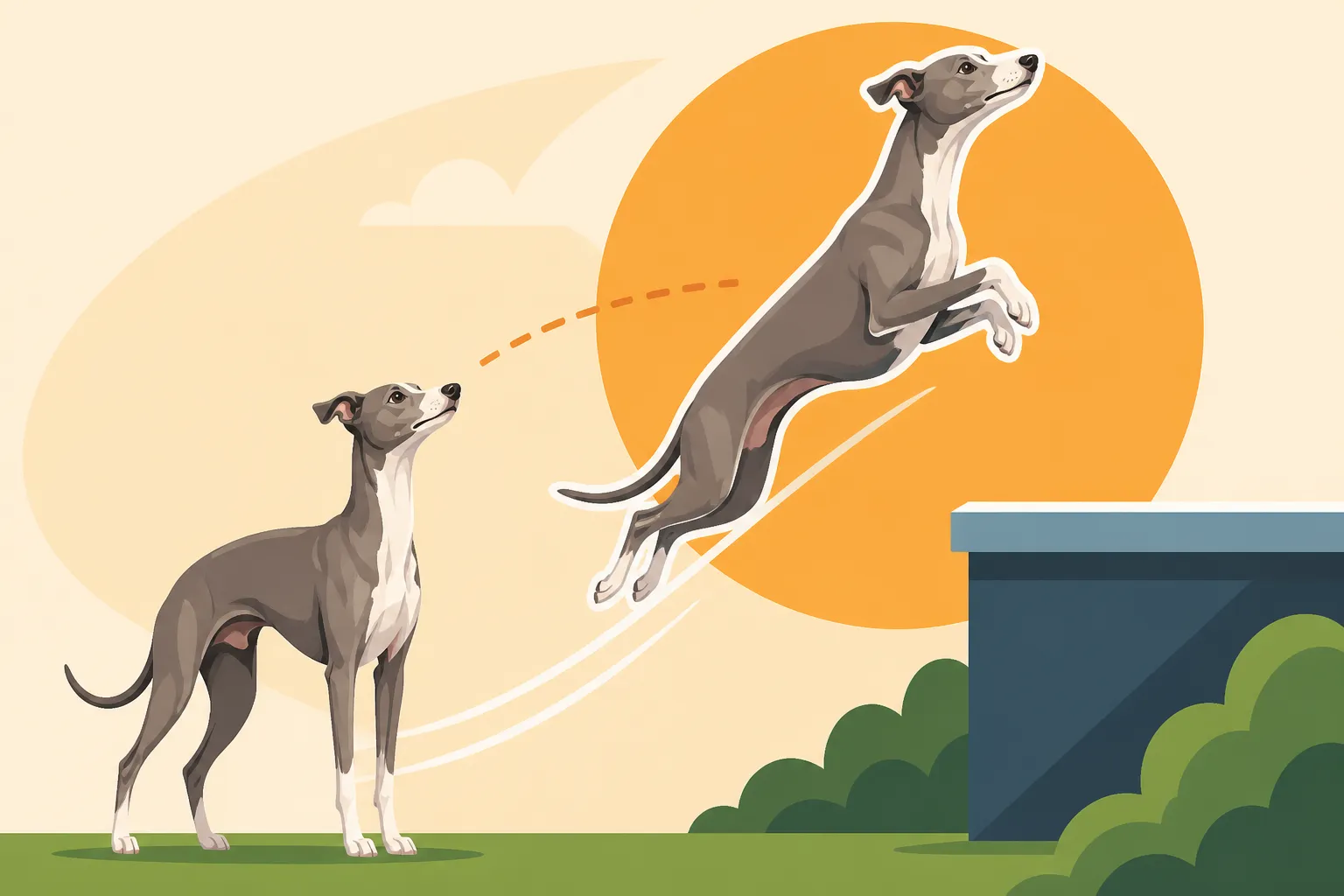
How High an Italian Greyhound Can Jump From Standing
It’s a common moment for new Italian Greyhound owners: you glance away for a second, and suddenly your little IG is on top of the kitchen counter, or perhaps clearing a baby gate with surprising ease. They look so delicate, but these little sighthounds possess an incredible athletic prowess, especially when it comes to vertical leaps. This guide will delve into just how high an Italian Greyhound can jump from a standing position, what drives this behavior, and most importantly, how to manage it safely to protect their fragile bones and your peace of mind.
The Surprising Vertical Leap of an Italian Greyhound
Italian Greyhounds are often underestimated when it comes to their physical capabilities. Their slender build and dainty appearance can be deceiving, leading many owners to believe they are less agile or capable of impressive physical feats. However, anyone who has spent time with an IG knows they can be absolute rockets, both horizontally and vertically.
Anatomy and Agility: What Makes Them Jump
The Italian Greyhound’s physique is perfectly adapted for bursts of speed and remarkable agility. They possess a lean, muscular build, especially in their powerful hindquarters, which act like coiled springs. Their spine is incredibly flexible, allowing for that classic "roach" or arched back when they're in motion, giving them extra spring and reach. Unlike many other small breeds, IGs are sighthounds, bred for speed and the ability to spot and chase small prey. This inherent athleticism translates directly into their jumping ability. Their lightweight bone structure, while a concern for fractures, also contributes to their effortless leaps, as there's less mass to overcome. Think of them as miniature versions of their larger Greyhound cousins, designed for swift, unencumbered movement, not just delicate lounging.
This physical makeup allows them to execute impressive standing vertical jumps, often surprising owners who are used to dogs that might struggle with anything more than a small hop. It’s not just about height; it’s about the quickness and grace with which they launch themselves, seemingly defying gravity for a moment. This agility is a key part of their charm and also a significant factor in their care, especially when considering the potential for Why an Italian Greyhound's Leg Bones Break So Easily.
Actual Jump Heights: What to Expect
So, how high can they actually jump? From a standing start, many Italian Greyhounds can easily clear heights of 30-36 inches (76-91 cm). This might sound unbelievable for a dog that stands only 13-15 inches tall at the shoulder, but it's a testament to their powerful legs and agile bodies. I’ve heard countless stories of IGs clearing standard 24-inch baby gates without a second thought, landing gracefully on the other side. Some particularly athletic IGs, especially those motivated by a squirrel or a dropped treat, might even manage to clear slightly higher.
For context, this means your Italian Greyhound might be able to jump onto:
- Most kitchen counters if they can get a toe-hold or a slight boost.
- Dining room tables with minimal effort.
- Standard sofas and recliners from a standstill.
- Fences that you might consider adequate for a small dog, often up to 3 feet high.
It's crucial to distinguish between a standing jump and a running jump. While this guide focuses on standing jumps, their running jumps can be even more spectacular, especially if they are chasing something. A standing jump requires pure vertical power, while a running jump allows them to convert horizontal momentum into vertical lift, often enabling them to scale even greater heights or obstacles. Understanding these capabilities is the first step in creating a safe environment for your agile companion.
Why They Jump: Instincts and Curiosity
Why do Italian Greyhounds choose to jump so often? It's a combination of instinct, curiosity, and sometimes, plain old naughtiness.
First, that sighthound prey drive is always lurking. If they spot something interesting – a bird outside the window, a dust bunny floating by, or a sibling dashing past – their instinct is to pursue, and sometimes that pursuit means getting over an obstacle. Jumping gives them a better vantage point, allowing them to survey their surroundings and identify potential "prey" or points of interest.
Second, IGs are incredibly curious and love to explore. If there's something on the counter that smells good, or a cozy spot on the back of the sofa, they'll often try to get there. They’re problem solvers, and if jumping is the easiest route to their goal, they’ll take it.
Third, they're smart and quickly learn what gets them attention. Jumping up to greet you, or leaping onto your lap, is a sure-fire way to get a reaction. They thrive on human companionship, and being closer to their people, often at eye level, is a strong motivator. They truly are "Velcro dogs" who want to be part of every moment.
Understanding these motivations helps owners implement effective management strategies rather than simply punishing the behavior. It's not usually malicious, but rather an expression of their natural traits.
Jumping Hazards and Safety Measures
While an Italian Greyhound’s agility is impressive, it also comes with significant risks. Their delicate bone structure, particularly their radius and ulna in the front legs, makes them highly susceptible to fractures from falls, even seemingly minor ones. This is one of the biggest anxieties for any IG owner, and for good reason.
The Risks of High Jumps for an Italian Greyhound
The primary concern with an Italian Greyhound's jumping is the severe risk of injury. Their bones are much more fragile than those of many other breeds, often described as "glass bones" or "china dolls." A fall from even a moderate height can result in a devastating fracture, especially in the foreleg. I have known owners whose IGs have broken a leg jumping off a bed, a sofa, or even simply tripping during a zoomie. A Broken Leg Is the Emergency Every Italian Greyhound Owner Fears is not an exaggeration – it's a very real and terrifying possibility.
The dangers include:
- Fractures: The most common and dreaded injury. Landing awkwardly, hitting a hard surface, or twisting mid-air can snap a bone in an instant. The radius is particularly vulnerable.
- Sprains and Strains: Even if a bone doesn't break, ligaments and muscles can be stretched or torn, leading to pain and lameness.
- Internal Injuries: While less common, a very hard landing or collision could cause internal bruising or organ damage.
- Arthritis: Repeated stress on joints from jumping and hard landings can contribute to the early onset or exacerbation of arthritis later in life. Arthritis in an Italian Greyhound's Healed Leg is a concern for dogs who have suffered past injuries.
The worst part is that these injuries often require extensive veterinary care, including costly surgeries and long recovery periods. It's a heartbreaking experience for both dog and owner, and one that proactive prevention can significantly reduce.
Securing Your Home: Preventing Unintended Jumps
Given these risks, securing your home to minimize jumping opportunities is paramount. This isn't about stifling their natural exuberance, but redirecting it and mitigating hazards.
Here are some strategies:
- Baby Gates: While many IGs can jump over standard baby gates, they can still be useful for managing access to certain rooms, especially if you get taller ones or stack them (carefully!). However, never assume a gate will contain a determined IG. Be mindful that if they can jump it, they will.
- Ramps and Steps: This is arguably the single most important preventative measure. Instead of allowing your Italian Greyhound to jump off furniture like beds and sofas, provide them with ramps or steps. Teach them from a young age that these are the only safe ways to access elevated surfaces. You can find a wide range of options on Amazon, from carpeted ramps to stylish wooden steps that blend with your decor. Consistency in using them is key. Ramps and Steps for an Italian Greyhound's Furniture will save you countless worries.
- Counter and Table Management: Don't leave tempting food or interesting objects within reach on counters or tables. If they have a reason to jump, they will. Practice "leave it" commands and keep surfaces clear, especially when you're not actively supervising.
- Supervision: The best safety measure is always attentive supervision. When your IG is out and about, be aware of what they're doing and where they might try to jump. Interrupt risky behavior with a gentle redirect.
- Designated "Safe Zones": When you can't actively supervise, use a playpen or a secure, puppy-proofed room with no high jumping surfaces. This is especially important for puppies or new rescues who are still learning the house rules.
Outdoor Considerations: Fences and Leashes
Outside, the jumping instinct doesn't diminish – it often intensifies with the sights and smells of the wild. This makes outdoor safety paramount for Italian Greyhounds.
- Fence Heights: If you have a yard, a standard 4-foot fence might not be enough to contain an athletic Italian Greyhound, especially if they are motivated by something on the other side. Some IGs can easily clear a 4-foot fence, and even a 5-foot fence isn't entirely foolproof for the most determined jumpers. Consider a 6-foot fence as the safest minimum if you intend to leave your IG unsupervised in the yard. Also, inspect your fence for gaps or weak spots they could squeeze through or under. How High a Fence an Italian Greyhound Needs directly addresses this concern.
- Leash Use: This cannot be stressed enough: Why an Italian Greyhound Cannot Be Trusted Off Leash, Ever. Their prey drive is so strong that if they spot something interesting – a squirrel, a bird, a rabbit – they will take off in pursuit, deaf to your calls, and run at incredible speeds. Their speed, combined with their jumping ability, means they can quickly cover vast distances or navigate obstacles you wouldn't expect. Always use a secure harness and leash when outside, even in seemingly safe, enclosed areas. A martingale collar or a properly fitted harness is essential, as their slender necks can easily slip out of a flat collar.
- Dog Parks: While some Italian Greyhounds enjoy controlled play, dog parks can be dangerous environments for them. The rough-and-tumble play of larger dogs, or even other smaller, stockier breeds, can easily lead to accidental injuries. In an overstimulated environment, an IG might jump or twist to avoid another dog, only to land awkwardly. Their delicate build is simply not designed for impact with larger, heavier dogs. Consider controlled playdates with known, gentle dogs instead.
Training and Managing Jumping Behavior
Training an Italian Greyhound to manage their jumping isn't about suppressing their natural athleticism, but rather teaching them appropriate outlets and boundaries. It takes patience, positive reinforcement, and a deep understanding of their sensitive nature.
Discouraging Counter Surfing and Furniture Jumping
It's tempting to yell "Off!" or grab your IG when you catch them on the forbidden counter or sofa, but this breed is incredibly sensitive. Why Raising Your Voice Sets an Italian Greyhound Back a Month is a real phenomenon. They shut down under harsh correction, which can actually make training harder.
Instead, focus on these gentle yet firm methods:
- Positive Interruption and Redirection: If you catch them in the act, use a calm, cheerful voice to get their attention, then lure them off the forbidden surface with a high-value treat. As soon as all four paws are on the floor, reward them lavishly.
- "Off" Cue Training: Practice the "off" cue regularly, even when they aren't doing anything wrong. Lure them onto a low stool, say "off," and then lure them down and reward. This builds a positive association with the cue.
- Environmental Management: The best defense is a good offense. Don't leave anything on counters or tables that they might want to jump for. If the reward isn't there, the motivation to jump decreases.
- Designated "Up" Spots: Provide plenty of comfortable, low-to-the-ground beds and blankets where they are allowed to be. Make these spots irresistible. When they jump onto a permitted surface (like their dog bed), reward them.
- Consistency is Key: Every member of the household needs to be on the same page. If one person allows counter surfing, it undermines everyone else's efforts.
For more structured training, consider programs like those offered by BAXTER & Bella. Their online resources often provide step-by-step guidance on managing common puppy behaviors and building a strong, positive relationship, which is crucial for a sensitive breed like the Italian Greyhound. Their methods often emphasize positive reinforcement, which aligns perfectly with what an Italian Greyhound responds to best.
Channeling Jumping Energy Safely
Italian Greyhounds do need exercise and outlets for their energy, including their jumping instincts. The trick is to channel it safely to prevent injury.
- Short Bursts of Speed: They are sprinters, not endurance runners. Short, controlled bursts of running in a securely fenced area (remembering fence height concerns!) or on a long line in a safe space are perfect. Think a quick 10-15 minute sprint session, then calm down time.
- Controlled Play: Play with soft toys, flirt poles, or engage in gentle tug-of-war. Avoid games that involve uncontrolled leaping or twisting, especially on hard surfaces.
- Lure Coursing: This is hands-down one of the best activities for Italian Greyhounds. It allows them to use their natural sighthound instincts, speed, and agility in a controlled, safe environment. They chase a plastic lure around a track, getting to run and jump (over very low, safe obstacles if part of the course) to their heart's content, without the risk of traffic or escaping. Lure Coursing and Racing With an Italian Greyhound is an excellent way for them to express their true nature.
- Agility (with caution): Some IGs enjoy agility, but it needs to be approached with extreme caution. Avoid high jumps or sharp turns. Focus on weave poles, tunnels, and low-impact obstacles. Always consult with your vet before starting any high-impact sport.
- Training Tricks: Teach them fun tricks that involve controlled jumps, like jumping over your leg when you're sitting, or a very low bar. Always spot them and ensure a soft landing. This gives them a physical and mental workout.
Remember, the goal is to give them appropriate outlets, not to stop them from being an Italian Greyhound. Their high energy, especially during puppyhood, can be surprising, but with the right guidance, it can be managed. The First Year With an Italian Greyhound Puppy often involves finding these safe outlets.
The Importance of Early Training and Consistency
Starting early with training is vital for Italian Greyhounds, especially given their delicate nature. Puppies learn quickly, and establishing good habits from the beginning can prevent a lifetime of headaches (and vet bills!).
- Puppy Proofing: When you bring your Italian Greyhound puppy home, assume they can jump and climb more than you expect. Puppy-proof your home with ramps, gates, and clear surfaces from day one.
- Ramp/Step Training: Introduce ramps and steps immediately. Make them fun, using treats and praise to encourage your puppy to use them. It's much easier to teach a puppy than to retrain an adult dog who has developed a habit of jumping off the sofa.
- Socialization and Manners: Enrolling in positive reinforcement puppy classes can be beneficial. Not only do they learn basic cues, but they also get gentle socialization in a controlled environment. A well-socialized dog is often more confident and less likely to engage in frantic, risky behaviors out of fear or excitement.
- Family Involvement: Ensure every family member understands the rules regarding jumping and safe access to furniture. Inconsistency is confusing for dogs and can undo weeks of training. If one person lifts them onto the sofa and another tells them "off," it creates a mixed message.
Building a strong foundation of trust and consistent boundaries early on will pay dividends for the entire Why an Italian Greyhound Lives Fourteen to Fifteen Years. It helps your IG feel secure, knowing what's expected of them, and helps you feel confident that you're doing everything you can to keep them safe.
Tools and Products to Aid in Jump Management
Creating a truly safe environment for an Italian Greyhound means more than just training; it involves strategically using the right tools and products to prevent dangerous jumping and facilitate safe movement around the home.
Safe Ramps and Steps
These are non-negotiable for Italian Greyhound owners. Ramps and steps provide a gradual, safe way for your dog to get onto and off beds, sofas, and even window sills, eliminating the need for risky jumps.
- Gradual Incline: Look for ramps with a gentle slope. Steep ramps can still put strain on their joints or cause them to lose their footing. A good rule of thumb is a ramp that's at least as long as the furniture is tall.
- Non-Slip Surface: The surface of the ramp or steps should be carpeted or have a textured, non-slip covering. IGs have very little padding on their paws, and slick surfaces can lead to falls or hesitation.
- Stability: Ensure the ramp or steps are sturdy and won't wobble or slide when your dog uses them. A wobbly ramp will deter them from using it.
- Placement: Place ramps and steps strategically next to all furniture that your Italian Greyhound is allowed to access. I often recommend having one for each side of the bed if your IG sleeps with you, and one for each frequently used sofa. You can find many excellent, well-reviewed options for ramps and steps on Amazon, often categorized by pet size or furniture height.
Teaching your IG to use these tools consistently will drastically reduce the risk of fractures caused by jumping off furniture. This is a small investment that can prevent a very large vet bill.
Secure Gates and Playpens
While IGs are adept jumpers, well-chosen gates and playpens can still be valuable tools for managing their movement within the home, especially during times of unsupervised play or when you need to contain them safely.
- Extra-Tall Gates: Standard baby gates (around 24-30 inches) are often no match for a determined Italian Greyhound. Look for extra-tall pet gates, ideally 36 inches or higher. Some brands offer gates with vertical bars that prevent climbing.
- Pressure-Mounted vs. Hardware-Mounted: For doorways you frequently use, pressure-mounted gates can be convenient, but for areas requiring more security (like a long-term blockade of a room), hardware-mounted gates are sturdier and less likely to be dislodged.
- Playpens: A good, sturdy playpen provides a secure, contained space for your IG when you can't actively supervise them. Choose one that is tall enough that they cannot jump out and that offers enough space for a bed, water, and perhaps a potty pad if needed. This is particularly useful for puppies. Brands available on Amazon offer various heights and configurations. Remember, the goal is to provide a safe space, not a prison.
Even with tall gates, remember the Italian Greyhound's inherent ability to climb and assess. Never assume any gate is 100% foolproof, but they are excellent for setting boundaries and providing a physical deterrent.
Comfortable and Warm Bedding
This might seem unrelated to jumping, but it plays a role. Italian Greyhounds crave warmth and comfort. They have very little body fat and thin skin, making them prone to getting cold quickly. Why an Italian Greyhound Carries Almost No Body Fat is a key factor here. If their designated sleeping areas on the floor are cold or uncomfortable, they will seek out warmer, softer spots – often on your sofa or bed – and might jump up to get there.
- Plush, Orthopedic Beds: Invest in high-quality, supportive beds. Orthopedic foam can be beneficial, especially for older IGs or those prone to developing pressure sores. The Bedding a Thin Skinned Italian Greyhound Actually Needs is essential to prevent calluses and discomfort.
- Abundant Blankets: Italian Greyhounds love to burrow and snuggle. Provide plenty of soft, warm blankets in their beds and around the house. They will often "nest" in these, creating their own cozy den.
- Heated Beds: In colder climates or for IGs who particularly feel the chill, a heated dog bed can be a game-changer. These provide consistent, comforting warmth, making their approved sleeping spots far more attractive than the "forbidden" couch.
By making their own sleeping areas incredibly appealing, you reduce the motivation for them to jump onto furniture in search of comfort. This holistic approach to their well-being helps manage their jumping behaviors more effectively.
Jumping Safety Comparison Table
Here's a quick overview to help you differentiate between safe and risky jumping scenarios for your Italian Greyhound:
| Scenario / Height | Risk Level | Description & Best Practice |
|---|---|---|
| Jumping off a bed (24-30 inches) | HIGH | Very common cause of fractures. Always use ramps or steps. |
| Jumping off a sofa (16-20 inches) | MODERATE | Still risky, especially if landing awkwardly. Provide ramps/steps consistently. |
| Clearing a baby gate (24 inches) | HIGH | Demonstrates capability. Use taller gates (36"+) or secure rooms instead. |
| Scaling kitchen counter | HIGH | Risk of injury from fall, plus ingesting hazards. Keep counters clear; supervise. |
| Jumping from floor onto lap | LOW | Controlled, short jump to a soft landing. Still discourage excessive "bouncing" behavior. |
| Lure coursing (low obstacles) | LOW | Designed for sighthounds, controlled environment. Excellent safe exercise. |
| Agility course (high jumps) | HIGH | Too much impact on delicate joints. Avoid high jumps; stick to low-impact obstacles. |
| Jumping over a low bar (e.g., in training) | LOW | With spotter, soft landing, and proper technique. Focus on controlled, gentle jumps. |
| Jumping in excitement (e.g., zoomies) | MODERATE | Risk of collision/awkward landing. Ensure clear, non-slip space; supervise. |
| Jumping a 4-foot fence | HIGH | Definitely possible for some IGs. Consider 6-foot fences or leashed walks only. |
An Italian Greyhound's ability to jump from standing is a surprising aspect of their athleticism, but it comes with significant risks that owners must be diligent in managing. By understanding their physical capabilities, channeling their instincts safely, and implementing proactive safety measures in the home, you can protect your delicate companion from harm. Consistent training, environmental management with tools like ramps and secure gates, and a deep appreciation for their unique needs are key to a long, happy, and fracture-free life together.
Disclaimer
This article is for general informational purposes only and does not constitute professional advice. Laws, prices and regulations vary by location and change over time. Consult a qualified professional for guidance on your specific situation.