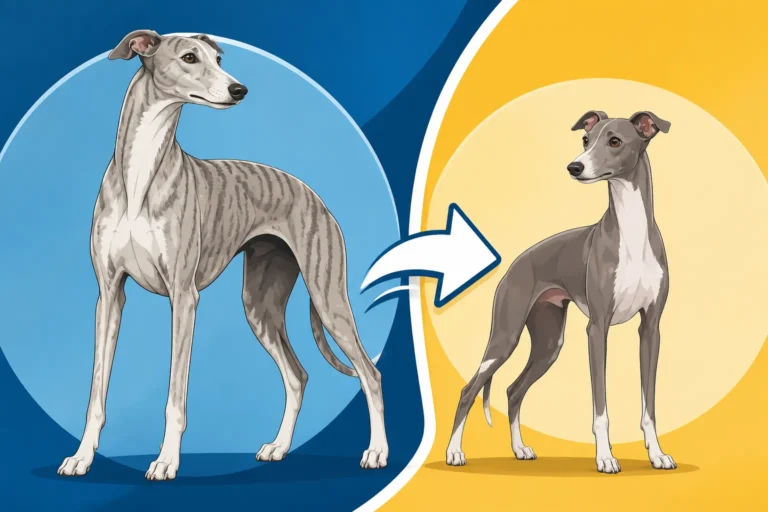
Italian Greyhound or Miniature Pinscher
Choosing between an Italian Greyhound and a Miniature Pinscher can feel like choosing between two small dogs with completely different operating systems. One may be happiest curled beneath a blanket; the other may be patrolling the windowsill for neighborhood news. This guide compares their temperaments, exercise needs, training, care, and family fit so you can picture everyday life with either breed.
The biggest differences between Italian Greyhounds and Miniature Pinschers
Build, size, and physical sturdiness
Italian Greyhounds and Miniature Pinschers are both small, short-coated dogs, but their outlines and physical needs are quite different. An Italian Greyhound is a fine-boned sighthound with long legs, a narrow body, and a deep chest. A Miniature Pinscher is compact and muscular, with a more square, sturdy-looking build. Neither breed is a miniature version of another: the Italian Greyhound is not simply a tiny Greyhound, and the Miniature Pinscher is a distinct breed rather than a small Doberman.
Height and weight overlap, but a dog’s individual build can vary. Italian Greyhounds are generally taller and more slender, while Miniature Pinschers tend to look shorter and more solid. If you’re comparing two puppies, don’t rely on a single number to predict how either will mature. Ask about the parents, consult a veterinarian about healthy growth, and learn what each breed’s expected proportions look like. What an Italian Greyhound Weighs and How Tall It Stands
That delicate outline has practical consequences. Italian Greyhounds can be vulnerable to fractures, particularly when they are young, and a tumble from furniture or rough play can have serious consequences. They need thoughtful supervision around stairs, slippery floors, and larger, boisterous dogs. Miniature Pinschers are generally more robustly built, but “sturdy” does not mean injury-proof. They are still small dogs, and unsafe jumps or rough handling can hurt them, too.
Personality and day-to-day energy
Italian Greyhounds are often affectionate, sensitive, and strongly attached to their people. Many enjoy a lively sprint followed by a long stretch of resting close to someone they trust. Their quiet, cuddly side can be very appealing, but it doesn’t mean they are automatically easygoing in every setting. Some are shy with unfamiliar people, unsettled by household commotion, or uncomfortable when left alone for long periods.
Miniature Pinschers are often bold, curious, and alert. They may seem to take their responsibility as household lookout seriously, investigating new sounds and announcing activity at the door. Their confidence can be entertaining, but it also means they benefit from consistent boundaries and an owner who can redirect them before curiosity turns into trouble. Both breeds have distinct personalities, so talk with breeders or rescues about the individual dog in front of you rather than treating breed tendencies as guarantees.
The breeds also use their energy differently. An Italian Greyhound may love running in a safe, enclosed space, then settle on a warm lap. A Miniature Pinscher may be keen to explore, play, and join in with whatever the household is doing. Neither needs endless strenuous exercise, but both need daily activity and attention. For an Italian Greyhound, How Much Exercise an Italian Greyhound Needs is a useful starting point for thinking about a routine that balances walks, safe running, and rest.
| Everyday consideration | Italian Greyhound | Miniature Pinscher |
|---|---|---|
| Typical build | Tall-looking, slender, fine-boned | Compact, muscular, more solid-looking |
| Common temperament tendency | Affectionate, sensitive, often cuddly | Bold, curious, alert, often busy |
| Cold-weather comfort | Often needs warmth and weather protection | Short coat; may also need a coat in cold conditions |
| Exercise style | Walks and safe opportunities to sprint, followed by rest | Regular walks, play, exploration, and engagement |
| Main safety concern | Fragile limbs, especially during puppyhood | Small-dog hazards, escapes, and overconfident adventuring |
| Training emphasis | Gentle consistency, confidence, and house-training routines | Consistent boundaries, recall practice, and managing alert behavior |
Training, exercise, and safety
House-training and learning routines
House-training can be frustrating with either dog, but Italian Greyhound owners commonly need patience and a plan for bad weather. Some Italian Greyhounds are reluctant to go outside when it is cold, wet, or windy. If a dog is uncomfortable outdoors, it may hold on longer than expected or have accidents indoors. Predictable bathroom breaks, immediate rewards for going in the right place, and a sheltered route outside can make the routine easier. Why an Italian Greyhound Is Slow to Housetrain
A Miniature Pinscher also needs a clear, consistent bathroom routine, especially as a puppy. Small dogs have small bladders, and missing an early cue can mean cleaning up an accident before you’ve even finished your coffee. Reward the behavior you want, supervise closely indoors, and avoid punishment. Scolding after the fact can make a dog hide when it needs to go rather than teach it where to go.
Both breeds are intelligent, but that doesn’t mean they will perform a cue perfectly just because they learned it once. Short, upbeat training sessions are usually more useful than long drills. Teach practical behaviors such as coming when called, waiting at doors, settling on a mat, and accepting gentle handling. An Italian Greyhound may shut down if training feels harsh, while a Miniature Pinscher may find an inconsistent rule worth testing again tomorrow.
Exercise, prey drive, and secure outdoor time
A small body does not automatically mean a dog is content with a quick walk around the block. Italian Greyhounds are sighthounds, and many have a strong instinct to chase movement. A rabbit, squirrel, or suddenly darting cat can capture their attention faster than a familiar recall cue can bring it back. That is why off-leash time belongs in a securely enclosed area, not an unfenced yard or an open park. How Strong an Italian Greyhound's Prey Drive Is
Miniature Pinschers can also be energetic explorers and may chase or investigate whatever catches their interest. Teach them to wait before going through doors, use secure walking equipment, and check that fencing and gates are reliable. A dog that seems obedient in a quiet garden may react very differently when wildlife appears or a gate is left ajar.
For either breed, exercise should be adapted to age, health, and temperament. Walks offer more than physical activity: they provide chances to sniff, observe, and practice calm behavior around the world. Play and reward-based training can help fill out the day, while puppies need careful supervision and age-appropriate activity. Italian Greyhound owners should pay special attention to roughhousing and high-impact jumps. Why an Italian Greyhound Puppy Should Not Wrestle Big Dogs
Apartment life and time alone
Either breed can live in an apartment, provided the household meets its needs. An Italian Greyhound may appreciate a warm, comfortable place to rest and a predictable bathroom plan. A Miniature Pinscher may need more help learning when to bark and how to settle after hearing hallway activity. Apartment suitability depends less on square footage than on routine, training, access to safe exercise, and how well the dog copes with shared walls and neighbors.
Time alone deserves a realistic conversation before you bring either dog home. Italian Greyhounds can be very people-focused, and some struggle when left by themselves for extended stretches. A second dog is not a guaranteed fix; companionship can help some individuals, but it does not replace gradual alone-time training. Miniature Pinschers also need attention and enrichment, and an under-stimulated dog may bark, chew, or find its own entertainment.
Think through a normal weekday, not just a relaxed weekend. Who handles the midday bathroom break? What happens if a meeting runs late? Is there a trusted sitter, friend, or dog walker available? Those details matter more than the breed’s small size. If you’re new to the breed, Whether an Italian Greyhound Suits a First Time Owner can help you consider whether its particular needs fit your experience and schedule.
Grooming, health, and practical care
Coats, cold weather, and everyday comfort
Both breeds have short coats that are relatively simple to maintain. A quick brush or wipe-down can help remove loose hair and keep the coat tidy. Neither breed needs elaborate coat styling, but easy grooming should not be confused with low-maintenance living overall. Nail care, dental care, routine veterinary visits, safe exercise, and thoughtful temperature management still take time.
Italian Greyhounds often feel cold more readily than people expect. Their lean bodies and short coats offer little insulation, so a chilly morning walk may call for a well-fitted coat. Some also need a warm layer indoors if the room is cool. A practical wardrobe is about comfort, not dressing up: the garment should allow free movement and fit without rubbing the chest, armpits, or legs. When shopping for coats or other dog supplies, including at Chewy, check measurements carefully rather than assuming a standard small-dog size will fit a narrow, long-bodied sighthound (see When an Italian Greyhound Needs a Sweater Indoors).
Miniature Pinschers have short coats, too, and may appreciate a coat in cold or wet weather. They are not immune to discomfort just because they look more robust. Watch the dog rather than relying only on the thermometer: shivering, reluctance to keep walking, or repeatedly trying to head home can signal that the conditions are too much.
Health considerations and routine prevention
The Italian Greyhound’s fine bones deserve particular attention. Prevention means more than blocking access to one tall sofa; it includes teaching children to handle the dog safely, discouraging chaotic play with much larger dogs, and making slippery areas easier to navigate. Use furniture ramps if appropriate, and supervise access to beds, stairs, and other favorite launching points. Learn the signs of a possible fracture and contact a veterinarian promptly if your dog suddenly limps, holds up a leg, or seems painful. A Broken Leg Is the Emergency Every Italian Greyhound Owner Fears
Dental care is important for both breeds. Small mouths can be crowded, and plaque and tartar can build up if teeth are neglected. Regular tooth-brushing at home, with dog-safe toothpaste, gives you a chance to notice changes such as red gums, bad breath, or sensitivity. Chewy and other pet retailers carry toothbrushes and toothpaste, but products are only helpful if the dog tolerates them and they are used consistently. Ask your veterinarian to recommend a home-care approach and discuss professional dental assessments.
Neither breed should be chosen on the assumption that it will be free of health problems. Ask responsible breeders what health screening is performed and request clear veterinary records when considering an adult dog. With a rescue, find out what is known about the dog’s medical history and current behavior. Regular checkups also give you a chance to discuss weight, dental health, exercise, and any changes you’ve noticed rather than waiting until a small concern becomes urgent.
Which breed may fit your household better
Choose by the life you want to share
An Italian Greyhound may be a better fit if you want a close companion who enjoys indoor comfort, you can manage cold-weather outings, and you’re ready to supervise carefully around falls and rough play. You should be comfortable with positive, patient training and prepared to build a reliable bathroom routine. A securely fenced place to run can be valuable, but daily life should also include calm walks, companionship, and a warm resting spot.
A Miniature Pinscher may suit you if you enjoy a confident, inquisitive dog that tends to stay engaged with household activity. You’ll need to provide regular exercise, teach manners consistently, and manage alert barking or attempts to investigate beyond the yard. Their sturdier build can make ordinary household life feel less delicate than it does with an Italian Greyhound, but it doesn’t remove the need to supervise children, prevent unsafe jumping, and keep the dog secure.
Neither is the obvious choice for a home with very young children who have not learned how to handle a small dog gently. Italian Greyhounds are particularly vulnerable to injury from rough handling or accidental falls. Miniature Pinschers may be tougher-looking, but a child can still frighten or hurt a small dog by grabbing, dropping, or chasing it. Adult supervision and clear rules for children are essential with either breed. How an Italian Greyhound Behaves With Small Children
Questions to ask before deciding
Meet adult dogs if possible. Puppies can be charming bundles of motion, but an adult gives you a better sense of the breed’s everyday size, energy, coat care, and social style. Ask how the dog behaves when visitors arrive, how it manages being alone, whether it is comfortable with children or other pets, and what situations make it nervous or overly excited.
Be specific about health and handling. For an Italian Greyhound, ask about past limb injuries, safe play habits, dental care, and how the dog responds to cold-weather bathroom trips. For a Miniature Pinscher, ask about barking, secure-door habits, leash behavior, and how the dog settles after an exciting walk. If you are choosing a puppy, ask what the breeder is doing to encourage gentle handling, confident social development, and safe interactions.
Finally, picture the inconvenient moments as clearly as the cute ones. What will you do when it is raining and your Italian Greyhound refuses to go out? How will you respond when your Miniature Pinscher alerts at every sound in the hallway? Who will supervise the dog around children, visitors, and other pets? Matching the breed to your actual routine—not an imagined perfect day—is the best way to give either dog a comfortable, successful home.
Disclaimer
This article is for general informational purposes only and does not constitute professional advice. Laws, prices and regulations vary by location and change over time. Consult a qualified professional for guidance on your specific situation.