Whether Anesthesia Free Cleaning Works on an Italian Greyhound
The sight of your beloved Italian Greyhound's teeth, yellowed with tartar and perhaps accompanied by a less-than-fresh breath, often leads to a dilemma. You know professional dental care is essential, but the thought of anesthesia can be daunting for such a delicate breed. This common concern leads many to wonder if anesthesia-free dental cleaning offers a safe and effective alternative, a question this guide aims to answer thoroughly for dedicated Italian Greyhound guardians.
The Unique Dental Challenges of Italian Greyhounds
Let's face it, our Italian Greyhounds are built a little differently, and that includes their mouths. They possess those long, elegant muzzles, but inside, their teeth are often crowded and packed into a relatively small jawbone. This unique oral anatomy, combined with their propensity for certain health issues, makes them particularly vulnerable to dental disease. It's a reality that can be frustrating for owners who want nothing but the best for their tiny companions.
Why Italian Greyhounds Are Prone to Dental Disease
It’s not just bad luck; there are several reasons why Italian Greyhounds are front-runners in the dental disease marathon. Their fine bone structure, including their jaws, is one factor. The teeth themselves are often large for the space they inhabit, leading to overcrowding. When teeth are jammed together, it creates little nooks and crannies where food particles and bacteria can easily hide, becoming perfect breeding grounds for plaque. And plaque, if left undisturbed, quickly hardens into tartar. This isn't just an aesthetic issue; it's a health concern that can lead to significant pain and systemic problems down the line. Many Italian Greyhound owners are keenly aware that Periodontal Disease Is the Italian Greyhound's Most Common Diagnosis, and it starts with this simple buildup.
The Rapid Progression of Plaque and Tartar
You might feel like you just cleaned their teeth yesterday, only to see that familiar yellowing creep back in. That's because Italian Greyhounds can accumulate plaque and tartar at an astonishing rate. Unlike some breeds where tartar build-up is a slow process, IGs often show significant accumulation even as young adults. This rapid progression means that what starts as a mild case of gingivitis – inflamed gums – can quickly escalate to more severe periodontal disease. We're talking about gum recession, bone loss, and eventually, tooth loss. It's a common and unfortunate reality that How Common Dental Disease Is in an Italian Greyhound is remarkably high, often leading to multiple dental procedures throughout their lifespan.
The Hidden Dangers of Dental Issues
Beyond the bad breath and visible tartar, dental disease in Italian Greyhounds harbors silent threats. The bacteria thriving in their mouths don't just stay there. They can enter the bloodstream, traveling to vital organs like the heart, kidneys, and liver, causing secondary infections and long-term damage. This makes dental disease not just an oral health problem, but a systemic one that can significantly shorten an Italian Greyhound's life. Moreover, teeth that appear stable on the surface can have severe disease below the gumline, invisible to the naked eye. This is why a thorough examination is so critical, something superficial cleanings often miss entirely.
What Anesthesia-Free Dental Cleaning Entails
When you hear "anesthesia-free dental cleaning," it sounds incredibly appealing, especially for a breed like the Italian Greyhound where any anesthetic procedure raises a whisper of concern among owners. The idea of your dog getting a sparkling smile without the risks of sedation seems like a win-win. However, it's crucial to understand what these procedures actually involve and, more importantly, what they don't involve.
The Basic Process of Anesthesia-Free Cleaning
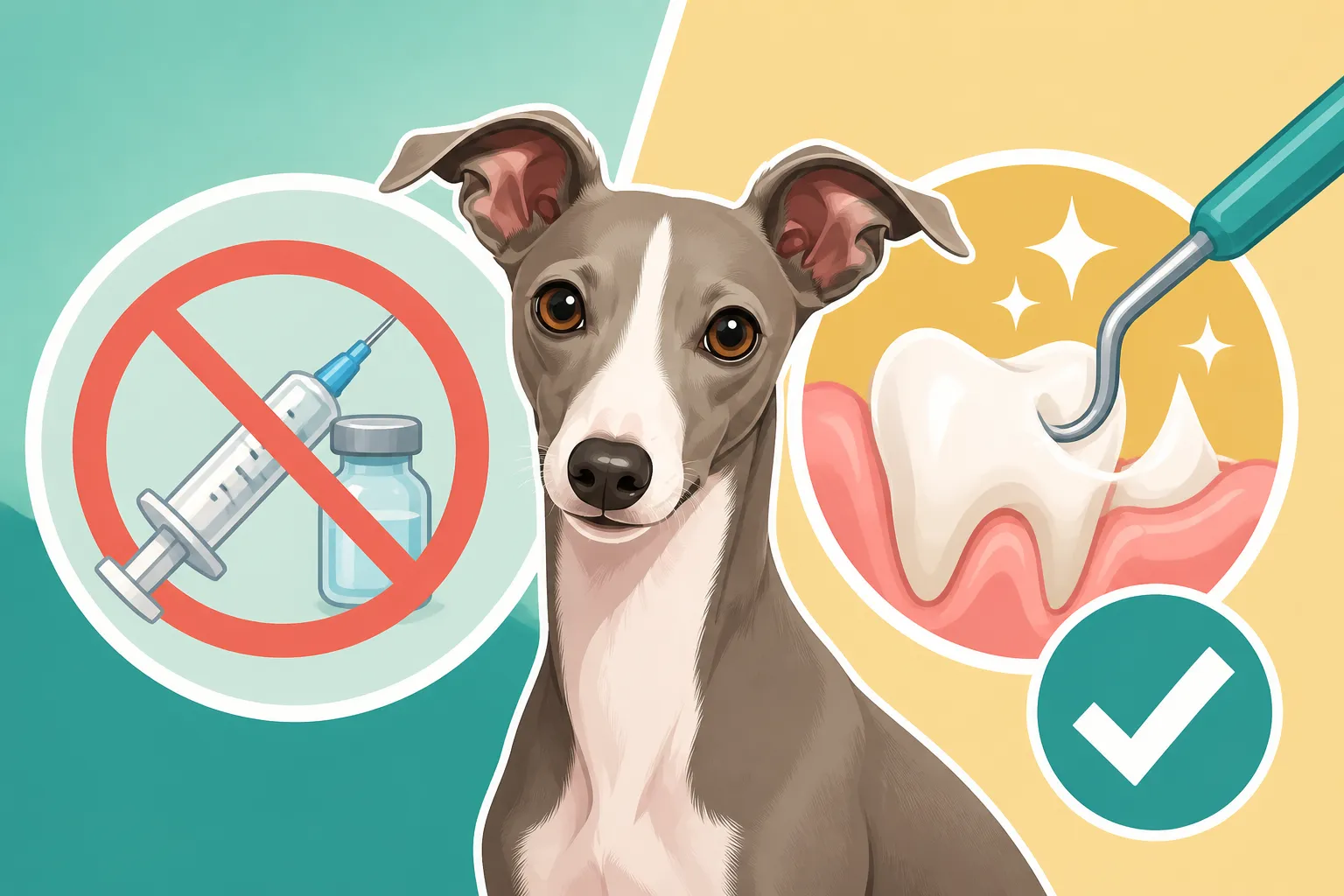
Typically, an anesthesia-free cleaning involves a technician or hygienist scaling visible plaque and tartar from the surface of your Italian Greyhound's teeth using hand instruments. The dog is usually held, sometimes gently restrained, while the surfaces of the teeth are scraped clean. Some providers might also offer polishing afterward. The whole idea is to avoid the perceived risks and costs associated with general anesthesia. They're often performed at pet stores, grooming salons, or by mobile services, sometimes even touted as a "spa treatment" for your dog's teeth. It offers a quick, surface-level fix for visible issues, making your dog's smile look brighter, at least for a little while. You might even find products on sites like Chewy that claim to aid in plaque reduction, but these are for daily home use, not a substitute for a professional cleaning.
The Limitations of Anesthesia-Free Procedures
Here's where the appealing facade starts to crack: anesthesia-free cleaning is inherently limited in its scope and effectiveness. It only addresses the visible surfaces of the teeth – the parts above the gumline. Imagine trying to clean your own teeth without brushing under your gumline, or without a dentist checking for cavities you can't see. It's simply not thorough. The most critical areas for dental disease are often hidden below the gumline, where bacteria silently wreak havoc on the supporting structures of the teeth. These procedures also cannot legally or ethically perform necessary diagnostic steps like X-rays, which are absolutely vital for assessing the true extent of dental disease. Without X-rays, you're literally guessing at what's going on inside your Italian Greyhound's mouth.
Why This Method Can Be Misleading
The biggest problem with anesthesia-free cleaning isn't just what it misses, but what it appears to accomplish. By removing visible tartar, it gives owners a false sense of security that their dog's dental health has been adequately addressed. In reality, the underlying periodontal disease can continue to progress unchecked beneath the gums, leading to severe infections, pain, and eventual tooth loss. It's like painting over rust on a car; it looks better for a moment, but the corrosion underneath is still eating away at the structure. This can be especially detrimental for a breed like the Italian Greyhound, whose small, crowded mouths are already a ticking time bomb for dental issues. It can delay proper veterinary intervention, making eventual treatment more extensive, more painful, and more costly.
The Risks and Ineffectiveness for Italian Greyhounds
For our delicate Italian Greyhounds, opting for an anesthesia-free dental cleaning carries significant risks and is largely ineffective for truly managing their oral health. While the intention might be good – to avoid anesthesia – the drawbacks far outweigh any perceived benefits.
Incomplete Cleaning: The Root of the Problem
The fundamental flaw of anesthesia-free dental cleaning is its inability to clean below the gumline. This is where periodontal disease truly takes hold, eroding the bone and ligaments that hold teeth in place. Bacteria thrive in these dark, oxygen-poor pockets, creating inflammation and infection. Without addressing these subgingival areas, any surface cleaning is merely cosmetic. For an Italian Greyhound with already fragile jawbones and crowded teeth, leaving these bacterial reservoirs intact is akin to doing nothing at all, only with a prettier facade. The critical question of Whether an Italian Greyhound Can Keep Its Teeth for Life largely depends on complete care, not just surface-level.
Stress, Pain, and Potential for Injury
Imagine a stranger scraping your teeth with sharp instruments without your consent, while you’re fully awake and unable to understand what’s happening. That’s essentially what an anesthesia-free cleaning feels like for your Italian Greyhound. Even the most gentle handling can be incredibly stressful for a sensitive dog. A stressed dog might resist, making a thorough cleaning impossible and increasing the risk of accidental injury from the sharp tools. Furthermore, if your IG already has painful pockets of infection or loose teeth, the procedure can cause immense pain, leading to a negative association with future dental care and possibly worsening existing conditions. Italian Greyhounds are prone to anxiety, and this kind of restraint without sedation is often a traumatic experience for them.
Missing Critical Pathology: X-rays are Non-Negotiable
This is perhaps the most dangerous aspect of anesthesia-free dental cleaning: the complete absence of dental X-rays. Approximately 60-70% of dental disease in dogs occurs below the gumline and is only detectable through X-rays. Without them, even a skilled professional cannot identify issues like abscesses, bone loss, un-erupted teeth, root fractures, or jaw lesions. For Italian Greyhounds, whose small jaws are already predisposed to problems, missing these hidden conditions can lead to excruciating pain, severe infections, and even catastrophic jaw fractures if extractions are attempted without full knowledge of the bone density. This is why Why an Italian Greyhound's Jaw Can Break During Extraction is a serious concern, and proper diagnostics are absolutely essential.
No Opportunity for Extractions or Advanced Treatment
Should the technician performing an anesthesia-free cleaning find a fractured tooth, a deep pocket, or a severely diseased tooth, they cannot, by law or by training, do anything about it. They are not veterinarians. This means that if serious issues are present, you'll still need to schedule a proper veterinary dental procedure under anesthesia anyway, potentially after weeks or months of unnecessary pain for your dog. This not only delays crucial treatment but also means you've paid for an ineffective procedure that did not truly benefit your Italian Greyhound's health.
The Gold Standard: Veterinary Dental Cleanings Under Anesthesia
While the idea of avoiding anesthesia is tempting, the reality is that a thorough and safe dental cleaning for an Italian Greyhound simply cannot happen without it. Modern veterinary medicine has made enormous strides in anesthetic safety, particularly for sighthounds, making a professional dental cleaning under anesthesia the undeniable gold standard.
Why Anesthesia is Essential for Comprehensive Care
General anesthesia allows your veterinarian to perform a truly comprehensive oral exam, scaling, and polishing, both above and, crucially, below the gumline. Your Italian Greyhound is completely still, comfortable, and pain-free throughout the procedure. This enables the vet to use ultrasonic scalers and hand instruments effectively and safely, removing every speck of plaque and tartar from every surface. More importantly, it facilitates the taking of full-mouth dental X-rays, which are absolutely non-negotiable for understanding the true state of your IG's oral health. Without anesthesia, none of this essential diagnostic and therapeutic work is possible. It might seem like a big step, but understanding Why an Italian Greyhound's Dental Requires Anesthesia is key to their long-term health.
The Role of Dental X-rays and Full Oral Exams
During a professional dental cleaning, once your Italian Greyhound is safely under anesthesia, the veterinary team conducts a full oral exam. This involves carefully probing the gumline around each tooth to measure pocket depths, checking for gum recession, and visually inspecting every tooth surface. Then, full-mouth dental X-rays are taken. These radiographs reveal the hidden structures: the roots of the teeth, the surrounding bone, and any un-erupted teeth. It's here that abscesses, bone loss, root resorption, and other severe pathologies are discovered. Without X-rays, roughly two-thirds of significant dental disease would go undiagnosed, leaving your Italian Greyhound in silent pain. This thorough diagnostic process is what truly differentiates a veterinary dental cleaning from any non-anesthetic procedure.
Addressing Anesthetic Concerns in Italian Greyhounds
It's completely normal to have concerns about anesthesia, especially for a small, lean breed like the Italian Greyhound. Their low body fat and unique physiology mean they can be more sensitive to certain drugs and prone to hypothermia during sedation. However, modern veterinary practices are well-equipped to manage these risks. Your vet will perform pre-anesthetic bloodwork to assess organ function, tailor an individualized anesthetic protocol, and utilize advanced monitoring equipment (ECG, blood pressure, oxygen saturation, temperature). They'll also implement warming measures throughout the procedure, such as heated blankets and circulating warm water pads. Many Italian Greyhound owners appreciate the peace of mind that comes from knowing their vet understands Why Anesthesia Is Handled Differently in an Italian Greyhound. Don't hesitate to discuss these protocols with your veterinary team; a good vet will be happy to explain their safety measures.
The True Cost vs. Perceived Savings
While anesthesia-free cleaning might appear cheaper upfront, it often leads to greater costs in the long run. By masking underlying problems and delaying proper treatment, it allows dental disease to progress to a more severe stage, requiring more extensive and expensive interventions later. Think of it this way: a yearly anesthesia-free cleaning that misses a growing abscess could lead to emergency surgery and potential jaw fracture repair down the line, a bill far greater than routine professional care. Investing in regular, comprehensive veterinary dental care, perhaps offset by pet insurance like Healthy Paws, is a far more economical and humane approach to your Italian Greyhound's oral health over their lifetime. This proactive approach saves not only money but also your dog from unnecessary pain and suffering.
Proactive Home Dental Care for a Lifetime of Healthy Smiles
While professional veterinary dental cleanings are absolutely essential, they are only one part of the equation. What you do at home, every single day, plays an enormous role in maintaining your Italian Greyhound's oral health and extending the time between professional cleanings. This daily commitment is the true foundation of preventing advanced periodontal disease.
The Power of Daily Toothbrushing
Nothing, and I mean nothing, beats daily toothbrushing for preventing plaque and tartar buildup. It’s the single most effective thing you can do at home. Yes, it takes patience, and yes, your Italian Greyhound might not love it at first, but with positive reinforcement, most IGs can learn to tolerate it. Choose a soft-bristled, small toothbrush – some owners find a finger brush works well, others prefer a child-sized brush or a specialized pet toothbrush found on Chewy. Use a pet-specific enzymatic toothpaste (never human toothpaste!) which helps break down plaque. Focus on the outside surfaces of the upper teeth, where tartar tends to accumulate fastest. Making it a consistent, positive routine, perhaps after their last potty break before bed, will yield incredible results. Brushing their teeth daily can significantly reduce the frequency and intensity of professional dental cleanings and is crucial for Whether an Italian Greyhound Can Keep Its Teeth for Life.
Understanding Dental Chews and Water Additives
Many commercial dental chews and water additives are marketed to improve dental health. Some can be mildly helpful as an adjunct to brushing, but they are never a substitute. Look for dental chews that have the Veterinary Oral Health Council (VOHC) seal of approval, which means they've been proven to reduce plaque and/or tartar. However, even VOHC-approved chews primarily clean the surfaces they contact, and often don't reach below the gumline or target all tooth surfaces equally. For an Italian Greyhound with their delicate jaws, ensure any chew is soft enough not to risk tooth fracture. Hard chews or bones are a definite no-go. Water additives can help reduce bacteria in the mouth but are typically the least effective standalone measure. They're more of a bonus than a primary tool.
Regular Oral Inspections and Early Detection
Make it a habit to regularly lift your Italian Greyhound’s lips and inspect their teeth and gums. Look for any signs of redness, swelling, bleeding, or discolored teeth. Keep an eye out for missing teeth or retained baby teeth, which are common in IGs and can lead to problems if not addressed. Any changes in appetite, favoring one side of the mouth, pawing at the face, or excessive drooling could be signs of oral pain and warrant a veterinary visit. Don't dismiss bad breath as just "dog breath"; it's often the first indicator of dental disease and What Bad Breath Means in an Italian Greyhound is usually a call to action. Catching issues early can prevent them from becoming severe, painful, and expensive.
The Role of Nutrition in Oral Health
While diet isn't a silver bullet for dental health, good nutrition supports overall well-being, which in turn can aid in maintaining a healthier mouth. Some kibble designs claim to help scrape teeth, but their effectiveness is limited, especially for smaller breeds where the kibble often crumbles before significant scraping can occur. A balanced, high-quality diet, perhaps like those offered by Ollie, contributes to a strong immune system, which helps the body fight off oral infections. Avoid excessive sugary treats or human foods that can contribute to plaque buildup. A healthy body is better equipped to maintain a healthy mouth, reducing inflammation and supporting gum tissue integrity.
| Feature | Anesthesia-Free Cleaning | Veterinary Dental Cleaning Under Anesthesia |
|---|---|---|
| Effectiveness | Cosmetic, only removes visible plaque/tartar above gumline | Comprehensive, removes plaque/tartar above and below gumline |
| Safety | Risk of injury from tools, stress/pain to dog | Very high when modern protocols are followed, dog is pain-free |
| Diagnostics | None (no X-rays, no probing below gumline) | Full oral exam, dental X-rays, probing |
| Treatment Capability | None (cannot extract, fill, or perform surgery) | Full range of treatments (extractions, surgery, etc.) |
| Pain Management | No pain relief, potential for acute pain during procedure | Full pain relief during and after procedure |
| Cost | Lower upfront cost, higher long-term costs due to delayed treatment | Higher upfront cost, lower long-term costs due to preventative care |
| Long-Term Impact | Masks disease, allows progression of subgingival issues | Prevents and treats disease, promotes overall health |
Ultimately, while the desire to avoid anesthesia for your beloved Italian Greyhound is completely understandable, anesthesia-free dental cleaning simply doesn't provide the comprehensive care they need. It's a temporary cosmetic fix that can dangerously mask serious underlying issues. For the long-term health, comfort, and safety of your Italian Greyhound, a full veterinary dental cleaning under general anesthesia, coupled with diligent at-home care, is truly the only way to ensure their precious smile remains healthy and pain-free.
Disclaimer
This article is for general informational purposes only and does not constitute professional advice. Laws, prices and regulations vary by location and change over time. Consult a qualified professional for guidance on your specific situation.