How Italian Greyhound Type Has Changed Since 1900
If you compare an Italian Greyhound from an old portrait with one in a show ring today, the dog may look familiar but not identical. Changes in breeding priorities, breed standards, population size and ideas about soundness all shaped the modern Italian Greyhound. This guide explains what shifted since 1900, what stayed consistent, and how to tell lasting breed type from passing fashion.
What Italian Greyhound type means
The enduring outline
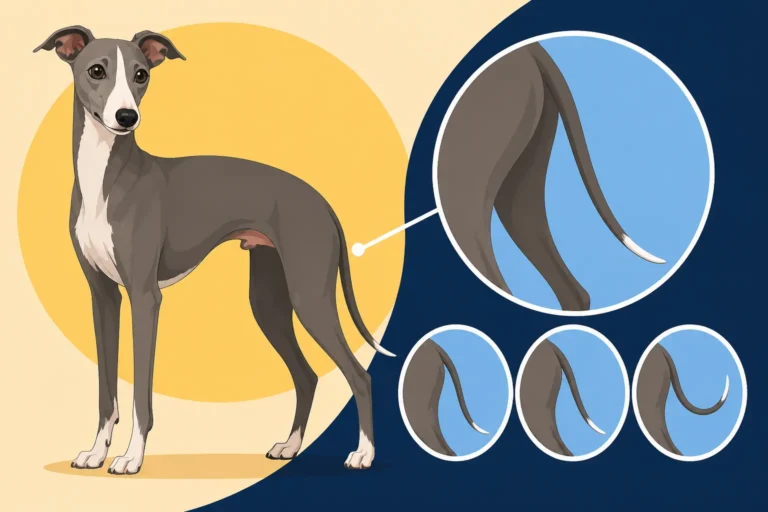
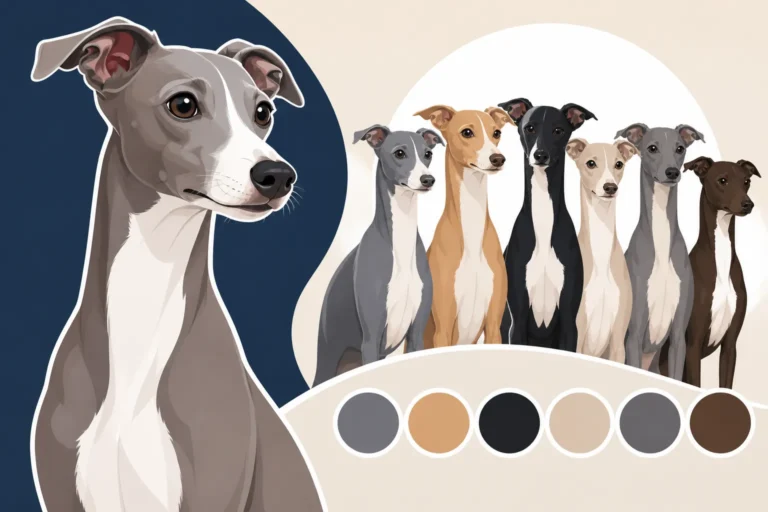
“Type” is the recognizable combination of features that makes a breed look and move like itself. In an Italian Greyhound, that means more than a small body or a fine coat. The breed’s identity comes from the relationship between its elegant outline, deep chest, tucked-up abdomen, long legs, narrow head and alert, graceful movement.
The image many people have in mind is a delicate little sighthound, but delicacy does not mean weakness. A well-made Italian Greyhound should look refined without appearing frail or structurally unsound. Breed descriptions and show standards help define that balance, although judges and breeders may interpret the ideal somewhat differently.
A historic painting or photograph can offer clues about the dogs of its time, but it is not a technical record. Artists may exaggerate a dog’s proportions, and photographs can be affected by pose, lens, grooming or the individual dog’s age. For that reason, it is more useful to compare broad patterns across many sources than to treat one striking image as proof that the breed once looked entirely different.
What changed, and what did not
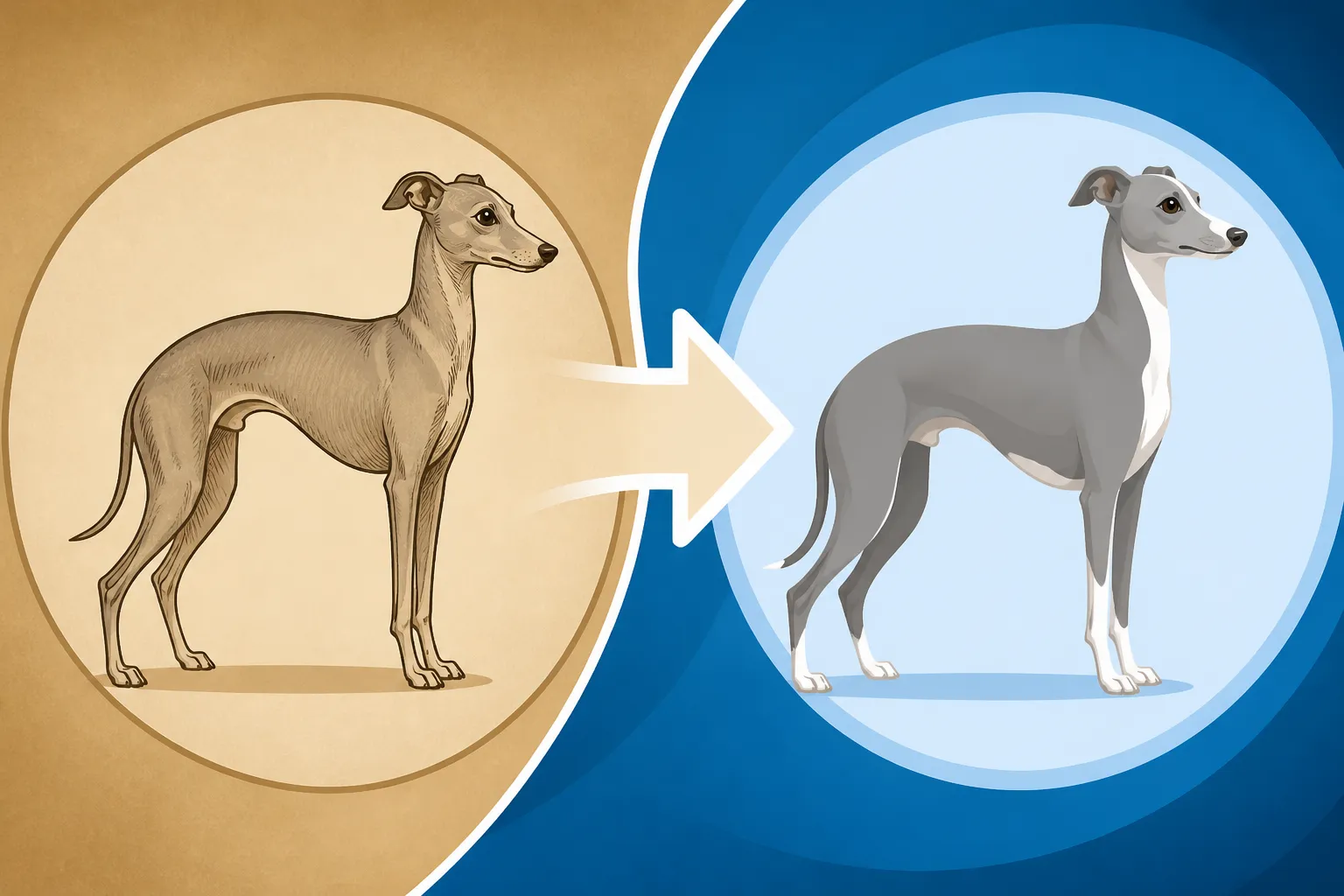
The Italian Greyhound has not been replaced by a fundamentally new breed since 1900. Its core sighthound character—light, agile, fine-boned and built for speed—remains recognizable. What has shifted is the way people have defined and selected for the ideal expression of those qualities.
Breeders and judges work within written standards, but a standard is not a snapshot of every dog in every decade. It sets out the desired structure and appearance; the dogs being bred, the size of the available population and the preferences of influential breeders all affect how that ideal looks in practice. Some differences that observers notice may reflect changing presentation rather than a change in underlying structure.
It also helps to separate an individual dog’s look from breed-wide change. A particularly small dog, a heavier-boned dog or one with a more pronounced outline does not by itself show that the breed has shifted. To understand the longer story, look at the pressures and turning points that affected breeding populations over time.
How the breed changed through the twentieth century
From a broad European history to a smaller breeding population
By the start of the twentieth century, Italian Greyhounds had already been kept in Europe for generations. They had been cherished as companions and appeared in portraits and other art, but their numbers and breeding fortunes were not stable everywhere. The breed’s history includes periods of serious decline, and the disruptions of the world wars further complicated the survival and exchange of breeding stock.
That history matters because a narrow breeding population can shape the options available to breeders. When there are fewer dogs to choose from, it may be harder to preserve a broad range of healthy, well-balanced individuals while also selecting for a consistent appearance. The story of those pressures is explored in The Italian Greyhound Nearly Died Out Twice in Europe and What the World Wars Did to the Italian Greyhound.
After periods of population loss, rebuilding a breed is not simply a matter of producing more puppies. Breeders need to preserve the qualities that make the breed distinctive while avoiding an overly narrow focus on one look or a limited set of lines. The history of recovery and its lasting implications is closely connected to How American Breeders Saved the Italian Greyhound and How Narrow the Italian Greyhound Gene Pool Became.
How standards and show culture shape appearance
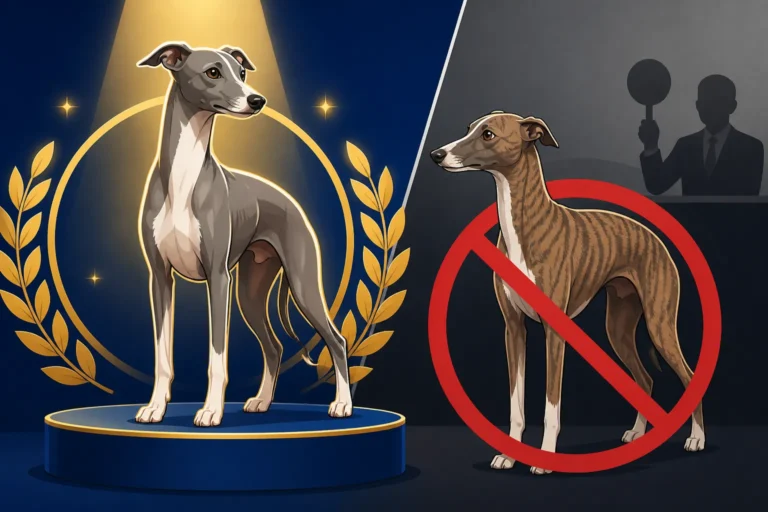
A written breed standard gives breeders and judges a shared description of the desired Italian Greyhound. It can help maintain recognizable features across generations, but it cannot freeze a breed’s appearance. Standards are interpreted by people, and show culture influences which details receive the most attention in a given period.
Selection can gradually shift the population toward traits that are especially rewarded or admired. If a particular outline, expression or movement repeatedly wins attention, breeders may be more inclined to choose dogs that display it. Over time, that can make some features more common without changing the breed’s basic identity.
It is important not to confuse a show-ring preference with a universal change in every Italian Greyhound. Companion dogs, working and performance dogs, and show dogs may be bred with overlapping but not identical priorities. And a dog’s silhouette can look different depending on its stance, condition, coat and age. The broad question of how standards are applied across regions is covered in How Italian Greyhound Standards Differ Between Countries.
The balance between elegance and soundness
Why “more delicate” is not always better
The Italian Greyhound’s refinement is part of its appeal, but extreme smallness or exaggerated fragility is not the same thing as correct breed type. A dog can look dainty while still having sound structure and the ability to move comfortably. Conversely, a very tiny or unusually fragile-looking dog should not automatically be treated as the ideal simply because it seems to match a popular image of the breed.
Ideas about size have sometimes encouraged demand for unusually small dogs. That pressure can put appearance ahead of health and soundness, especially when buyers are promised a special “miniature” or “teacup” version. The history and risks behind that idea are discussed in Whether the Italian Greyhound Was Ever Bred Too Small, The Toy Sized Italian Greyhound Fad and What It Cost and Why Very Small Italian Greyhounds Are Unsound.
A more useful question than “How tiny is this dog?” is whether the dog is proportionate, moves freely and has a body suited to ordinary life. A puppy’s small size alone cannot establish how it will mature or whether it is healthy. Prospective owners should focus on the individual dog’s welfare and on responsible breeding practices, rather than treating unusually small size as proof of quality.
What “fragile” looks like in context
Italian Greyhounds are fine-boned dogs, and their build does require sensible handling. That does not mean every dog is weak, nor does it mean a healthy Italian Greyhound should be kept from all play and movement. It means owners should understand the breed’s physical limits, supervise interactions with much larger dogs and prevent risky leaps from furniture.
Historical descriptions and casual conversation can reinforce the idea that the breed should look almost breakable. That can distort expectations in both directions: some people may mistake normal refinement for poor health, while others may overlook a real concern because they assume fragility is simply part of the breed. A balanced explanation of the distinction appears in Whether a Correct Italian Greyhound Looks Fragile.
Size should also be considered in relation to proportion and movement, not in isolation. Breed standards describe a preferred range and outline, but the practical goal is a healthy, functional dog—not the smallest possible one. For a closer look at the formal measurement question, see What Height the Italian Greyhound Standard Asks For.
Reading old and modern Italian Greyhounds fairly
A practical comparison checklist
When comparing a dog from an old photograph, painting or written description with a modern Italian Greyhound, use a consistent checklist. This avoids drawing big conclusions from one visible feature, such as apparent height or how narrow the dog looks.
| What to compare | What to look for | Why it matters |
|---|---|---|
| Overall outline | Balance between body length, leg length and depth of chest | Helps distinguish breed type from a single exaggerated feature |
| Head and expression | Fine, elongated shape and an alert expression | Small differences may reflect pose, age or artistic style |
| Body condition | Visible muscle and general fitness, not just thinness | A lean outline can be healthy; extreme thinness is not a breed virtue |
| Movement | Ease, coordination and a light, free stride | A still image cannot show how comfortably a dog moves |
| Scale | Compare proportions where a reliable size reference exists | Perspective can make a dog appear smaller or larger than it is |
| Source | Consider whether the image is a portrait, show photograph or casual snapshot | The purpose and style of the image affect how the dog is presented |
Even with a checklist, historical comparisons have limits. A portrait might show a favored companion posed to flatter its owner, while a modern show photograph may emphasize a formal stance. Neither image necessarily represents the typical dog of its era. Looking at multiple examples from different decades gives a more dependable sense of recurring patterns.
What modern owners should take from the history
For someone choosing an Italian Greyhound today, the historical story is useful because it explains why “classic” appearance can be interpreted in different ways. It also reinforces a practical priority: choose a healthy, well-socialized dog from people who put welfare and soundness ahead of novelty or extreme size.
Ask breeders about their goals, the health and temperament of their dogs, and how they select breeding animals. Look at adults as well as puppies, since a puppy’s proportions will change as it grows. Be cautious when a seller presents unusually small size as a special feature or uses dramatic labels instead of explaining the dog’s health, background and expected adult development.
It is equally important not to assume that every modern Italian Greyhound is less sound than dogs from the past. Old images cannot tell us everything about health, temperament or movement, and nostalgia can make earlier dogs seem more ideal than the evidence supports. A thoughtful comparison recognizes both continuity and change: the breed’s graceful sighthound outline has endured, while breeding populations, standards and human preferences have influenced how that outline is expressed.
Disclaimer
This article is for general informational purposes only and does not constitute professional advice. Laws, prices and regulations vary by location and change over time. Consult a qualified professional for guidance on your specific situation.