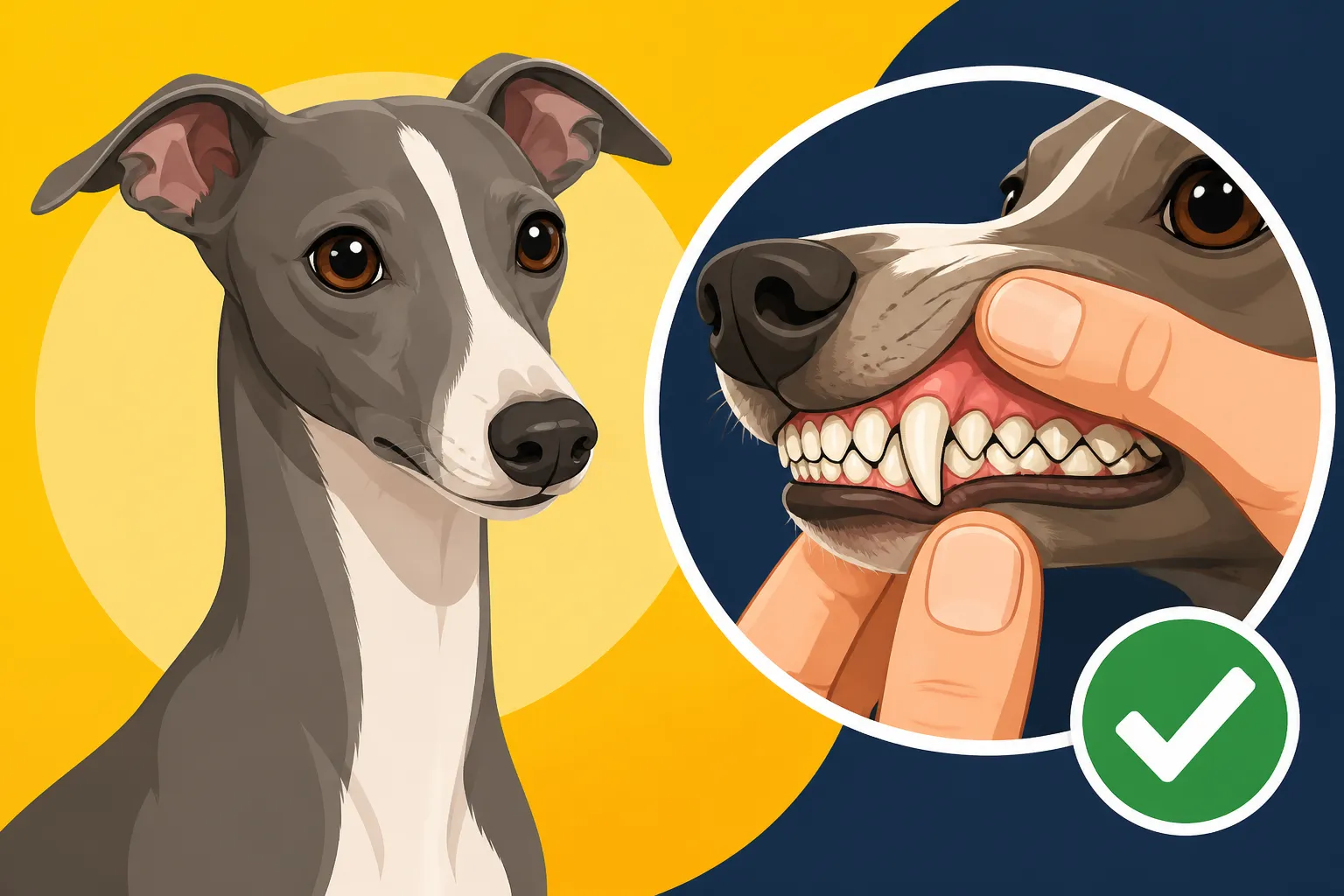
What an Italian Greyhound’s Bite Should Be
An Italian Greyhound’s teeth should meet in a scissors bite: the upper incisors sit just in front of the lower incisors, with the teeth fitting together neatly. But a bite that looks slightly uneven at home is not automatically a problem. This guide explains the breed’s expected bite, what variations deserve attention, and when to ask your veterinarian or a dental specialist.
The Italian Greyhound bite in plain language
What a scissors bite looks like
A scissors bite is the usual preferred bite for an Italian Greyhound. When the mouth is gently closed, the upper front teeth overlap the lower front teeth slightly, like the blades of scissors. The canines and back teeth should also fit together without an obvious collision or twisting.
The key word is fit. You are not expected to assess your dog like a show judge, and a quick peek while your dog is wriggling in your lap is not a diagnosis. Still, understanding the basic alignment can help you notice a change. If the lower jaw seems to sit far ahead of the upper jaw, the front teeth do not meet, or teeth appear to be pushing into the gums or palate, bring it up at a veterinary appointment.
A puppy’s mouth can be especially hard to interpret because baby teeth and adult teeth are changing places. If you are unsure whether what you see is normal development or a retained baby tooth, take a clear photo and ask your veterinarian to examine the mouth. The concerns that can arise during this stage are explained in Retained Baby Teeth in an Italian Greyhound and When an Italian Greyhound's Baby Teeth Must Be Pulled.
What the breed standard says and what it does not mean
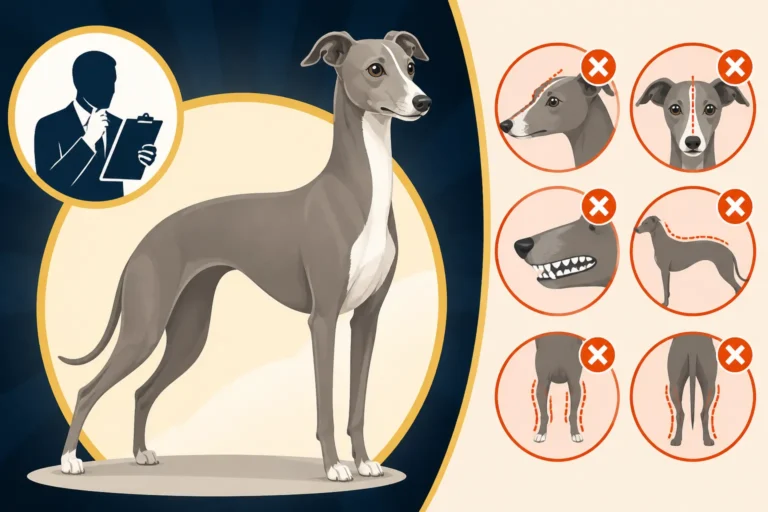
The Italian Greyhound breed standard prefers a scissors bite, while a level bite may be acceptable. In a level bite, the upper and lower incisors meet edge to edge rather than overlapping. A level bite is not the same thing as a severe underbite or overbite, and the appearance of a dog’s front teeth is only one part of a full mouth assessment.
A breed standard describes the desired traits for evaluating the breed. It is not a complete veterinary health checklist, nor does a small difference from the preferred bite automatically mean a dog is in pain. A veterinarian will consider the whole mouth: how the jaws align, whether the teeth are crowded, whether there are broken or loose teeth, and whether the gums and other tissues look healthy.
If you are comparing your dog with show descriptions, keep health and comfort in view. A charming face or tidy-looking front teeth cannot tell you whether hidden teeth are crowded or whether gum disease is developing. For broader context on the Italian Greyhound’s muzzle and limited room for teeth, see What an Italian Greyhound's Muzzle Cannot Hold Its Teeth.
Bite terms owners commonly hear
These terms describe different patterns of tooth alignment. They are useful vocabulary for a conversation with your veterinarian, but they are not a substitute for an examination.
| Bite description | What it generally looks like | What to do |
|---|---|---|
| Scissors bite | Upper incisors sit slightly in front of lower incisors | This is the preferred alignment; continue routine mouth checks |
| Level bite | Upper and lower incisors meet edge to edge | Ask your veterinarian whether it is comfortable and appropriate for your dog |
| Overbite | Upper jaw or teeth sit noticeably ahead of the lower jaw | Have the alignment assessed, especially if teeth contact soft tissue |
| Underbite | Lower jaw or teeth sit noticeably ahead of the upper jaw | Ask your veterinarian to check tooth contact, comfort, and function |
| Crooked or crowded teeth | Teeth overlap, rotate, or have little space between them | Schedule an exam; crowding can make cleaning and monitoring harder |
Descriptions can overlap, and the visible front teeth do not always reveal what is happening farther back in the mouth. If someone uses a term you do not recognize, ask them to show you which teeth they mean and whether they see a health concern or simply a variation in alignment.
Why bite and tooth alignment matter
Crowding can make routine dental care harder
Italian Greyhounds have fine, narrow muzzles, and some dogs have crowded teeth. When teeth sit close together or overlap, food and plaque can be harder to remove with brushing. Tight spaces may also make it difficult for an owner to see early changes in the gums.
Crowding does not mean dental disease is inevitable, but it is a reason to be attentive. A tooth that is turned or pressed against another may trap debris, and some areas may be challenging to brush thoroughly. That is why a veterinarian’s mouth exam matters even when your dog still eats normally and does not seem bothered. Why an Italian Greyhound's Teeth Crowd explores this issue in more detail.
Home care can support oral health, but it cannot correct the position of a tooth or assess areas you cannot see. If your dog tolerates brushing, use toothpaste made for dogs and a small brush that lets you reach the outer surfaces gently. Pet retailers such as Chewy carry dog-specific dental supplies, but ask your veterinary team what type of brush and toothpaste suit your dog’s mouth before buying something new.
A bite problem is not always a dental emergency
An uneven bite can be a harmless variation, a developing issue in a puppy, or a sign that teeth are contacting the wrong places. The practical question is not just “Does it look perfect?” but “Is it causing pain, injury, difficulty eating, or progressive damage?”
Watch for redness, bleeding, swelling, a bad smell that is new or persistent, pawing at the mouth, dropping food, chewing on one side, or suddenly avoiding hard food. Some dogs continue eating despite discomfort, so a normal appetite does not rule out a problem. If you spot a broken tooth, facial swelling, bleeding that does not stop, or obvious distress, contact a veterinary clinic promptly.
For subtler signs, note what you have observed and when it began. A short phone video of your dog eating or opening its mouth may help your veterinarian understand what you are seeing, but do not force the jaw open or poke at a sore area. The signs to look for are covered further in Signs an Italian Greyhound's Mouth Hurts.
Gum health matters as much as the front teeth
A bite can look neat while plaque and inflammation build near the gumline. Conversely, a bite that is not textbook-perfect may not be causing any discomfort. Alignment and dental health are related, but they are not the same thing.
Italian Greyhounds can be vulnerable to dental problems, so preventive care deserves a place in the routine rather than waiting until breath becomes unpleasant or a tooth appears loose. Your veterinarian can check the gums, look for tartar and abnormal tooth contact, and discuss whether a professional cleaning is appropriate. Periodontal Disease Is the Italian Greyhound's Most Common Diagnosis explains why oral health is worth taking seriously in this breed.
How to check your Italian Greyhound’s bite safely
Make a gentle, brief home check
Choose a calm moment when your dog is relaxed. Good opportunities might be after a walk or while your dog is resting beside you, rather than when they are excited, tired of handling, or guarding a chew. Start by lifting the lip gently; you do not need to pry the mouth open to get a useful first look.
Look at the front teeth from the side and then from the front. Notice whether the upper incisors sit slightly ahead of the lower ones, meet edge to edge, or seem markedly out of alignment. If your dog is comfortable, briefly check the visible gums for redness, swelling, or bleeding. Stop if your dog pulls away, stiffens, growls, or seems painful. A home check should build familiarity, not turn into a wrestling match.
It can help to check the same way every few weeks, especially while a puppy’s adult teeth are coming in. A note or photo can make gradual changes easier to describe at an appointment. Do not use a home check to decide that a tooth needs pulling, that the jaw is abnormal, or that professional dental care is unnecessary.
Know what to mention at the appointment
You do not need to arrive with a diagnosis. Tell your veterinarian what you noticed: for example, “The lower front teeth seem to sit ahead of the upper ones,” or “One baby canine is still beside the adult tooth.” Mention any change in eating, chewing, breath, drooling, or willingness to have the face touched.
For puppies, ask whether the adult teeth are erupting normally and whether any baby teeth are being retained. For adult dogs, ask whether the bite is comfortable and whether the tooth positions are creating contact with the gums or palate. Your veterinarian may recommend monitoring, a dental assessment, or a referral if the issue needs more specialized evaluation.
If you are uncertain how to look at your dog’s mouth without causing stress, ask the veterinary team to demonstrate a gentle lip lift. You can also ask which signs should prompt a sooner recheck. This is often more useful than repeatedly trying to inspect a reluctant dog at home.
Build brushing into the routine
Daily brushing is a useful goal when your dog tolerates it, but start with small steps. Let your dog sniff the brush, touch the outside of the lips, and gradually work up to brushing a few teeth at a time. Keep sessions calm and brief. Reward cooperation, and stop before your dog becomes overwhelmed.
Use only toothpaste formulated for dogs. Human toothpaste is not intended to be swallowed and may contain ingredients unsuitable for pets. A small, soft brush or finger brush may be easier to manage, though the best option depends on your dog’s mouth and comfort. If you are shopping for supplies, Chewy is one place owners may look for pet toothbrushes and dog toothpaste; confirm that the product is specifically intended for dogs and check with your veterinarian if your dog has oral pain or a dental condition.
Brushing helps with plaque at accessible tooth surfaces, but it does not replace examinations or professional care. If a tight bite or crowded teeth make brushing difficult, do not scrub harder or force the brush into a painful spot. Ask your veterinarian to show you safe positioning and discuss other appropriate ways to support your dog’s dental health. For practical brush-size considerations, see Which Toothbrush Fits an Italian Greyhound's Mouth.
Puppies, adult dogs, and when to get help
Puppy teeth need a little extra attention
Puppies go through a transition from baby teeth to adult teeth, and the change can make the mouth look uneven for a time. Keep an eye out for a baby tooth that remains beside an adult tooth, especially if the two teeth seem crowded together. Do not try to pull a tooth yourself; extraction can injure the surrounding tissue or damage a developing adult tooth.
At routine puppy visits, ask your veterinarian to check the bite and tooth development. Early attention can be helpful when teeth are crowded or making abnormal contact, but the right approach depends on the individual puppy. A puppy’s mouth changes quickly, so a veterinary exam is more informative than comparing one week’s appearance with a photograph of another dog.
Adult dogs can develop changes too
A dog that had a comfortable bite earlier in life can still develop dental disease, fractures, or tooth loss. The teeth may appear different because of wear, trauma, inflammation, or other changes in the mouth. If your dog’s bite seems newly uneven, do not assume it is simply aging or a harmless quirk.
Be especially observant after a fall, collision, or hard chew if your dog suddenly resists having the face touched or starts eating differently. Avoid testing the teeth by offering something very hard. A veterinarian can determine whether a tooth is damaged and whether the jaw or surrounding tissues need attention.
Professional dental care may be recommended when there is significant tartar, gum inflammation, pain, or a tooth that cannot be adequately assessed while the dog is awake. The timing and type of care depend on the exam and the dog’s overall health. You can read about routine-care questions in How Often an Italian Greyhound Needs a Dental Cleaning.
Get prompt advice for pain, injury, or sudden change
Call your veterinarian if you notice a broken tooth, facial swelling, bleeding, trouble closing the mouth, sudden reluctance to eat, or clear pain when your dog chews. Seek prompt guidance if your dog’s jaw looks newly misaligned after an injury. Do not try to push the jaw or teeth back into position.
A gradual, painless difference in tooth alignment can usually be raised at a scheduled visit, but it still deserves an informed opinion. If you are unsure how quickly to act, describe the signs to the clinic and ask whether your dog should be seen sooner. It is much easier to sort out a mild concern early than to wait until eating becomes difficult.
The useful takeaway is simple: a scissors bite is preferred, a level bite may be acceptable, and a striking overbite or underbite deserves an individual assessment. Look for comfort and function, keep up with gentle home care, and let your veterinarian evaluate changes you cannot confidently interpret. How to Check an Italian Greyhound's Gums offers another practical way to become familiar with what is normal for your dog.
Disclaimer
This article is for general informational purposes only and does not constitute professional advice. Laws, prices and regulations vary by location and change over time. Consult a qualified professional for guidance on your specific situation.