What Shape an Italian Greyhound’s Feet Are
An Italian Greyhound’s feet can look unusually long and delicate, especially beside the breed’s fine-boned legs. Their characteristic shape is closer to a hare’s foot than a compact cat’s paw: the toes are elongated and arched, with firm pads beneath them. Knowing what’s typical makes it easier to spot slipping, overgrown nails, soreness, or a change that deserves attention.
The Typical Shape of an Italian Greyhound’s Feet
Hare feet, not compact cat feet
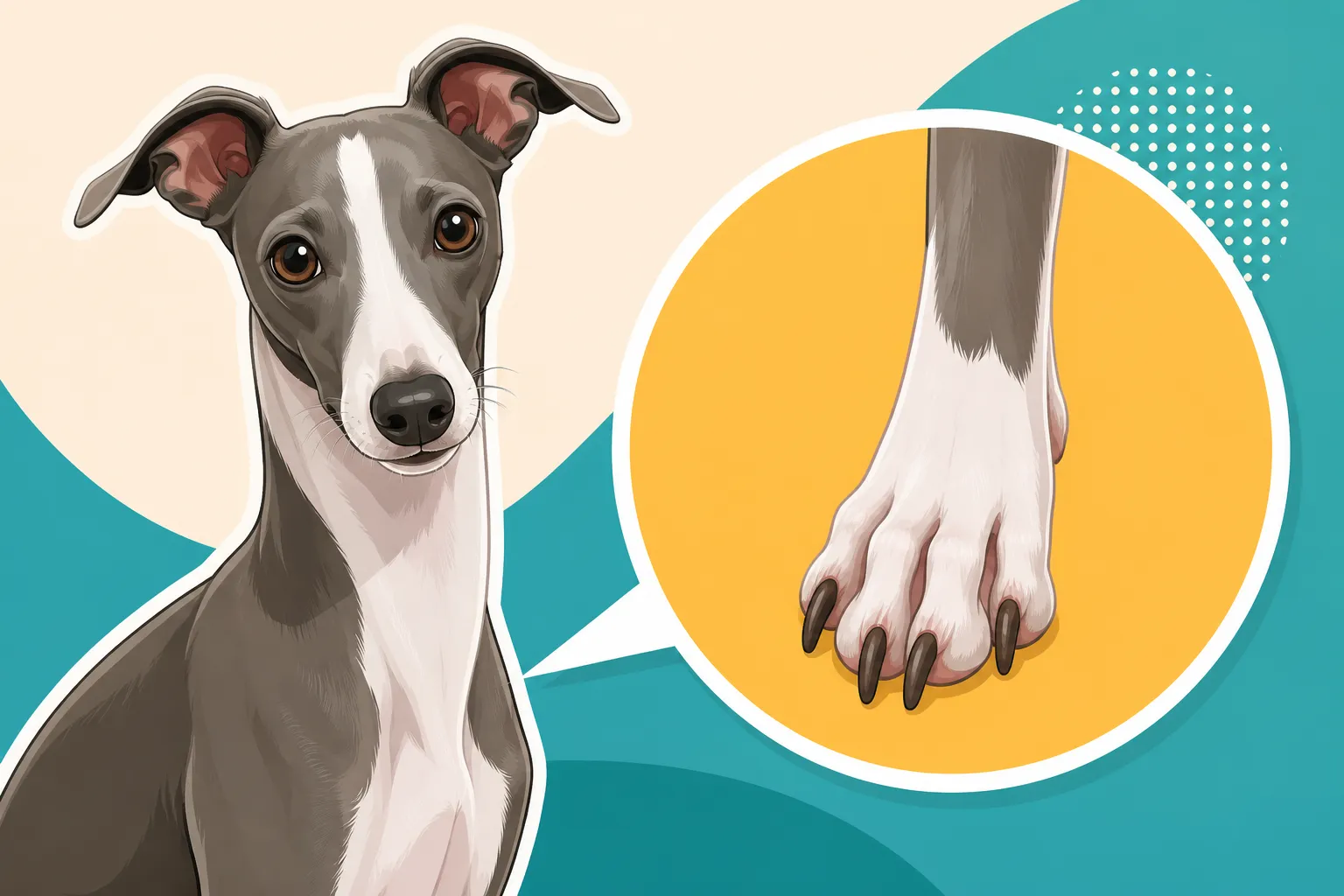
Italian Greyhounds have hare-shaped feet. The toes are relatively long and lie close together, with a noticeable arch rather than a short, round outline. The pads are firm and substantial for a small, fine-boned dog, and the nails extend from the tips of the toes. From the side, the foot may look narrow and refined; from underneath, the toes can seem longer than owners expect.
That shape fits the breed’s overall build. An Italian Greyhound is light, slim, and made for quick movement, and its feet are part of that elegant outline. They should not look like wide, flat paddles, but neither should they seem so pinched or weak that the dog struggles to stand or walk comfortably.
The long toes can also create a misleading impression. A paw may look a little splayed when the dog is standing on a soft bed or uneven ground, even if it looks more neatly gathered on a firm surface. Check both front and rear feet while your dog is standing naturally, and compare them over time rather than judging one paw from a single awkward pose.
What the toes, pads, and nails should look like
The toes should be distinct and gently arched, with the nails kept short enough that they do not force the toes upward or change how the foot meets the ground. Pad color and nail color can vary with coat pigmentation. A dark nail is not automatically more correct or healthier than a lighter one, and the appearance of a paw should be considered alongside comfort, movement, and the individual dog.
Healthy pads are generally supple rather than cracked or raw. They can feel a little textured, since they need to grip the ground, but sudden flaking, bleeding, swelling, or a tender spot is different from ordinary roughness. Look between the toes as well as at the pad surfaces: a grass awn, small stone, or irritated patch can hide in the spaces and make a dog suddenly favor one foot.
A quick comparison can help you describe what you see to your veterinarian or groomer:
| Feature | Typical appearance | Worth checking |
|---|---|---|
| Overall outline | Narrow, elongated, and hare-shaped | A new, marked change in one foot |
| Toes | Long, close together, and gently arched | Swelling, spreading, or tenderness |
| Pads | Firm, intact, and not sore to touch | Cracks, cuts, burns, or bleeding |
| Nails | Trimmed so they do not distort the toes | Nails curling, snagging, or clicking heavily |
| Movement | Comfortable, even steps for that dog | Persistent limping or reluctance to bear weight |
The breed’s high-stepping movement can make the feet look especially noticeable. If you are comparing paw shape with movement, What the Italian Greyhound's Gait Should Look Like offers useful context. The key is not to expect every Italian Greyhound to look identical; it is to notice what is normal for your own dog.
How Italian Greyhound Feet Affect Walking and Balance
Long toes can make footing look delicate
The shape of an Italian Greyhound’s paw is only one part of how it moves. Fine limbs, light body weight, and long toes can make a dog seem less planted than a sturdier breed, particularly on slick flooring. Some Italian Greyhounds tiptoe across polished wood or hesitate at a hallway transition, while others move confidently until they try to turn quickly or jump down from furniture.
This does not mean every hesitant step signals a foot problem. A dog may be reacting to a slippery surface, a startling noise, cold floors, or an earlier slip. Still, repeatedly scrambling, splaying the toes, or avoiding a familiar stretch of floor deserves attention. A small adjustment such as adding runners or washable rugs can make the route from bed to water bowl less stressful. See Why an Italian Greyhound Slips on Hardwood and Whether Rugs Help an Italian Greyhound on Hardwood for more on improving traction at home.
Pay attention to the whole pattern. Does your dog walk normally outdoors but hesitate on the kitchen floor? Is one paw held up, or are all four feet sliding? Does the problem appear only after exercise? Those details help distinguish an environmental footing issue from a possible injury or discomfort.
Protecting feet on different surfaces
Pavement, gravel, hot sidewalks, icy paths, and salted winter walkways can all be hard on paws. Italian Greyhounds are often eager to run, so they may not stop simply because a surface has become uncomfortable. After walks, check the pads and the spaces between the toes, especially if your route included rough ground, treated sidewalks, or very warm pavement.
In winter, dry air, cold ground, and de-icing products may leave pads irritated or cracked. Rinse or wipe paws after walks where salt or grit may be present, then dry between the toes. If your dog repeatedly lifts a paw or refuses to walk, head indoors rather than trying to coax them through discomfort. Why an Italian Greyhound's Feet Crack in Winter covers common seasonal problems, and Whether an Italian Greyhound Needs Traction Socks can help you think through grip on slick indoor floors.
Boots and socks are not automatically helpful for every dog. Some Italian Greyhounds accept them easily; others freeze, fuss, or lose them within a few steps. A close fit matters, and anything that rubs between the toes can create a new problem. Introduce footwear gradually indoors and check the skin after short trials rather than leaving it on for a long outing the first time.
Nail Care for a Long-Toed Paw
Why regular trimming matters
Long nails can alter how an Italian Greyhound places its toes. If nails touch the floor well before the pads do, they may push the toes out of their natural position, catch on fabric, or make walking on hard surfaces uncomfortable. A regular trim helps maintain a more natural stance and reduces the chance of a nail snagging during a sprint or play session.
Nail length varies with activity and the surfaces a dog walks on. Pavement may wear nails differently from grass or carpet, so there is no one schedule that suits every Italian Greyhound. Check the feet frequently and listen for repeated clicking on hard floors. Clicking by itself is not a diagnosis, but it is a useful prompt to look at the nails and see whether they are contacting the ground too soon.
If the nails are very long, avoid trying to take them back dramatically in one session. The quick—the living tissue inside the nail—can extend farther into an overgrown nail, making an ambitious trim painful and likely to bleed. A gradual approach, with small trims over time, is usually safer. How Often an Italian Greyhound's Nails Need Trimming explains how to assess nail length, while Why an Italian Greyhound's Quick Is Hard to See is useful if dark nails make the safe cutting point difficult to judge.
Making nail trims calmer and safer
Many dogs dislike having their feet held, and a fine-boned dog may be especially wiggly when a paw is lifted. Start with brief, calm handling rather than making the first lesson a full trim. Touch a shoulder, move down the leg, pause, and reward relaxed behavior. Then briefly touch a paw, reward again, and stop before your dog becomes worried.
When you do trim, support the leg gently and avoid twisting the foot into an uncomfortable angle. Take a tiny amount from the nail tip at a time, and keep styptic powder or another veterinarian-approved bleeding-control product nearby in case you nick the quick. If your dog panics, struggles hard, or has painful feet, it is better to pause and ask a veterinarian or experienced groomer for help than to force the job.
A rotary nail tool may suit some dogs, but it can produce noise, vibration, and heat if held in one place. Introduce it slowly, let your dog investigate while it is switched off, and use very brief contact. For some households, a conventional clipper is simpler; for others, a professional trim is the more comfortable option. Whether a Dremel Suits an Italian Greyhound's Nails discusses the trade-offs.
If you shop for nail-care supplies, retailers such as Chewy carry a range of clippers, files, and paw-care items. Choose tools that feel easy to control in your hand, and check that any paw product is suitable for dogs. A product being easy to find online does not make it appropriate for every irritated or injured paw.
When a Foot Shape or Paw Problem Needs Attention
Normal variation versus a concerning change
Not every difference in paw appearance means something is wrong. One nail may grow faster than another, a dog may have slightly different pigmentation on each foot, and the toes may spread a little when standing on a soft surface. What matters most is whether the difference is new, worsening, or paired with discomfort.
Look for limping, repeated paw licking, reluctance to walk, a toe held at an unusual angle, swelling, heat, or a cut that will not stop bleeding. A suddenly painful foot after a jump or fast turn should not be dismissed just because the dog can still put some weight on it. Italian Greyhounds can be spirited even when uncomfortable, and activity alone does not prove that a paw or leg is fine.
If a nail is torn, a pad is deeply cut, a toe is visibly swollen, or your dog cannot bear weight, contact a veterinarian promptly. Avoid applying human medications or tightly wrapping a paw without veterinary guidance. A wrap that is too tight can cause additional problems, and a dog may worsen a wound by chewing at an unfamiliar bandage.
A simple at-home foot check
A quick routine after walks can help you catch small issues before they become harder to manage. Choose a quiet moment when your dog is relaxed, perhaps after coming inside and settling on a familiar blanket. Check one foot at a time, looking at the pads, nails, and spaces between toes without pulling the legs into an awkward position.
Use this simple sequence:
- Look for dirt, thorns, grit, redness, or swelling.
- Gently check each pad for a cut, crack, or tender spot.
- Look between the toes for trapped debris or irritation.
- Check whether nails are snagging or pressing against the floor.
- Notice whether your dog pulls away, licks one foot, or reacts differently on one side.
Keep the interaction brief and positive. A small treat can help, and Chewy carries dog treats that some owners use during cooperative handling practice. If your dog seems worried, stop and return to easier steps another day instead of turning a routine check into a struggle.
For ongoing paw concerns, photos and notes can help you spot a pattern. Record when the problem began, which foot is affected, what surfaces your dog walked on, and whether the discomfort is improving. Chewy also offers basic grooming and paw-care supplies, but persistent pain, repeated cracking, swelling, or a change in gait calls for a veterinary assessment rather than another product to try at home. If the skin itself is fragile or repeatedly injured, How an Italian Greyhound's Skin Tears provides related context about this breed’s delicate skin.
An Italian Greyhound’s feet are meant to look refined and hare-shaped, with long arched toes and firm pads—not perfectly identical on every dog. Regular checks, sensible nail care, and secure footing help those distinctive paws do their job comfortably. If shape changes suddenly or your dog starts limping, focus on the change in comfort and movement, not just on how the paw looks.
Disclaimer
This article is for general informational purposes only and does not constitute professional advice. Laws, prices and regulations vary by location and change over time. Consult a qualified professional for guidance on your specific situation.