Why an Italian Greyhound Does Not Bloat
One of the most terrifying emergencies a dog owner can face is Gastric Dilatation-Volvulus, often simply called "bloat." It's a rapid, life-threatening condition where the stomach fills with gas and can twist, cutting off blood supply. It's a gut-wrenching worry for many, especially those with larger, deep-chested breeds. Thankfully, if you're an Italian Greyhound owner, this particular nightmare is one you can largely cross off your list of anxieties, and this guide will explain exactly why these delicate sighthounds are spared from such a devastating condition.
The Terrifying Reality of Gastric Dilatation-Volvulus in Dogs
Gastric Dilatation-Volvulus (GDV), or bloat, is a severe, rapidly progressing condition that affects dogs, and it’s one that every dog owner, particularly those with at-risk breeds, dreads. It typically begins when a dog’s stomach fills with gas, fluid, or food, causing it to distend abnormally. This initial stage is known as gastric dilatation. While uncomfortable, it’s not immediately life-threatening on its own. The real danger, and what makes GDV an absolute emergency, is when the distended stomach then twists upon its axis, a process called volvulus. This twisting can range from 90 to 360 degrees and, when it occurs, it traps the gas and fluid inside, completely cutting off blood supply to the stomach and often the spleen.
The immediate consequences of this twisting are dire. The lack of blood flow rapidly causes tissue death in the stomach wall. The trapped gas and fluid put immense pressure on other organs, including the diaphragm, making it difficult for the dog to breathe. It also compresses major blood vessels, leading to a dangerous drop in blood pressure and eventually shock. Without immediate surgical intervention, GDV is almost always fatal. Owners of breeds like Great Danes, Weimaraners, German Shepherds, and Standard Poodles are acutely aware of this risk, often taking extensive precautions and knowing the emergency signs by heart. For these dogs, a sudden onset of unproductive retching, a distended abdomen, restlessness, and signs of pain are red flags that demand an immediate trip to an emergency veterinary clinic.
What Happens During a Bloat Episode
When bloat strikes, the process is swift and brutal. Imagine your dog's stomach, usually a flexible, somewhat pear-shaped organ, suddenly inflating like a balloon. This distension causes tremendous pain and pressure. If the stomach then rotates, usually clockwise, it pinches off the esophagus (the tube from the mouth to the stomach) and the duodenum (the first part of the small intestine). This means nothing can go in or out – no gas can escape through belching, no vomit can be expelled. The dog will often try to vomit, but only foamy saliva will come up, if anything.
Simultaneously, the twisting can pull the spleen along with it, compromising its blood supply. The pressure inside the abdomen makes it harder for the heart to pump blood effectively, leading to a cascade of systemic problems, including cardiac arrhythmias and organ damage. The dog's gums might become pale or bluish, and they will likely exhibit extreme weakness, collapse, and difficulty standing. This isn't just a stomachache; it's a multi-systemic crisis that progresses from bad to catastrophic in a matter of hours, sometimes even minutes. Every second counts, making emergency surgery the only viable treatment, aiming to untwist the stomach, assess tissue damage, and often perform a gastropexy – a procedure to tack the stomach to the abdominal wall to prevent future occurrences.
The Italian Greyhound's Unique Physique and Bloat Risk
Given the serious nature of bloat, it's a huge relief for Italian Greyhound owners to know their beloved companions are incredibly unlikely to suffer from it. This isn't just luck; it's rooted deeply in their unique anatomy and overall physical characteristics. While the term "deep-chested" is often associated with bloat risk, it's the combination of a deep chest and a large body size that poses the real danger. Italian Greyhounds, despite their sighthound build, are very much a toy breed, and their small stature offers a significant protective factor.
Their slender, refined bone structure means their internal organs, including the stomach, are simply not subject to the same forces and stresses that can lead to torsion in a massive dog. The ligaments that hold an Italian Greyhound's stomach in place, while similar in function to those in larger dogs, are not as strained by immense gravitational pull or the sheer volume of a bloated, gas-filled stomach. Think of it this way: a tiny, delicate balloon is far less likely to twist on its tether than a giant, heavy blimp. The mechanics just aren't there for the violent, rotational forces required for GDV in such a small frame. This is just one of the many reasons that Italian Greyhounds generally tend to live long and healthy lives, often reaching ages of Why an Italian Greyhound Lives Fourteen to Fifteen Years.
Why Small Size Matters for Bloat Prevention
The primary reason Italian Greyhounds are spared from bloat lies in their compact size. Most studies and veterinary observations confirm that GDV is overwhelmingly a disease of large and giant breed dogs. The sheer volume of abdominal space in a large dog allows for greater movement and twisting of the stomach when it distends. In a small dog like an Italian Greyhound, which typically weighs between 7 to 14 pounds, the abdominal cavity is simply too constricted to permit the significant rotation needed for volvulus to occur.
Their delicate skeletal structure, particularly their narrow rib cage and lean body, limits the internal space available for the stomach to become dramatically displaced. Italian Greyhounds also tend to have very little body fat, as detailed in Why an Italian Greyhound Carries Almost No Body Fat, which means less cushioning and more direct anatomical constraints. While owners of larger sighthounds like Greyhounds and Borzoi might still need to be vigilant, the Italian Greyhound's toy classification effectively removes them from the high-risk group for GDV. It's a huge relief, especially when considering the myriad other, more common health concerns that can affect this breed, such as A Broken Leg Is the Emergency Every Italian Greyhound Owner Fears.
Comparing Italian Greyhound Anatomy to At-Risk Breeds
To fully grasp why Italian Greyhounds are safe from bloat, it's helpful to compare their anatomical features to breeds that are highly susceptible. Imagine a Great Dane: a huge dog with a deep, narrow chest and a significant amount of "empty" space within its rib cage. When a Great Dane's stomach rapidly fills with gas, it can swell to an enormous size, and with enough internal movement or activity, it has ample room to swing and twist on its attachments. The sheer weight and volume of the distended stomach create a powerful leverage effect, easily overcoming the natural ligaments meant to hold it in place.
Now picture an Italian Greyhound: much smaller, with a proportionally deep but overall very narrow chest. The length of the stomach, the strength and elasticity of its suspensory ligaments, and the limited abdominal space all combine to create a much more stable environment. Even if an Italian Greyhound were to experience severe gastric dilatation (which itself is uncommon), the physical confines of its small body would make a full volvulus extremely difficult, if not impossible. Their light bones and compact frame, while making them prone to other issues like Why an Italian Greyhound's Radius Is the Bone That Breaks, paradoxically protect them from this specific, terrifying condition. This table helps visualize some of these key differences:
| Feature | High-Risk Bloat Breeds (e.g., Great Dane) | Italian Greyhounds |
|---|---|---|
| Size | Large to Giant | Small (Toy Breed) |
| Chest Depth | Very deep, often narrow | Proportionally deep, but overall narrow |
| Abdominal Space | Ample, allowing organ movement | Limited, restricting organ movement |
| Stomach Ligaments | Can be stretched/overcome by large, heavy stomach | More stable due to small stomach size |
| Bone Structure | Heavy, robust | Light, refined |
| Typical Weight | 70-200+ lbs | 7-14 lbs |
| GDV Risk | High | Extremely Low |
Understanding Risk Factors and Prevention for Other Breeds
While Italian Greyhounds are not susceptible to bloat, understanding the risk factors and prevention strategies for other breeds can provide helpful context and highlight why their specific characteristics are so protective. For many large and giant breed owners, bloat prevention is a serious daily consideration. The exact cause of GDV is still not fully understood, but a combination of factors is believed to contribute. These include genetics, diet, feeding practices, and even temperament.
Owners of at-risk breeds often go to great lengths to minimize risk. This includes feeding multiple small meals a day instead of one large one, using slow-feeder bowls to prevent rapid eating and gulping of air, and avoiding exercise immediately before or after meals. Managing stress and anxiety is also sometimes suggested, as anxious dogs may be more prone to gulping air. Some owners even opt for a prophylactic gastropexy during spay or neuter surgery, where the stomach is surgically tacked to the abdominal wall as a preventative measure. This can prevent the volvulus (twisting) component, even if the stomach still dilates. It's a testament to the severity of GDV that such invasive preventative measures are routinely considered and performed.
Common Risk Factors for Bloat-Prone Dogs
For breeds that are predisposed to GDV, several factors have been identified that can increase their risk:
- Breed Predisposition: As mentioned, large and giant breeds with deep chests are most at risk. This genetic component is significant.
- Family History: Dogs whose parents or siblings have bloated are at a higher risk.
- Age: The risk of GDV increases with age, typically seen in middle-aged to older dogs (2-10 years old).
- Rapid Eating: Dogs that eat very quickly, gulping down food and air, seem to be at higher risk.
- Single Large Meals: Feeding one large meal a day instead of multiple smaller ones.
- Exercise Around Meals: Vigorous exercise or excitement immediately before or after eating.
- Elevated Food Bowls: While once thought to be preventative, some studies suggest elevated bowls might actually increase risk in certain breeds.
- Temperament: Anxious, fearful, or highly stressed dogs may be more prone.
- Diet: The role of diet is complex and debated, but some evidence suggests certain food types or ingredients might play a role, though no definitive consensus exists.
For an Italian Greyhound, none of these specific risk factors translate into a significant threat for GDV. Their small meals, typically eaten at a moderate pace, combined with their anatomical safeguards, mean these preventive measures are largely unnecessary for this specific concern. However, understanding their general dietary needs is always important, such as What an Italian Greyhound Eats in a Month.
Why Prevention Strategies Don't Apply to Italian Greyhounds
Since GDV is not a concern for Italian Greyhounds, the extensive prevention strategies applied to larger breeds simply don't need to be adopted. You don't need to worry about slow-feeder bowls to prevent air gulping, or religiously timing exercise around meals to prevent stomach torsion. This freedom from bloat anxiety allows owners to focus on the Italian Greyhound's actual breed-specific needs and vulnerabilities.
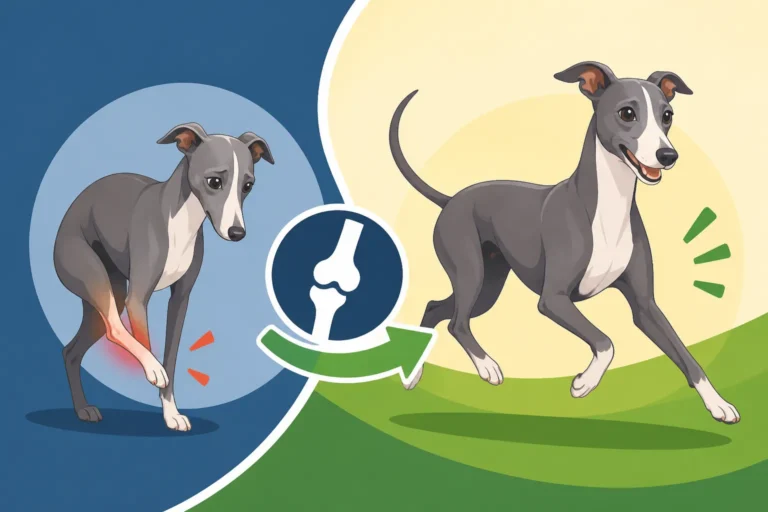
For example, given their delicate bones, preventing falls and jumps from furniture is a far more pressing concern for an Italian Greyhound than any gastric issue. Ensuring they have proper ramps and steps to avoid high-impact landings is vital. Also, their thin skin means they are prone to Cuts, Scrapes and an Italian Greyhound's Paper Thin Skin, which requires different preventative care. While Italian Greyhounds might be prone to other issues like Periodontal Disease Is the Italian Greyhound's Most Common Diagnosis, understanding which health concerns are truly relevant to your breed helps prioritize care and allocate resources. This also highlights why a comprehensive pet insurance plan from a provider like Healthy Paws is so valuable, as it covers the real health issues your Italian Greyhound might face, rather than theoretical ones.
When to Be Concerned: Recognizing Other Gastrointestinal Issues in Italian Greyhounds
While it's a huge relief that Italian Greyhounds are virtually immune to bloat, this doesn't mean they are entirely free from gastrointestinal issues. Like any dog, they can experience upset stomachs, diarrhea, vomiting, and other digestive problems. The key is to recognize these common issues for what they are – usually less severe, but still requiring attention – and not to mistake them for the terrifying signs of GDV.
Italian Greyhounds, despite their generally robust health, can have sensitive digestive systems. Stress, dietary changes, eating something they shouldn't have (a common "toy breed" pastime!), or even certain medications can trigger a tummy upset. Knowing what "normal" looks like for your Italian Greyhound in terms of appetite, stool consistency, and energy levels is crucial. Any significant deviation warrants observation and, if persistent or severe, a call to your veterinarian. Remember, vigilance in general health monitoring is part of How Often an Italian Greyhound Needs a Wellness Exam.
Common GI Upset Symptoms in Italian Greyhounds
Even without the threat of bloat, Italian Greyhounds can exhibit a range of symptoms indicating they're not feeling well in the tummy. These are generally indicative of less severe conditions but still require your attention:
- Vomiting: Can range from an occasional regurgitation of food to repeated bouts of bile or undigested food. If it's frequent, projectile, or contains blood, it's an emergency.
- Diarrhea: Loose, watery, or bloody stools. Can be caused by diet changes, parasites, stress, or underlying illness. Dehydration is a concern with persistent diarrhea.
- Loss of Appetite (Anorexia): Your Italian Greyhound might refuse meals or pick at their food. This can indicate nausea or a general feeling of unwellness.
- Lethargy: Reduced energy levels, excessive sleeping, or reluctance to play.
- Abdominal Discomfort: Unlike the rigid, distended abdomen of bloat, they might show general discomfort, hunching their back, stretching, or guarding their belly. They might also groan or sigh more than usual.
- Changes in Stool: Beyond diarrhea, look for changes in color (e.g., black tarry stools indicating digested blood, grey stools indicating pancreatic issues) or consistency.
- Constipation: Straining to defecate, producing hard, dry stools, or not passing stools at all.
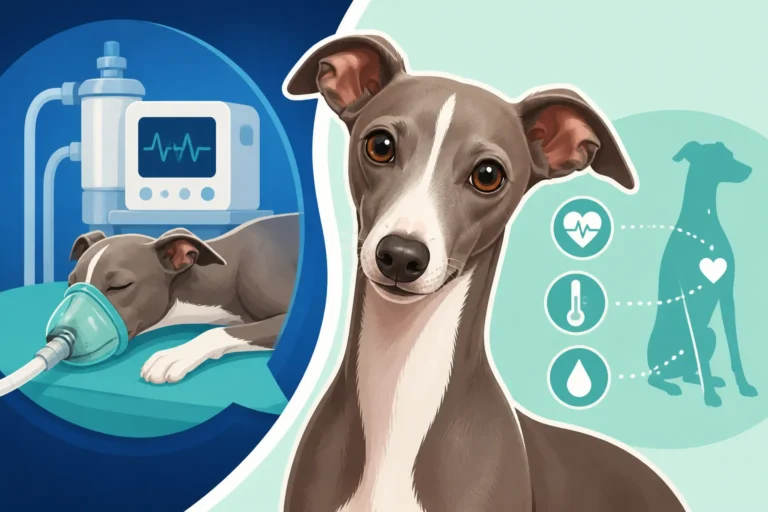
If your Italian Greyhound shows any of these symptoms, especially if combined with lethargy or a complete refusal to eat, it's always best to consult your vet. While bloat isn't the concern, timely intervention can prevent other issues from escalating. It's important to remember that Why Anesthesia Is Handled Differently in an Italian Greyhound for many procedures, so proactive care for any ailment is always best.
When to Seek Veterinary Attention for Gastrointestinal Issues
Knowing when to call the vet versus when to simply monitor your Italian Greyhound can be tricky. Here’s a general guideline:
Call Your Vet Immediately (within hours):
- Repeated, uncontrolled vomiting or diarrhea: Especially if accompanied by blood.
- Extreme lethargy or weakness: If your IG is listless, unresponsive, or collapses.
- Severe abdominal pain: If they cry out when touched, are hunched over, or refuse to move.
- Persistent unproductive retching: While not bloat in IGs, this could indicate a foreign body obstruction or another serious issue.
- Pale or blue gums: A sign of shock or severe illness.
- Inability to keep water down: Risk of rapid dehydration.
Call Your Vet for Advice (within 24 hours):
- Mild, infrequent vomiting or diarrhea: If your IG is still active, eating a little, and seems otherwise okay.
- Partial or intermittent loss of appetite: If they are still drinking and have some energy.
- Changes in stool consistency without other severe symptoms.
- Any symptom that lasts longer than 24-48 hours without improvement.
A great tip for Italian Greyhound owners, as for all dog owners, is to establish a good relationship with your vet. They are your best resource for determining the severity of symptoms and the appropriate course of action. Having a robust pet insurance plan, such as those offered by Healthy Paws, can certainly alleviate financial worries during these unexpected trips to the clinic, ensuring you can always make the best health decisions for your furry friend without hesitation.
Disclaimer
This article is intended for informational purposes only and does not constitute veterinary advice. Always consult with a qualified veterinarian for any health concerns or before making any decisions about your pet's care.