Whether an Invisible Fence Holds an Italian Greyhound
Oh, the allure of the invisible fence! It sounds like such a wonderful, modern solution, doesn't it? The dream of letting your Italian Greyhound frolic freely in the yard without a big, obtrusive physical barrier is incredibly tempting for so many of us. But here's the honest truth, and a frustration many IG owners grapple with: what sounds ideal in theory often doesn't align with the very unique nature of our delicate, high-prey-drive sighthounds. This guide is here to shed light on why invisible fences are rarely a reliable or safe containment method for Italian Greyhounds and what safer alternatives truly exist to keep your precious pup secure.
Understanding the Italian Greyhound's Instincts and Physicality
To truly grasp why an invisible fence isn't a good fit for an Italian Greyhound, we first have to talk about what makes them, well, them. These aren't just small dogs; they're sighthounds, bred for centuries with a very specific set of instincts and physical traits that directly contradict the principles of invisible containment.
The Sighthound Prey Drive
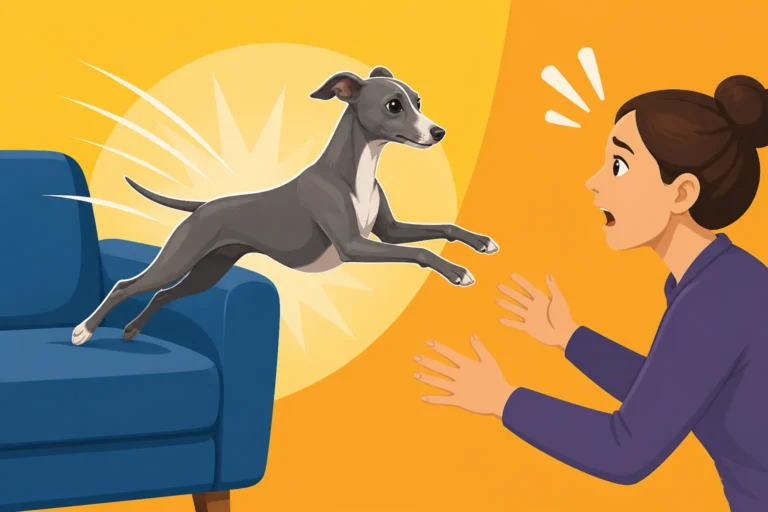
Imagine something small and fast darting across your yard – a squirrel, a rabbit, a leaf blowing just so. For an Italian Greyhound, this isn't just an interesting sight; it's a primal call to action. Their eyes are designed to spot movement from a distance, and their brains are hardwired to chase. This is their core identity, an instinct so powerful it often overrides everything else.
When that prey drive kicks in, a warning beep or a static correction from a collar becomes utterly insignificant. They are literally seeing red, focused entirely on the chase. The momentary discomfort of an invisible fence's correction simply pales in comparison to the irresistible urge to pursue. It's like asking a human to stop mid-sprint for a mild tickle – it might register, but it won't stop the momentum, especially when the finish line (or the fleeing critter) is in sight. This single-minded focus is a beautiful, if sometimes challenging, part of owning an IG, but it makes an invisible fence a risky gamble. They will absolutely blow right through that boundary if something triggers their chase instinct. You can read more about this in What an Italian Greyhound Does When It Sees a Rabbit.
Speed and Agility
Italian Greyhounds are built for speed and agility, miniature athletes with explosive power. They can reach surprising speeds in a very short amount of time, often before you even register what they're chasing. Their lean, aerodynamic bodies and long legs are perfectly adapted for bursts of high-speed pursuit.
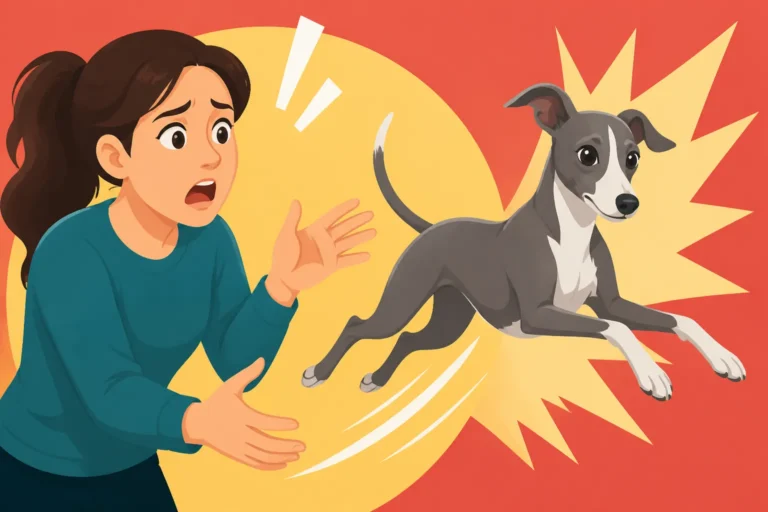
When they hit that boundary with the static correction, they're often already moving at such a clip that the shock simply becomes part of the rush. They're not going to stop, turn around, and calmly retreat. More often than not, they will yelp, tuck their tail, and continue forward, breaking through the barrier in their sheer momentum. Once they've learned they can endure the momentary "sting" for the reward of escape or the thrill of the chase, the invisible fence loses all deterrence. Their delicate frame and spirited nature mean they are far more likely to experience the shock as frightening and confusing rather than a clear boundary.
Low Body Fat and Pain Tolerance
Our Italian Greyhounds are famously delicate, with very little body fat. This isn't just about their aesthetic; it means they have less natural cushioning and insulation than many other breeds. While an invisible fence delivers a "static correction" rather than an actual "shock," it's still designed to be an unpleasant sensation.
For an IG, this sensation can be profoundly distressing. Given their thin skin and minimal muscle mass, the intensity of the correction might feel much stronger than intended, potentially causing undue fear or pain. Conversely, some IGs, particularly when their prey drive is fully engaged, might be so focused that they barely register the correction, or they interpret it as part of the exciting (or frightening) chase, not a sign to stop. The goal of an invisible fence is to deter through discomfort, but with an IG, it often either causes intense fear or is simply overridden by instinct, neither of which is a safe or effective outcome. Why an Italian Greyhound Carries Almost No Body Fat touches on their unique physiology.
How Invisible Fences Work (and Why They Struggle with Italian Greyhounds)
Let's delve into the mechanics of invisible fences and examine why these systems, designed with good intentions, often fall short for the Italian Greyhound breed.
The Principle of Containment
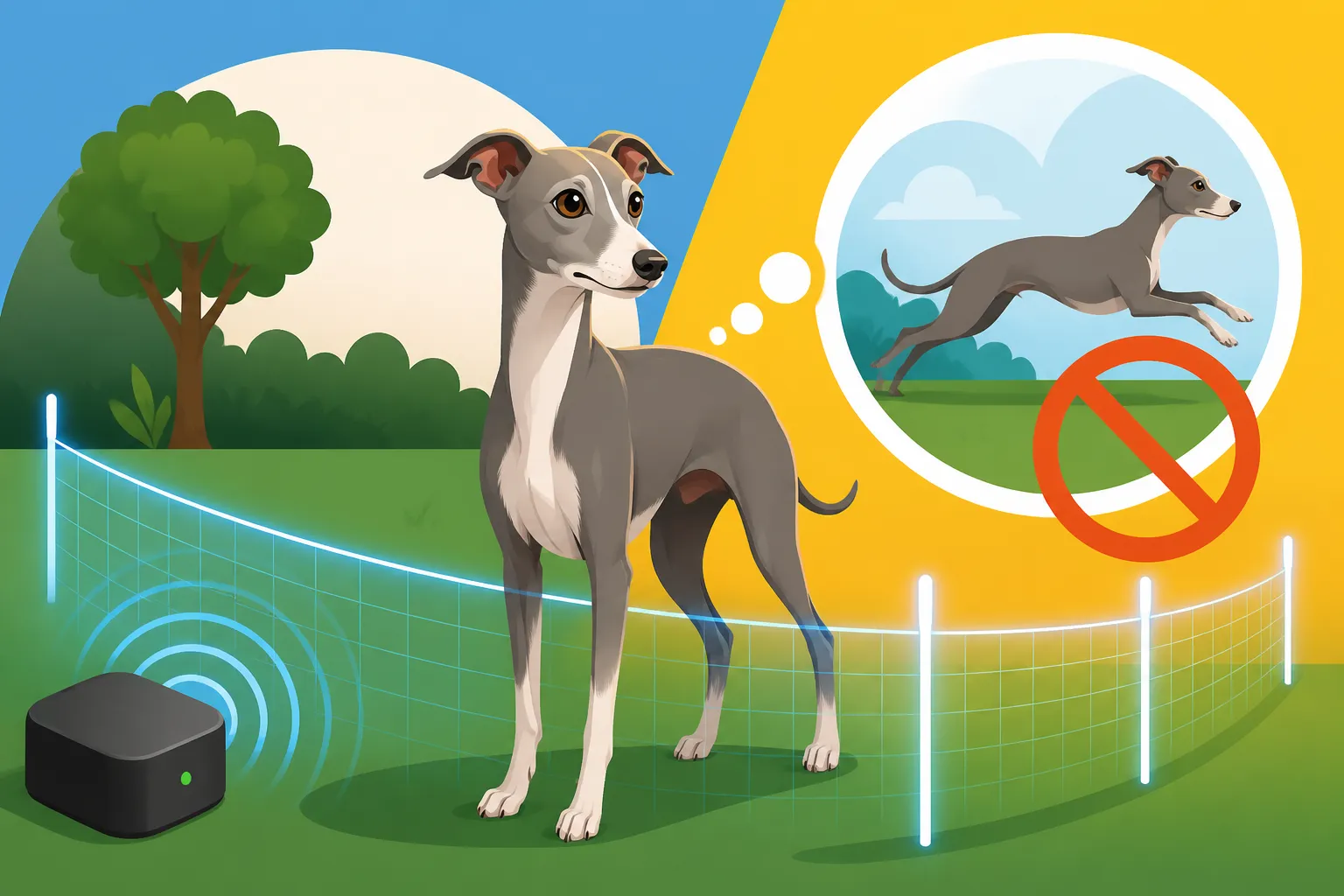
Invisible fences typically work using a buried wire that defines a perimeter in your yard. A transmitter sends a radio signal through this wire. Your dog wears a special collar equipped with a receiver. As the dog approaches the boundary, the collar emits an audible warning beep. If the dog continues to move closer to the wire, the collar then delivers a static correction (often referred to as a "shock" by owners, though proponents call it a "stimulus" or "correction"). The idea is that the dog learns to associate the warning beep and the correction with the boundary, thus staying within the safe zone.
Owners are usually instructed to train their dogs using flags along the perimeter, demonstrating where the boundary is and allowing the dog to learn the warning signs. The hope is that the dog will quickly understand that staying away from the flags and the warning sound means no static correction, reinforcing safe behavior. This system relies heavily on the dog's ability to consistently associate the warning with the boundary and respond by retreating, making it a cognitive challenge.
The "Run Through" Phenomenon
This is where the rubber meets the road, or rather, where the Italian Greyhound meets the invisible fence, usually with less-than-ideal results. The "run through" phenomenon is exactly what it sounds like: the dog, despite the warning beep and static correction, pushes past the boundary. For many breeds, a static correction is enough to startle them and make them turn back. For an Italian Greyhound with its powerful prey drive and sheer speed, it's often a different story.
Imagine your IG spots a cat on the other side of the invisible fence line. Their instinct to chase is immediate and overwhelming. They hear the beep, feel the static correction, but their brain is saying, "CHASE! NOW!" The brief, momentary discomfort of the correction is often insufficient to halt their forward momentum. They'll yelp, perhaps even jump, but the desire to pursue is so strong that they will often just "power through" the sensation. Once they realize they can endure the quick zap and be free on the other side, the invisible fence effectively becomes useless. Now, you have a dog that's escaped, potentially confused and scared, and potentially injured, not to mention outside the safety of your yard.
Psychological Impact and Training Challenges
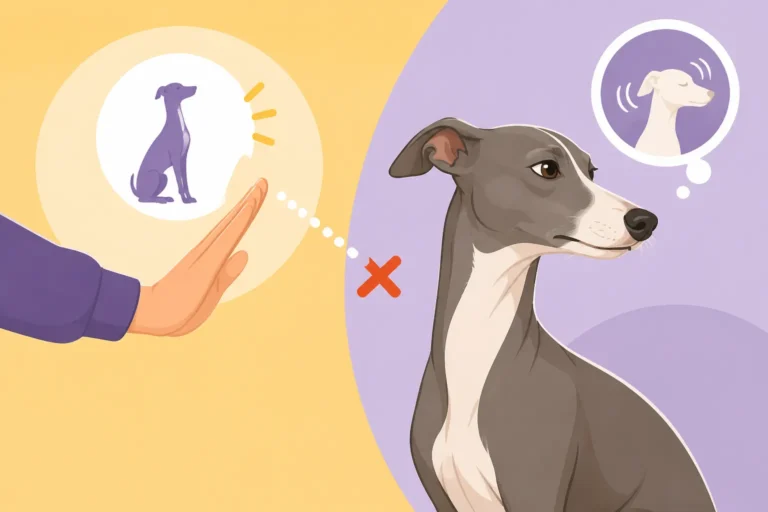
Italian Greyhounds are renowned for their sensitive and intelligent nature. This sensitivity, combined with their desire to please, makes harsh corrections counterproductive in training. Invisible fences, by their very design, rely on aversive conditioning – using an unpleasant stimulus to deter a behavior. For a breed as sensitive as the Italian Greyhound, this can backfire dramatically.
Instead of learning where the boundary is, an IG might become fearful of the entire yard, or even develop anxiety about going outside at all. They might associate the static correction with random objects, you, or even innocent activities, leading to confusion, stress, and behavioral issues. For example, if they get a correction while chasing a ball near the boundary, they might stop playing with balls in the yard altogether, or develop a fear of the ball itself. This can damage their confidence and your bond with them. Positive reinforcement is far more effective with Italian Greyhounds, rewarding desired behaviors rather than punishing unwanted ones. It can be incredibly difficult to make the invisible fence a positive and clear learning experience for such a delicate and intelligent breed. Why Raising Your Voice Sets an Italian Greyhound Back a Month speaks to their sensitive nature.
The Risks and Downsides of Relying on Invisible Fences for Italian Greyhounds
Trusting an invisible fence to contain an Italian Greyhound introduces several significant risks that every prospective owner should carefully consider. These aren't just minor inconveniences; they can lead to heartbreaking situations.
Escape and Danger
The most immediate and terrifying downside of an invisible fence for an Italian Greyhound is the high likelihood of escape. As we've discussed, their prey drive and speed can easily override the static correction. Once they've "broken through" the boundary, they are completely unprotected. An escaped Italian Greyhound faces a multitude of dangers.
They are incredibly fast, making them difficult to catch, especially if they are in full chase mode or panicked. They are highly vulnerable to vehicle traffic, stray dogs, or even accidental ingestion of something harmful. Being so small and delicate, they are also easily injured if they dart into an unseen obstacle or fall awkwardly while running at top speed. The heartbreak of an escaped IG, lost or injured, is a fear that plagues many owners. It's simply not worth the gamble when their safety is on the line. Why an Italian Greyhound Cannot Be Trusted Off Leash, Ever highlights their inability to be reliably off-leash.
External Threats
Another critical flaw of invisible fences is that they are purely a containment system; they do nothing to keep external threats out of your yard. While your Italian Greyhound might (theoretically) be deterred from leaving, an aggressive stray dog, a curious coyote, or even an unfamiliar person can walk right into your yard.
An Italian Greyhound, being so small and gentle, is incredibly vulnerable to larger animals or even unintended rough play from other dogs. They have very little in the way of defense mechanisms and can be seriously injured or worse in an encounter. Invisible fences create a false sense of security, making owners believe their dog is safe, when in reality, they are exposed to any potential danger that might wander onto the property. For a breed prone to injury and with a strong flight instinct, this is a significant and unacceptable risk.
Stress and Behavioral Issues
The consistent use of static corrections, even if mild, can have a profoundly negative psychological impact on a sensitive Italian Greyhound. Instead of creating a sense of freedom, it can instill fear, anxiety, and confusion. Your dog might develop a general apprehension about the yard, associating outdoor time with unpleasant sensations.
This stress can manifest in various behavioral issues. An IG might become jumpy, timid, or even exhibit redirected aggression, snapping at you or other pets after receiving a correction because they don't understand the source of their discomfort. Some dogs become obsessive about watching the boundary, constantly scanning for threats, unable to relax and enjoy their outdoor space. Others may develop separation anxiety if they associate being left alone outside with the possibility of receiving a static shock. The goal of providing a safe outdoor space quickly becomes an environment that breeds fear and discomfort, which is the antithesis of what we want for our beloved IGs.
Safer and More Effective Alternatives for Italian Greyhound Containment
Given the significant risks associated with invisible fences for Italian Greyhounds, it's crucial to explore and implement genuinely safe and effective containment methods. There are many reliable ways to give your IG outdoor time without compromising their safety or well-being.
Physical Fencing: The Gold Standard
When it comes to outdoor containment for an Italian Greyhound, a secure physical fence is truly the gold standard. It provides a tangible barrier that not only keeps your IG in but also keeps other animals and people out. For an Italian Greyhound, you'll want a fence that is at least 5-6 feet high, as they are surprisingly agile and can jump higher than you might expect, especially if motivated.
The fence should also be dig-proof at the bottom, or at least regularly checked, as some IGs can be surprisingly adept at squeezing under small gaps or digging. Chain link, wood, or vinyl fences are all viable options. The key is that it's a solid, inescapable perimeter. This gives you immense peace of mind, knowing that your delicate sighthound is truly safe to explore and play within the confines of your property without the constant threat of escape or external dangers. Consider Which Fence Height Contains an Italian Greyhound for more details.
| Feature | Invisible Fence for IGs | Physical Fence for IGs |
|---|---|---|
| Containment | Unreliable; high risk of "run-throughs" due to prey drive/speed | Highly reliable; provides a solid, visible barrier |
| Safety | Dog can escape; doesn't keep external threats out | Keeps dog in and external threats out |
| Psychological Impact | High risk of fear, anxiety, confusion due to corrections | Low risk; clear, understandable boundary, no aversive stimuli |
| Cost | Varies, but ongoing battery/collar replacement; initial install | Higher initial install, but durable and long-lasting |
| Maintenance | Wire breaks, battery replacement, regular training reinforcement | Periodic checks for damage, painting/staining if wood |
| Suitability for IGs | Not Recommended | Highly Recommended |
Leashed Walks and Long Lines
While a secure physical fence offers yard freedom, leashed walks are still an indispensable part of an Italian Greyhound's routine. They allow for controlled exercise, socialization, and exploration of new sights and smells in a completely safe manner. Even if you have a fenced yard, daily walks are beneficial for their mental and physical health.
For those without a secure fence, leashed walks become the primary method of outdoor exercise. Investing in a comfortable, well-fitting harness (rather than just a collar, which they can easily slip) is crucial. A long line – a leash ranging from 15 to 50 feet – can be an excellent tool for giving your IG more freedom in a safe, open area, like a truly empty park or field, always under close supervision. This allows them to run and explore while remaining physically connected to you, ensuring their safety and your peace of mind. Just remember, even with a long line, their speed means you need to be constantly vigilant.
Secure Indoor Spaces and Enclosures
Sometimes, outdoor access simply isn't feasible or safe, especially in extreme weather or for very short potty breaks. Creating secure indoor spaces or using appropriate enclosures can be a fantastic alternative. A large exercise pen can give your Italian Greyhound room to stretch and play indoors, perhaps in a dog-proofed room where they can't get into trouble.
Many Italian Greyhound owners find great success with indoor potty setups, like real grass pads or even litter boxes designed for dogs. This allows them quick and safe relief without needing to brave the elements or risk an outdoor escape. It's a pragmatic solution that acknowledges their delicate nature and sometimes finicky housetraining habits. For more on this, check out Setting Up an Indoor Bathroom for an Italian Greyhound. These indoor options are particularly helpful for puppies or senior IGs, or simply for those times when a quick outdoor trip isn't practical or safe.
Combining Methods for Enhanced Safety
The best approach often involves layering multiple safety strategies. If you have a physical fence, still supervise your Italian Greyhound when they're outside. Don't just open the door and walk away. Accidents can happen, a gate might be left ajar, or they might discover a weak spot. Think of your fenced yard as a fantastic, safe playground, but one that still requires your presence as a lifeguard.
For training and overall security, focusing on positive reinforcement and building a strong bond with your IG is paramount. Resources like BAXTER & Bella offer comprehensive online training programs that focus on building good habits and communication, which are far more effective for IGs than relying on aversive tools. A well-trained IG, even with their instincts, will be more responsive to your commands and less likely to put themselves in danger. Whether it's daily walks combined with indoor play, or a sturdy fence complemented by vigilant supervision, the goal is always to create an environment where your Italian Greyhound can thrive safely and happily.
Disclaimer
This article is for general informational purposes only and does not constitute professional advice. Laws, prices and regulations vary by location and change over time. Consult a qualified professional for guidance on your specific situation.