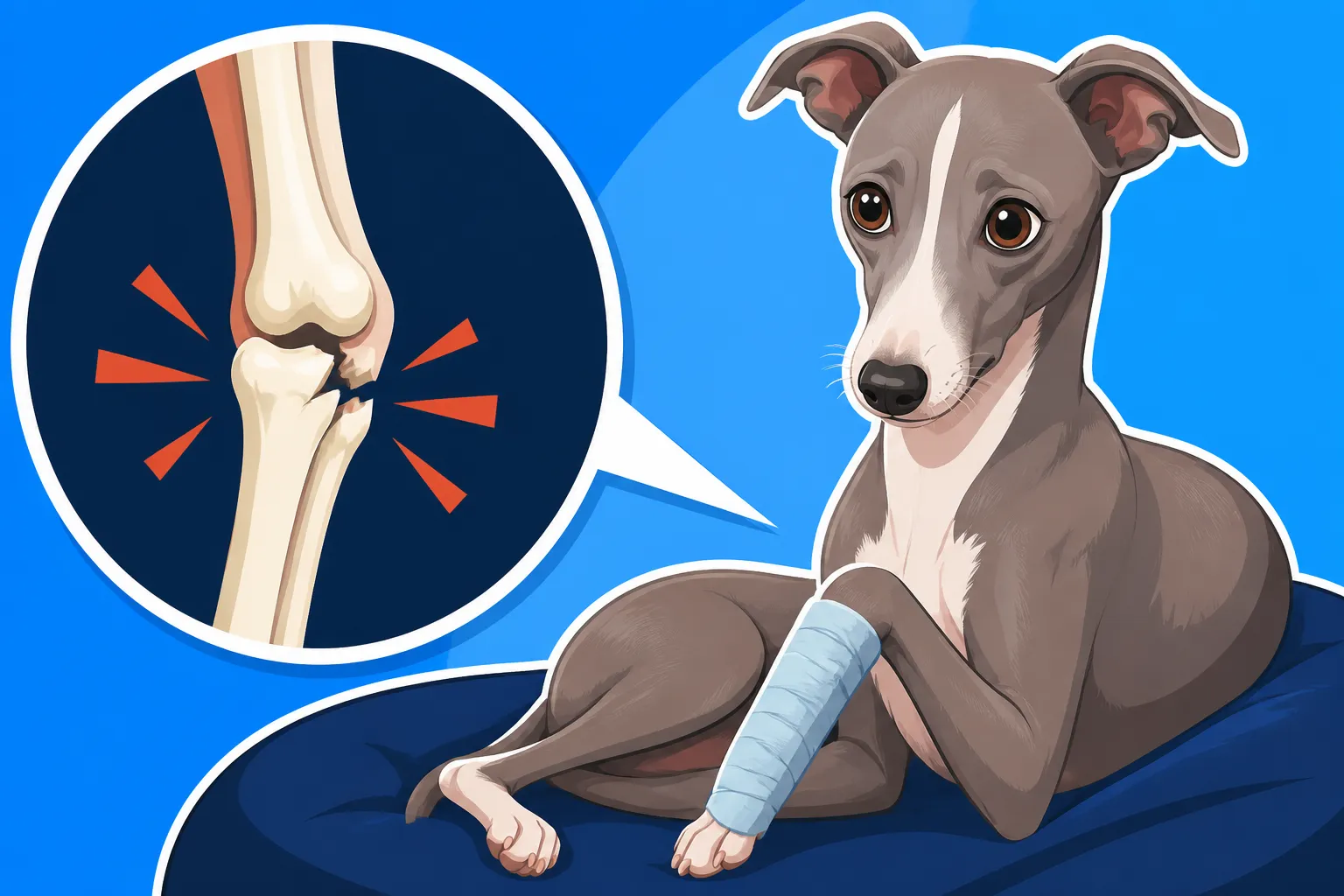
Why an Italian Greyhound’s Leg Bones Break So Easily
One of the most heart-wrenching realities of sharing your life with an Italian Greyhound is the constant worry about their delicate bones. It's a fear many new and even experienced owners grapple with, often feeling like their beloved companion could shatter with just a wrong move. This comprehensive guide will delve deep into why these elegant dogs are so prone to fractures, exploring the anatomical, developmental, and environmental factors at play, and crucially, what you can do to protect your treasured Italian Greyhound.
The Unique Anatomy Behind Italian Greyhound Bone Fragility
It’s not just an old wives' tale; Italian Greyhounds genuinely have bones that are more prone to breaking than many other breeds. This isn't a design flaw in a negative sense, but rather a consequence of centuries of selective breeding that prioritized their graceful, lithe physique. Their skeletal structure is built for speed and agility, not robust impact resistance.
The Thin Cortex and Medullary Cavity
When you look at an Italian Greyhound, you see sleek lines, fine musculature, and an almost ethereal grace. What you don't see, but what's critically important, is the internal structure of their bones. Unlike breeds with denser, thicker bones, Italian Greyhounds possess a very thin cortical bone. The cortex is the hard, outer layer of the bone that provides most of its strength. In Iggies, this layer is notably thinner, meaning there's less material to absorb shock and resist bending or twisting forces.
Compounding this is a relatively wide medullary cavity, which is the hollow center of the bone where bone marrow resides. While all bones have this, the ratio of the thin cortex to the wide medullary cavity in an Italian Greyhound’s long bones, particularly in their front legs, leaves them with less structural integrity. Imagine a fragile, hollow tube rather than a solid, sturdy rod. This unique bone architecture means that forces that might just bruise another dog could easily cause a clean snap or spiral fracture in an Italian Greyhound.
Low Bone Density Compared to Other Breeds
It's not just the thickness of the outer layer; the actual density of the bone material itself can be a factor. While there isn't extensive research comparing the exact bone mineral density (BMD) of Italian Greyhounds to, say, a Labrador, anecdotal evidence and veterinary experience strongly suggest a lower overall density. This isn't necessarily a disease, but rather a breed-specific characteristic. Think of it like balsa wood versus oak – both are wood, but one is inherently much lighter and more prone to breaking.
This lower density means their bones are simply less resilient. They lack the inherent "give" or flexibility that denser bones might possess when subjected to stress. This makes them particularly susceptible to sudden, sharp impacts or awkward landings. It's why a broken leg (A Broken Leg Is the Emergency Every Italian Greyhound Owner Fears) is a constant topic among owners, and why understanding this fundamental difference is crucial for prevention.
Radius and Ulna: The Most Vulnerable Bones
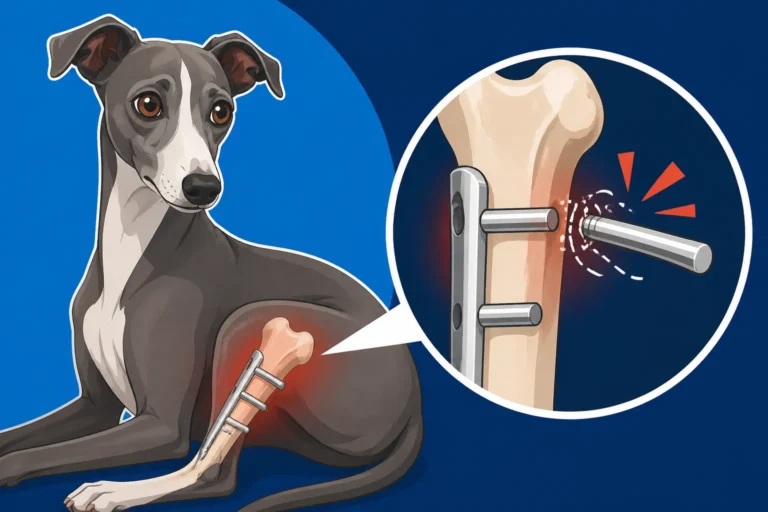
While any bone can break, Italian Greyhounds have particular weak spots, with the radius and ulna in their front legs being the most common fracture sites. These are the two long bones in the forearm, just below the elbow. The narrowest point of these bones is particularly vulnerable. When an Italian Greyhound jumps from a sofa, lands awkwardly, or twists its leg during play, the forces often concentrate on these specific areas, leading to a break.
The unique structure of these bones in Italian Greyhounds, coupled with their relatively long and slender form, means that even a seemingly minor misstep can have catastrophic consequences. The delicate nature of the radius (Why an Italian Greyhound's Radius Is the Bone That Breaks) is a well-known lament among orthopedic veterinarians specializing in sighthounds. It’s why so much emphasis is placed on protecting these particular limbs.
Growth Plate Vulnerabilities in Puppies and Young Iggies
The risk of fracture is not static throughout an Italian Greyhound's life; it's significantly higher during their puppyhood and adolescence, primarily due to their developing skeletal system.
Open Growth Plates in Young Dogs
Puppies, including Italian Greyhounds, are born with "growth plates" at the ends of their long bones. These are areas of cartilage where bone growth occurs. Unlike mature bone, growth plates are softer and more susceptible to injury. They are the weakest link in a young dog's skeletal system. A fracture through a growth plate can not only be excruciatingly painful but can also disrupt the normal growth of the bone, potentially leading to limb deformities or uneven leg lengths if not treated properly.
For Italian Greyhound puppies, whose bones are already inherently delicate, open growth plates amplify the risk. A tumble or an awkward landing that an adult dog might shake off can result in a growth plate fracture in a young Italian Greyhound. This is a primary reason why the age an Italian Greyhound is most likely to break a leg (The Age an Italian Greyhound Is Most Likely to Break a Leg) is often cited as under two years old. Owners must be exceptionally vigilant during this critical developmental period.
When Bones Fully Harden
Italian Greyhounds, like most dogs, don't reach full skeletal maturity until they are typically 12 to 18 months old, and sometimes even up to two years. During this entire period, their growth plates are gradually closing and ossifying (turning into hard bone). Until this process is complete, the risk of fracture remains elevated. It's a common misconception that once a puppy reaches a certain size, their bones are "strong enough." For an Iggy, true skeletal robustness takes time.
This means that owners often need to maintain a heightened level of caution and supervision throughout their Italian Greyhound's first two years of life. Restricting an Italian Greyhound Under Two isn't about stifling their joyful puppy energy, but about channeling it into safe activities that minimize fracture risk until their bones are as mature as they're going to get. It requires patience and a commitment to a controlled environment.
Impact of Early Exercise on Bone Development
While proper exercise is vital for overall health, excessive or inappropriate exercise can be detrimental to a young Italian Greyhound's developing bones. High-impact activities, repetitive jumping, or sustained rough play can put undue stress on open growth plates and fragile young bones. While "zoomies" are a natural part of an Iggy's life, prolonged, uncontrolled bursts of intense activity, especially on hard or slippery surfaces, can increase risk.
It's a delicate balance. You want your puppy to develop strong muscles and healthy joints, but you need to avoid activities that could lead to injury. Structured play, short walks, and soft surfaces are preferable to long runs on concrete or unsupervised wrestling with larger, heavier dogs. Understanding this balance is crucial (Why an Italian Greyhound Puppy Should Not Wrestle Big Dogs), as the disparity in size and play style often puts the Iggy at a severe disadvantage.
Common Scenarios Leading to Fractures
Italian Greyhounds are often nicknamed "four-on-the-floor" dogs by their experienced owners, a term that speaks volumes about the constant vigilance required to prevent accidents. Their athleticism, combined with their fragile build, makes certain everyday situations particularly hazardous.
Jumps from Heights and Falls
This is arguably the most common cause of fractures in Italian Greyhounds. Their natural inclination to jump on and off furniture – sofas, beds, chairs – is a leading culprit. While they are agile and seem to land gracefully, the impact from even a relatively small height can be too much for their slender leg bones. A fall from a human's arms, especially if they squirm or jump out unexpectedly, is another high-risk scenario. The Jump Off the Sofa That Breaks an Italian Greyhound's Leg is a story heard far too often in Iggy circles.
It's not just about the height, but also the angle and surface of the landing. An awkward twist, a foot catching, or landing on a hard floor instead of a soft rug can be disastrous. Many owners invest in ramps and steps (Ramps and Steps for an Italian Greyhound's Furniture) to mitigate this risk, effectively removing the temptation for them to leap. Even then, training is required to teach them to use these aids consistently.
Rough Play with Other Dogs
Italian Greyhounds love to play, often with an intensity that belies their delicate frame. However, playing with larger, more boisterous breeds, or even other Italian Greyhounds who play too roughly, presents a significant fracture risk. A bigger dog could accidentally step on an Iggy's leg, knock them over, or land on them during a wrestling match. Even a seemingly innocent chase can end in disaster if the Iggy takes a bad fall.
The sheer difference in weight, bone density, and play style makes these interactions perilous. While dog parks can be wonderful for many breeds, they are often a high-risk environment for Italian Greyhounds. It's not that Iggies shouldn't socialize, but owners must carefully select playmates and supervise interactions intensely. A quick, unplanned collision during playful antics can easily lead to an emergency vet visit and a hefty bill, which is where having comprehensive pet insurance like Healthy Paws can truly offer peace of mind.
Accidents in the Home Environment
Even in a seemingly safe home, hidden dangers lurk for an Italian Greyhound. Slippery floors (hardwood, tile, laminate) are a major concern, as they can cause skidding and uncontrolled falls, especially during their famous "zoomies." Sudden twists and turns on these surfaces can put immense rotational stress on their long bones. Clutter on the floor, open stairs, or even a sudden trip over a toy can lead to a misstep and a fracture.
Furthermore, doors and gates can be hazards. An Iggy darting out an open door and being accidentally caught or tripped, or getting a paw caught in a closing gate, can cause serious injury. The enthusiasm and speed with which these dogs move mean they can get into trouble in an instant. Protecting them means actively "Iggy-proofing" your home, just as you would child-proof for a toddler.
The Role of Activity Levels and Environment
While their delicate build is a primary factor, how an Italian Greyhound interacts with its environment and manages its own energy levels significantly influences fracture risk. It's a combination of nature and nurture.
Zoomies and Sudden Movements
Oh, the zoomies! Every Iggy owner knows them well. Those explosive, joyful bursts of speed where your Italian Greyhound rockets around the house, often bouncing off furniture or doing acrobatic turns. While utterly endearing and a true expression of their sighthound nature, these moments are also peak fracture risk times. The sheer velocity and sudden changes in direction put incredible stress on their slender legs. A misstep, a slide on a rug, or an impact with furniture during a full-throttle sprint can easily lead to a broken bone.
It's not about stopping the zoomies entirely – that would be impossible and frankly, cruel. It's about managing them. Ensuring your Iggy has ample space, clear paths, and soft, non-slip surfaces during these high-energy periods is paramount. Understanding their need to run and finding safe outlets for it, like a securely fenced yard or a sighthound-specific enclosed park, can help reduce the intensity of indoor bursts.
Slippery Surfaces and Unsafe Furniture
As mentioned, flooring plays a huge role in preventing fractures. Hardwood, tile, and laminate floors are treacherous for Italian Greyhounds, whose fine bones and lack of thick padding on their paws offer little traction. A sudden stop or turn on a slippery surface can lead to a leg splaying out, twisting unnaturally, and resulting in a spiral fracture. Many owners swear by covering high-traffic areas with runners or rugs to provide grip.
Similarly, furniture that encourages jumping without offering a safe descent is a major problem. Beds and sofas are often too high for an Italian Greyhound to jump down from safely. Even if they make it 99 times, it’s the 100th time, the one with an awkward landing, that leads to an emergency. Providing ramps and steps (Ramps and Steps for an Italian Greyhound's Furniture) isn't just a suggestion; for many, it's a necessity to protect their dog's legs. Training them to use these aids consistently is equally important, as Iggies can be quite headstrong.
The Importance of a Controlled Environment
Ultimately, preventing fractures in Italian Greyhounds comes down to meticulously controlling their environment. This means being acutely aware of potential hazards both inside and outside the home. It involves constant vigilance, especially when they are young and their growth plates are still open. Leaving them unsupervised for long periods, particularly with access to high furniture or slippery areas, significantly increases risk.
A truly controlled environment extends to interactions with other animals and children. While Italian Greyhounds can be wonderful family pets, not letting children carry them (Why Children Should Not Carry an Italian Greyhound) is a critical lesson to learn early. Even well-meaning children can accidentally drop or mishandle an Iggy, leading to severe injury. It’s about creating a bubble of safety that allows them to thrive and express their joyful personalities without constant fear of injury.
Genetic Predisposition and Breed-Specific Traits
Beyond the immediate anatomy and environmental factors, there's an underlying genetic component that has shaped the Italian Greyhound's delicate structure over centuries.
Selective Breeding for Delicate Features
The Italian Greyhound has been selectively bred for thousands of years, prized for its miniature size, elegant lines, and refined appearance. During the Renaissance, especially in Italy, the breed became a status symbol, with a strong emphasis on achieving a small, slender, and delicate build. This intense selection for aesthetic qualities, such as fine bone and a graceful silhouette, inadvertently amplified the inherent fragility of their skeleton.
While breeders were striving for beauty and refinement, the long-term consequence was a compromise in bone robustness. This isn't a fault of modern breeders, but rather a historical characteristic embedded deeply within the breed's genetic makeup. It's simply who they are – a testament to selective breeding prioritizing form over ruggedness.
Lack of Breed Standard Focus on Bone Density
Current breed standards for the Italian Greyhound typically emphasize traits like height, weight, coat color, head shape, and gait, all contributing to their elegant appearance. While "fine bone" is often mentioned, there isn't a specific focus or genetic marker for bone density or fracture resistance as a primary breeding goal. The emphasis remains on the aesthetic ideal that makes them so beloved.
This isn't to say breeders are ignoring health. Responsible breeders diligently screen for inherited eye conditions, patellar luxation, and other health concerns. However, the inherent fragility of their bones is such a defining characteristic that it hasn't been "bred out" because it's intertwined with their very essence and standard. Therefore, owners must accept this as a core trait and adapt their care accordingly.
The Myth of Calcium Supplementation
When owners realize their Italian Greyhound's bones are fragile, a common instinct is to assume a calcium deficiency and start supplementing. However, Whether Calcium Strengthens an Italian Greyhound's Bones is a topic often misunderstood. For a healthy Italian Greyhound on a high-quality, balanced diet, additional calcium supplementation is rarely beneficial and can actually be harmful.
An excess of calcium, especially in growing puppies, can lead to skeletal deformities and other health issues, rather than strengthening already delicate bones. Bone fragility in Italian Greyhounds is a structural and density issue, not typically a dietary deficiency if they are fed appropriate commercial dog food. Always consult your veterinarian before considering any supplements for your Italian Greyhound.
Proactive Measures and Prevention Strategies
Given the inherent risks, Italian Greyhound owners must adopt a proactive and preventative approach to care. It's about creating a safe world for them, mitigating risks, and understanding that prevention is always better than treatment.
Creating a Safe Home Environment
The first and most critical step is to "Iggy-proof" your living space. This involves several key actions. Start by addressing slippery floors: consider rugs, carpet runners, or even special paw pads for traction, especially in areas where zoomies might occur. Next, tackle furniture. Even low sofas can pose a risk. Use ramps and steps (Ramps and Steps for an Italian Greyhound's Furniture) to provide safe access to and from elevated surfaces. Block off stairs with secure gates until your Iggy is older and trained, or ideally, permanently if you're concerned.
Clear pathways are also important. Keep floors free of clutter that could cause a trip or snag a paw. If you have other pets, especially larger, boisterous ones, create separate play zones or supervise interactions closely. Never leave an Italian Greyhound unsupervised with access to high-risk areas or items. This level of diligence might seem extreme to owners of other breeds, but for an Iggy, it’s a necessary part of ensuring the fifteen-year cost (What an Italian Greyhound Costs Over Fifteen Years) doesn't include multiple expensive fracture repairs.
Supervision and Play Management
Constant, vigilant supervision is non-negotiable, particularly for puppies and young Italian Greyhounds. This means always being aware of their activities, especially during periods of high energy. When playing, guide their interactions. For instance, redirect overly rough play with other dogs to more sedate activities. Avoid dog parks or uncontrolled off-leash areas where a larger dog could accidentally injure your Iggy.
When family or friends visit, especially children, educate them on how to interact safely with your Italian Greyhound. Explain that Iggies are not rough-and-tumble playmates and must be handled gently and never dropped. That children should not carry an Italian Greyhound (Why Children Should Not Carry an Italian Greyhound) cannot be stressed enough; their enthusiasm can easily lead to an accidental fall. Every interaction, especially during play, should be managed to ensure it remains safe and fun.
Diet and Appropriate Exercise
A balanced diet is fundamental for overall health and bone development, but as discussed, extra calcium is usually not the answer. Feed a high-quality dog food appropriate for their life stage, ideally one formulated for small breeds. Maintaining a healthy weight is also crucial; an overweight Iggy puts additional stress on already delicate bones, increasing fracture risk.
When it comes to exercise, think quality over quantity, and safety over intensity. Short, frequent walks on leash are excellent for physical and mental stimulation. Allow for zoomies in a safe, carpeted, or securely fenced outdoor area where they won't encounter hazards or other large dogs. Avoid forced, repetitive jumping or intense agility training that puts excessive strain on their joints and bones, especially when they are young. Always remember that healing a fracture (How Long an Italian Greyhound Takes to Heal a Fracture) can be a lengthy, costly, and emotionally draining process, so proactive measures are truly the best path. Having pet insurance like Healthy Paws can also help manage the financial strain of such an event, covering a significant portion of unexpected veterinary costs.
Regular Veterinary Check-ups and Emergency Preparedness
Regular veterinary check-ups are essential to monitor your Italian Greyhound's overall health and discuss any concerns about bone development or activity levels. Your vet can advise on appropriate diet and exercise for your specific dog. Being prepared for the worst-case scenario is also vital. Know the signs of a broken leg (Signs an Italian Greyhound Has Broken a Leg) — though they may try to hide pain — and have an emergency plan.
This plan should include knowing the location and contact information for the nearest emergency veterinary clinic, especially one experienced with sighthounds and orthopedic injuries. Budgeting for emergencies is also crucial. What Fracture Repair Costs on an Italian Greyhound can be substantial, often running into thousands of dollars for specialized surgery. Setting aside an emergency fund or investing in pet insurance, such as through Healthy Paws, can provide a financial safety net and allow you to make decisions based on the best medical care rather than cost. Whether it regains full use of the leg (Whether an Italian Greyhound Regains Full Use of the Leg) often depends on prompt and expert care, making preparedness invaluable.
| Factor | Impact on Italian Greyhound Bone Fragility | Preventative Action |
|---|---|---|
| Thin Bone Cortex | Less material to resist impact/stress | Avoid high jumps, falls, and rough play |
| Wide Medullary Cavity | Reduced structural integrity | Secure home, controlled play environment |
| Low Bone Density | Bones are less resilient, more brittle | Provide soft landings, manage exercise on hard surfaces |
| Open Growth Plates | Soft, vulnerable areas in young dogs | Strict supervision, restrict intense play until mature |
| Slippery Surfaces | Increased risk of falls/twists | Cover floors with rugs/runners, traction socks |
| High Furniture | Jumps lead to high impact landings | Use ramps/steps, train dog to use them, block access |
| Rough Play (Big Dogs) | Risk of being stepped on or knocked over | Supervised play, choose appropriate playmates |
| Accidental Drops | Severe impact from height | Educate family/guests, pick up securely |
Disclaimer
Please remember that this article is intended for informational purposes only and should not be considered a substitute for professional veterinary advice. Always consult with a qualified veterinarian regarding your Italian Greyhound's specific health concerns and care needs.