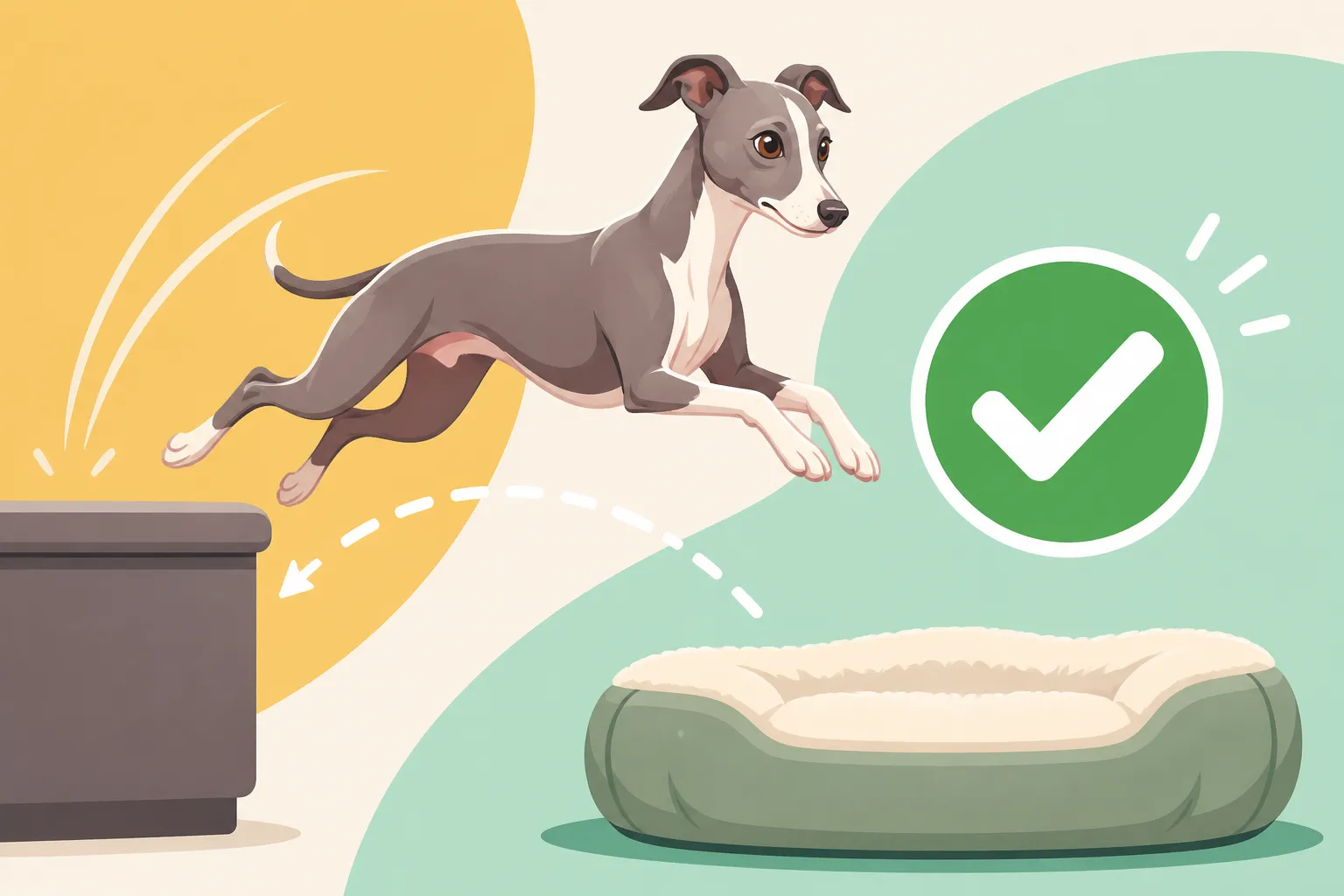
How High an Italian Greyhound Can Safely Land
One of the most heart-stopping moments for any Italian Greyhound owner is watching their graceful, yet notoriously fragile, companion launch themselves off a piece of furniture, seemingly without a care in the world. The worry isn't just about a scolding; it's the very real fear of a broken leg, a common and devastating injury for our beloved Iggies. This guide will delve into what truly constitutes a "safe" landing height for your Italian Greyhound and, more importantly, equip you with practical strategies to minimize risk and protect their delicate bones.
Understanding the Italian Greyhound's Unique Anatomy and Fracture Risk
It's no secret that Italian Greyhounds are built like tiny, elegant gazelles, and while their slender build contributes to their incredible speed and agility, it also leaves them particularly susceptible to orthopedic injuries. Understanding this fundamental aspect of their physiology is the first step in protecting them.
The Delicate Bone Structure
Unlike many other breeds, Italian Greyhounds possess extremely fine, delicate bone structures, especially in their legs. Their long, thin limbs, particularly the radius and ulna in the forelegs, are not designed to withstand high-impact forces. Imagine a delicate glass rod – it's strong in some ways, but easily shattered with a sudden, sharp impact. This fragility means that what might be a minor stumble for a sturdier breed can be catastrophic for an IG. When they land from a jump, even a seemingly modest one, the forces exerted on these slender bones can be immense, leading to a clean break or, worse, a spiral fracture that is notoriously difficult to repair. This is precisely Why an Italian Greyhound's Radius Is the Bone That Breaks most frequently, often resulting in complex and costly surgeries.
Furthermore, their minimal body fat provides very little cushioning. There isn't much soft tissue to absorb shock, so the impact is transmitted directly to their bones and joints. This lack of natural padding exacerbates the vulnerability, turning even a short fall into a high-risk event. Many owners are surprised by how easily these injuries occur, often from everyday activities like jumping off a sofa or bed.
Growth Plates and Youthful Vulnerability
Young Italian Greyhounds are at an even higher risk of fracture due to their still-developing bones. Puppies and adolescents have "growth plates" at the ends of their long bones. These are areas of cartilage where bone growth occurs, and they don't fully harden into solid bone until a dog reaches maturity, typically between 8 and 12 months of age, sometimes even a bit later for larger Iggies. Before these growth plates close, they are significantly weaker than the surrounding bone and much more prone to injury.
A jump or fall that might not injure an adult dog could easily cause a growth plate fracture in a puppy. These types of fractures can be particularly concerning because they can sometimes affect future bone growth, leading to limb deformities if not treated correctly and promptly. This is why many experienced Italian Greyhound owners and breeders strongly advocate for Restricting an Italian Greyhound Under Two years old, diligently limiting high-risk activities and providing a safe, controlled environment during this critical developmental period. It's a small window of intense vigilance that can prevent a lifetime of orthopedic issues.
The Impact of Landing Mechanics
It's not just the height of the jump that matters; it's how an Italian Greyhound lands. Their athletic, often impulsive nature means they don't always land gracefully or with foresight. A twisting motion, an awkward angle, or landing on an uneven surface can multiply the stress on their limbs dramatically. Consider the difference between a controlled, straight jump onto a soft mat versus a sudden, off-balance leap from a high bed onto a hardwood floor.
When an Italian Greyhound jumps, they often land front-feet first, bearing the brunt of the impact on their slender forelegs. If they misjudge the landing, twist in the air, or land with their leg splayed, the torsional forces can be immense, easily exceeding the strength of their delicate bones. The sudden, concentrated stress on a small area of bone is often what leads to the clean, sharp breaks that are so common. It's a stark reminder that even a short fall, if landed incorrectly, can have devastating consequences for these fragile dogs.
Defining "Safe" Landing Heights for Italian Greyhounds
The quest for a definitive "safe" landing height is a common, yet often frustrating, one for Italian Greyhound owners. The truth is, there's no single magic number, and relying on one can give a false sense of security.
The Myth of a Universal Safe Height
Many new IG owners desperately search for an exact measurement: "Is a 12-inch jump safe? What about 18 inches?" Unfortunately, the reality is far more nuanced. There isn't a universal safe height that applies to all Italian Greyhounds, all situations, or all surfaces. What might be deemed "low risk" for a fully mature, well-muscled Italian Greyhound landing on a thick carpet could be incredibly dangerous for a six-month-old puppy landing awkwardly on tile. This lack of a clear-cut answer can be disheartening, but it underscores the importance of a holistic approach to injury prevention rather than fixating on a single numerical threshold.
The problem with a universal height is that it fails to account for individual variations. Factors such as the dog's age, bone density, muscle tone, prior injuries, and even their current energy level can all play a role. A dog that is tired or distracted might make a clumsy jump from a height they usually manage fine, leading to injury. It’s a bit like asking what a "safe" speed for driving is – it depends entirely on the road conditions, visibility, and the driver's experience. For our Iggies, every jump is an independent assessment of risk factors.
Factors Influencing Safe Landing
Instead of a fixed height, it’s more helpful to consider a range of factors that collectively determine the safety of any given jump. By understanding these, you can create a much safer environment for your Italian Greyhound.
- Surface Type: This is perhaps one of the most critical factors. Landing on a plush carpet provides significant shock absorption, distributing the impact more evenly and reducing stress on bones and joints. In contrast, landing on a hard, unforgiving surface like concrete, tile, or hardwood amplifies the impact dramatically. A jump off the sofa onto a bare floor is exponentially more dangerous than the same jump onto a rug. Many owners lay down Ramps and Steps for an Italian Greyhound's Furniture to mitigate this, ensuring a soft landing if a jump still occurs.
- Dog's Age: As discussed, puppies and adolescents (under 1-2 years old) are far more susceptible due to open growth plates. Older Italian Greyhounds might also face increased risk due to age-related bone density loss or developing arthritis, making them less agile and more prone to awkward landings.
- Muscle Conditioning: A well-conditioned Italian Greyhound with strong core muscles and toned leg muscles might have better control over their body and a more controlled landing. Conversely, a sedentary dog with weaker musculature could be clumsier and less able to absorb impact effectively. Regular, controlled exercise is beneficial, but always within safe limits, avoiding high-impact activities.
- Landing Angle and Trajectory: A straight, controlled jump where the dog lands squarely on all four paws is inherently safer than a jump where they twist, land off-balance, or land heavily on one leg. Unfortunately, Iggies are often spontaneous jumpers, and their landings can be unpredictable. This is often where a seemingly "safe" height becomes dangerous.
- Height of the Jump: While not the only factor, height undeniably plays a role. The higher the jump, the greater the gravitational force and the potential impact. A jump from a standard sofa height (around 18-20 inches) is a common culprit for fractures, making it one of the heights many owners install ramps for. Beds, often 25-30 inches or more, present an even greater risk.
Here's a quick look at how these factors can play out:
| Scenario | Height (Approx.) | Surface | Dog Age | Risk Level | Notes |
|---|---|---|---|---|---|
| Sofa to Hardwood | 18-24 inches | Hard | Any | High | Common source of severe fractures, especially radial. |
| Sofa to Thick Carpet | 18-24 inches | Soft | Adult (>1 yr) | Moderate | Reduced impact, but awkward landings still a concern. |
| Bed to Hardwood | 25-35 inches | Hard | Any | Very High | Significant force, high likelihood of serious injury. |
| Bed to Pet Steps/Ramp | N/A | Mixed (Ramp) | Any | Low | Controlled descent, minimal impact. |
| Small Step (e.g., footstool) | 6-10 inches | Carpet/Soft | Puppy (<1 yr) | Moderate | Puppies' growth plates are vulnerable. |
| Small Step (e.g., footstool) | 6-10 inches | Carpet/Soft | Adult (>1 yr) | Low | Generally safer, but still watch for awkward landings. |
Why Even Small Jumps Can Be Dangerous
It's tempting to think that only "big" jumps pose a threat, but this isn't true for Italian Greyhounds. Even small, seemingly innocuous jumps can lead to serious injury. Think about the cumulative effect: countless small jumps over months or years can create micro-traumas that weaken the bone, making it more susceptible to a sudden fracture from a seemingly minor incident.
Moreover, the angle of the landing can turn a low-height jump into a high-risk event. If an Italian Greyhound slips mid-jump, lands heavily on one leg, or twists sharply upon impact, the forces generated can be far greater than the height itself suggests. We often hear stories of Iggies breaking legs jumping off a footstool or even just a low step. It's not always the grand leap from the couch that causes the issue; sometimes it's the awkward landing from a low perch. This is particularly true for younger Italian Greyhounds, whose growth plates make them inherently fragile. Owners have to be vigilant, because injuries like The Jump Off the Sofa That Breaks an Italian Greyhound's Leg can happen in an instant.
Strategies to Prevent Jumping Injuries
Given the inherent risks, proactive prevention is the absolute best approach to keeping your Italian Greyhound safe. It's about creating an environment where jumping isn't necessary or is significantly less risky.
Creating a Fracture-Safe Home Environment
Your home, which might seem perfectly safe to you, can be a minefield for an Italian Greyhound. Their love for high places and tendency to launch themselves off can lead to serious accidents. Making your home fracture-safe means anticipating these behaviors and mitigating the risks.
The most crucial step is to provide safe alternatives for accessing furniture. This means investing in good quality Ramps and Steps for an Italian Greyhound's Furniture. Place these strategically next to all sofas, chairs, and beds your Italian Greyhound is allowed on. It might take some training and patience to get them to use them consistently, but it's an investment in their long-term health. Look for ramps with a gentle slope and non-slip surfaces, and steps that are wide and stable. Initially, you might need to guide them with treats to encourage use.
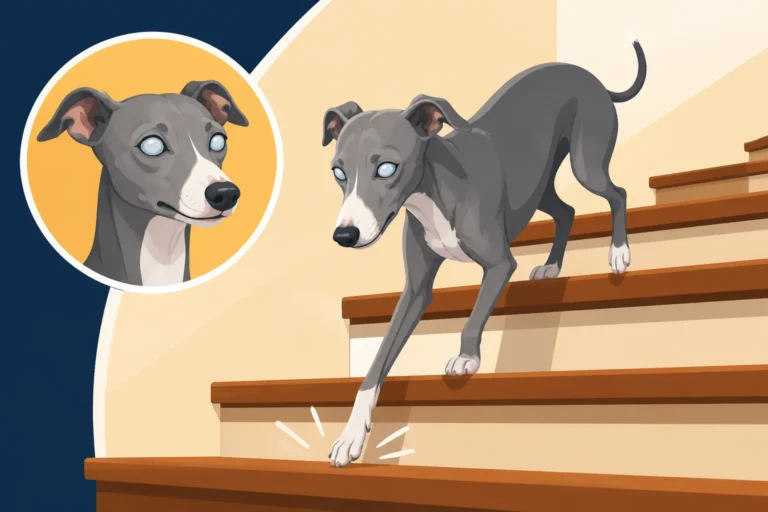
Beyond ramps and steps, consider your flooring. Hardwood, tile, or laminate floors, while beautiful, offer no shock absorption and can be slippery. Lay down non-slip rugs, carpet runners, or even large yoga mats in high-traffic areas and especially where furniture is located. This provides traction for zooming Iggies and a softer landing spot should they decide to make an unplanned descent. If you have stairs, especially for a puppy or an older IG, consider gating them off to prevent falls. An Italian Greyhound's delicate bones mean even a tumble down a few stairs can be devastating.
Training for Safe Descending
While environmental changes are paramount, training also plays a vital role. You can teach your Italian Greyhound to use ramps and steps, or even to wait to be lifted down from furniture. This requires consistency, patience, and positive reinforcement.
Start training early, ideally when they are puppies. Use high-value treats and praise to lure them onto and off ramps and steps. Make it a fun game, not a chore. Practice repeatedly, always rewarding successful use. For those instances where a ramp isn't available or your IG is particularly stubborn, teach a "wait" command or a signal to be picked up. Practice lifting them gently but firmly, supporting their chest and hindquarters, rather than letting them jump out of your arms. It can be challenging, as Why an Italian Greyhound Will Not Wait to Be Lifted Down is a common frustration, but persistence is key.
Remember, Italian Greyhounds are sensitive souls. Harsh corrections or scolding can make them fearful and less likely to cooperate. Keep training sessions short, positive, and rewarding. The goal is for them to associate ramps and waiting to be lifted with positive outcomes. Consider enrolling in a basic obedience class that uses positive reinforcement methods; it can greatly help with impulse control and teach them to respond to cues even when they're excited. Many owners find success using a clicker for precise timing of rewards when Teaching an Italian Greyhound to Use a Ramp.
Supervising Play and Interactions
Many Italian Greyhound fractures don't happen from jumping off furniture, but during play, especially with larger dogs or boisterous children. Close supervision is non-negotiable for these situations.
When your Italian Greyhound is playing with other dogs, especially larger breeds, always be present and ready to intervene. A bigger dog, even one that means no harm, can accidentally knock over, step on, or roughhouse too vigorously with a delicate IG, leading to a fall or direct injury. It's often safer to arrange playdates with other small, gentle dogs or other Italian Greyhounds. While Iggies love to run and play chase, always ensure this is done in a safe, enclosed area where there are no hidden obstacles they can trip over, or sudden drops. Remember, How High an Italian Greyhound Can Jump From Standing means they can easily clear low obstacles if they're excited.
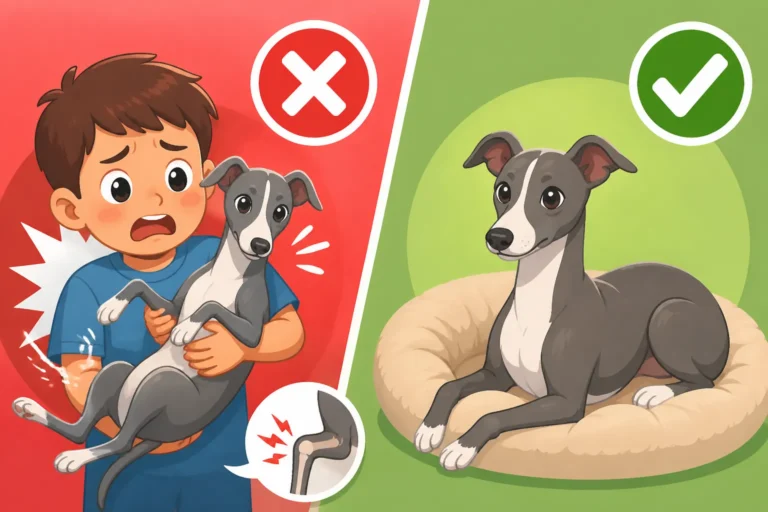
Similarly, if you have young children, teach them how to interact safely with your Italian Greyhound. Emphasize gentle handling, no roughhousing, and absolutely no carrying the dog unless they are sitting on the floor. Children, with the best intentions, can accidentally drop an Italian Greyhound, which almost always means a trip to the emergency vet for potentially severe fractures. Constant supervision when children and Iggies are together is crucial until both understand the boundaries and risks. A good approach is to teach children to always get on the floor to pet or play with the dog, minimizing the chance of falls.
What to Do if an Italian Greyhound Jumps and Gets Hurt
Despite all precautions, accidents can still happen. Knowing how to react calmly and efficiently can make a significant difference in the outcome for your Italian Greyhound.
Recognizing Signs of Injury
Your Italian Greyhound can't tell you in words that they're hurt, so it's vital to recognize the signs of a potential injury, especially a fracture. If your IG has jumped or fallen and then exhibits any of these symptoms, seek immediate veterinary attention:
- Sudden Lameness or Limping: The most obvious sign. They might be unwilling to put weight on a limb, or only toe-touch.
- Yelping or Crying: A sharp yelp at the moment of impact, or continued vocalization indicating pain.
- Holding a Leg Up: Often a clear sign they cannot or will not use the limb.
- Swelling or Deformity: The injured area might look swollen or oddly angled. Even subtle swelling can be a red flag.
- Reluctance to Move: They might become withdrawn, refuse to eat, or not want to participate in activities they usually enjoy.
- Shaking or Trembling: This can be a sign of pain or shock.
- Behavioral Changes: Any sudden shift in their normal demeanor, such as increased aggression when touched near a certain area, could indicate pain.
It's important to know that sometimes, an Italian Greyhound might still try to use a broken leg, especially if it's an incomplete fracture or they are running on adrenaline. Don't let this fool you into thinking the injury isn't serious. This is part of Signs an Italian Greyhound Has Broken a Leg, and it's a testament to their stoicism, but it doesn't mean they're not in immense pain and need urgent care.
Immediate Actions and Emergency Vet Care
If you suspect your Italian Greyhound has broken a leg or suffered another serious injury, the immediate steps you take can influence their prognosis.
First and foremost, remain calm. Your anxiety will only heighten your dog's stress. Gently, without causing further pain, try to restrict their movement. If possible, very carefully support the suspected injured limb to prevent further damage. You can use a towel or a soft blanket to create a makeshift sling if you know how, but generally, less handling is better. Do NOT attempt to set the bone yourself or apply tight bandages unless directed by a vet.
Contact your veterinarian immediately or head to the nearest emergency veterinary clinic. Call ahead if possible to let them know you are coming and describe the situation. They can prepare for your arrival and offer guidance on how to safely transport your dog. Use a secure carrier to transport your Italian Greyhound, ensuring they are lying flat and the injured area is as stable as possible.
Be prepared for the financial implications. Fracture repair for an Italian Greyhound is almost always surgical and can be incredibly expensive. This is where having pet insurance like Healthy Paws can be a lifesaver, helping to cover a significant portion of the costs associated with emergency care, diagnostics, and surgery. Many owners start an emergency fund specifically for their pets, but a good insurance policy like one from Healthy Paws can offer peace of mind when accidents occur. Consider Budgeting for an Italian Greyhound's Broken Leg Before It Happens as a wise preventative financial strategy.
The Road to Recovery
The journey to recovery after an Italian Greyhound fracture is often long, challenging, and requires immense dedication from owners. Once at the vet, your dog will undergo X-rays to diagnose the type and severity of the fracture. For most Italian Greyhound leg fractures, especially those involving the radius and ulna, surgical intervention is typically required.
Common repair methods include internal fixation with plates and screws, or external fixation, where pins are placed through the bone and connected to an external frame. These procedures require a skilled veterinary orthopedic surgeon, as Italian Greyhound bones are very fine and can be tricky to work with. What Fracture Repair Costs on an Italian Greyhound can vary widely based on the complexity, location, and the specialist performing the surgery, often running into thousands of dollars. Having a robust pet insurance plan like Healthy Paws can make these critical decisions about care much more manageable.
Post-surgery, strict crate rest and activity restriction are paramount for several weeks or even months. This means no jumping, running, or strenuous activity. Physical therapy, which can include gentle range-of-motion exercises and controlled short walks, will be crucial to regain strength and mobility. The recovery period is a test of patience, but with diligent care, most Italian Greyhounds can make a full or near-full recovery and return to their happy, active selves. They might not regain Whether an Italian Greyhound Regains Full Use of the Leg immediately, but with time and proper rehabilitation, the outlook is generally good.
Disclaimer
The information provided in this article is for general informational purposes only and does not constitute veterinary advice. Always consult with a qualified veterinarian for any health concerns or before making any decisions about your pet's health or treatment.